Understanding place values Numbers Worksheets for 7-Year-Olds
10 filtered results
-
From - To
Explore our engaging Understanding Place Values worksheets designed specifically for 7-year-olds! These worksheets provide a fun and interactive way for young learners to grasp the concept of place value in numbers. Through colorful graphics and relatable examples, children will develop essential skills in recognizing the importance of tens and units, enhancing their mathematical foundation. Our activities reinforce learning through various formats, including exercises on identifying place values, comparing numbers, and completing patterns. Perfect for classroom use or at-home practice, these worksheets will help your child build confidence and proficiency in mathematics. Dive into the world of numbers with our enriching resources today!
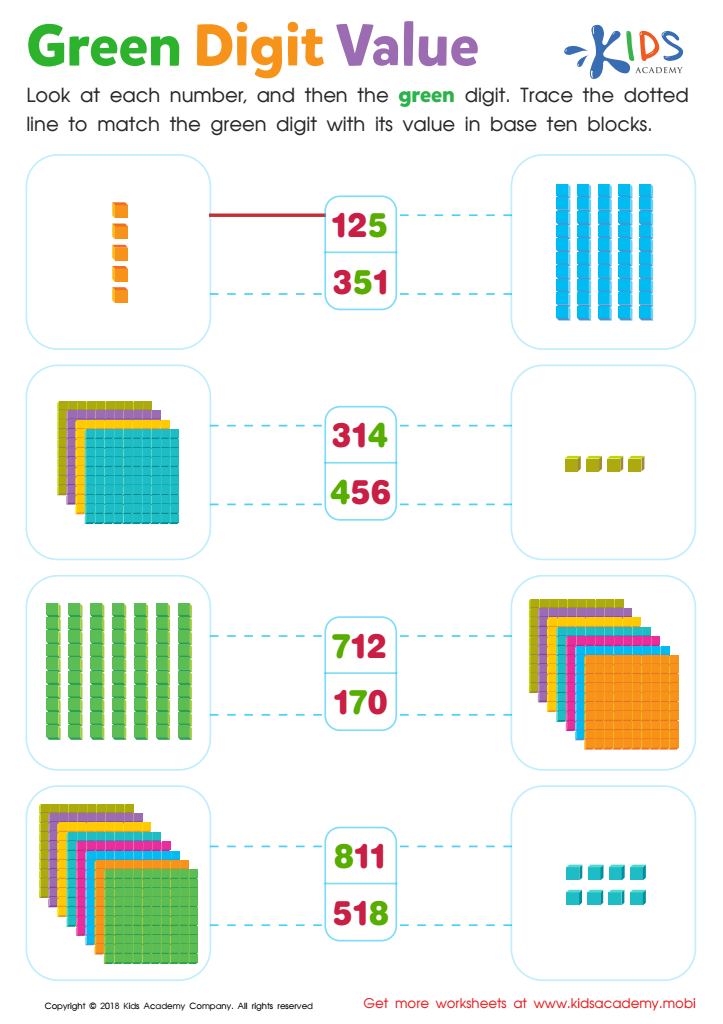
Green Digit Value Worksheet
 Assign to My Students
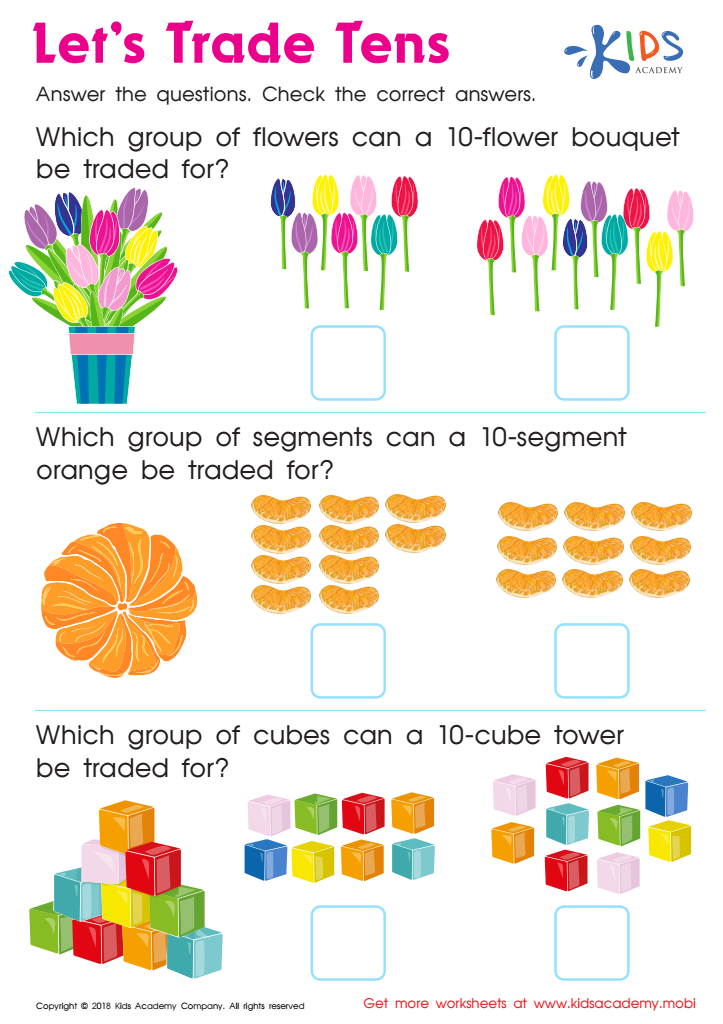
Lets Trade Tens Worksheet
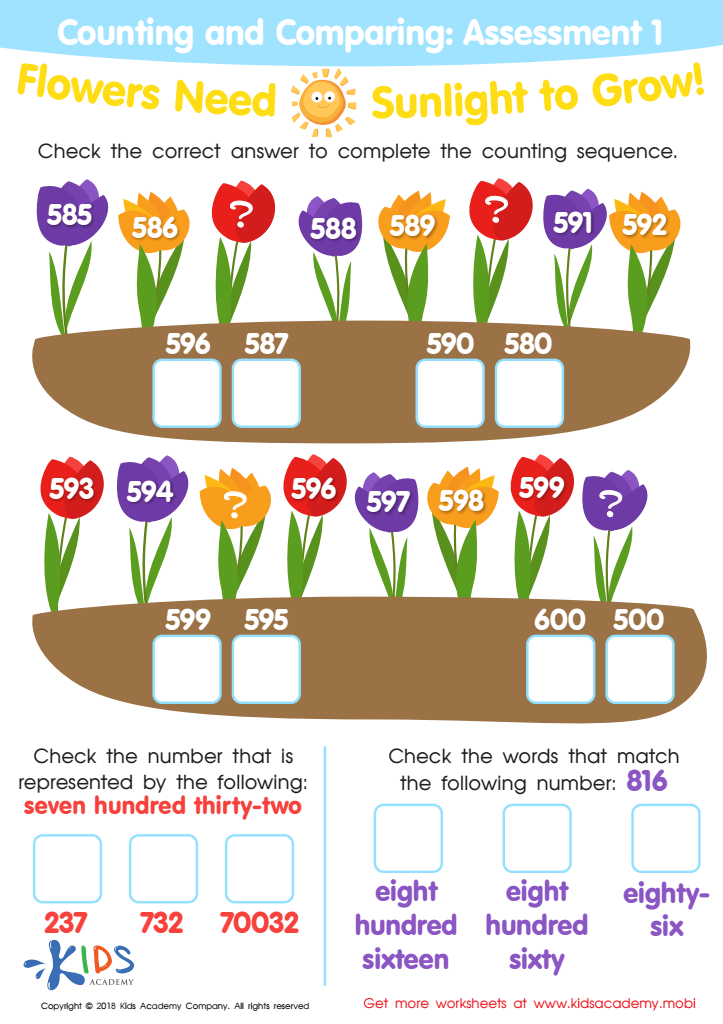
Counting and Comparing: Assessment 1 Worksheet
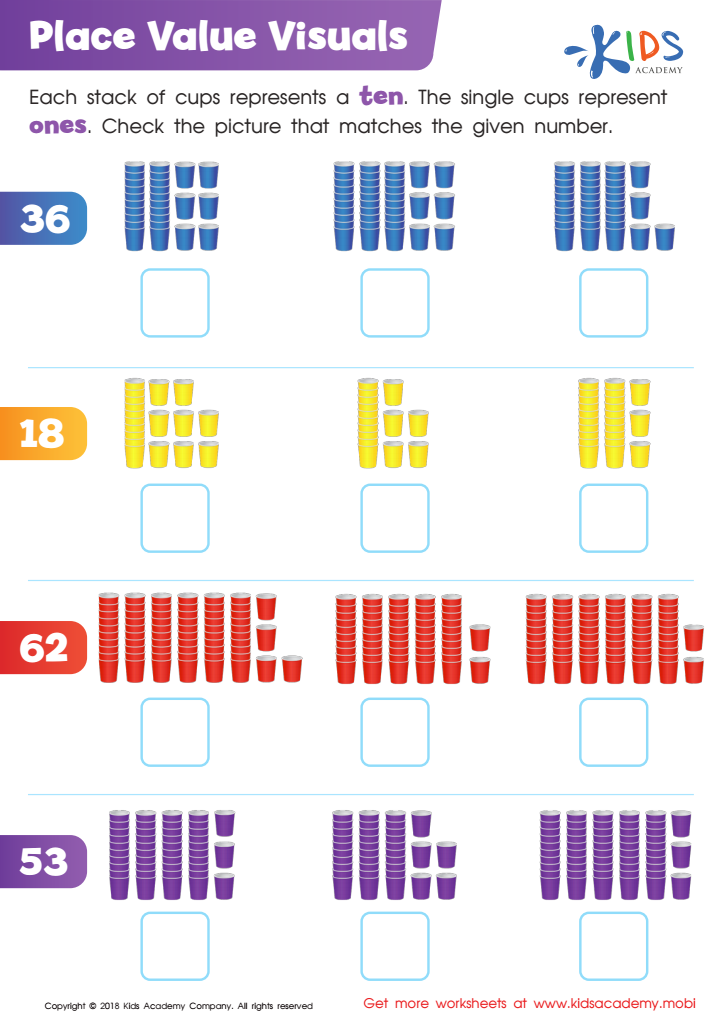
Place Value Visuals Worksheet
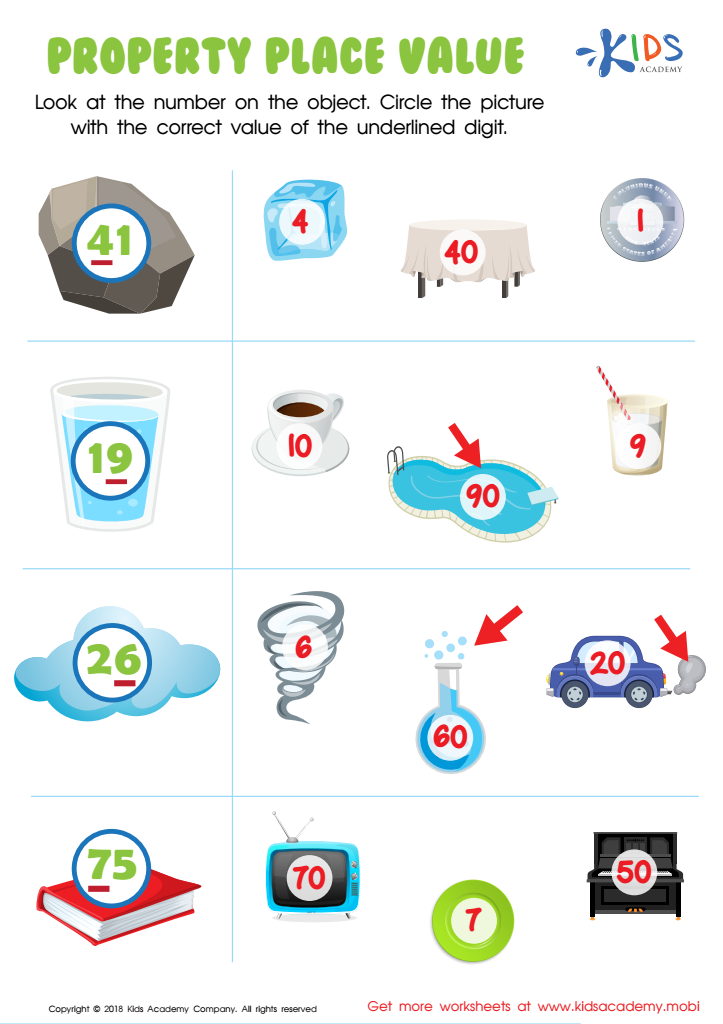
Property Place Value Worksheet
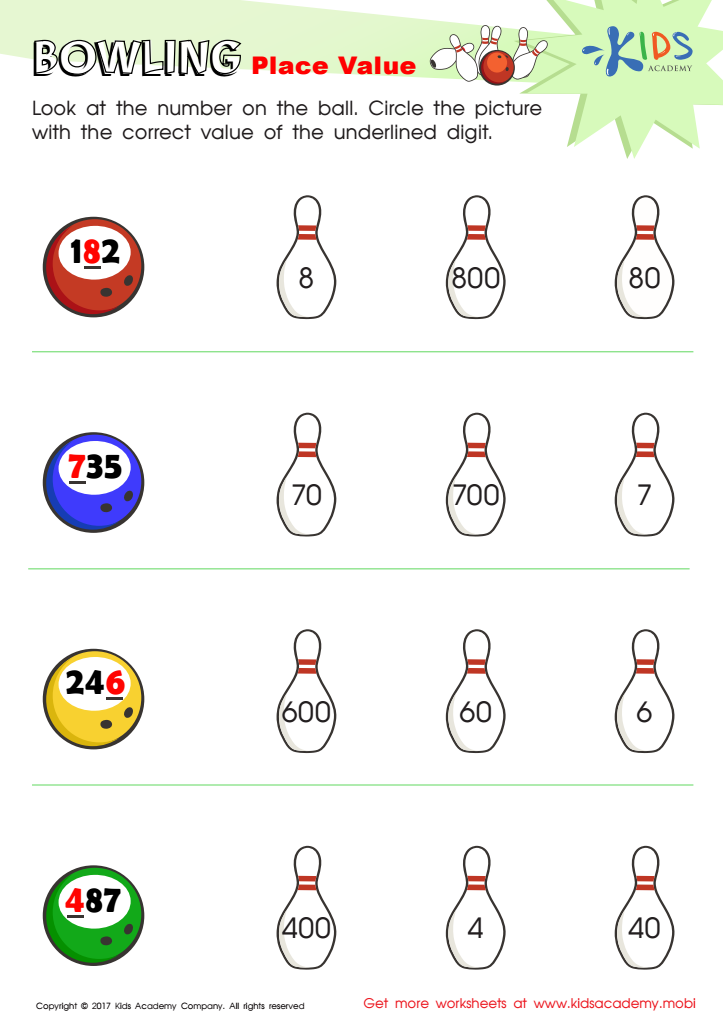
Place Value Worksheet
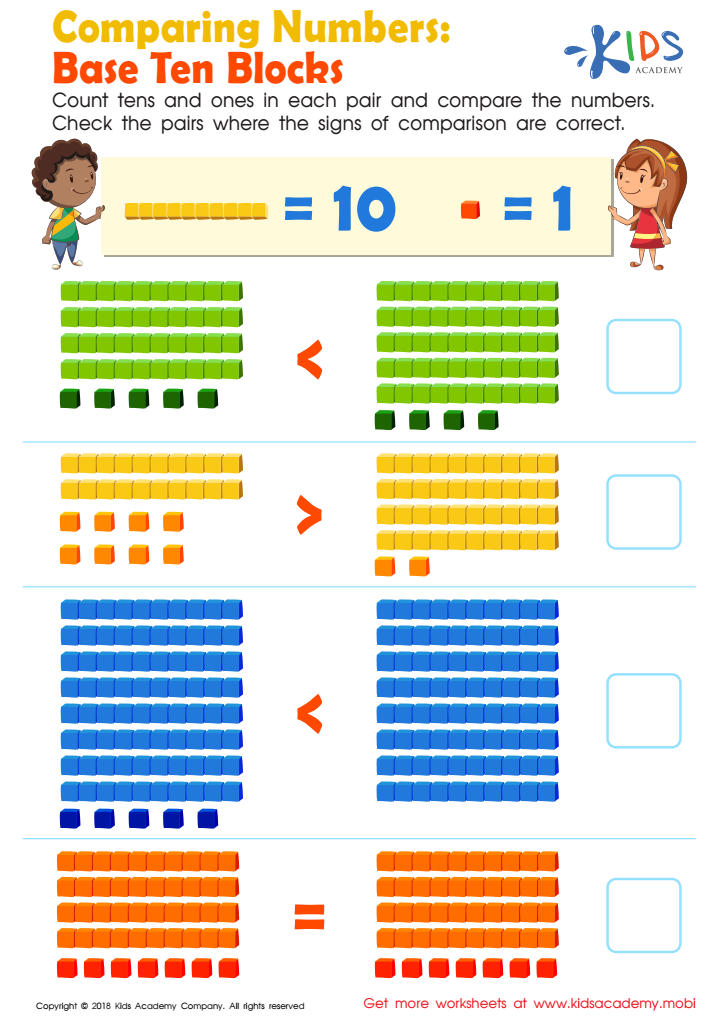
Comparing Numbers: Base Ten Blocks Worksheet
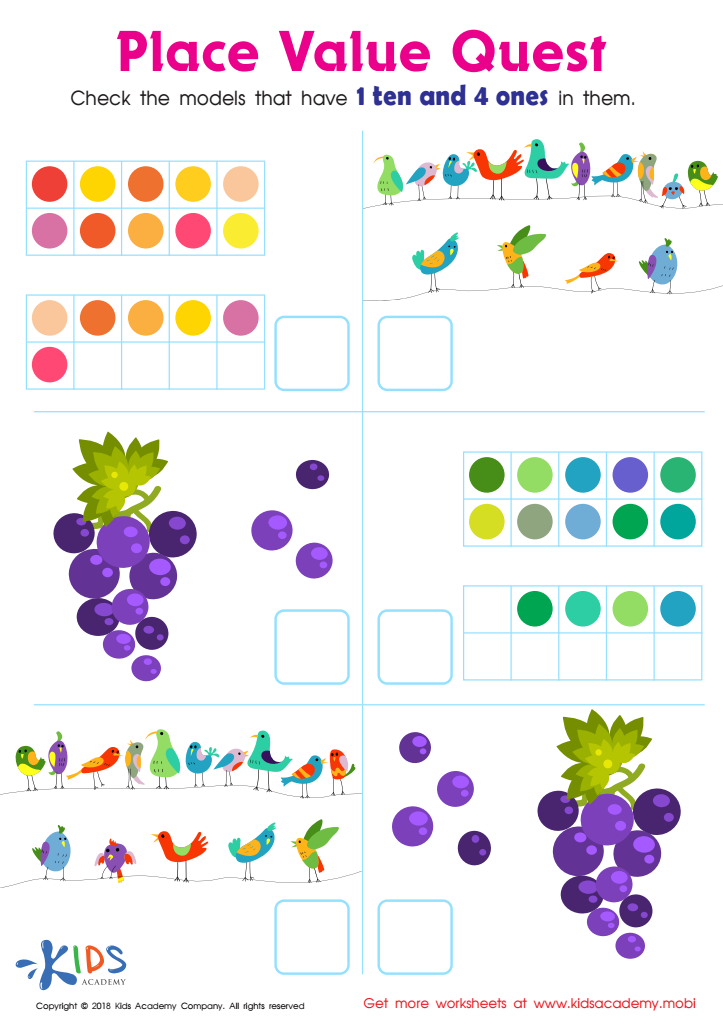
Place Value Quest Worksheet
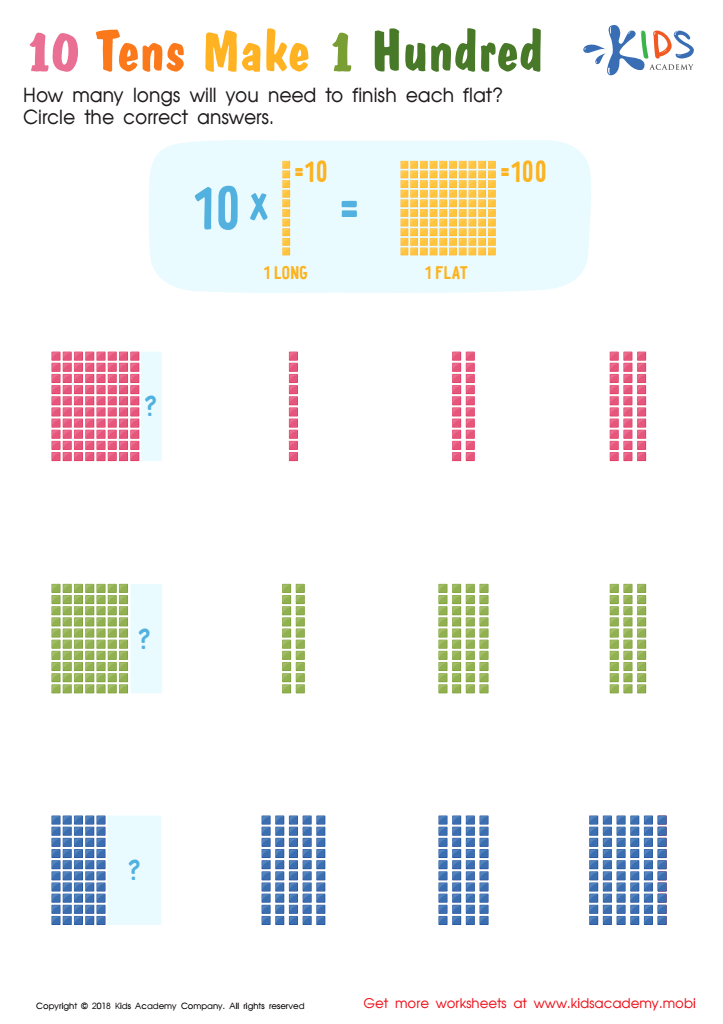
10 Tens Make 1 Hundred Worksheet
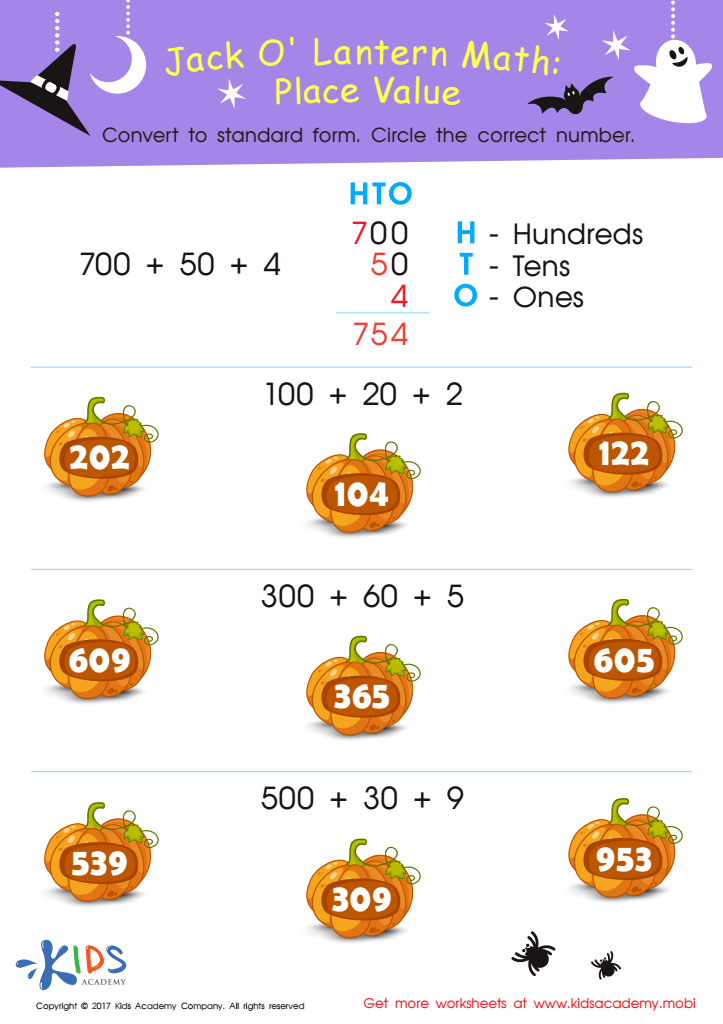
Free Place Value Worksheet






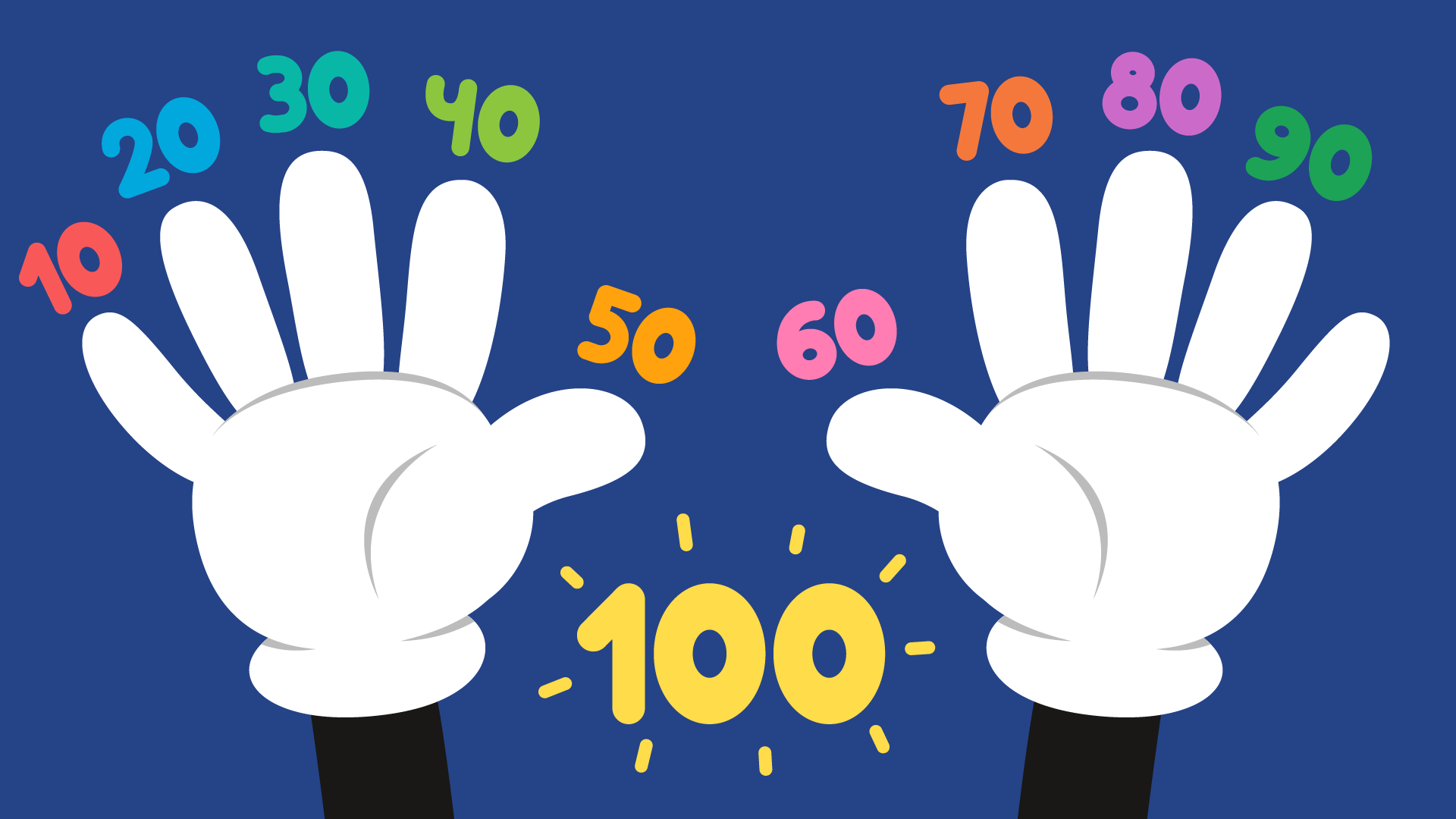

Understanding place value is fundamental for 7-year-olds as it lays the groundwork for all future mathematical concepts. At this age, children transition from simple counting to more complex operations like addition and subtraction. Grasping place value helps them comprehend that the position of a digit affects its value, which is essential for understanding larger numbers.
Place value also promotes critical thinking; when children can break down numbers into tens and ones, they develop a deeper analytical mindset that benefits not only math but other subjects as well. Furthermore, solid knowledge in place value enhances proficiency in mental math, enabling students to solve problems more efficiently.
For parents and teachers, fostering an understanding of place value is vital. It equips children with the skills to tackle fractions, decimals, and future mathematical challenges, creating a strong foundation for academic success. Engaging children through fun activities, games, and discussions about everyday numerical concepts can make learning enjoyable and memorable.
Moreover, a firm grasp of place value boosts confidence in children, encouraging a positive attitude towards math. This confidence can lead to increased participation and a willingness to explore more complex topics later on, setting the stage for lifelong mathematical understanding.








