Unlock the joy of learning with our "Enhance Comprehension Math Worksheets for 7-Year-Olds"! Designed to boost your child's understanding of fundamental math concepts, these engaging worksheets foster critical thinking and problem-solving skills. Children will explore addition, subtraction, and basic word problems through fun, relatable scenarios. Our worksheets are tailor-made to encourage curiosity and build confidence in young learners, ensuring they grasp essential skills in a supportive environment. With vibrant illustrations and interactive questions, learning math becomes an exciting adventure. Download and watch your 7-year-old thrive in comprehension while mastering key mathematical concepts today!
Check out this FREE Trial Lesson on Math for age 7!

P

Favorites
With answer key
Interactive
  • 7
  • Enhance comprehension
  • Math
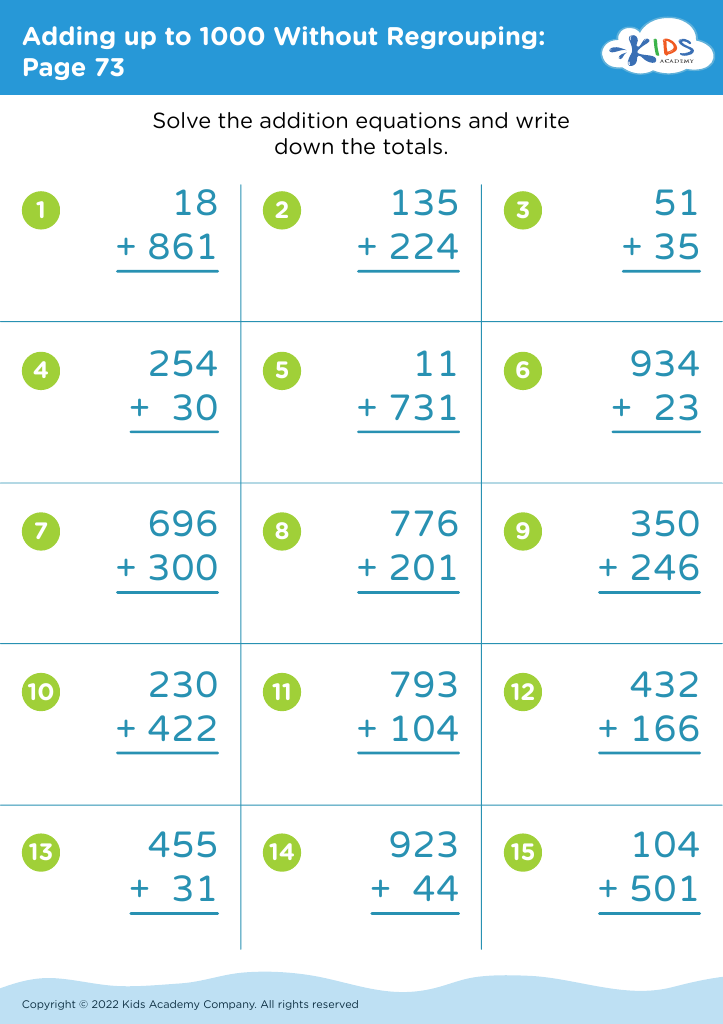
Adding up to 1000 Without Regrouping: Page 73
Worksheet
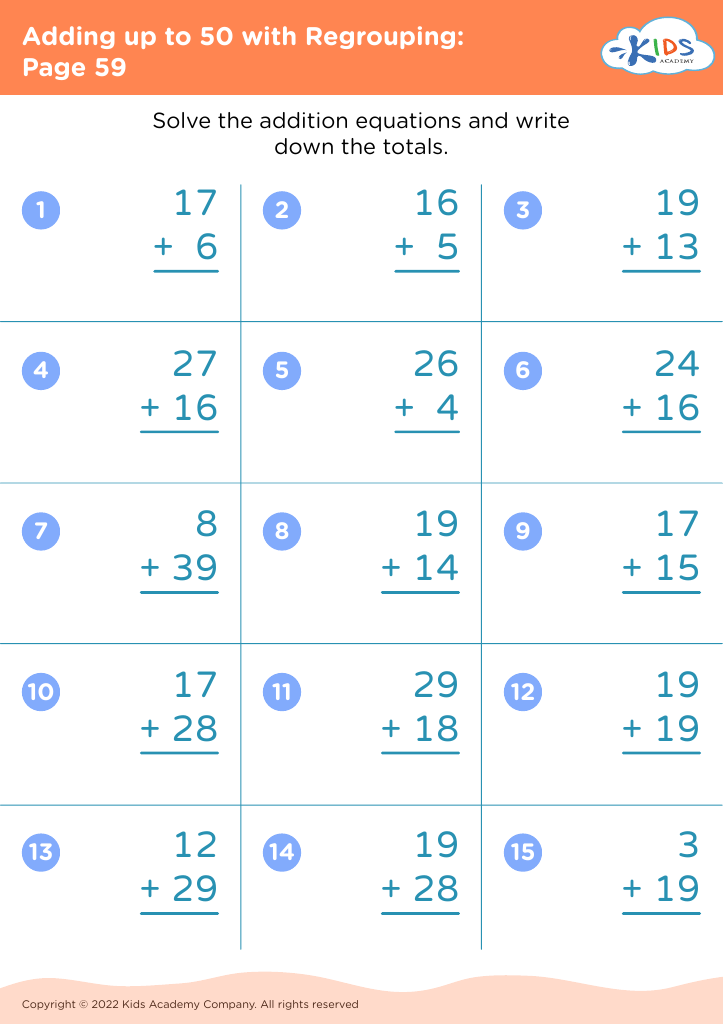
Adding up to 50 with Regrouping: Page 59
Worksheet
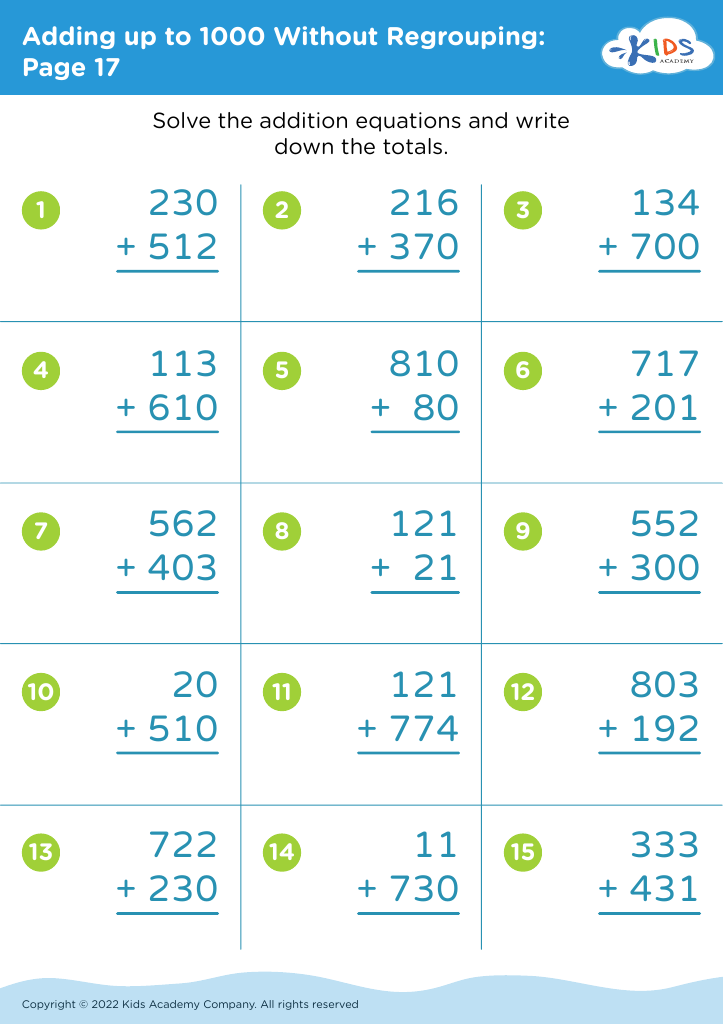
Adding up to 1000 Without Regrouping: Page 17
Worksheet
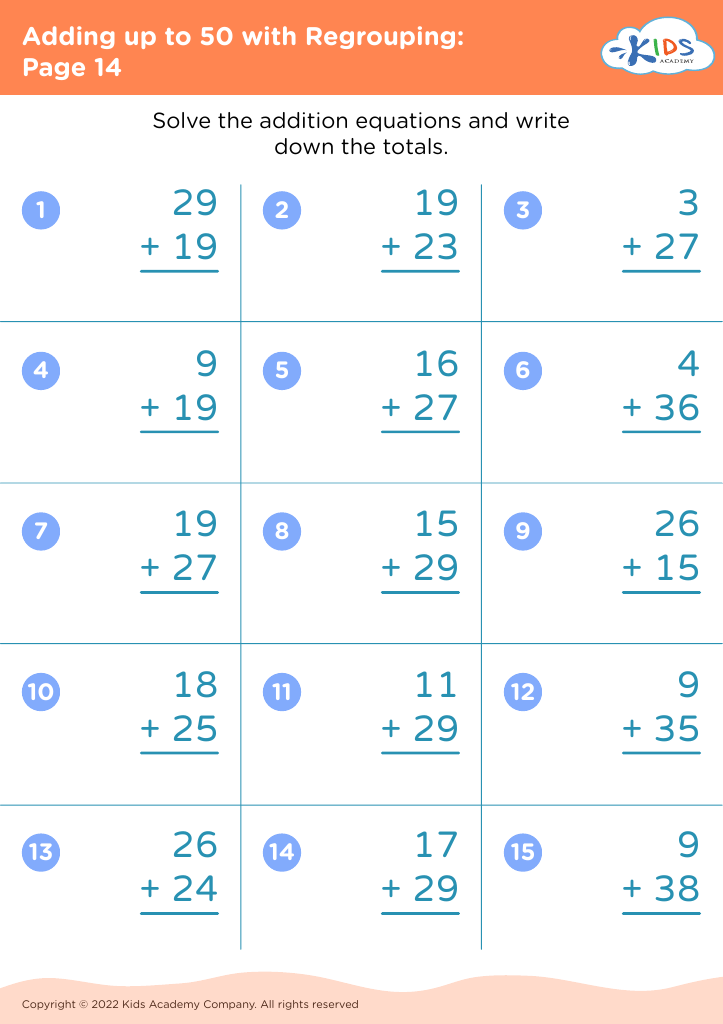
Adding up to 50 with Regrouping: Page 14
Worksheet
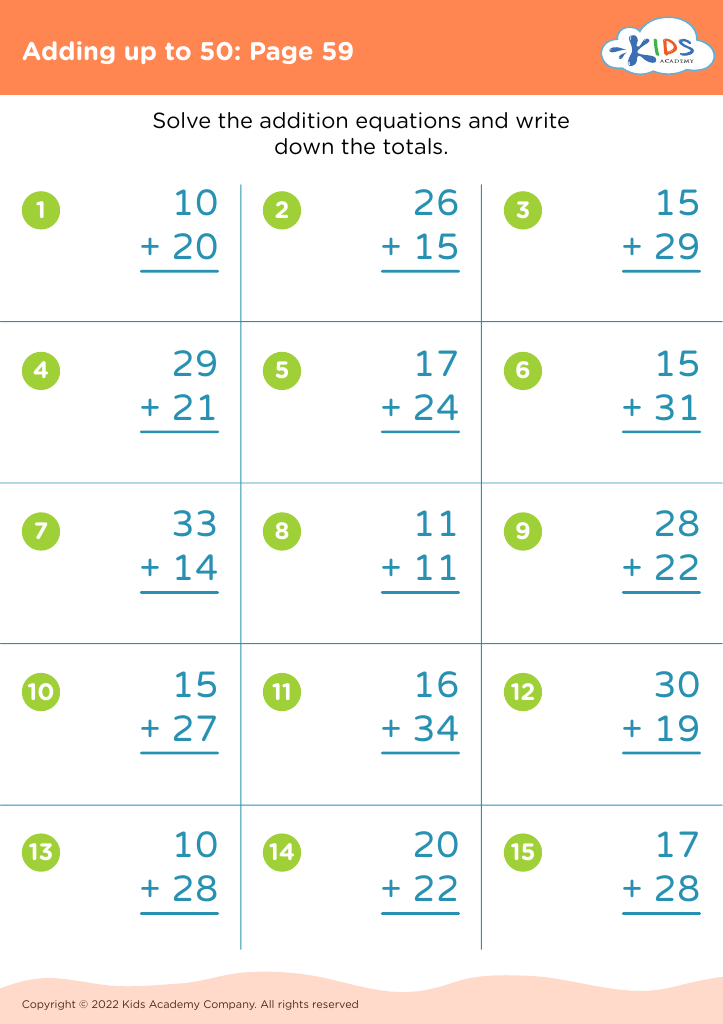
Adding up to 50: Page 59

Adding up to 50: Page 59

Adding up to 50: Page 59
Worksheet
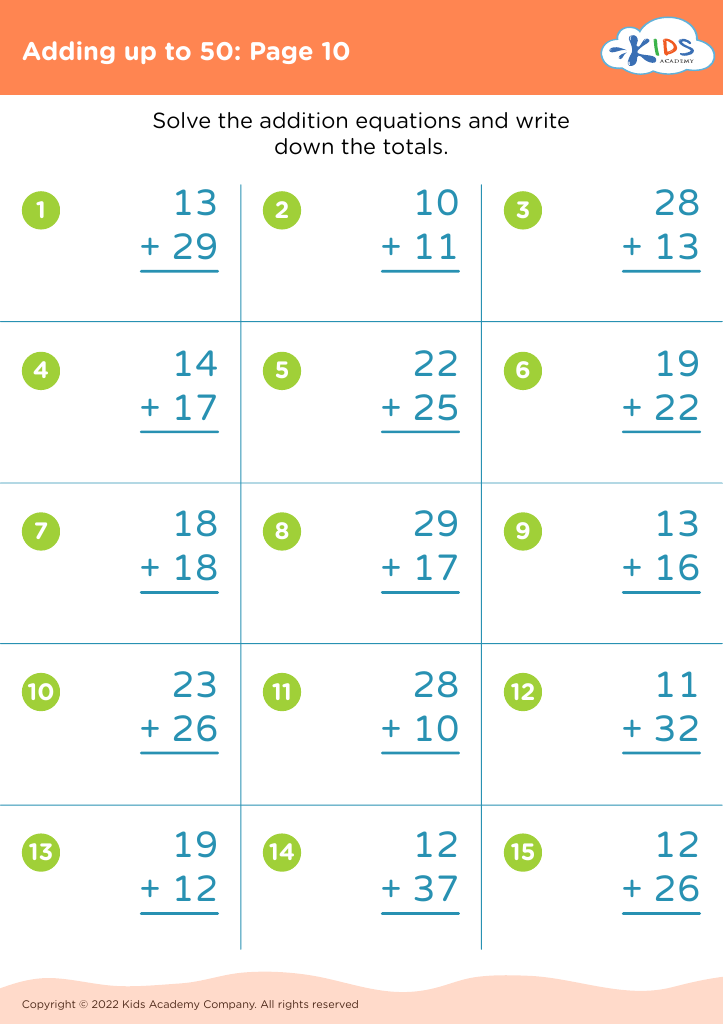
Adding up to 50: Page 10

Adding up to 50: Page 10

Adding up to 50: Page 10
Worksheet
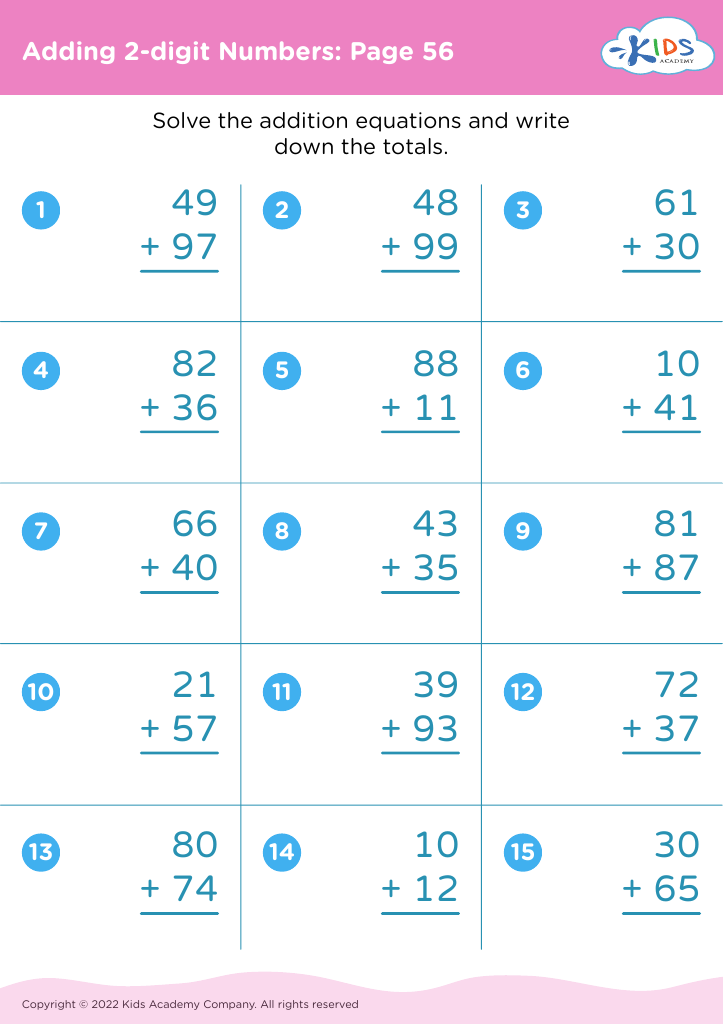
Adding 2-digit Numbers: Page 56

Adding 2-digit Numbers: Page 56

Adding 2-digit Numbers: Page 56
Worksheet
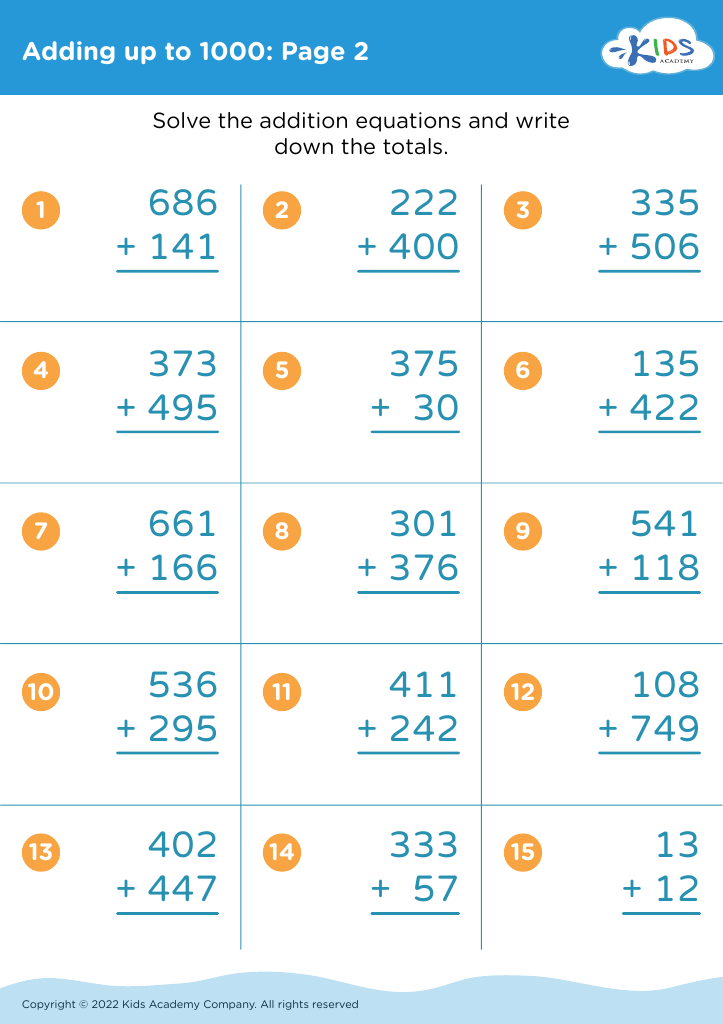
Adding up to 1000: Page 2

Adding up to 1000: Page 2

Adding up to 1000: Page 2
Worksheet
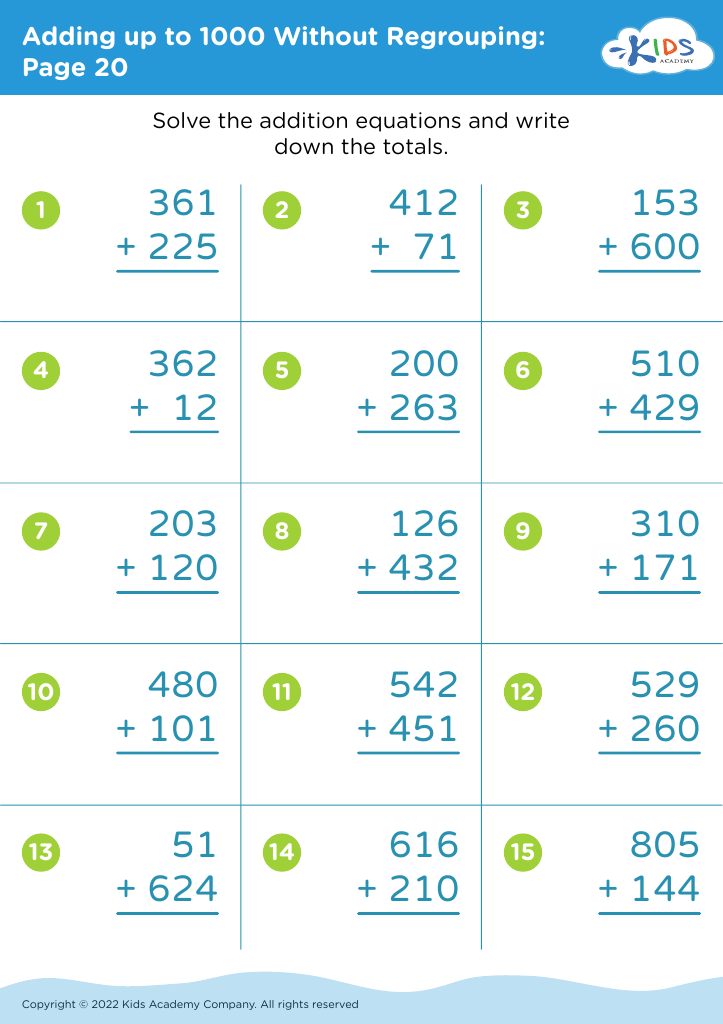
Adding up to 1000 Without Regrouping: Page 20
Worksheet
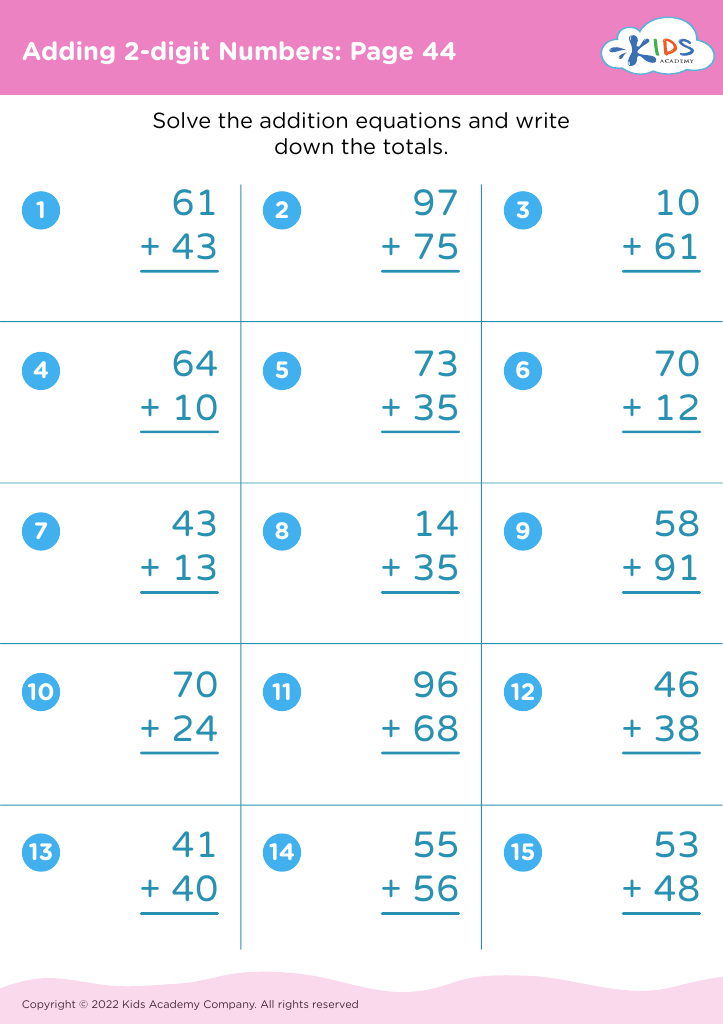
Adding 2-digit Numbers: Page 44

Adding 2-digit Numbers: Page 44

Adding 2-digit Numbers: Page 44
Worksheet
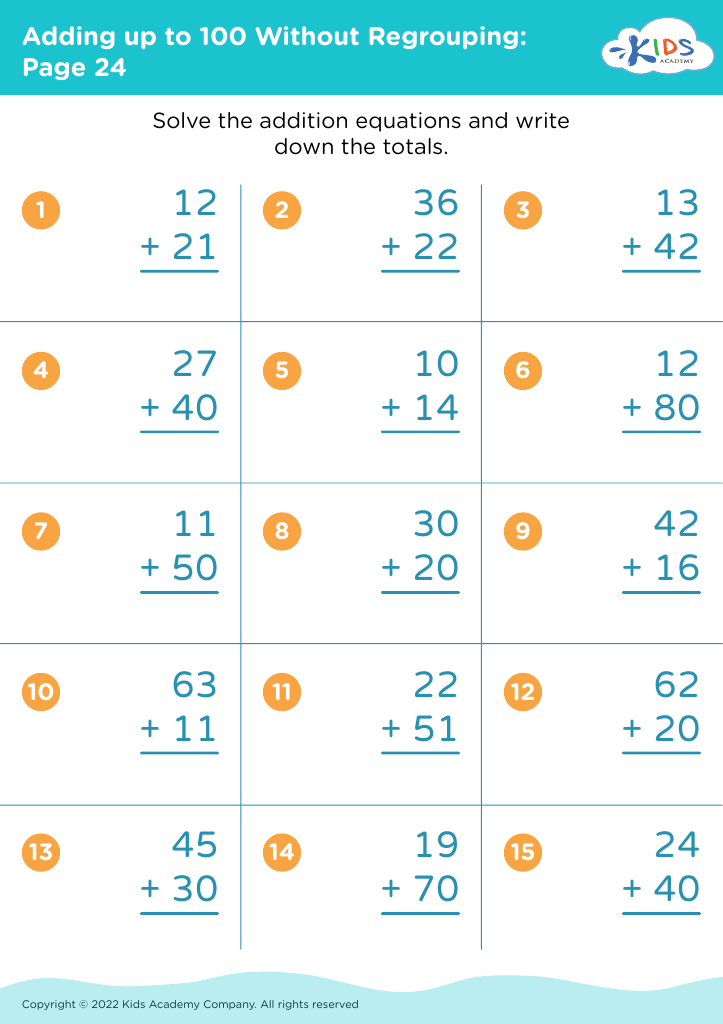
Adding up to 100 Without Regrouping: Page 24
Worksheet
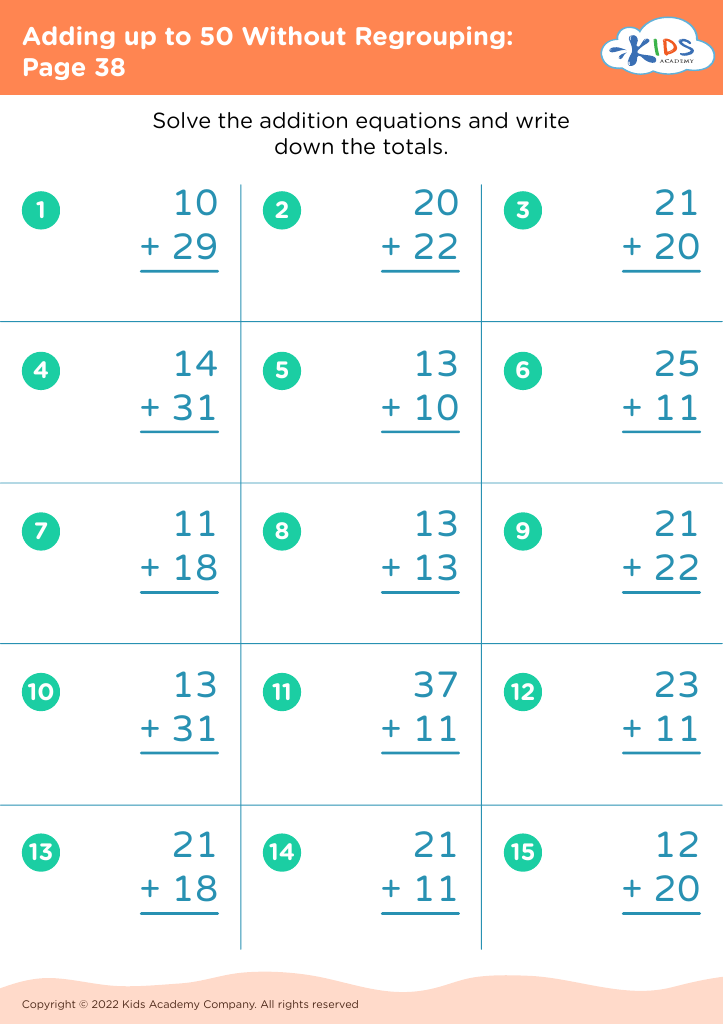
Adding up to 50 Without Regrouping: Page 38
Worksheet
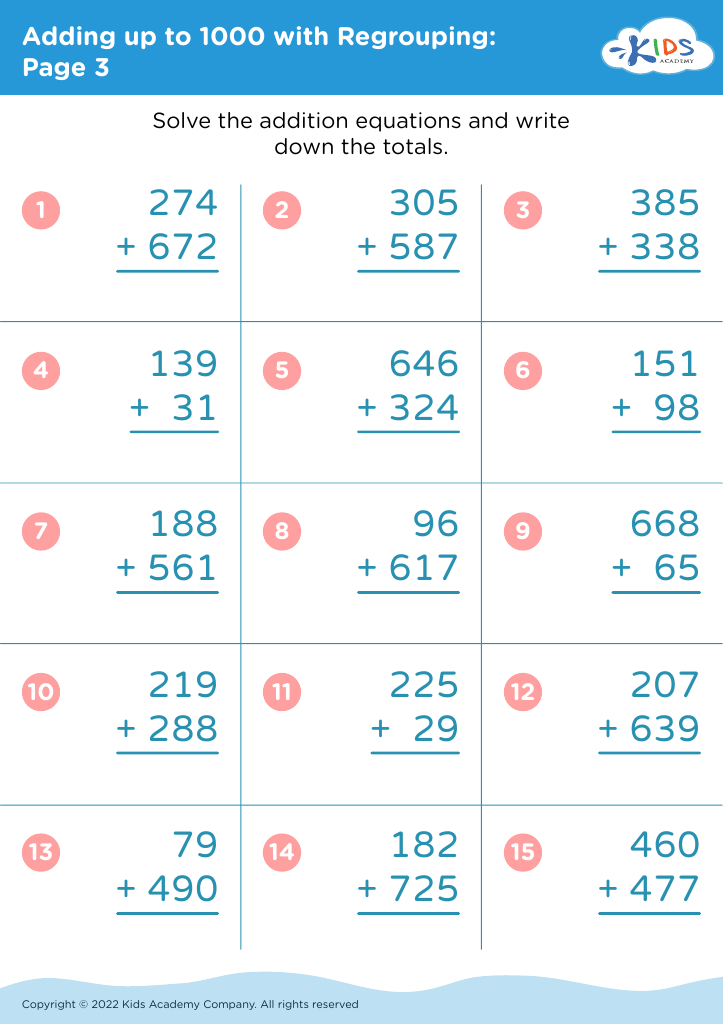
Adding up to 1000 with Regrouping: Page 3
Worksheet
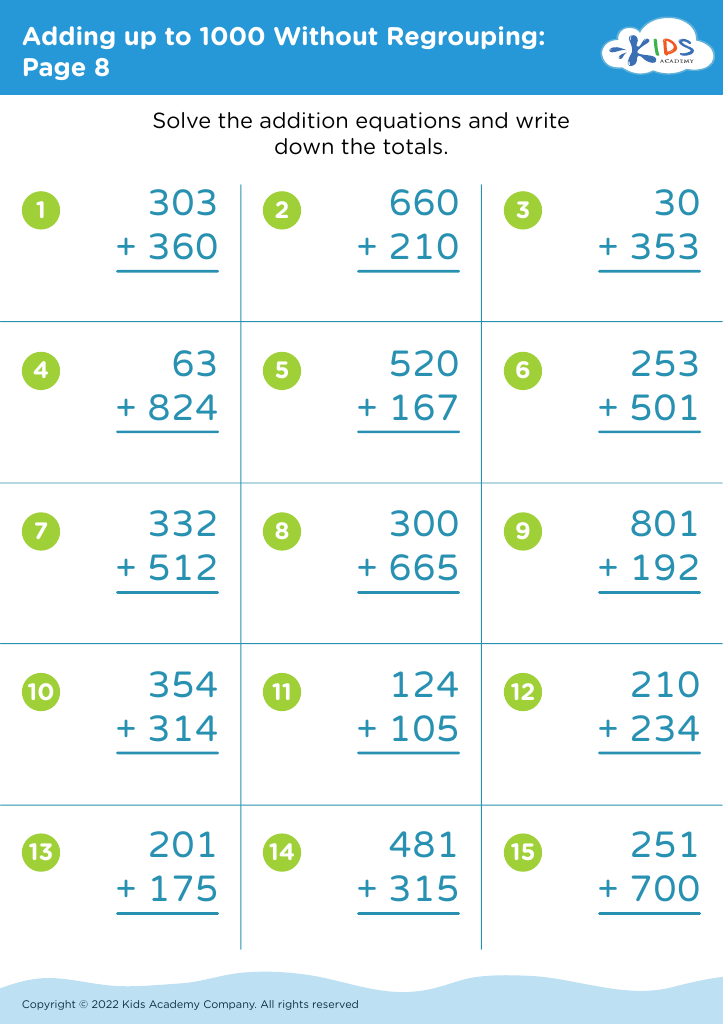
Adding up to 1000 Without Regrouping: Page 8
Worksheet
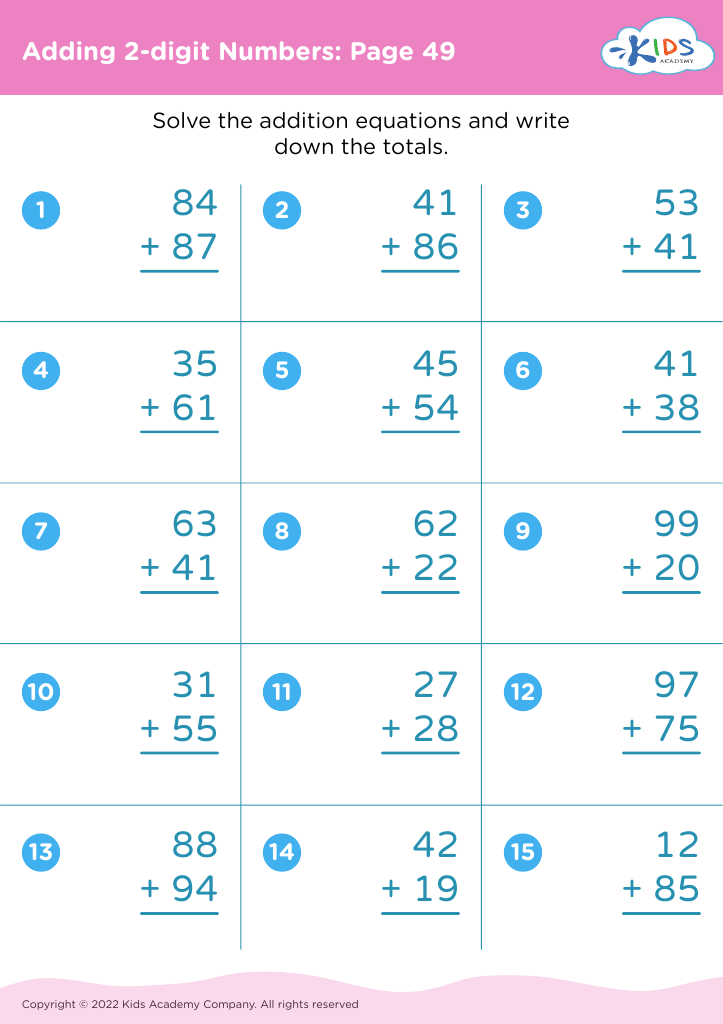
Adding 2-digit Numbers: Page 49

Adding 2-digit Numbers: Page 49

Adding 2-digit Numbers: Page 49
Worksheet
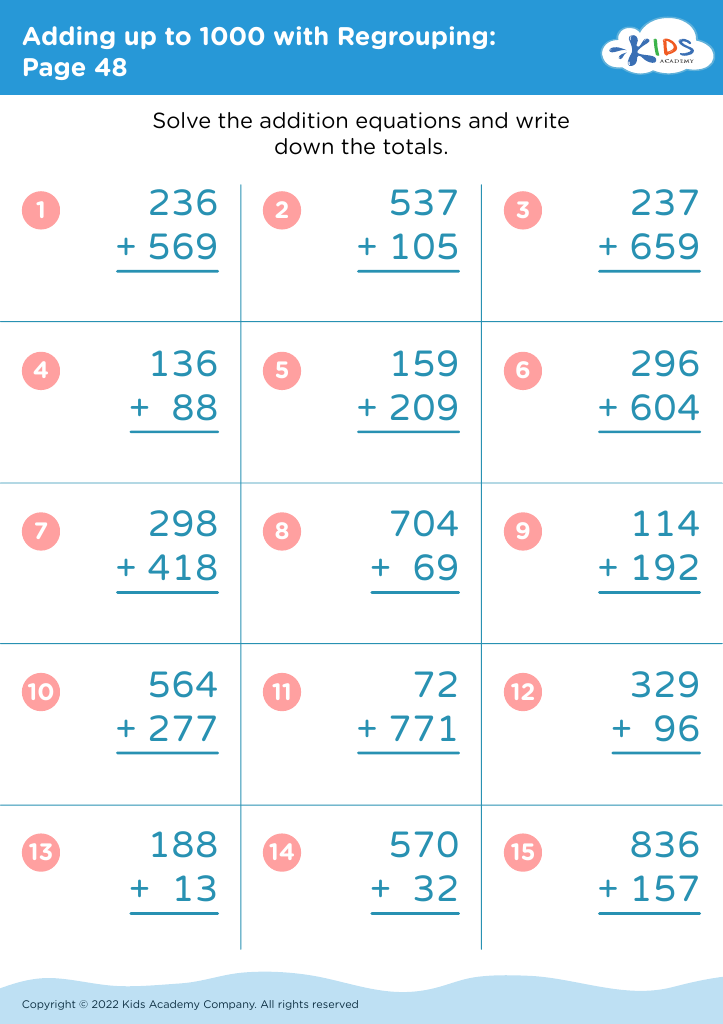
Adding up to 1000 with Regrouping: Page 48
Worksheet
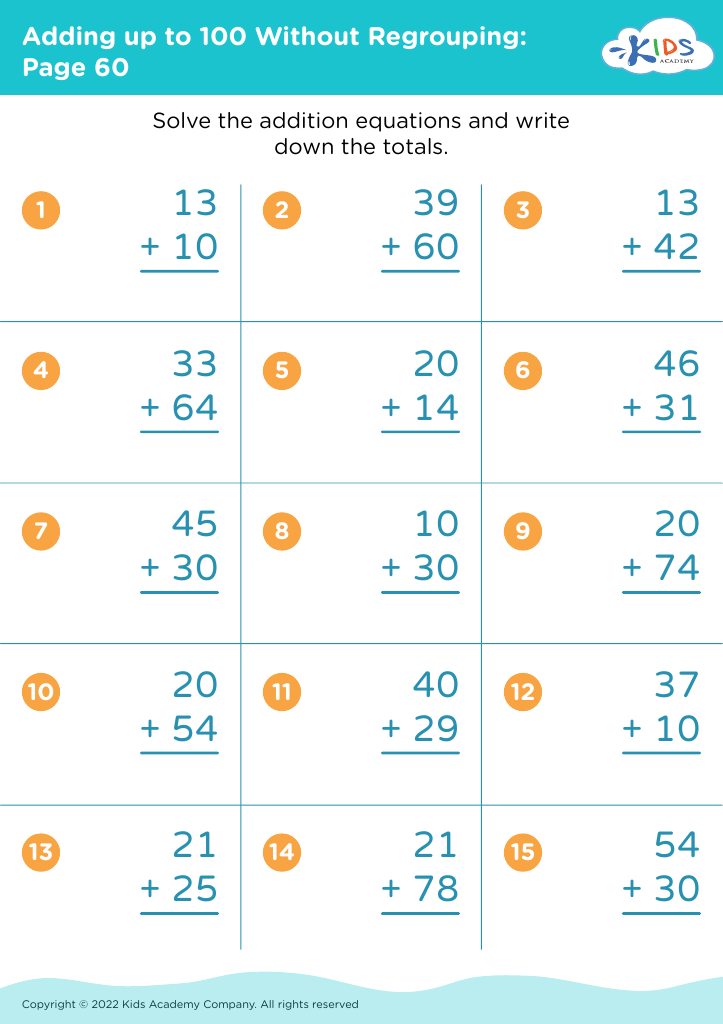
Adding up to 100 Without Regrouping: Page 60
Worksheet


Enhancing comprehension in math for 7-year-olds is crucial as it lays the foundation for a child’s future academic success and confidence in learning. At this age, children transition from basic arithmetic to more complex concepts, making it essential for them to develop a strong understanding of mathematical principles.

First, improved comprehension helps children to not only perform calculations but also to understand the ‘why’ and 'how' behind them. This deeper understanding fosters critical thinking, enabling them to solve problems effectively and apply mathematical concepts to real-life situations. For example, grasping the concept of addition and subtraction aids them in budgeting their own money or measuring ingredients while cooking.

Second, when children are encouraged to comprehend math, they are more likely to develop a positive attitude towards the subject. A strong self-belief in their mathematical abilities can diminish anxiety associated with the subject, paving the way for lifelong learning and curiosity.

Moreover, working collaboratively, parents and teachers can enhance math comprehension through interactive activities and engaging discussions, reinforcing the learning experience. Ultimately, prioritizing mathematical comprehension at this early stage equips children with vital skills needed for their educational journey and everyday life challenges.