Pattern identification Math Worksheets for 7-Year-Olds
6 filtered results
-
From - To
Discover our engaging Pattern Identification Math Worksheets designed specifically for 7-year-olds! These worksheets are crafted to enhance critical thinking and recognize sequences through colorful visuals and fun activities. Young learners will explore repeating patterns, shapes, and numbers while developing essential math skills. Perfect for classroom use or at-home practice, our materials promote cognitive development and inspire a love for learning. With varying difficulty levels, these worksheets ensure that every child can progress at their own pace. Download and print our Pattern Identification worksheets today to empower your child’s math journey and build a solid foundation in essential mathematical concepts!
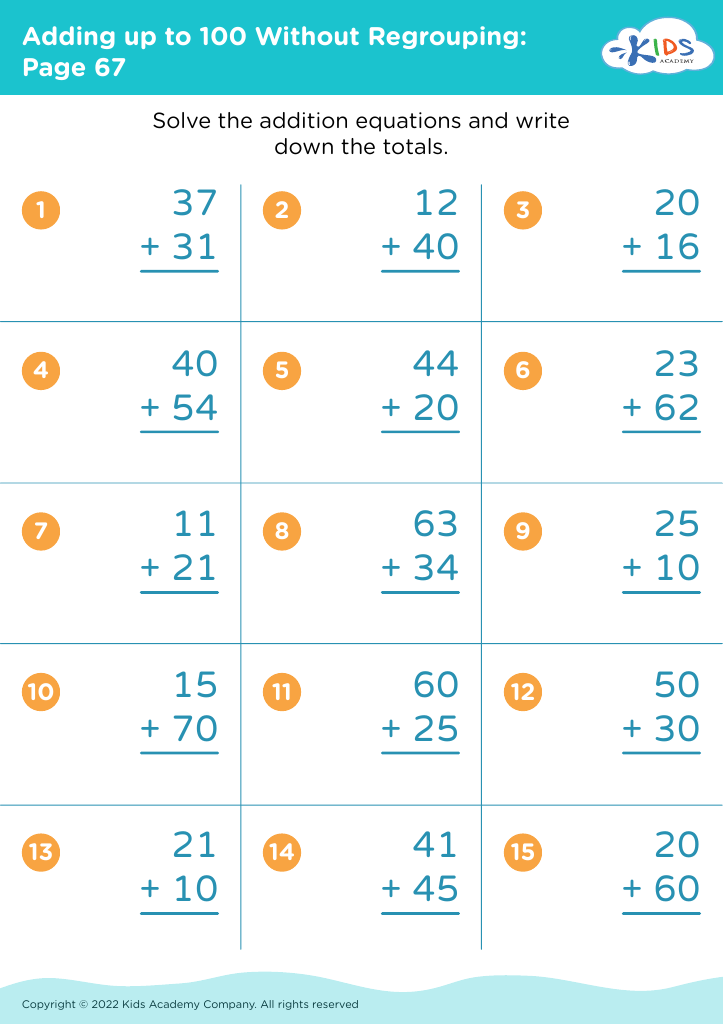
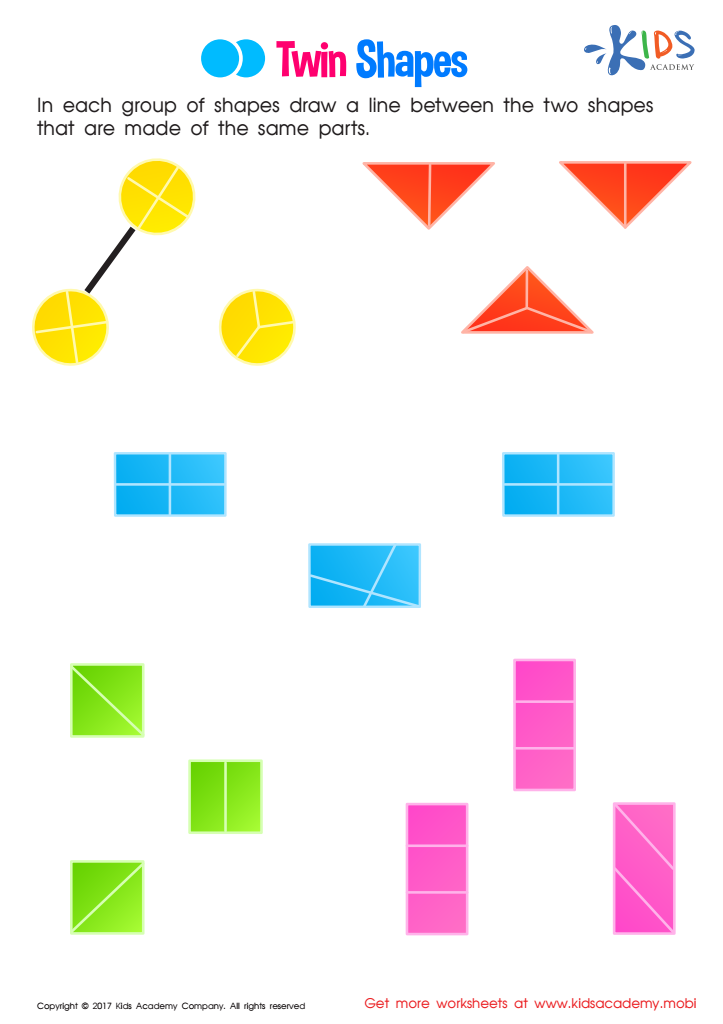
Twin Shapes Worksheet
 Assign to My Students
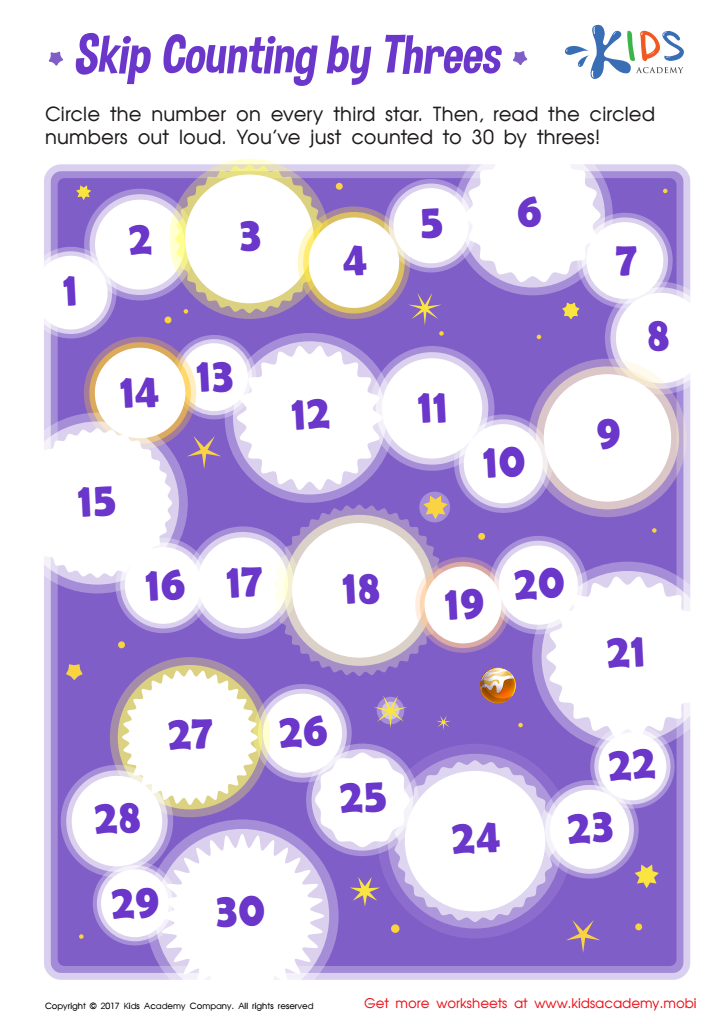
Skip Counting By Three Printable
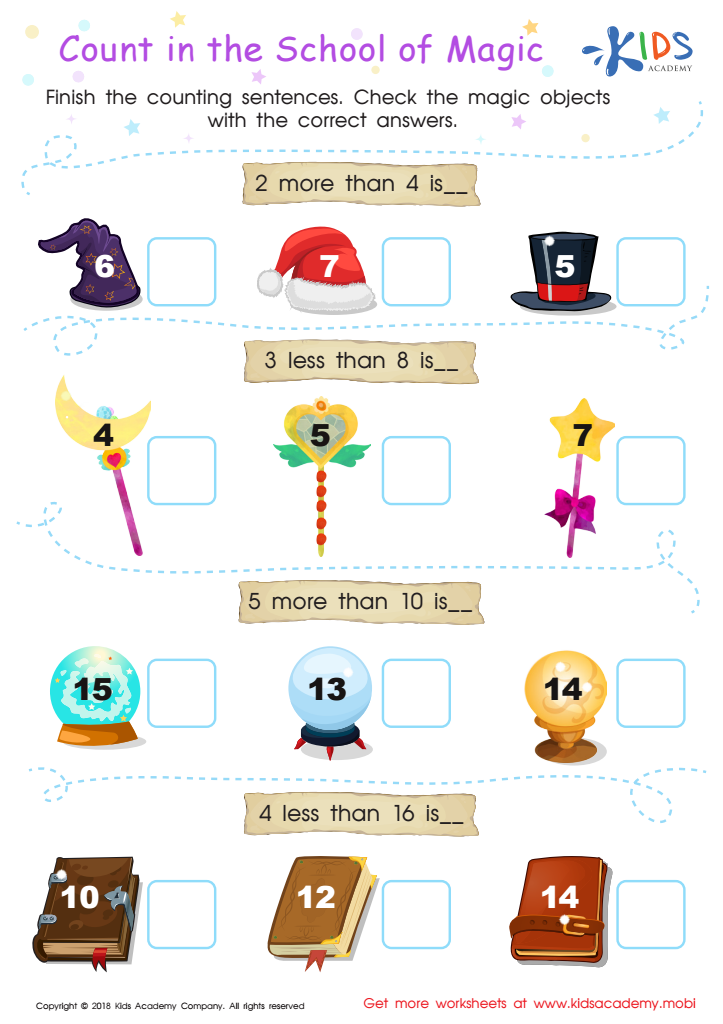
Count in the School of Magic Worksheet
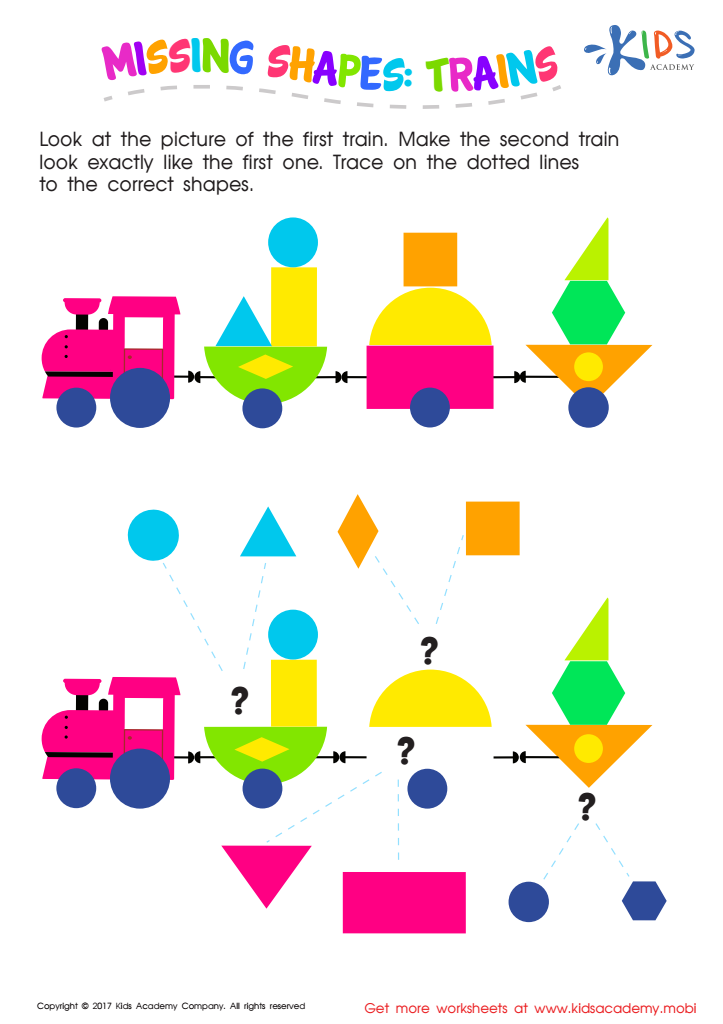
Missing Shapes: Trains Worksheet








Pattern identification in mathematics is a foundational skill for 7-year-olds that benefits both cognitive development and academic success. At this age, children are naturally curious and eager to explore relationships within numbers, making it prime time for them to learn mathematical patterns. Understanding patterns enhances critical thinking and problem-solving skills, encouraging kids to recognize sequences, structures, and relationships, which are essential for more advanced math concepts like algebra and geometry.
By nurturing pattern recognition, parents and teachers can help children develop essential skills such as logical reasoning and analytical thinking. Recognizing patterns also supports their ability to predict outcomes and make informed guesses, which are applicable beyond math, extending into scientific reasoning and everyday decision-making.
Moreover, engaging children with pattern identification can transform math from a daunting subject into a fun and engaging experience, fostering a lifelong love for learning. It enhances their confidence as they see the connections between math and the real world. By emphasizing pattern identification, both parents and teachers play a crucial role in preparing children for future academic challenges while cultivating a mindset geared toward exploration and discovery. Thus, prioritizing this skill is essential for holistic development in early learners.








