Vocabulary expansion Reading Worksheets for 7-Year-Olds - Page 3
51 filtered results
-
From - To
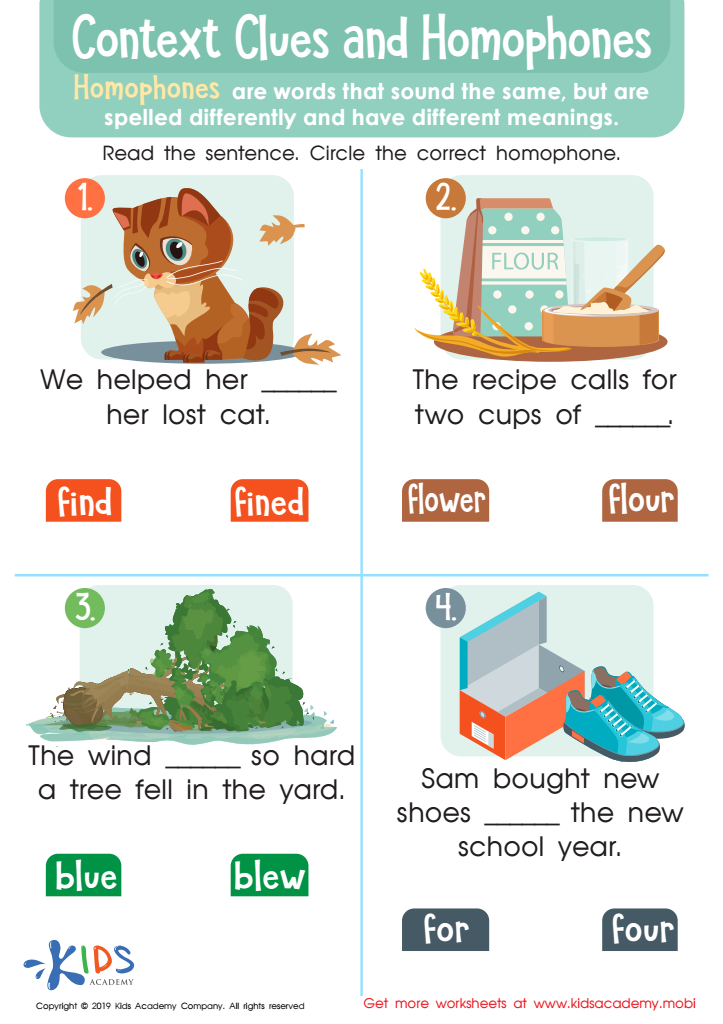
Context Clues and Homophones Worksheet
 Assign to My Students
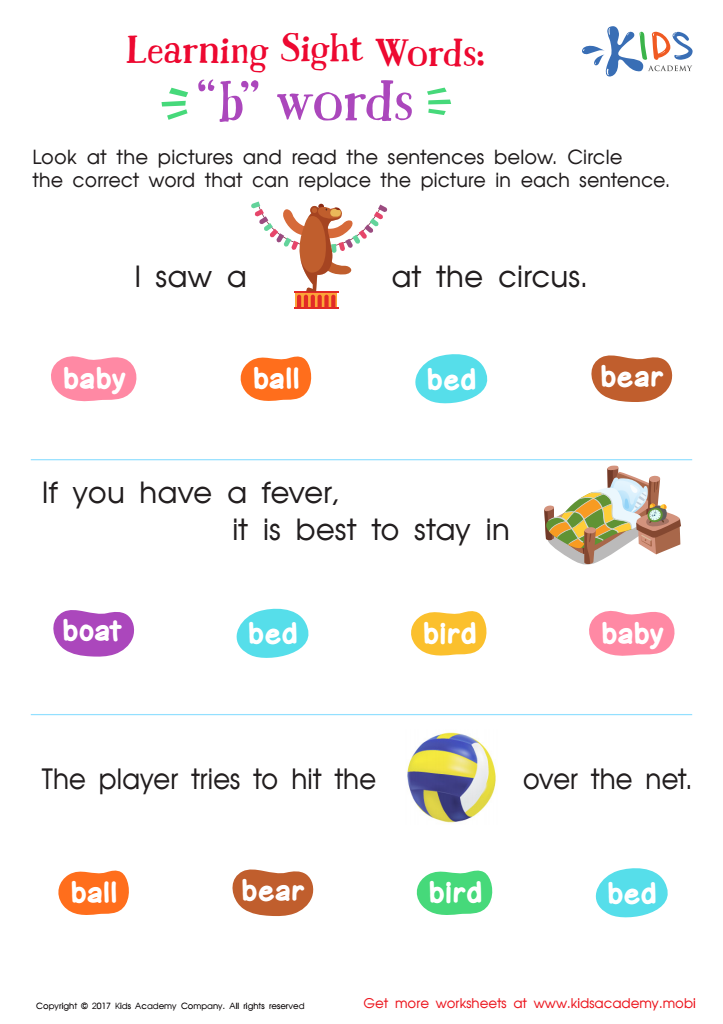
"B" Words Printable Sight Words Worksheet
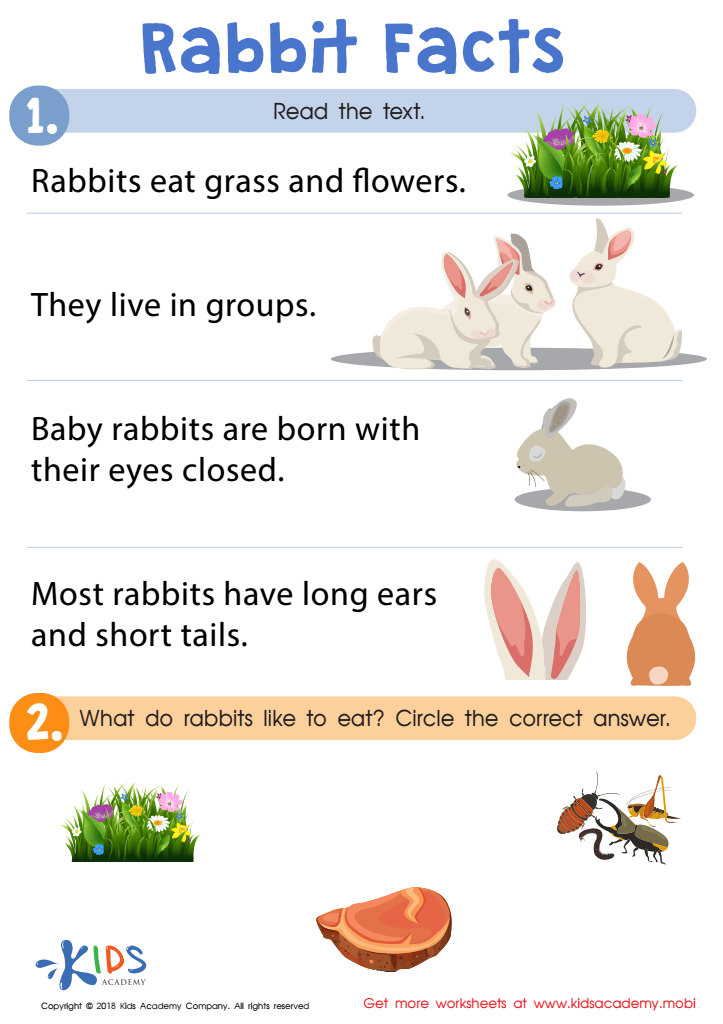
Rabbit Facts Worksheet








Vocabulary expansion in 7-year-olds is crucial for several reasons, making it a priority for both parents and teachers. At this age, children are rapidly developing their language skills, and a rich vocabulary lays the foundation for effective communication. The more words they know, the better they can express their thoughts and feelings, which boosts their self-confidence and fosters meaningful interactions.
Furthermore, vocabulary plays a significant role in reading comprehension. As children encounter new words, they not only grow their knowledge but also enhance their ability to understand and relate to various texts. This connection facilitates a lifelong love for reading, critical for academic success.
Additionally, vocabulary expansion is linked to cognitive development. Engaging with diverse words encourages critical thinking and helps children grasp complex concepts. By exposing them to a variety of language experiences—through storytelling, conversation, and reading—parents and teachers enable children to explore ideas beyond their immediate environment.
Lastly, a strong vocabulary sets the stage for success in future learning and literacy, bridging the gap between elementary education and higher academic pursuits. In sum, investing time in vocabulary development is essential for nurturing well-rounded, confident young learners equipped for success.








