
Vocabulary Building Reading Comprehension Worksheets for 7-Year-Olds
11 filtered results
Difficulty Level
Grade
Age
-
From - To
Subject
Activity
Standards
Boost your 7-year-old's reading skills with our engaging Vocabulary Building Reading Comprehension Worksheets! Designed to enhance language proficiency and comprehension, these worksheets offer fun activities that help kids expand their vocabulary while enjoying captivating stories. Our age-appropriate content encourages critical thinking and improves reading fluency, making learning both enjoyable and effective. Each worksheet features a variety of questions and exercises that challenge young readers, sparking their curiosity and fostering a love for reading. Perfect for classroom use or at-home learning, our resources are tailored to support advancing literacy skills in children. Start your child’s vocabulary journey today!
Favorites
With answer key
Interactive
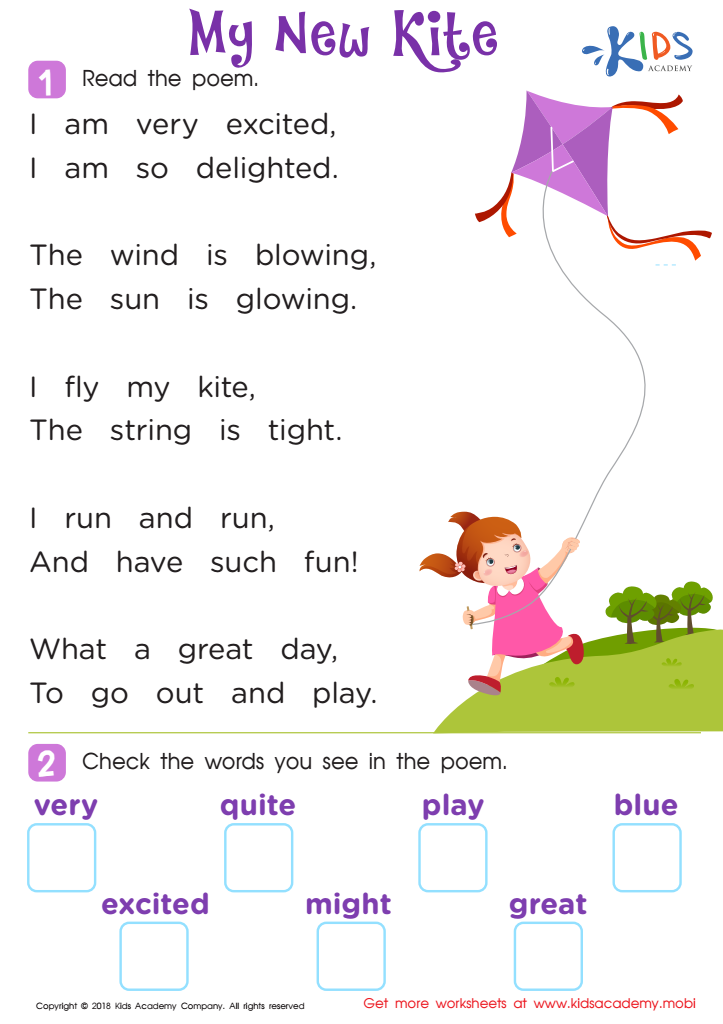
Poem: My New Kite Worksheet
Read a cheerful poem with your child and have them check the boxes next to the words that appear. Then, ask them to identify rhyming words, noting that these won't appear at the bottom of the page. This is a delightful reading activity to help your child remember what they read.
 Assign to My Students
Poem: My New Kite Worksheet
Worksheet
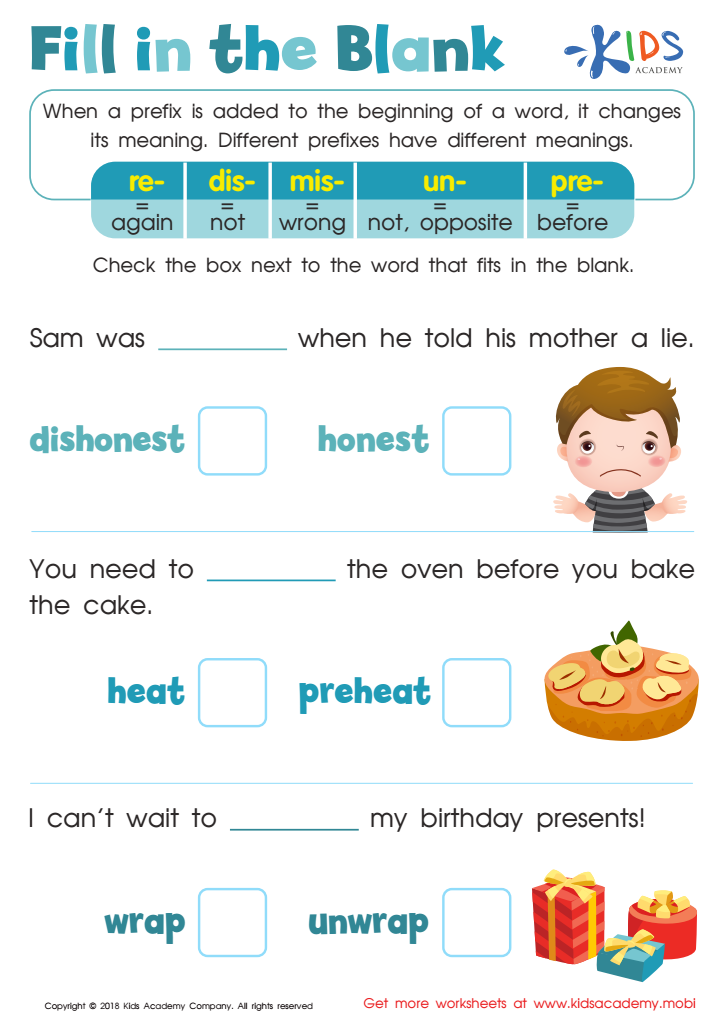
Reading: Fill in the Blank Worksheet
Students can practice understanding the meaning of common prefixes with this worksheet. They read sentences and pick the correct word with the appropriate prefix to complete it. Downloadable and a great addition to reading and vocabulary resources, this helps improve comprehension with mastery of the skill!
Reading: Fill in the Blank Worksheet
Worksheet
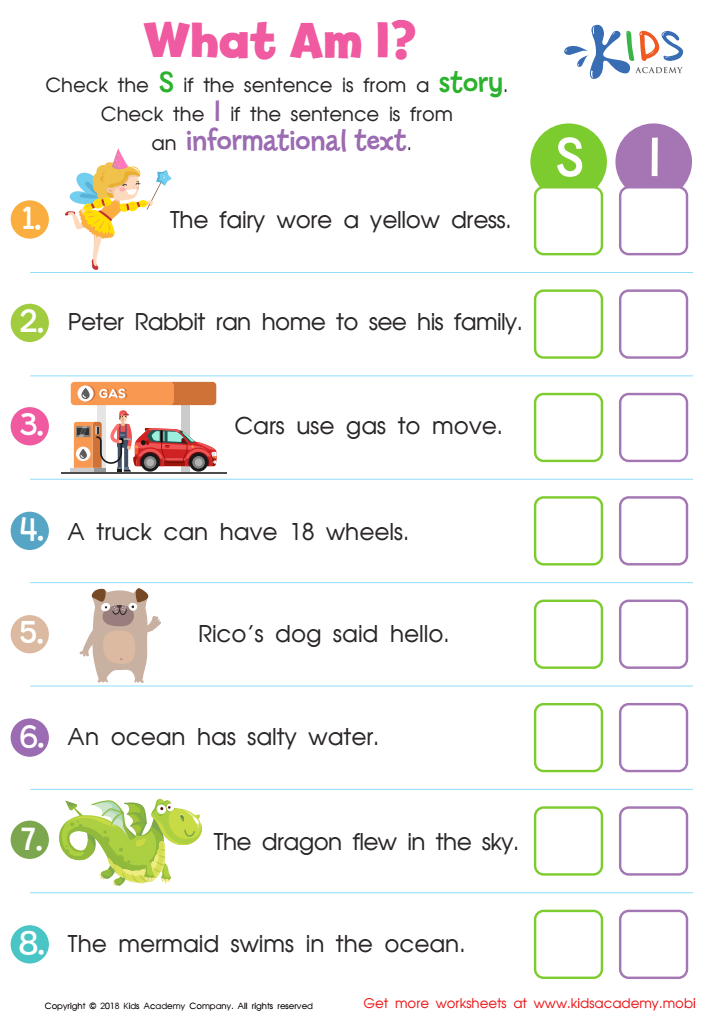
What Am I? Worksheet
This worksheet assesses students' ability to differentiate between stories and texts they read for facts. Students learn to distinguish between reading for pleasure and reading for information. It includes statements from both a story and an informational text, and students must decide what type of text it is.
What Am I? Worksheet
Worksheet
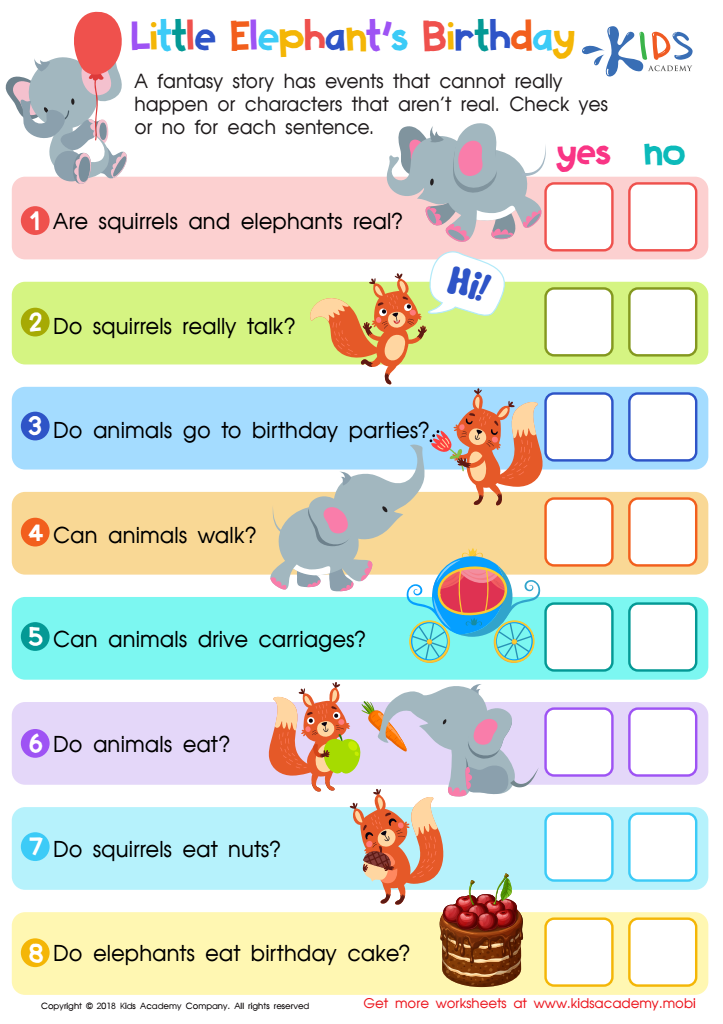
Little Elephant's Birthday Worksheet
It's Little Elephant's birthday! Help your students celebrate with this fun worksheet full of colors and pictures. Deciding which questions are facts and which are fiction will help them differentiate between fantasy stories and reality. Let them have fun learning why certain elements of fantasy can't be true!
Little Elephant's Birthday Worksheet
Worksheet
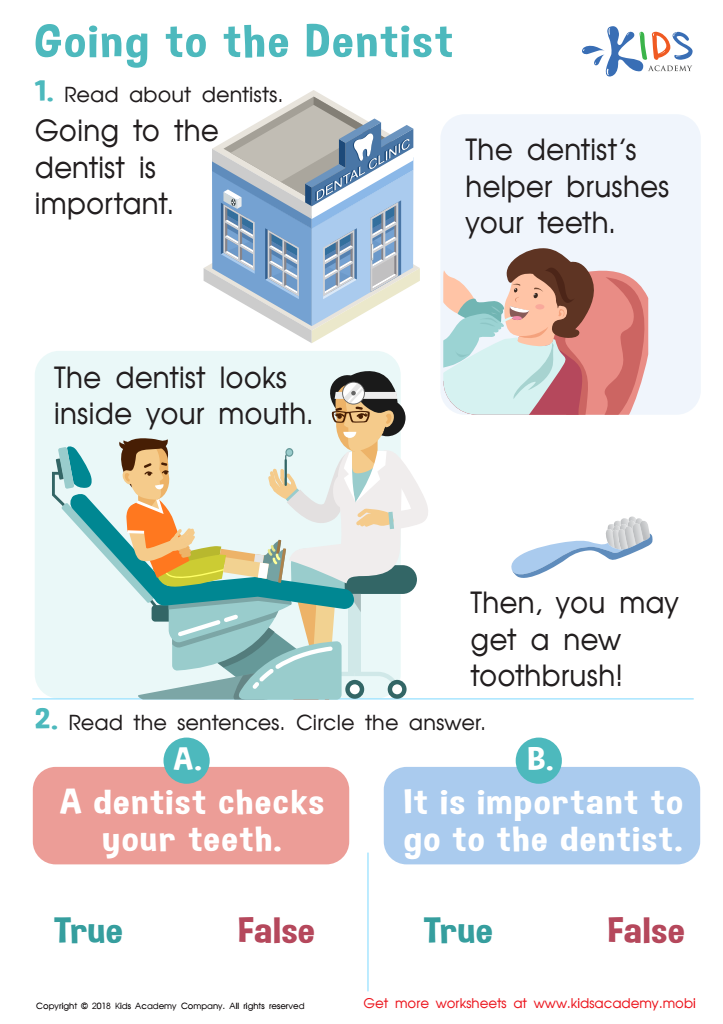
Going to the Dentist Part 2 Worksheet
Visiting the dentist can be nerve-wracking for children. This informative PDF will not only explain what the dentist does, but also use pictures to assure children. They'll learn why seeing the dentist is important and be able to verify their understanding through true/false questions.
Going to the Dentist Part 2 Worksheet
Worksheet
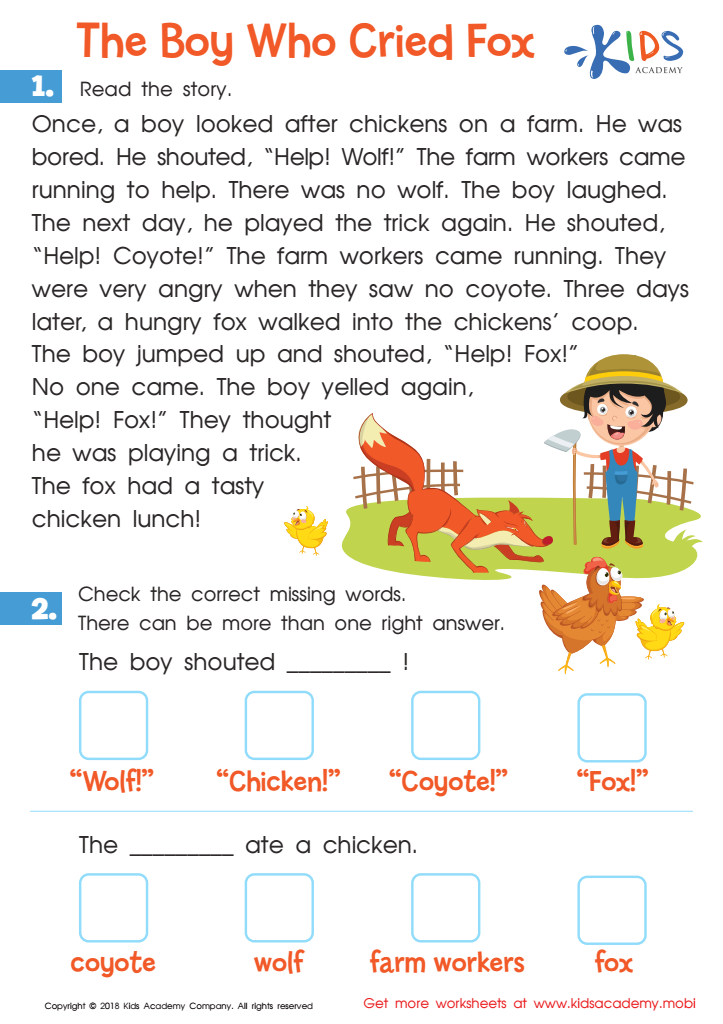
The Boy Who Cried Fox Worksheet
This worksheet encourages students to recall details from a story and answer questions to test their comprehension. Perfect for reading lessons, enrichment, or extra help.
The Boy Who Cried Fox Worksheet
Worksheet
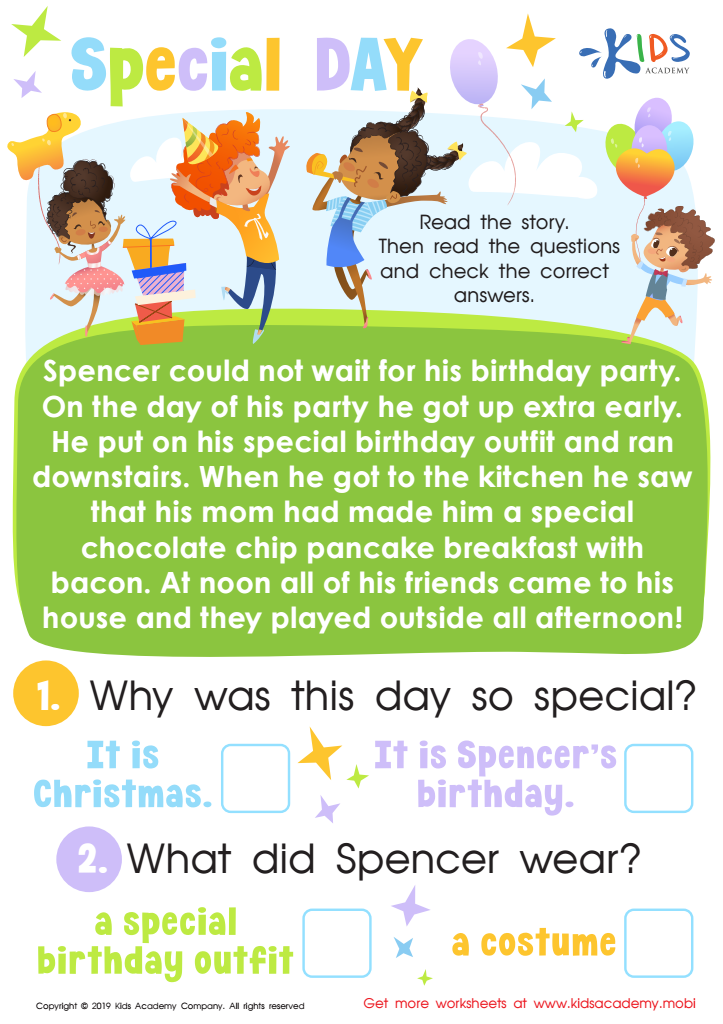
Special Day Worksheet
What's your child's favorite day? Let them tell you what makes it special and what they enjoy most. With the worksheet, show them the picture and ask them to identify the day. Read the story aloud, and help them answer the questions and check the right responses.
Special Day Worksheet
Worksheet
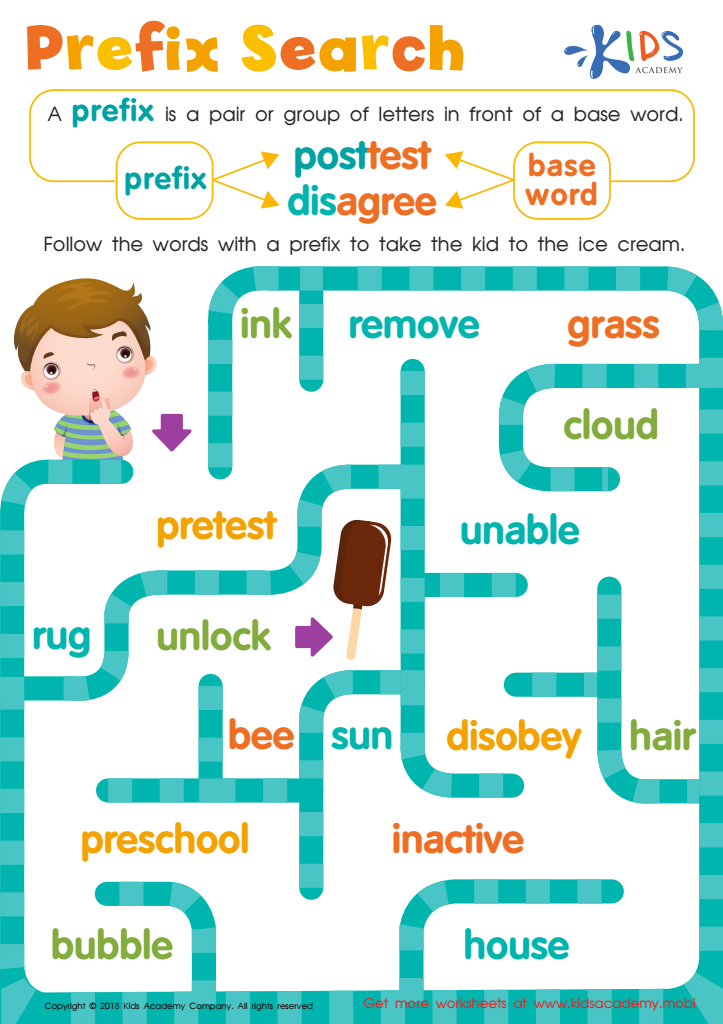
Reading: Prefix Search Worksheet
Maze your way through prefixes! This worksheet helps students practice reading new words with a prefix and figuring out the base word. An understanding of prefixes gives students the skills to comprehend new words. A fun and useful activity for the reading classroom!
Reading: Prefix Search Worksheet
Worksheet
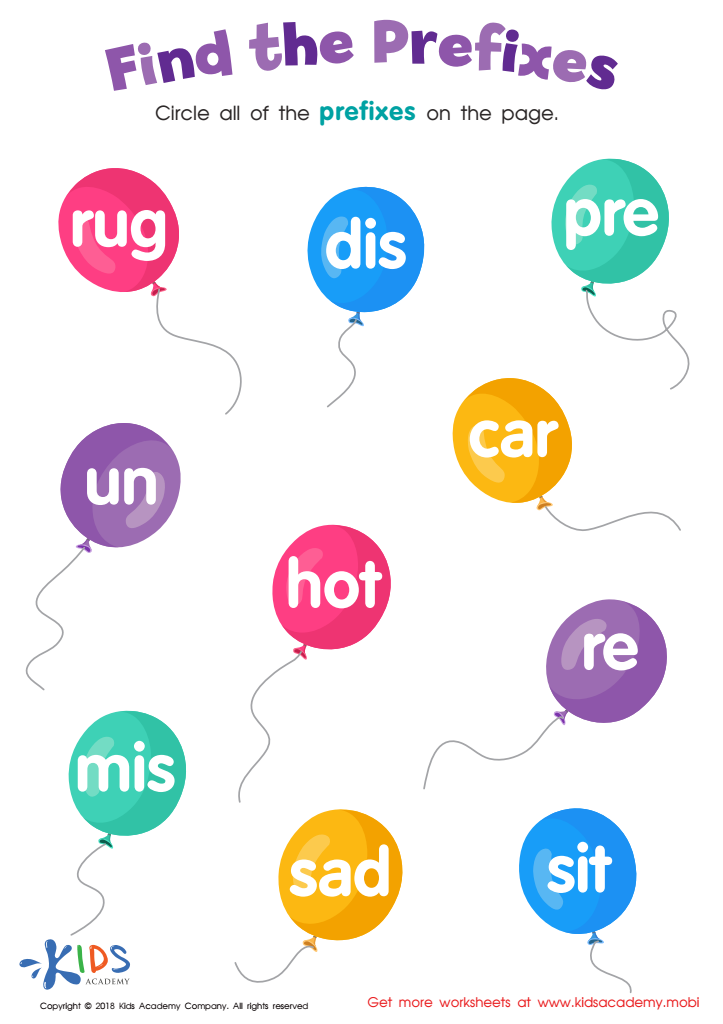
Reading: Find the Prefixes Worksheet
Students are asked to circle all prefixes on this worksheet and brainstorm a list of words that have them. It's a great tool for teaching vocabulary and helps students understand new and unfamiliar words by recognizing how prefixes change meaning.
Reading: Find the Prefixes Worksheet
Worksheet
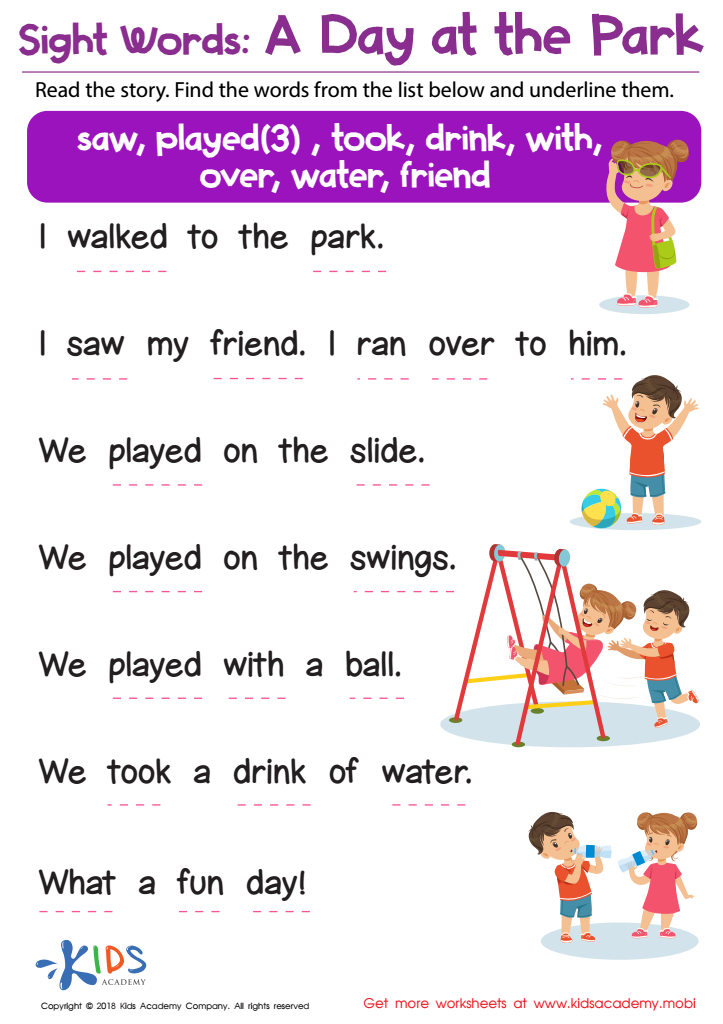
Sight Words: A Day at the Park Worksheet
This worksheet offers kids practice reading sight words in a story. With picture clues and repetitive wording, they'll work with words that can't be sounded out to reinforce their learning. This is an important step in the reading process that helps kids become more confident readers.
Sight Words: A Day at the Park Worksheet
Worksheet
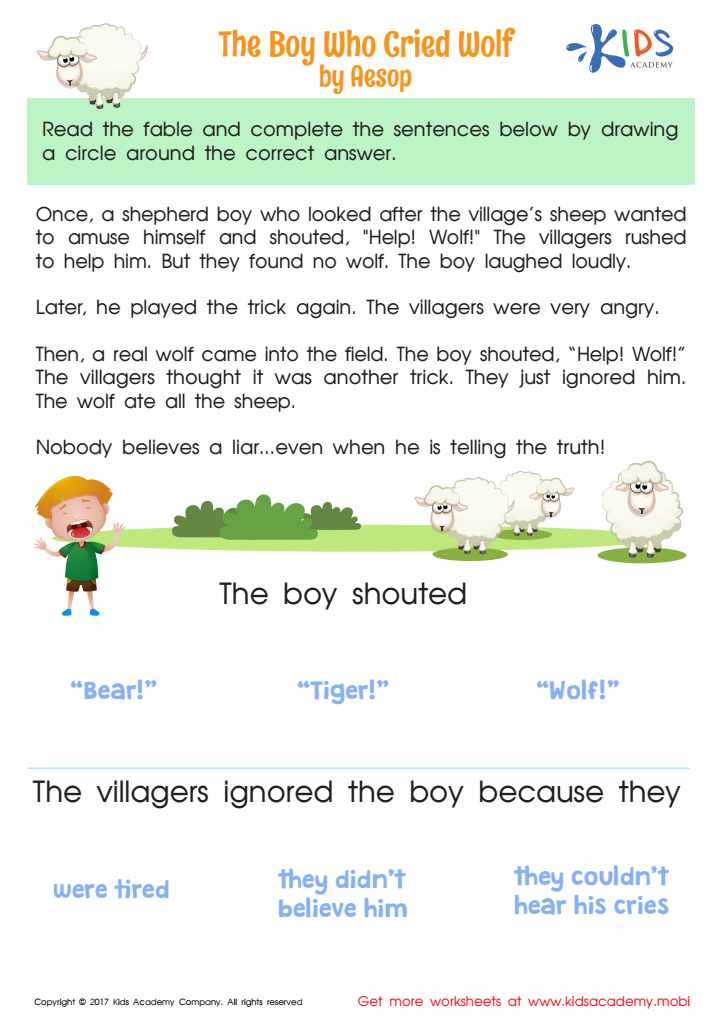
The Boy Who Cried Wolf Worksheet
Test your child's reading comprehension with The Boy Who Cried Wolf worksheet. Read the fable, then answer the questions. Use the text to help your child check their answers are correct. Boost reading skills in a fun, interactive way!
The Boy Who Cried Wolf Worksheet
Worksheet
Join Kids Academy for Free
Who is primarily going to use this learning content?








Parents and teachers should prioritize vocabulary building and reading comprehension for 7-year-olds because these skills lay the foundation for academic success and lifelong learning. At this age, children are transitioning from learning to read to reading to learn, which makes understanding vocabulary crucial. A robust vocabulary enables children to express their thoughts clearly and comprehend complex ideas in their reading materials.
Effective vocabulary development enhances a child’s ability to decode and recognize words, leading to improved reading fluency. This makes reading a more enjoyable and engaging experience, fostering a love for literature. Furthermore, strong comprehension skills are essential for critical thinking, as they help children analyze and draw conclusions from texts, abilities that are invaluable in higher educational pursuits and day-to-day decision-making.
Moreover, children with a rich vocabulary tend to excel in standardized testing, often correlating with higher academic achievement down the line. Additionally, emphasizing these skills at home or in the classroom cultivates social and emotional intelligence, as children learn to navigate conversations and express their needs more effectively. Overall, investing time and effort into vocabulary and comprehension not only supports academic growth but also equips children with the communication skills necessary for success in all areas of life.








