Word Recognition Reading Comprehension Worksheets for 7-Year-Olds
5 filtered results
-
From - To
Enhance your 7-year-old's reading skills with our engaging Word Recognition Reading Comprehension Worksheets! Designed to improve vocabulary and comprehension, these worksheets provide fun activities tailored for young learners. They help kids identify essential words in various contexts, boosting both their confidence and fluency. Explore a variety of exercises, including matching words with images, filling in the blanks, and reading short passages followed by questions. These interactive resources make learning enjoyable while fostering a love for reading. Perfect for use at home or in the classroom, our worksheets are an excellent way to support your child's education and literacy development.
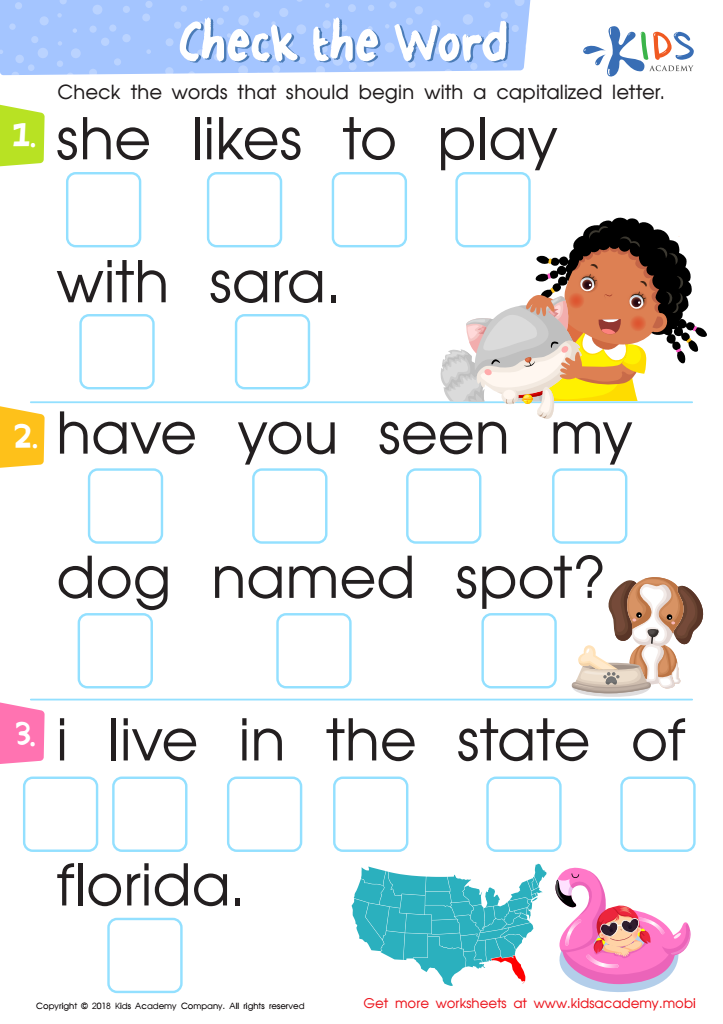
Check the Word Worksheet
 Assign to My Students
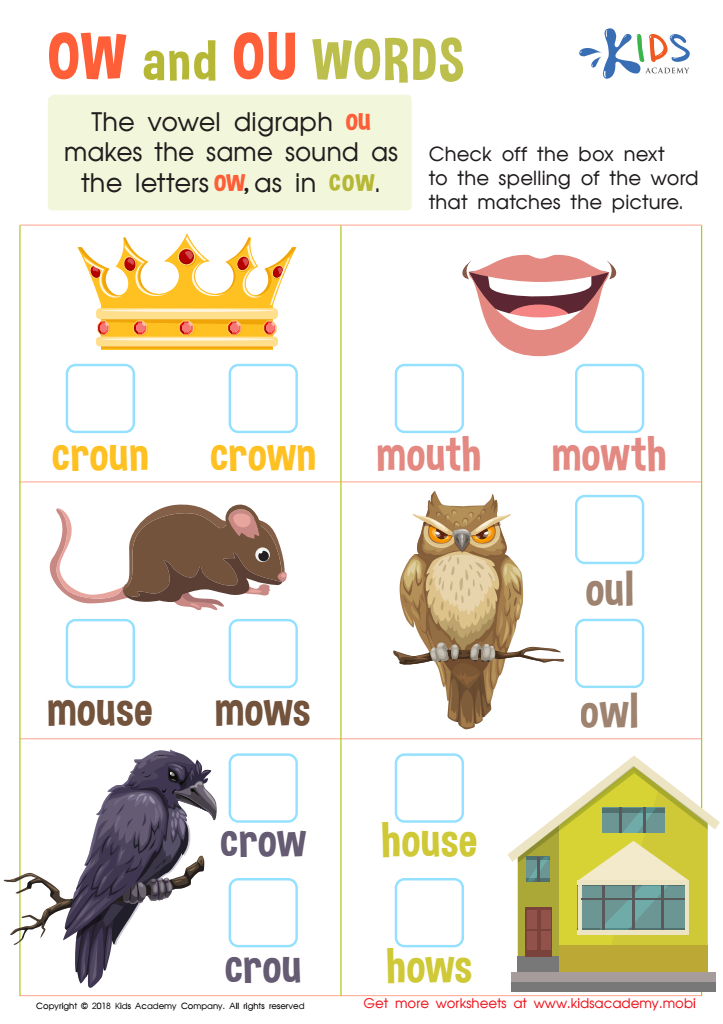
Reading: OW and OU Words Worksheet
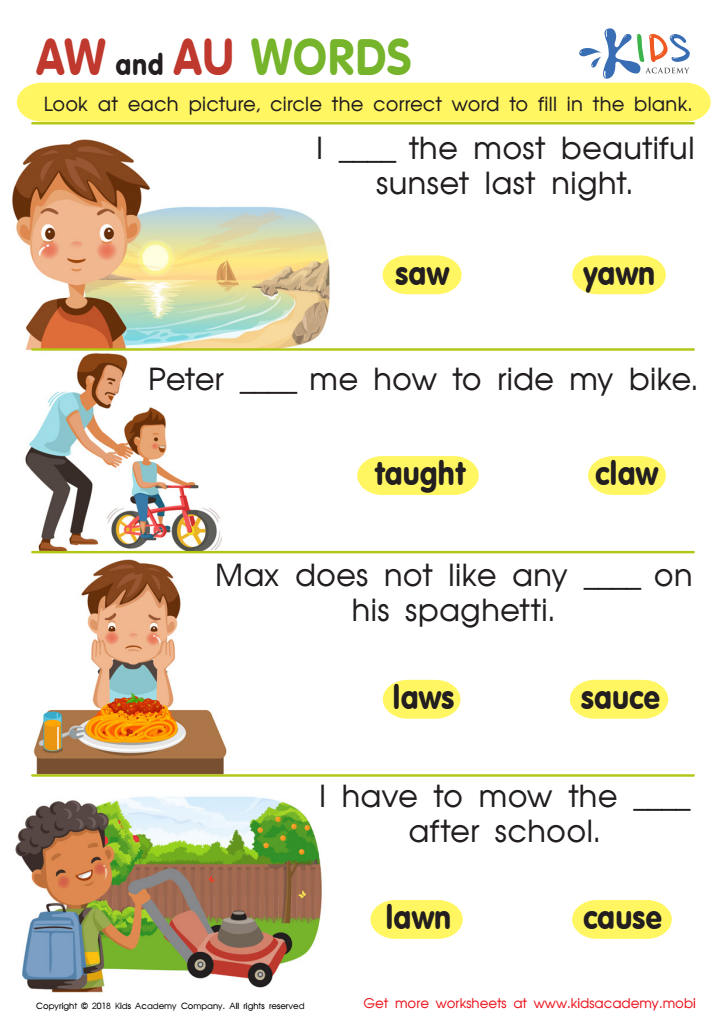
Reading: AW and AU Words Worksheet
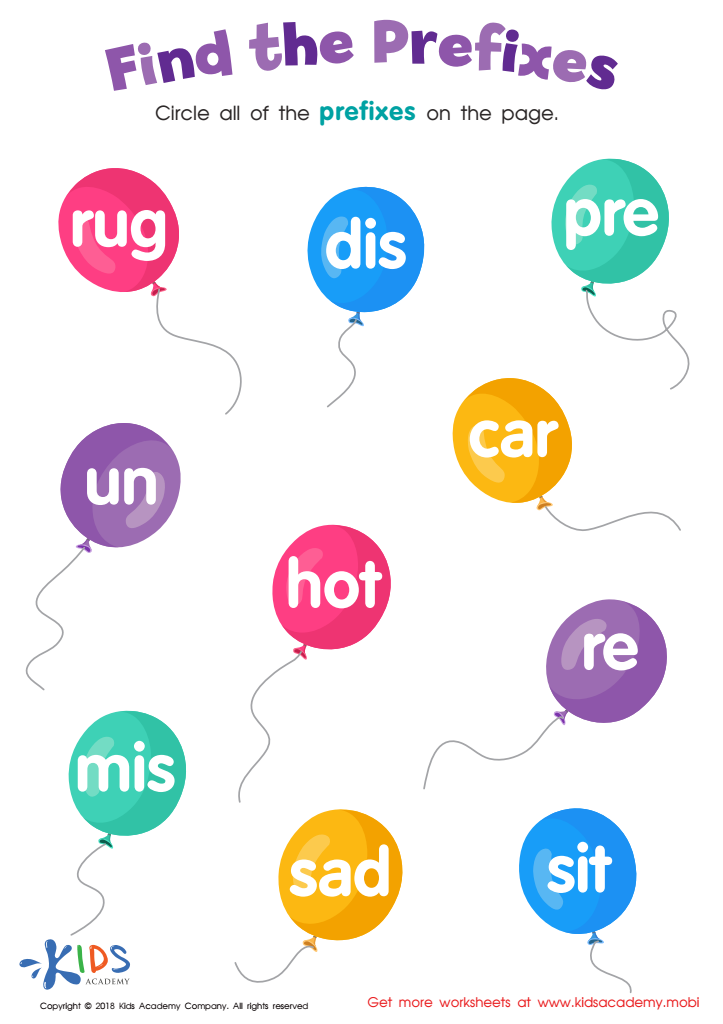
Reading: Find the Prefixes Worksheet
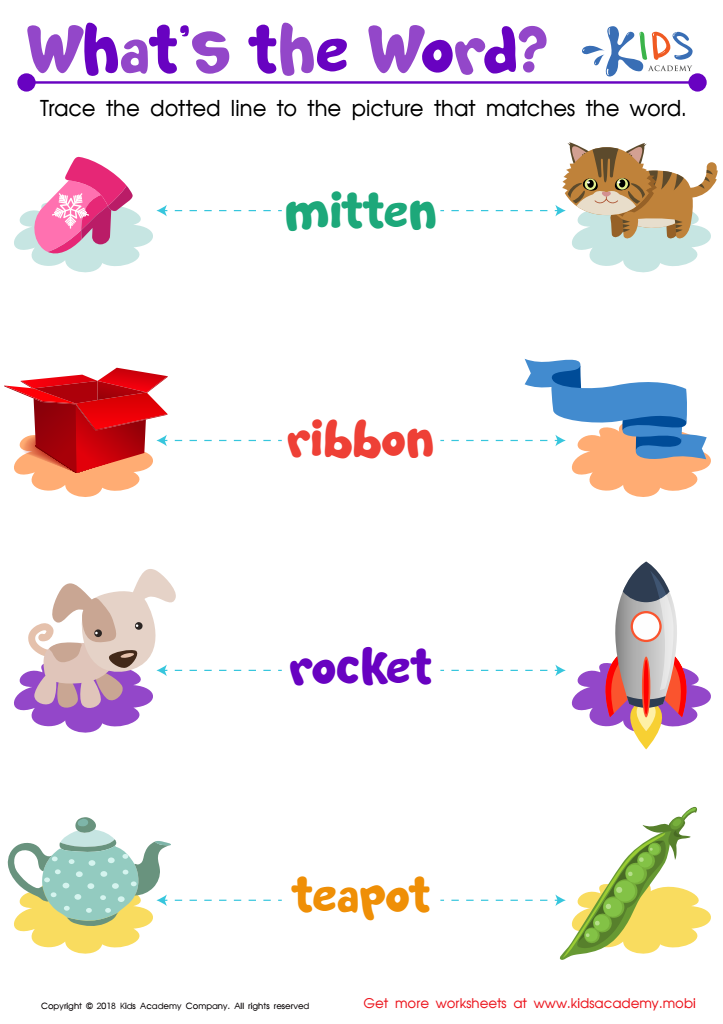
Reading: What's Word Worksheet



.jpg)




Word recognition and reading comprehension are crucial for the literacy development of 7-year-olds, laying the foundation for their academic success and lifelong learning. At this age, children are transitioning from learning to read to reading to learn. Effective word recognition allows them to quickly identify words, leading to improved fluency and overall reading enjoyment.
Understanding texts is equally vital. When children comprehend what they read, they can engage with stories, answer questions, and connect ideas, promoting critical thinking and curiosity. Comprehension skills also enhance vocabulary, as children learn new words in context, enriching their language development.
Parents and teachers play a pivotal role in fostering these skills. By providing a rich reading environment filled with diverse texts and by engaging children in discussions about their reading, they can support development in both areas. Reading comprehension strategies, such as making predictions or summarizing, should be taught and practiced regularly.
Ultimately, prioritizing word recognition and reading comprehension in early education cultivates confident and proficient readers. This not only positions children for success in school but also instills a lifelong love of reading, allowing them to explore fascinating worlds, ideas, and concepts throughout their lives.








