
Understanding life cycles Science Worksheets for 7-Year-Olds
8 filtered results
Difficulty Level
Grade
Age
-
From - To
Subject
Activity
Standards
Introducing our "Understanding Life Cycles" science worksheets, specifically designed for curious 7-year-olds! These engaging printables guide young learners through the fascinating world of life cycles, from plants and insects to animals and humans. Through hands-on activities, colorful illustrations, and easy-to-follow instructions, children will gain a solid understanding of growth, development, and the natural progression of life forms. Perfect for both classroom and home learning, these worksheets not only build essential science skills but also inspire a love for nature and biological processes. Kickstart your child's scientific journey with our fun and educational life cycle worksheets!
Favorites
With answer key
Interactive
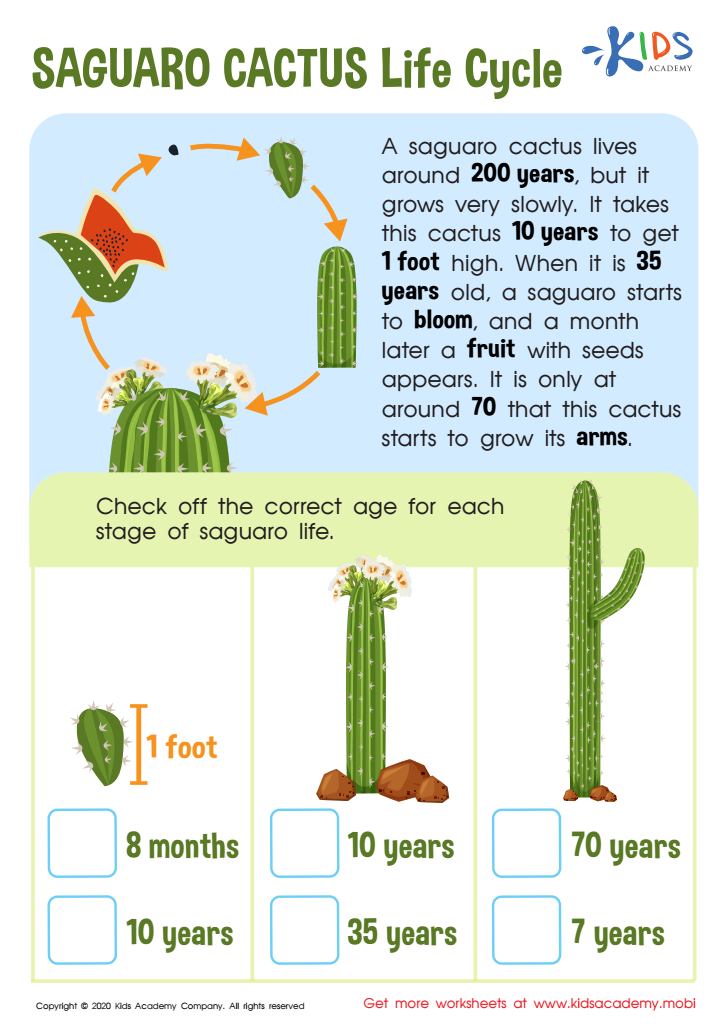
Saguaro Cactus Life Cycle Worksheet
Teach your child about the saguaro cactus, which takes 35 years to bloom and can live up to twice the lifespan of a human! Print this free PDF worksheet to engage learners with an interesting passage. Check off the correct answers to reflect their learning!
 Assign to My Students
Saguaro Cactus Life Cycle Worksheet
Worksheet
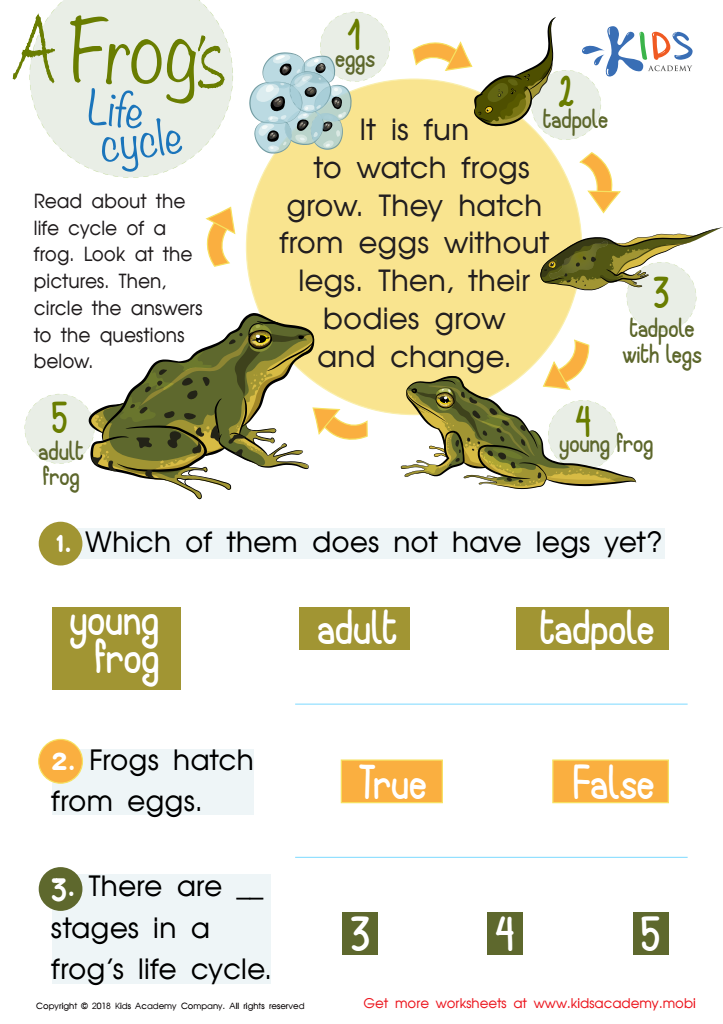
A Frog’s Life Cycle Worksheet
Encourage your kids to learn about frogs! Ask them to tell you some features, then read and discuss the text that explains the frog's life cycle. Show them the pictures to help them visualize it. Finish by helping them answer the questions at the bottom of the worksheet.
A Frog’s Life Cycle Worksheet
Worksheet
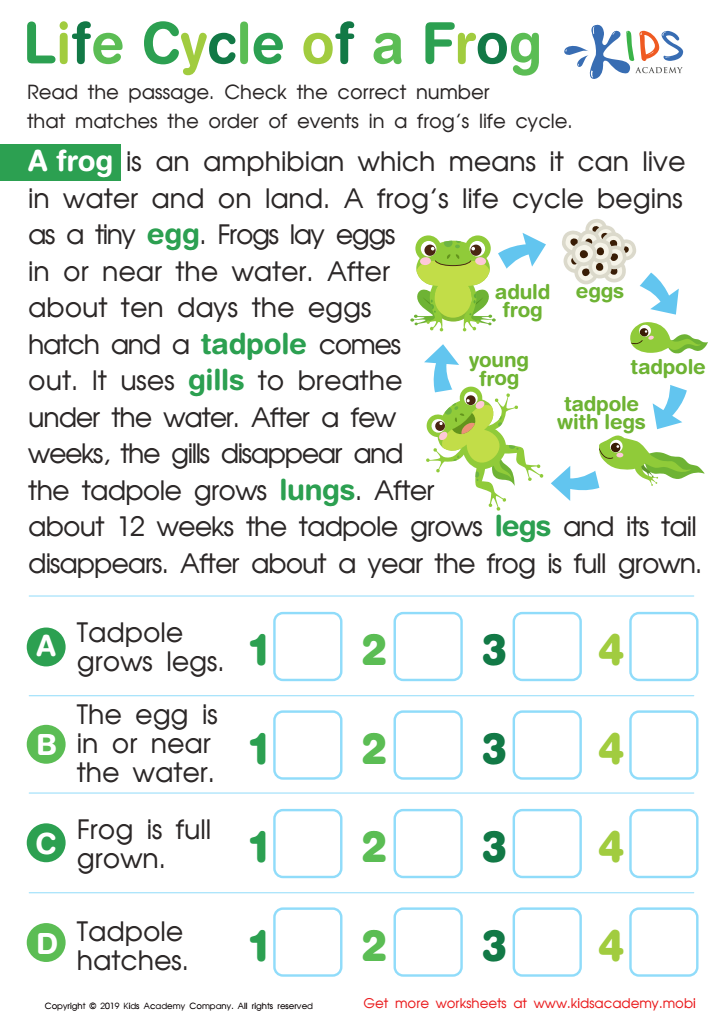
Life Cycle of a Frog Worksheet
Teach your kids to read and open their eyes to new knowledge. Frogs have fascinating life cycles. Show them the worksheet with pictures and guide them as they read the passage about it. Encourage them to check the number that matches the frog's life cycle order.
Life Cycle of a Frog Worksheet
Worksheet
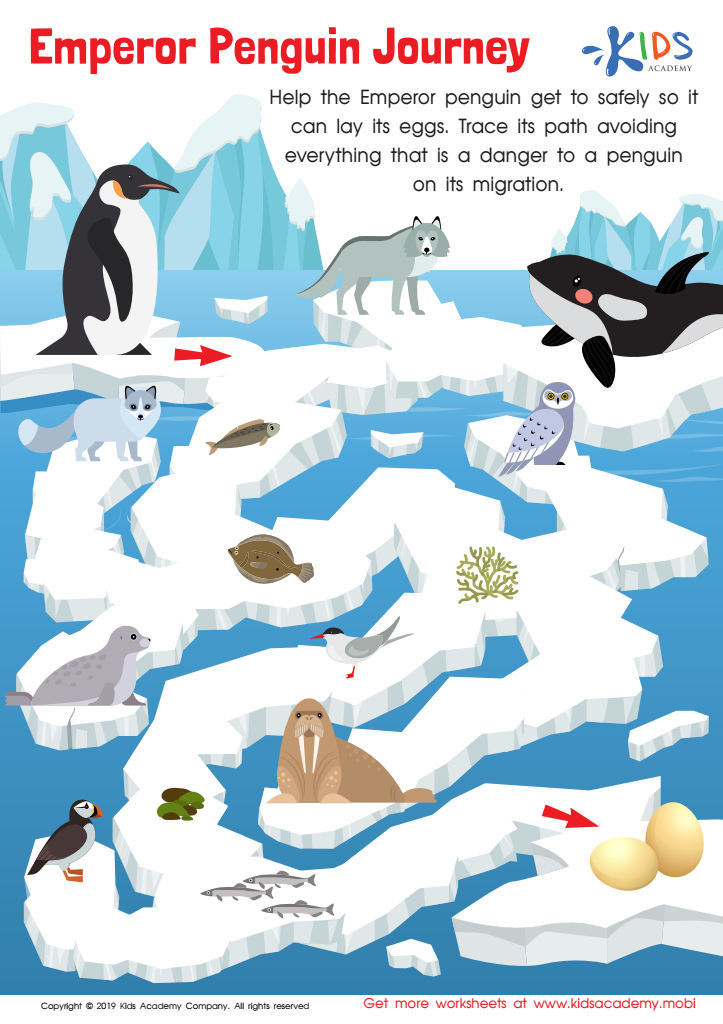
Emperor Penguin Journey Worksheet
Kids love learning about animal habitats! This bright worksheet on Emperor Penguins is a fun way for your child to explore the risks of migration. Download the free PDF and help the penguin make its way through the maze and to its eggs - all while stimulating fine motor skills. Kids will have a blast helping the Emperor Penguin waddle to safety!
Emperor Penguin Journey Worksheet
Worksheet
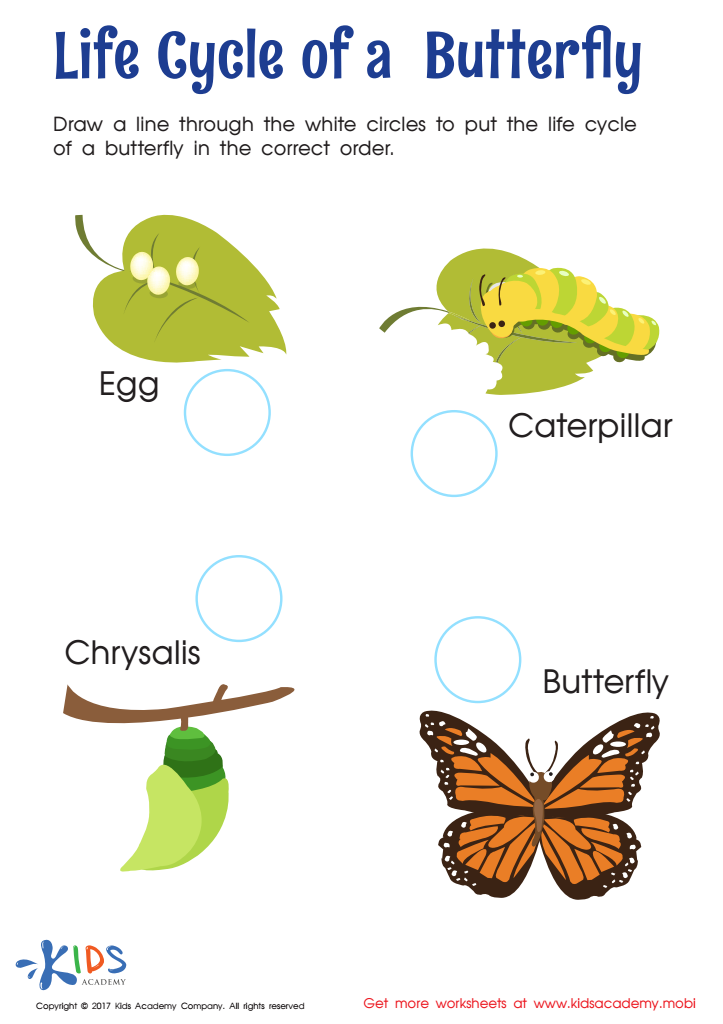
Life Cycle of Butterfly Worksheet
Kids Academy offers an exciting activity – a Life Cycle of a Butterfly Worksheet PDF. It shows four stages in the lifecycle of a butterfly with vivid pictures. Kids put the stages in the correct order to study the lifecycle.
Life Cycle of Butterfly Worksheet
Worksheet
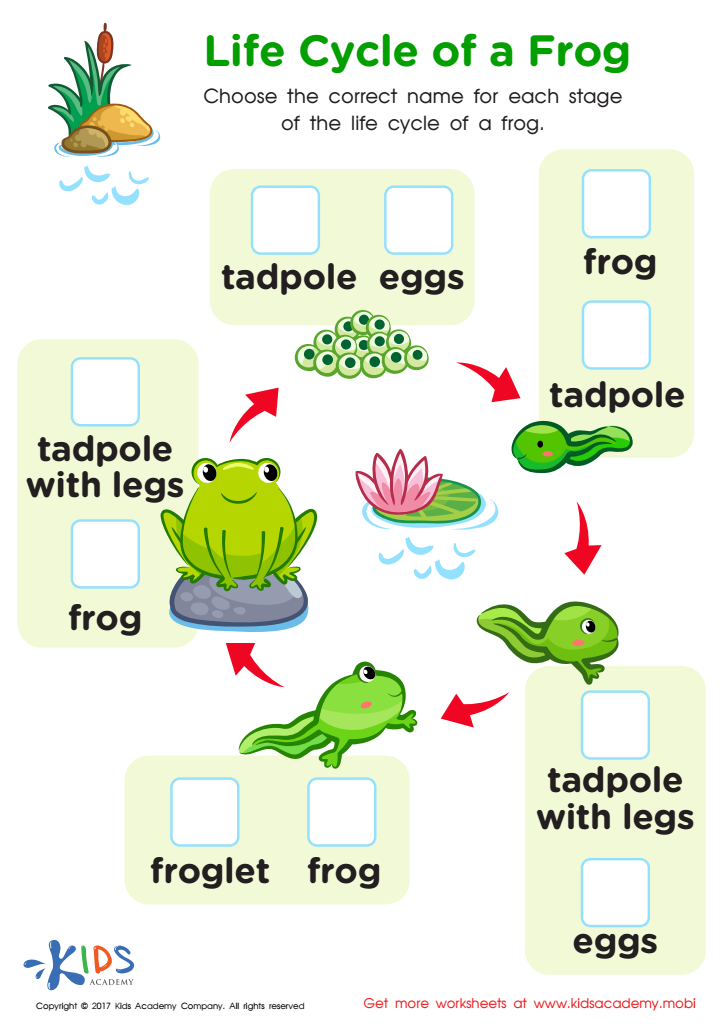
Life Cycle Frog Printable
Kids can explore the life cycle of frog with this fun worksheet! Draw lines from one stage to the next to follow the transformation from tadpole to frog and learn about the cycle of life.
Life Cycle Frog Printable
Worksheet
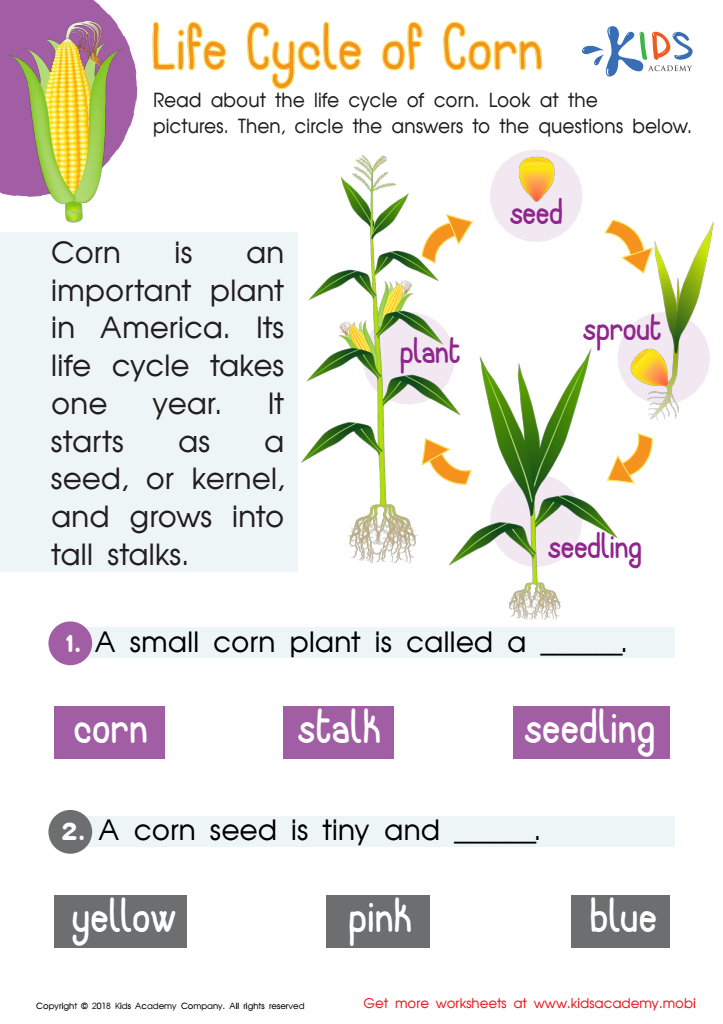
Life Cycle of Corn Worksheet
Help your kids learn about corn! Ask them what foods it's used to make. Read this worksheet and look at the pictures to learn the life cycle of corn. Then, have them circle the answers to the questions at the bottom. Corn is an important crop for farmers, used to make many foods we eat today.
Life Cycle of Corn Worksheet
Worksheet
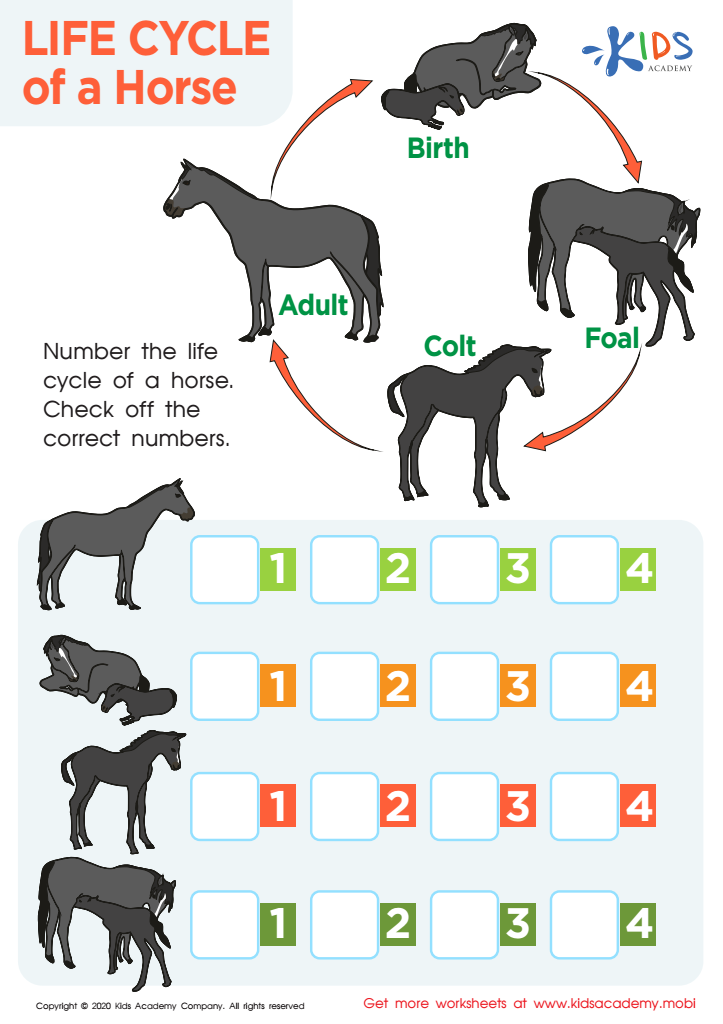
Life Cycle of a Horse Worksheet
Kids Academy's science worksheet on horses' lifecycles offers an engaging way for kids to learn! They'll study the diagram and label each stage of life, from birth to adulthood, and then number the pictures to mark the correct sequence. Fun and educational - a perfect way to get your kids learning!
Life Cycle of a Horse Worksheet
Worksheet
Join Kids Academy for Free
Who is primarily going to use this learning content?







Understanding life cycles is fundamental for 7-year-olds as it lays the groundwork for a broader comprehension of the world. Life cycles demonstrate the continuity and change in living organisms, which can profoundly shape a child's sense of order in nature. For parents and teachers, nurturing this knowledge can foster curiosity and respect for living things. It aids children in making connections between different stages of life, such as knowing how a tadpole transforms into a frog or a seed into a plant. These lessons extend beyond biology; they instill critical thinking and observation skills.
Moreover, comprehending life cycles introduces key scientific concepts, including growth, reproduction, and adaptation. These ideas become building blocks for more complex subjects. This understanding can spark an early interest in science, fostering a lifelong passion for learning. Real-world connections, such as gardening or observing local wildlife, also provide hands-on experiences that make learning tangible and engaging.
Lastly, teaching life cycles helps children appreciate the interconnectedness of ecosystems and the importance of environmental conservation. By learning that every stage of life has its role and significance, young minds can develop empathy and a sense of responsibility toward nature, which is vital in our efforts to nurture environmentally conscious future generations.







