Observational skills Our Planet and Environment Worksheets for 7-Year-Olds
6 filtered results
-
From - To
Enhance your child's observational skills with our engaging "Our Planet and Environment Worksheets" designed specifically for 7-year-olds. These interactive worksheets are perfect for fostering curiosity about the world around them! Through fun activities, children will practice keen observation, improving their ability to notice details in nature and understand environmental concepts. Each worksheet supports hands-on learning, encouraging kids to explore their surroundings thoughtfully while building a strong foundation in science. Watch as your young learner develops critical thinking skills and a deeper appreciation for our planet. Download now for exciting and educational content that makes learning about the environment enjoyable!
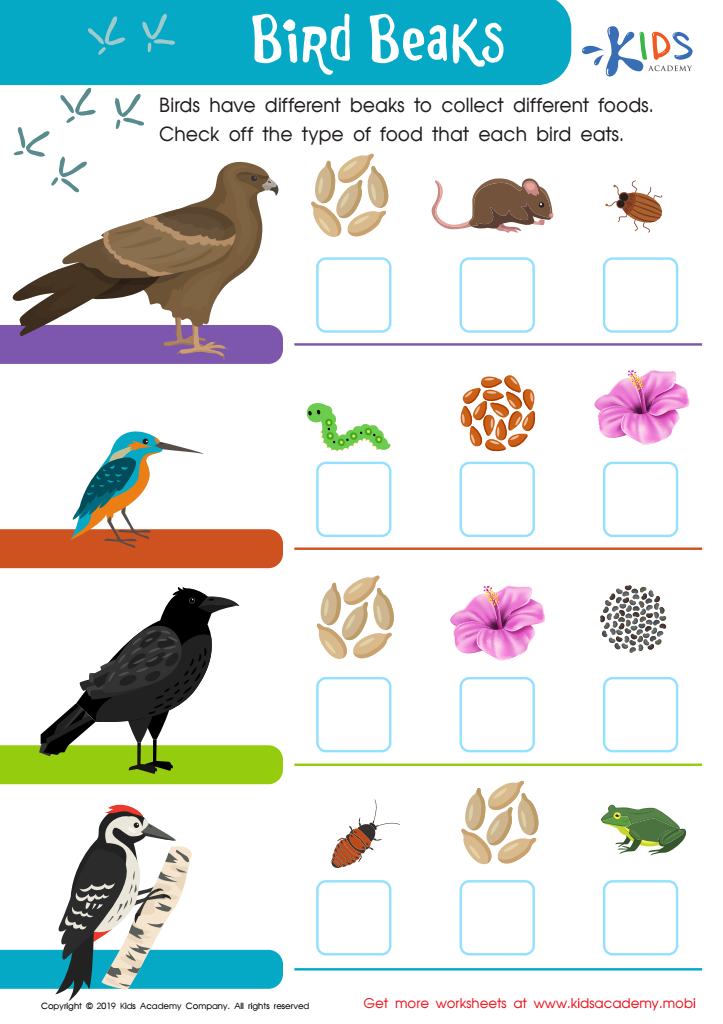
Bird Beaks Worksheet
 Assign to My Students
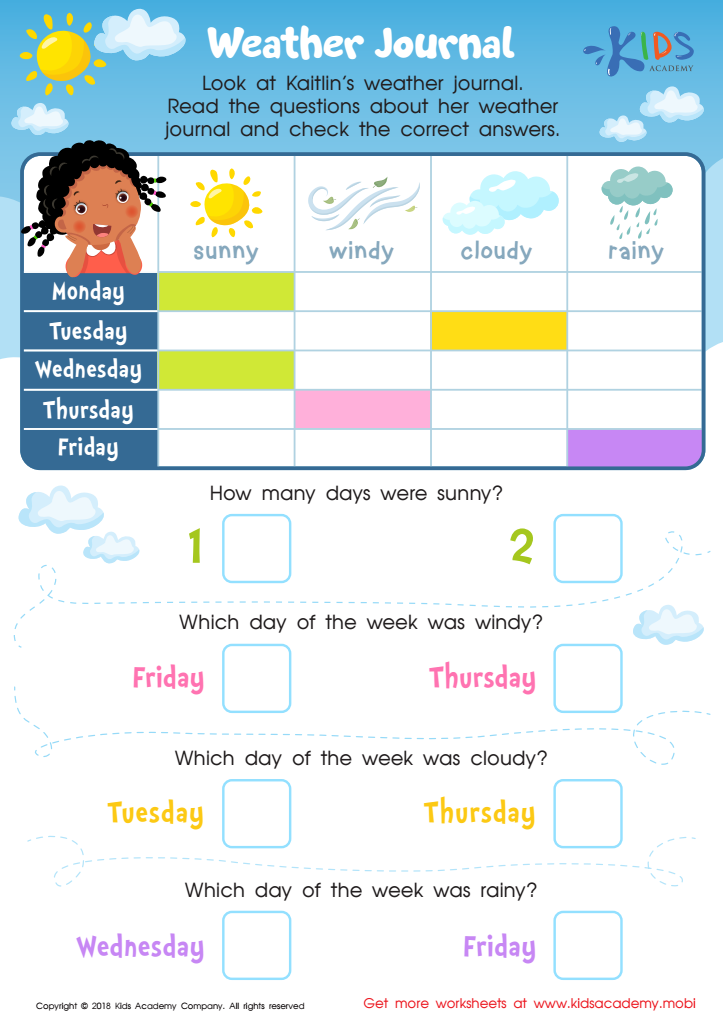
Weather Journal Worksheet
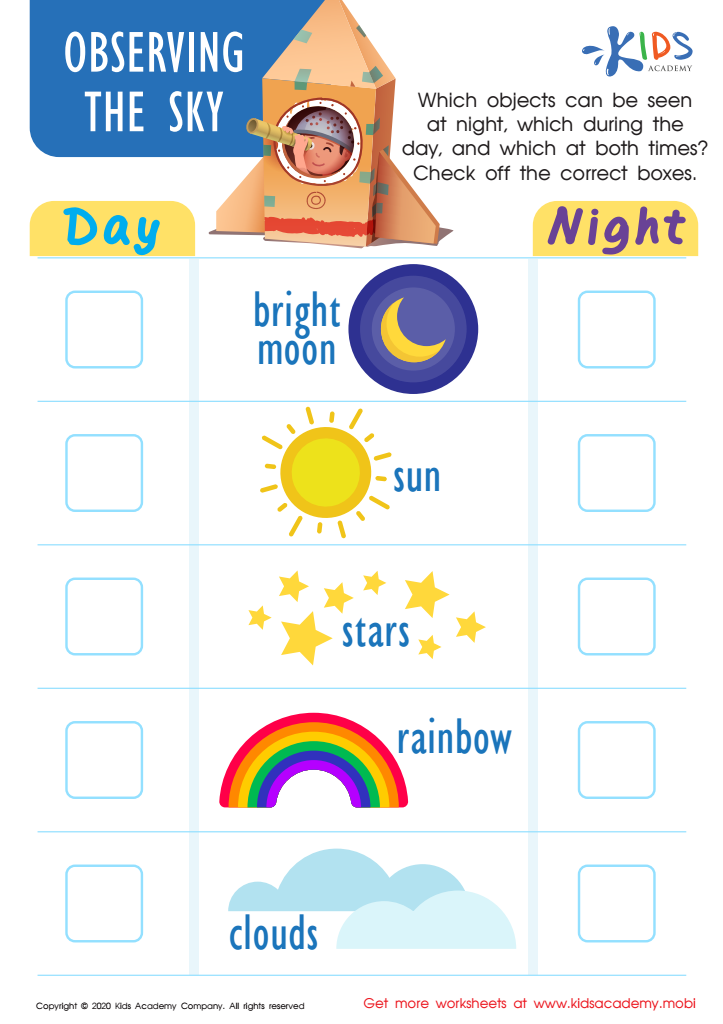
Observing the Sky Worksheet
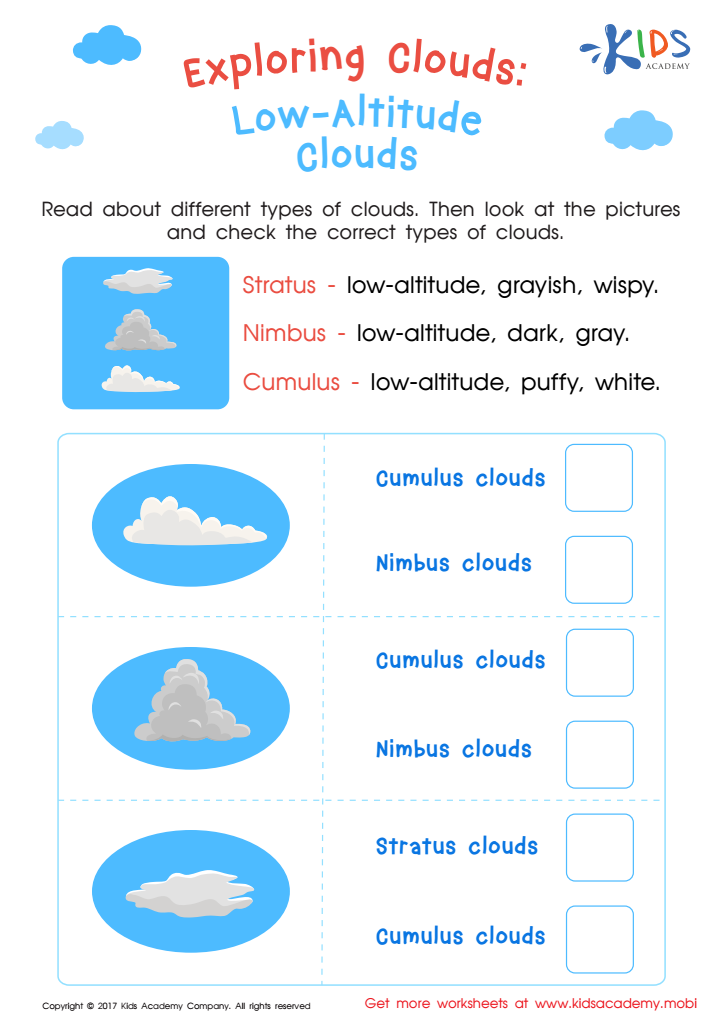
Exploring Clouds: Low Altitude Clouds Printable
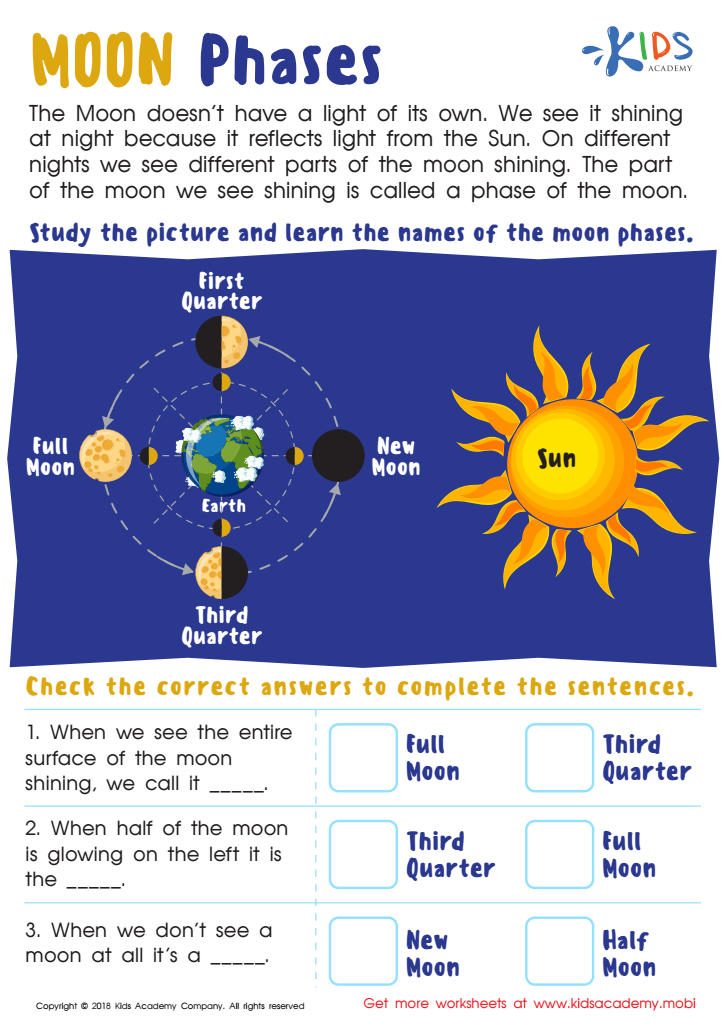
Moon Phases Worksheet
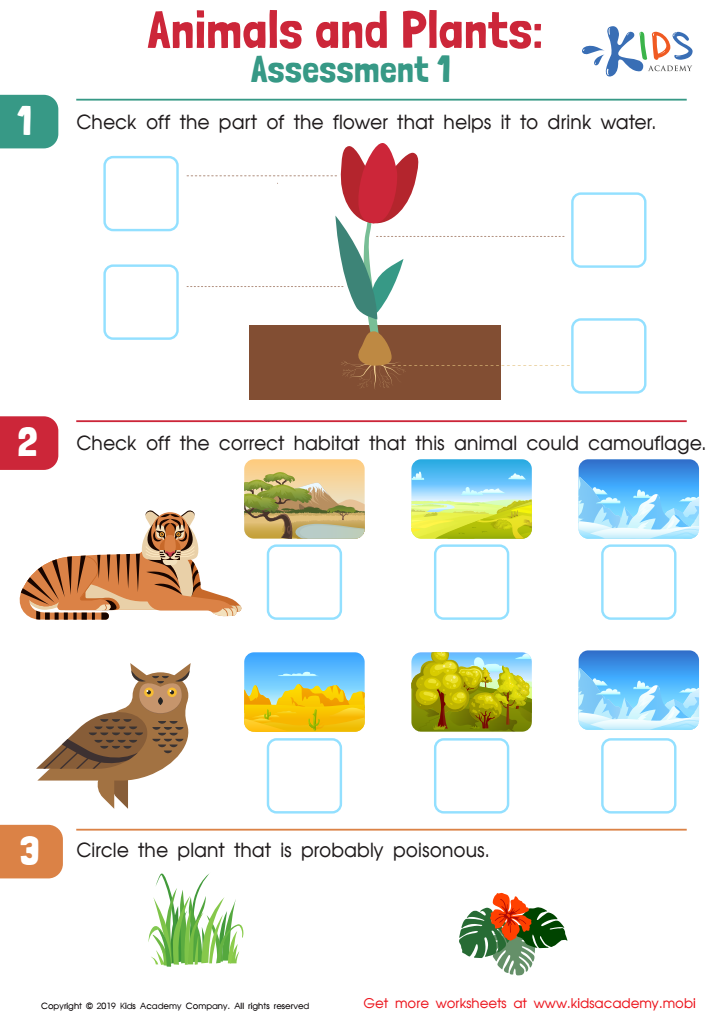
Animals and Plants: Assessment 1 Worksheet





Observational skills are crucial for 7-year-olds as they help them engage with and understand their environment. For parents and teachers, cultivating these skills fosters curiosity about our planet and promotes environmental awareness early on. When children learn to observe details in nature—such as the changing seasons, the diversity of plants and animals, and weather patterns—they develop a deeper appreciation for the world around them.
Enhancing observational skills encourages critical thinking, allowing children to ask questions, make predictions, and draw connections between concepts. This active engagement not only strengthens their cognitive abilities but also instills a sense of responsibility towards the environment. Furthermore, in an age dominated by technology, encouraging outdoor exploration is vital for the holistic development of children.
This hands-on approach to learning inspires empathy towards wildlife, highlights the importance of conservation, and motivates kids to become stewards of the earth. Involving parents and teachers in nurturing these skills ensures a comprehensive support system, helping children learn to recognize challenges facing our environment and instilling values that promote sustainability. As influential figures in a child’s life, fostering observational skills provides the foundational knowledge they need to shape a brighter, eco-conscious future.







