Observational skills Physical Science Worksheets for 7-Year-Olds
3 filtered results
-
From - To
Enhance your 7-year-old's learning experience with our engaging Observational Skills Physical Science Worksheets! Designed to spark curiosity and foster critical thinking, these worksheets promote essential observational techniques through hands-on activities and real-world examples. Young learners will explore the physical properties of various materials, improve their attention to detail, and develop their ability to describe and categorize objects. Our expertly crafted resources ensure that children enjoy learning while building a strong foundation in scientific inquiry. Perfect for home or classroom use, these worksheets make understanding foundational physical science both fun and rewarding. Unlock your child's potential with our interactive and educational materials today!
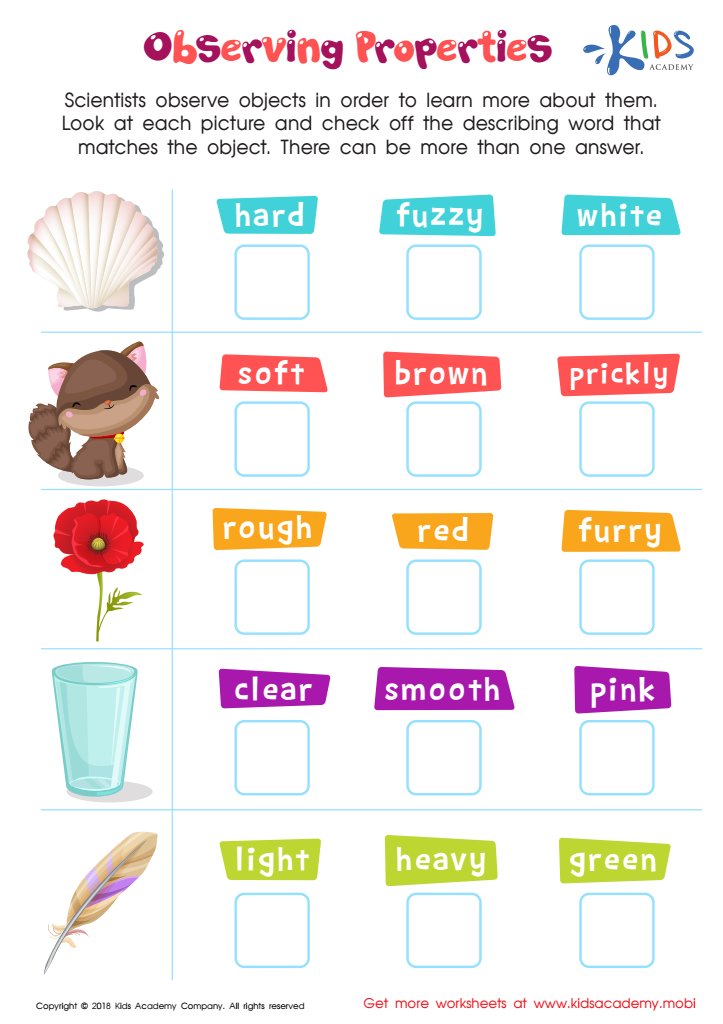
Observing Properties Worksheet
 Assign to My Students
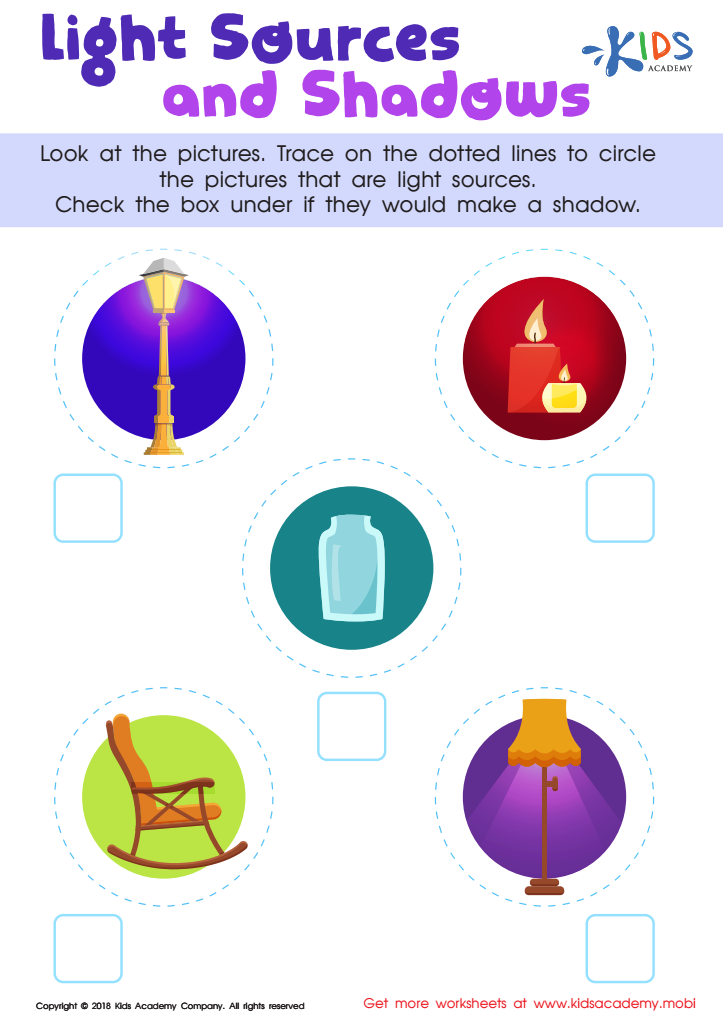
Light Sources and Shadows Worksheet
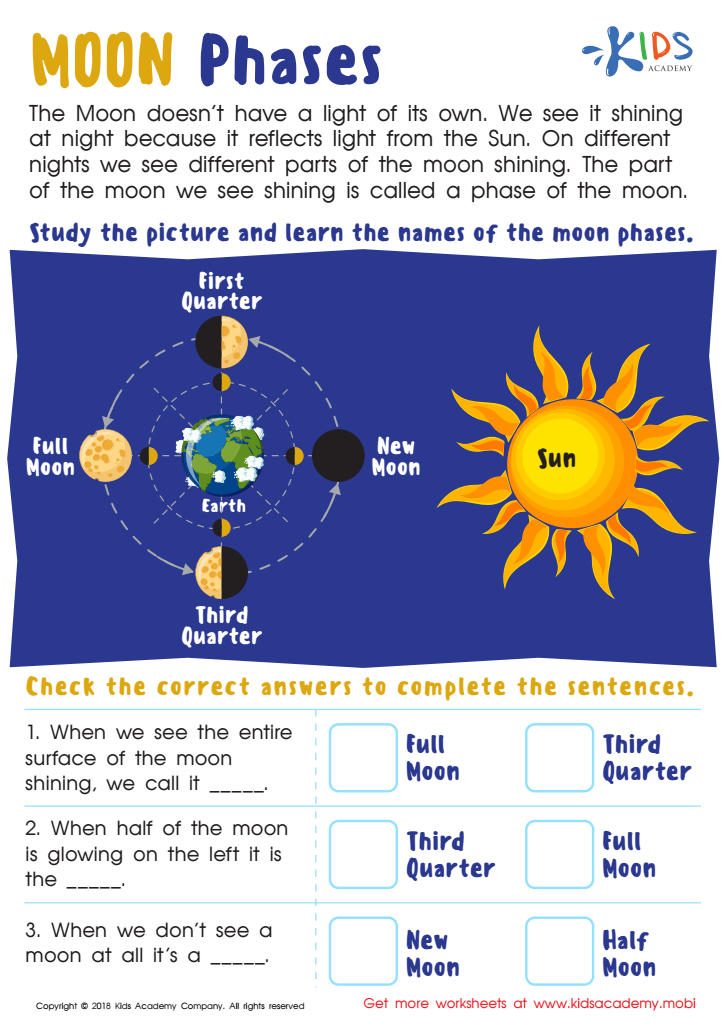
Moon Phases Worksheet








Observational skills are vital for young learners, particularly in Physical Science. For 7-year-olds, these skills lay the foundation for critical thinking, problem-solving, and scientific inquiry. When children observe the world around them, they learn to notice details, ask questions, and make connections between concepts, making abstract science concepts more relatable.
For parents and teachers, fostering observational skills means encouraging curiosity and engagement. By guiding children to observe natural phenomena—like the behavior of plants, the changing weather, or basic physics in motion—they build a deeper understanding of scientific principles. Engaging with their environment promotes excitement about learning and fosters a lifelong passion for science.
Furthermore, developing these skills helps students become proficient in excitement and safety during hands-on experiments and exploration. It encourages them to make informed predictions and understand cause and effect through real-world examples.
Incorporating activities such as nature walks, simple experiments, and observation journals not only enhances observational abilities but also strengthens parent-child or teacher-student relationships. By nurturing these skills, parents and teachers cultivate well-rounded, inquisitive thinkers equipped to tackle complex problems as they grow. Ultimately, strong observational skills empower children to become enthusiastic and capable learners in all areas of life.







