
Vocabulary development Plants and Animals Worksheets for 7-Year-Olds
3 filtered results
Difficulty Level
Grade
Age
-
From - To
Subject
Activity
Standards
Boost your 7-year-old's vocabulary with our engaging Plants and Animals Worksheets! At Kids Academy, we focus on comprehensive vocabulary development through our science-themed worksheets, specifically designed for young learners. These interactive printables help children explore the fascinating world of plants and animals, learning essential terms and concepts. Tailored to foster curiosity and knowledge, our exercises are perfect for enhancing word skills while providing an enjoyable educational experience. Encourage your child's budding scientific interests and vocabulary growth with our expertly crafted worksheets. Discover more and support your child's learning journey today at Kids Academy!
Favorites
With answer key
Interactive
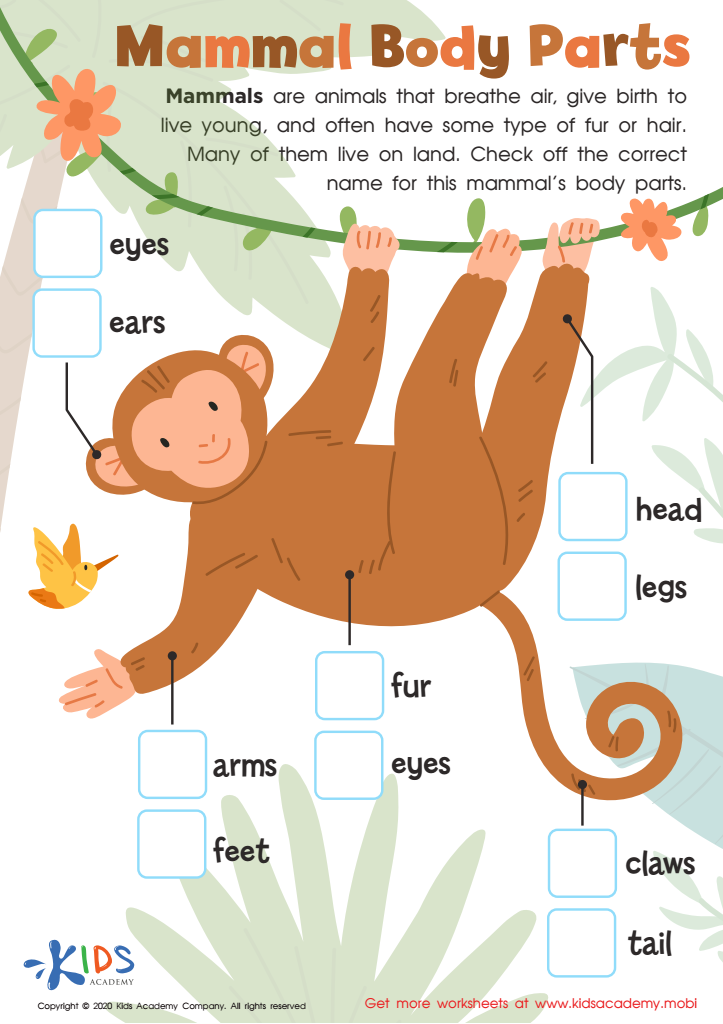
Mammal Body Parts Worksheet
Help your little scientist identify a mammal's body parts with this cute and colorful worksheet. It includes fur, arms, legs, tails, and more! Read the passage to learn what makes an animal a mammal, then have them check off the boxes to identify parts of the monkey. It's a fun way to learn about animals in the animal kingdom!
 Assign to My Students
Mammal Body Parts Worksheet
Worksheet











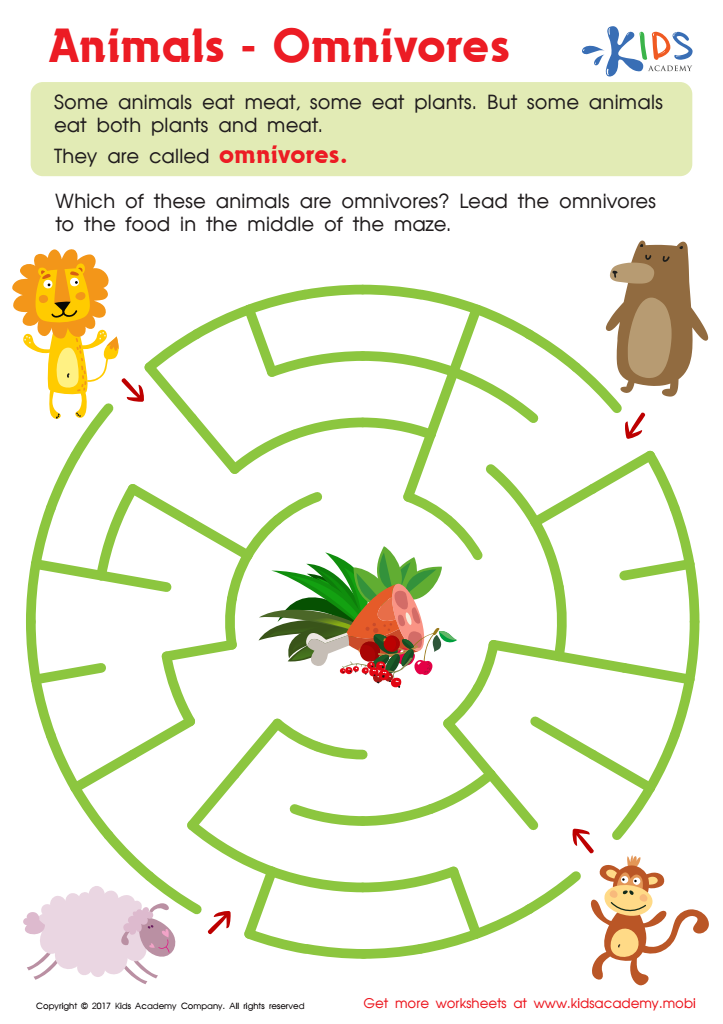
Omnivores Animals Worksheet
Kids can explore omnivores animals with this worksheet! It presents herbivores, carnivores and omnivores, with the main activity being a maze. Kids must guide a bear through it to get to its food. See how much they know about omnivores!
Omnivores Animals Worksheet
Worksheet
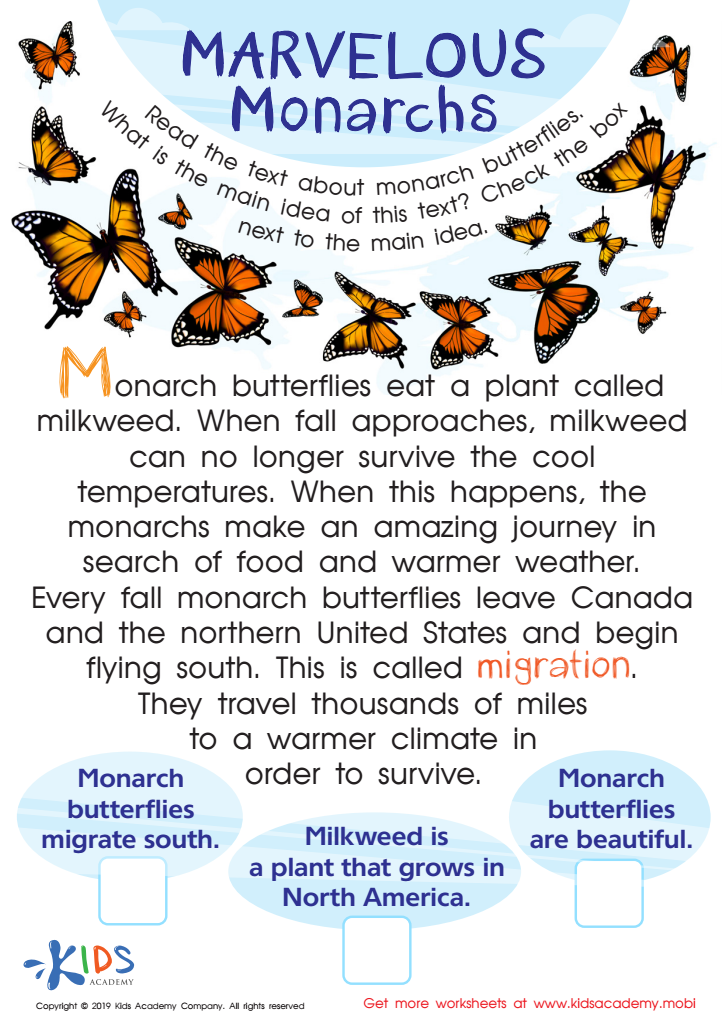
Marvelous Monarchs Worksheet
Help your kids have fun while reading - start with small words and short sentences. This worksheet can test your kids' reading and comprehension skills. Ask them to read the text about Monarch butterflies and help them locate the main idea.
Marvelous Monarchs Worksheet
Worksheet
Join Kids Academy for Free
Who is primarily going to use this learning content?







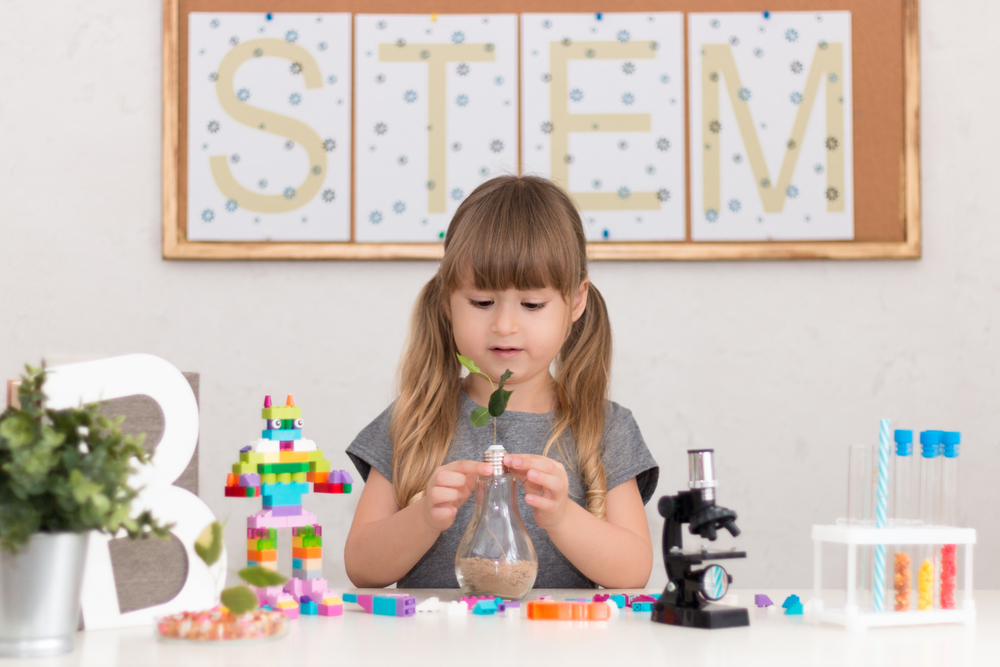
Parents and teachers should place a strong emphasis on vocabulary development related to plants and animals for 7-year-olds because it is foundational to their broader educational journey and cognitive development. At this age, children are incredibly curious about the world around them. Introducing them to vocabulary associated with plants and animals not only satisfies this curiosity but also builds their descriptive language skills, essential for effective communication and comprehension.
Understanding terms related to flora and fauna enhances children's scientific literacy. They learn to categorize organisms, observe patterns, and make connections between different concepts, which are critical thinking skills. For instance, knowing the parts of a flower or the characteristics of mammals versus reptiles helps them grasp more complex biological concepts in later grades.
Moreover, this vocabulary serves as a stepping stone for interdisciplinary learning. Kids often come across information about plants and animals in subjects like reading, geography, and even art. A robust vocabulary ensures they can understand and engage with this material, reinforcing their overall academic performance.
Finally, fostering a deep appreciation and knowledge of the natural world encourages environmental stewardship from a young age. When children recognize and name different species and understand their roles in ecosystems, they are more likely to develop a sense of responsibility and care for the environment. Thus, vocabulary development in this area is key to both intellectual growth and creating informed, conscientious future citizens.








