
Vowel Recognition Phonics Worksheets for Ages 8-9
6 filtered results
Difficulty Level
Grade
Age
-
From - To
Subject
Activity
Standards
Enhance your 8-9-year-olds' reading abilities with our comprehensive Vowel Recognition Phonics Worksheets. Designed to reinforce vowel sounds through engaging activities, these worksheets are perfect for building a strong foundation in phonics. Each printable worksheet offers fun exercises that focus on identifying and distinguishing between short and long vowel sounds, making learning interactive and enjoyable. Developed by educational experts, these worksheets cater to various learning styles, turning vowel recognition practice into a delightful journey. Perfect for homeschooling or extra practice, these sheets will help your children become confident, fluent readers. Discover the joy of learning with our vowel recognition worksheets today!
Favorites
With answer key
Interactive
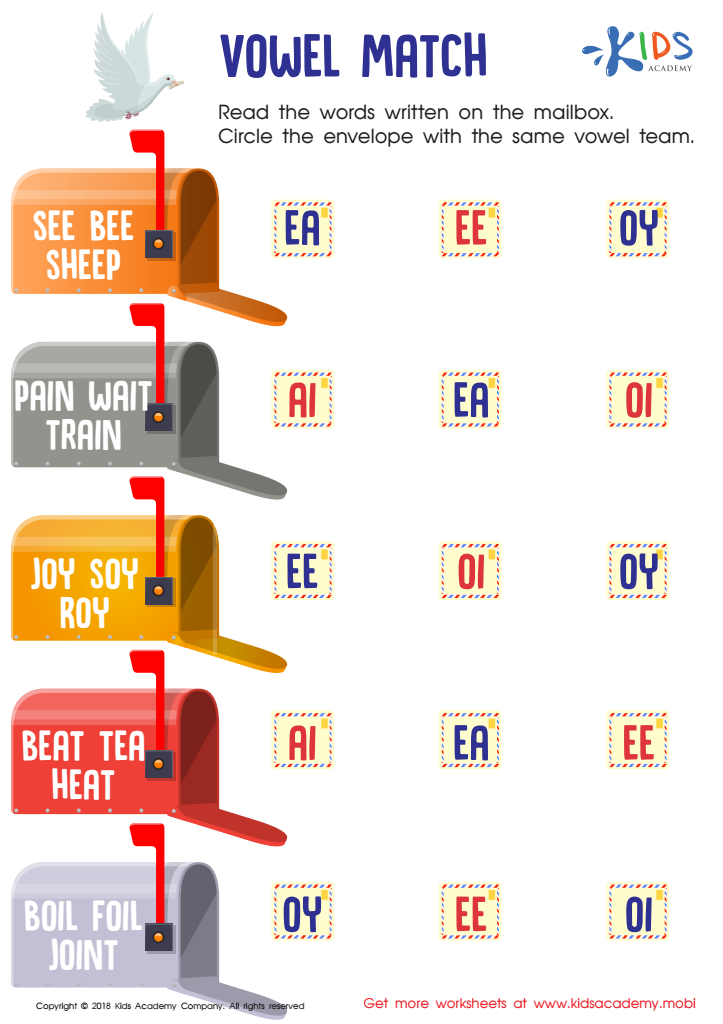
Vowel match Worksheet
Early readers can find vowel teams (digraphs) tricky. This simple worksheet helps kids match words with the right digraphs and learn to read! They'll practice reading words from different families, and linking the letters to their sounds. It's a fun way to get kids sending letters to the right addresses!
Vowel match Worksheet
Worksheet
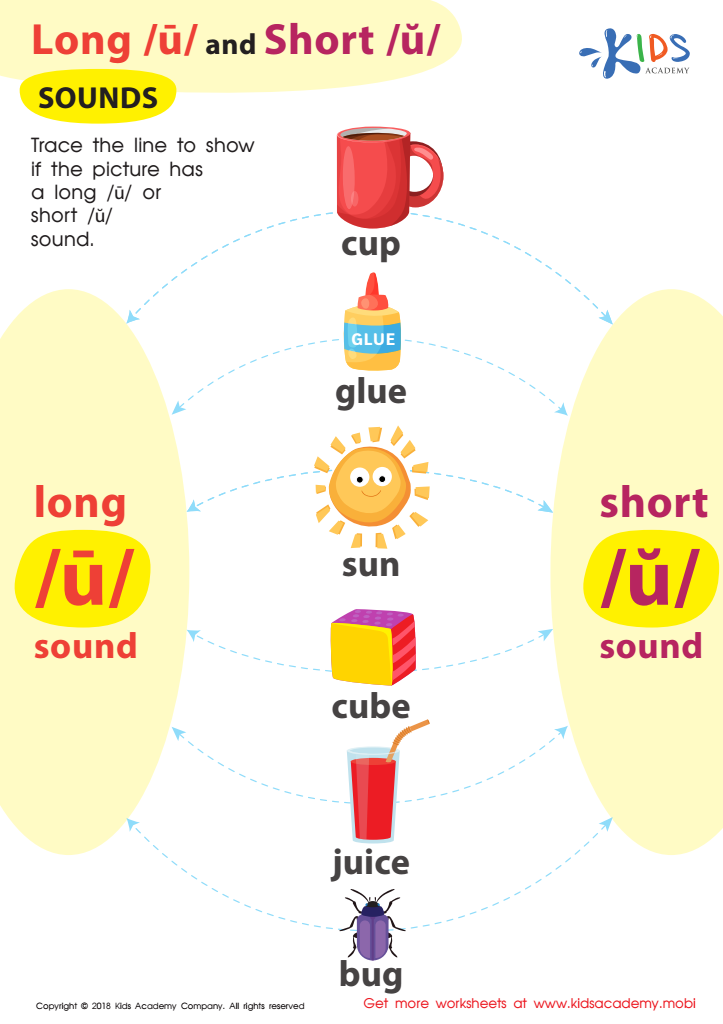
Reading: Long U and Short U Sounds Worksheet
Learning about long and short vowel sounds can be tricky, especially with the letter U. Extra practice with this worksheet is recommended for mastering this sound. Children read words with the different vowel sounds and categorize them. Great for instruction, practice and reteaching in reading classes.
Reading: Long U and Short U Sounds Worksheet
Worksheet
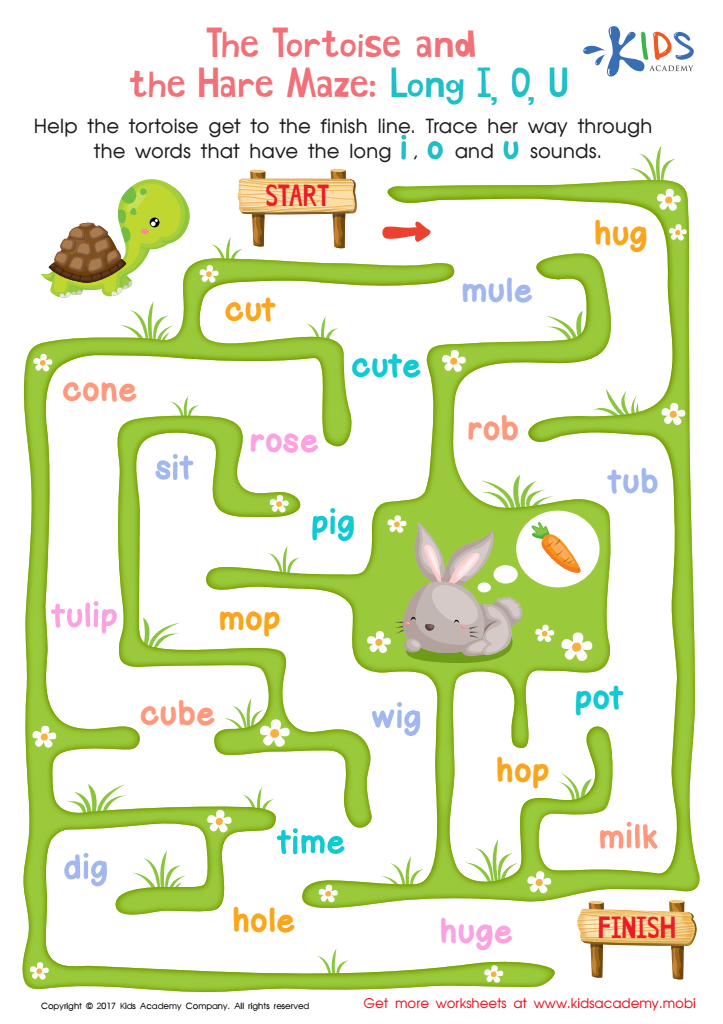
Long I, O, U Words Worksheet
This fun phonics worksheet has your child race the tortoise and hare to the finish line. Find all the long vowel sounds to win! It'll help your child's recognition of long I, O, and U words without him realizing it!
Long I, O, U Words Worksheet
Worksheet
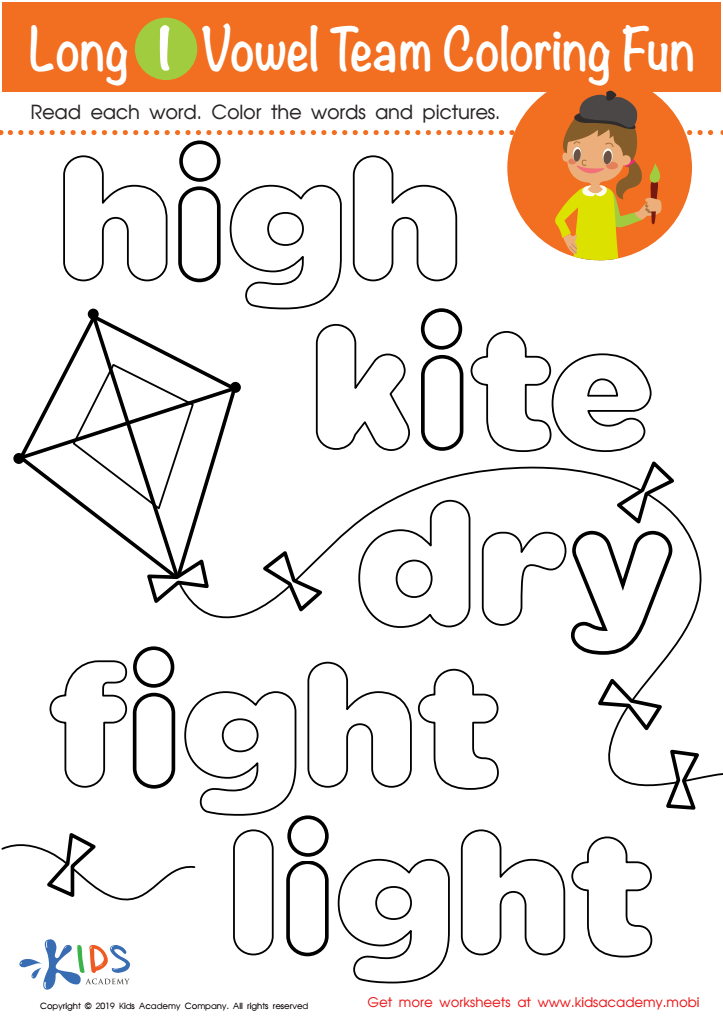
Long I Vowel Team Coloring Worksheet
This worksheet provides practice with letter combinations that make the long "i" sound while enhancing creativity and motor skills with a fun coloring activity. Unknowingly, new readers learn key phonics skills while having fun!
Download (PDF)
 Assign to My Students
Assign to My Students
Long I Vowel Team Coloring Worksheet
Worksheet
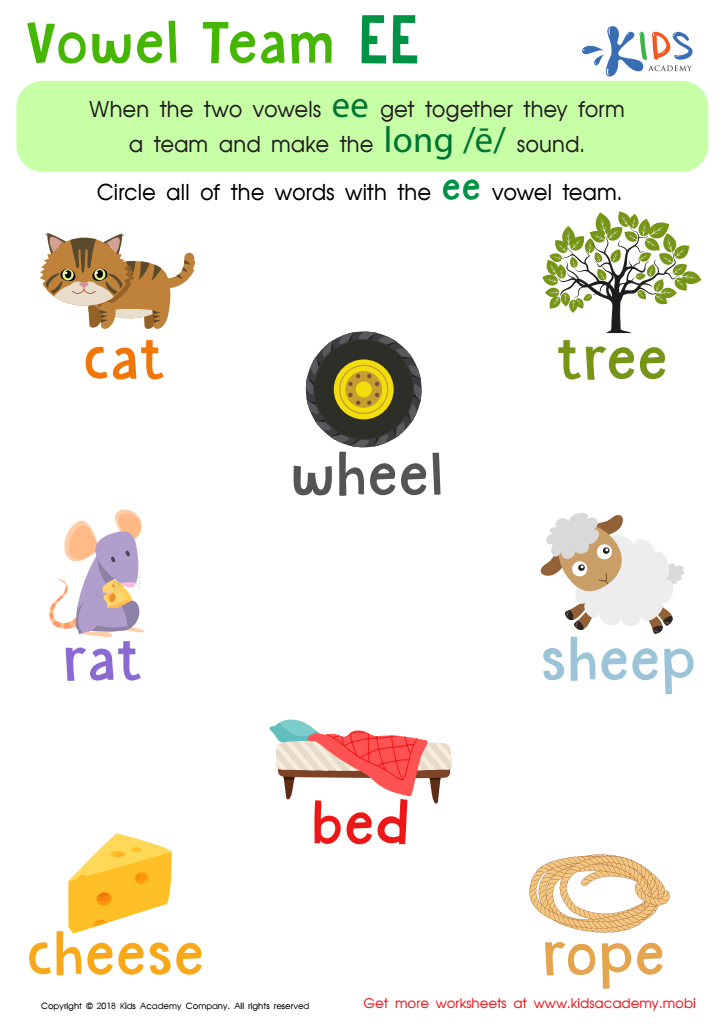
Reading: Vowel Team EE Worksheet
This worksheet is perfect for helping young learners master the /ee/ vowel team. It shows the first vowel with a long sound and the second vowel silent. It also provides pictures for unfamiliar words for readers of all levels. It's an ideal resource for teaching phonics skills.
Reading: Vowel Team EE Worksheet
Worksheet
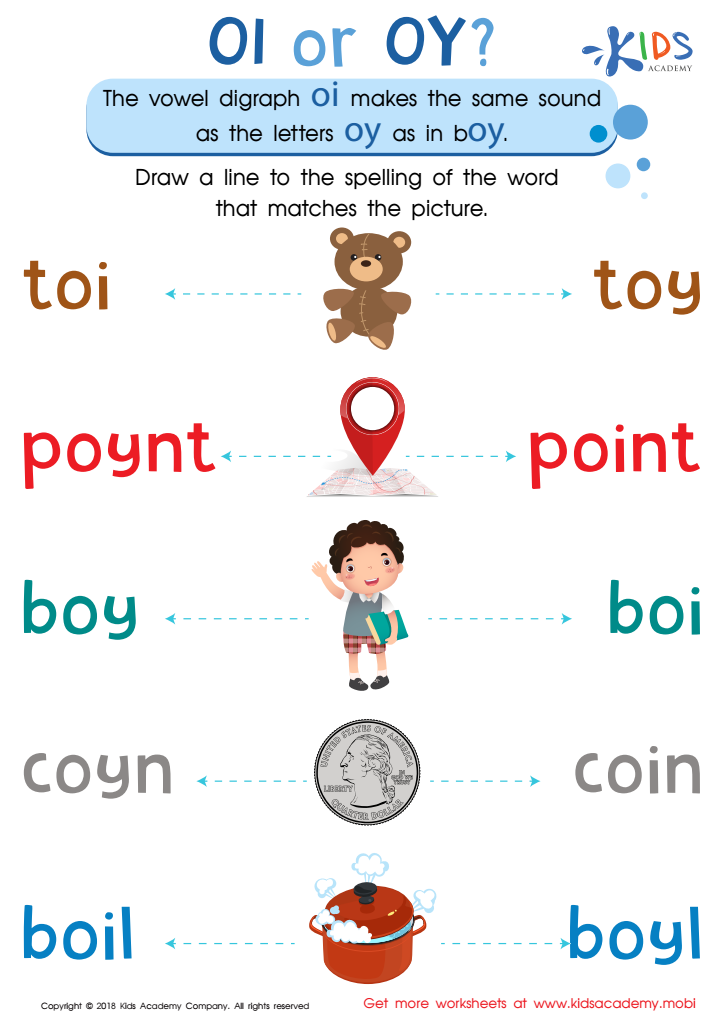
Reading: OI and OY Worksheet
Ask your students if they know the rule for words with /oi/ or /oy/ sound. If not, it's easy to learn! Rule: If /oy/ at end of word, spell with 'oy'; if /oi/ in middle of word, spell with 'oi'. Use this worksheet to help them master these digraphs and improve their ability to decode.
Reading: OI and OY Worksheet
Worksheet
Join Kids Academy for Free
Who is primarily going to use this learning content?








Vowel recognition phonics is a fundamental aspect of literacy for children aged 8-9 for several essential reasons. First and foremost, understanding vowels and their various sounds aids in accurate word pronunciation, which is crucial for effective reading skills. At this age, children transition from learning to read to reading to learn; solid phonics knowledge ensures they can decode new and complex words independently.
Additionally, vowel recognition underpins spelling proficiency. By grasping how different vowel combinations create specific sounds, children can more accurately spell words, which supports their writing skills. This knowledge allows them to express their ideas more clearly and confidently on paper.
Furthermore, strong phonics skills positively impact reading comprehension. When children can easily decode words, they can focus on understanding the text rather than struggling with individual words. This frees up cognitive resources for higher-level thinking and analysis, promoting deeper comprehension and a love for reading.
Finally, investing in vowel recognition phonics helps bridge educational gaps. Not all children will have the same level of exposure to rich reading environments. Solid phonics instruction provides a level playing field, offering all children the essential skills they need for academic success. Thus, both parents and teachers should prioritize vowel recognition phonics for sustained educational development.







