Comparing Fractions Worksheets for Ages 8-9
105 filtered results
-
From - To
Unlock your child's potential with our "Comparing Fractions Worksheets for Ages 8-9." These expertly designed worksheets are perfect for third graders, helping them grasp the concept of fractions step-by-step. Each activity focuses on comparing different fractions using visual aids, number lines, and relatable word problems to make learning engaging and effective. Ideal for both classroom use and at-home practice, our worksheets aim to simplify complex ideas, helping your child to excel in math. Equip your young learner with solid foundational skills in fractions and build their confidence today with Kids Academy’s learning resources.
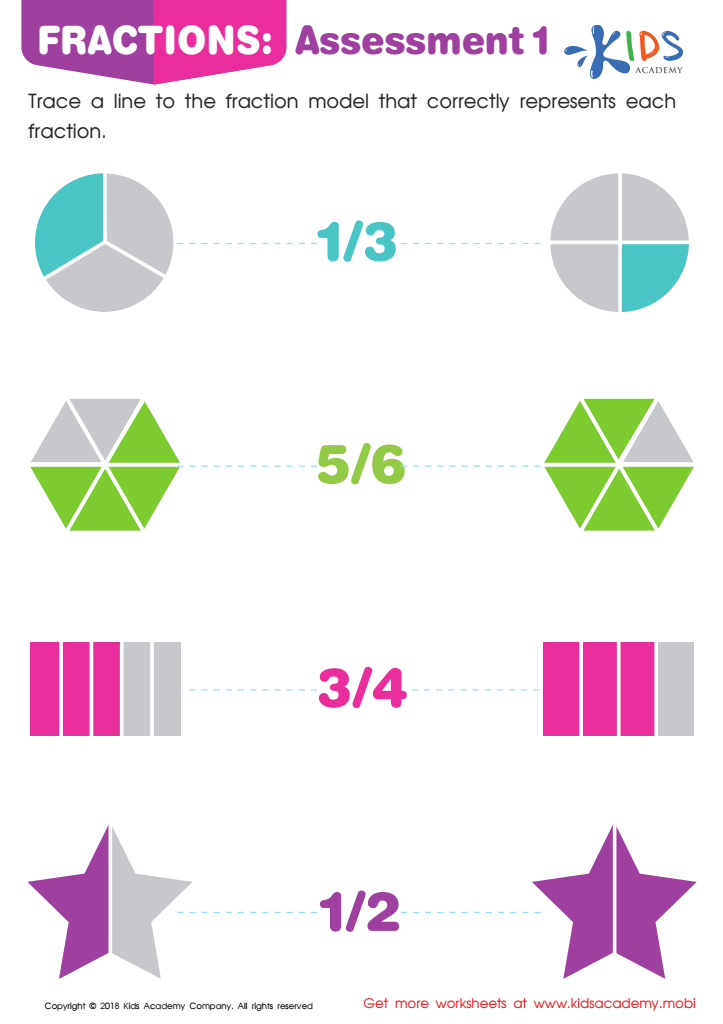
Fractions: Assessment 1 Worksheet
 Assign to My Students
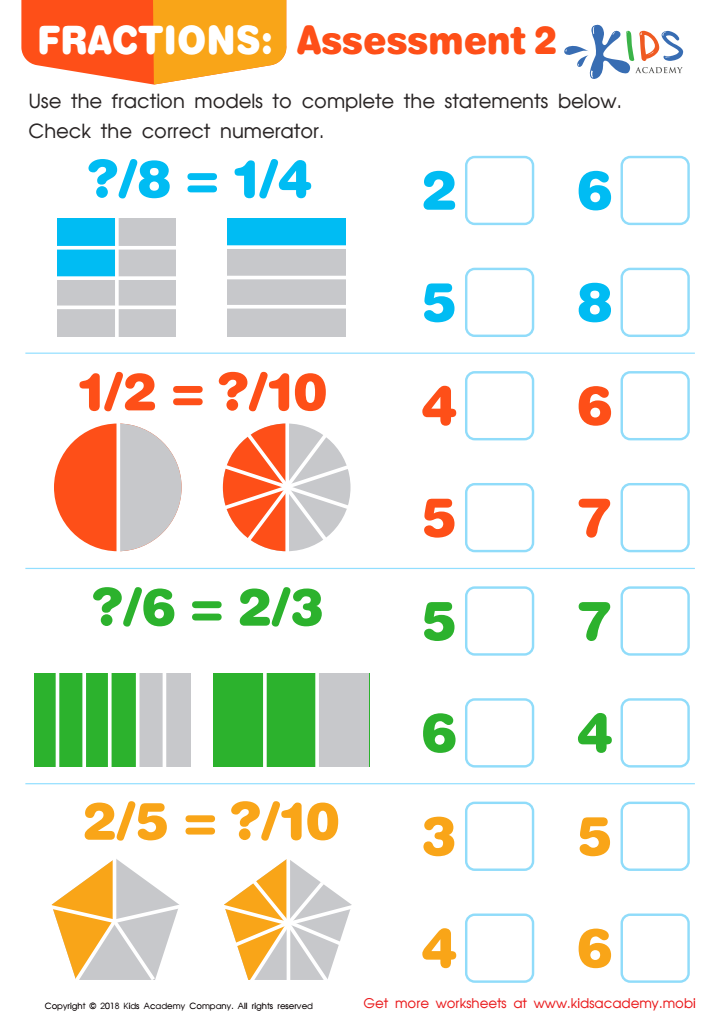
Fractions: Assessment 2 Worksheet
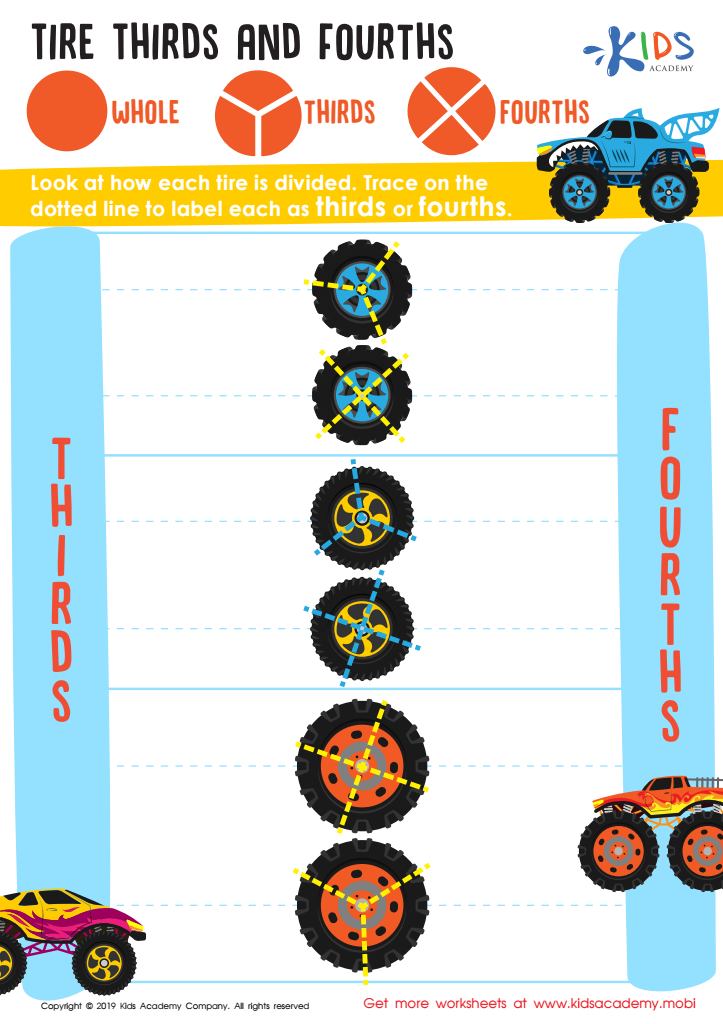
Tire Thirds and Fourths Worksheet
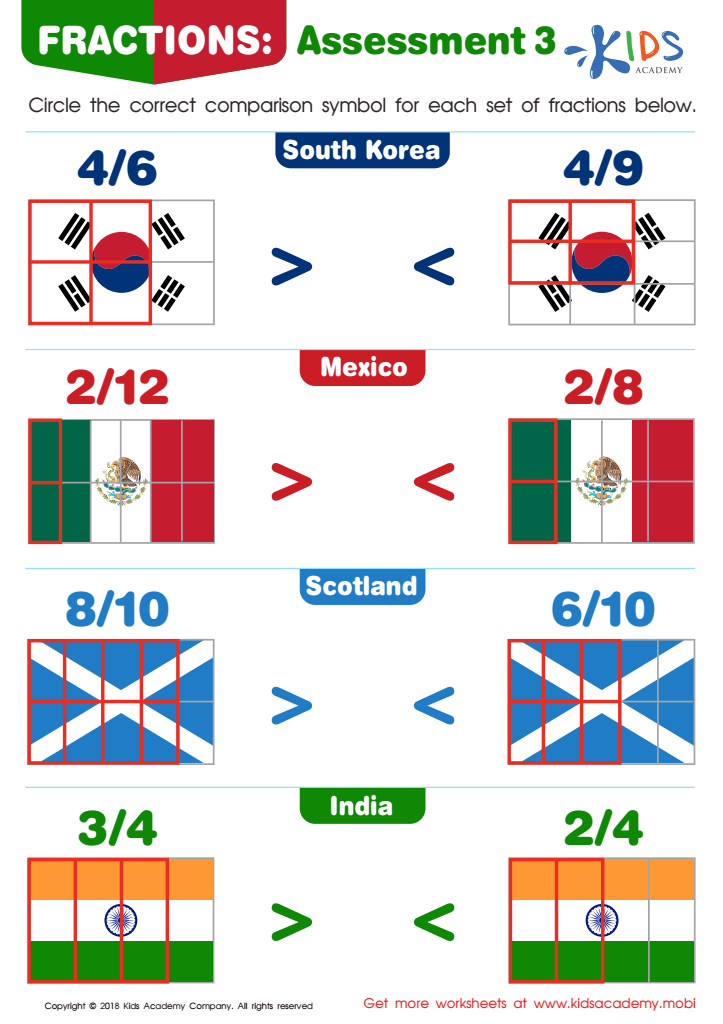
Fractions: Assessment 3 Worksheet
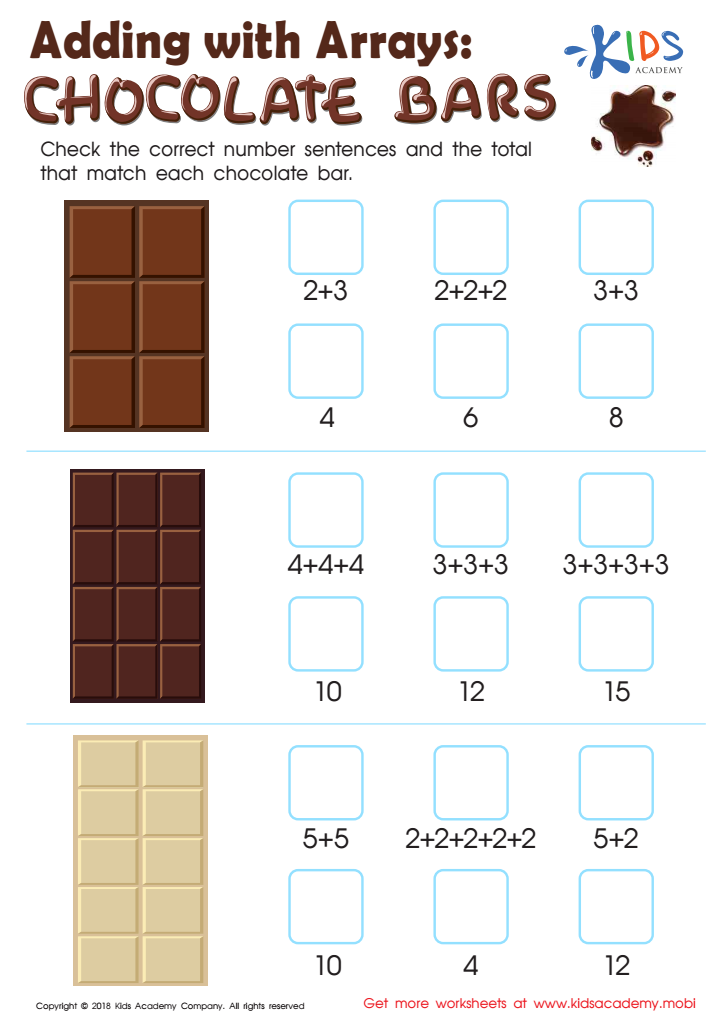
Adding with Arrays: Chocolate Bars Worksheet





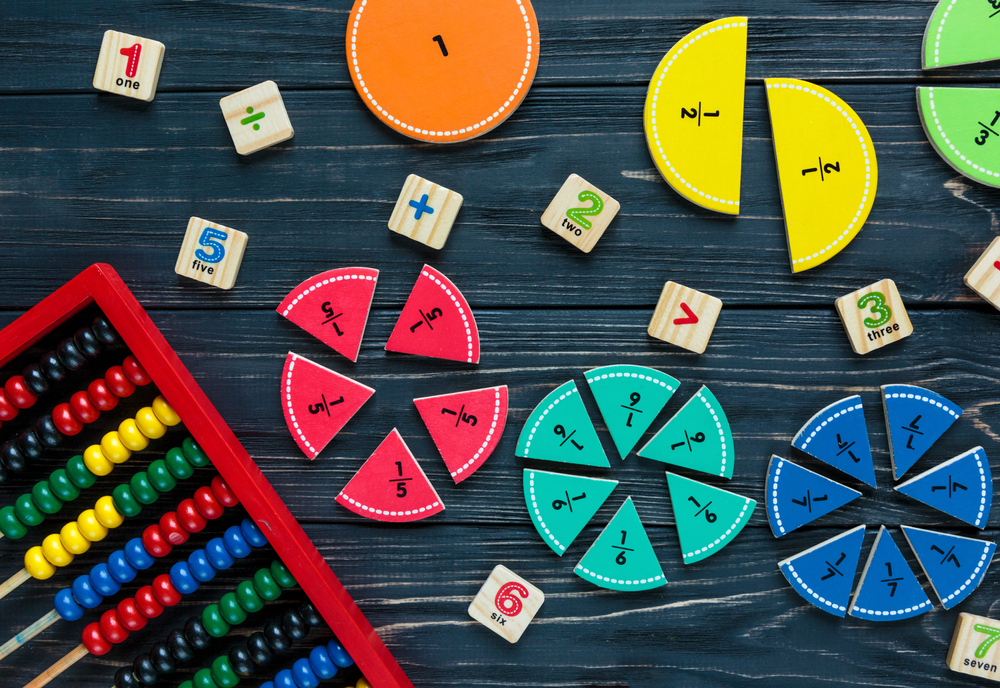


Teaching children aged 8 to 9 how to compare fractions is not just a mathematical skill, but a fundamental building block for their overall cognitive development. At this age, understanding fractions extends far beyond classroom applications; it has real-life relevance, such as sharing portions of food, and helps kids make sense of the world around them.
Parents and teachers need to care about this topic because comparing fractions develops critical thinking and problem-solving skills. When children compare fractions, they learn to recognize patterns, understand part-to-whole relationships, and make reasoned decisions based on numerical evidence. These abilities are crucial for more advanced math topics and subjects like science and engineering, as well as everyday decision-making.
Furthermore, mastering fractions boosts a child's confidence in their math abilities. Early success in understanding and comparing fractions can combat math anxiety, laying the foundation for a positive and proactive attitude towards more complex math in the future. Through engaging with fractions, children also improve their ability to concentrate, persevere through challenges, and think logically, skills essential across all areas of learning and life.
Ultimately, teaching children how to compare fractions equips them with versatile tools for both academic success and practical daily activities, making it a critical focus for any educator or parent.








