Help your child master essential measurement skills with our "Comparing Lengths Worksheets for Ages 8-9" at Kids Academy! These engaging and educational worksheets are expertly designed to enhance young learners' understanding of comparing lengths and measurements using real-world examples. Perfect for both classroom and home use, they feature diverse activities that promote critical thinking and problem-solving. Whether using a ruler or comparing different objects, kids will enjoy and benefit from these interactive exercises. Boost your child’s confidence and competence in math with our fun and informative comparing lengths worksheets. Visit us today and make learning an adventure!

Check out this FREE "Comparing lengths" Trial Lesson for age 8-9!

Size Word Problems

Favorites
With answer key
Interactive
  • 8-9
  • Comparing lengths
Compare Length in Inches and Centimeters Worksheet

Compare Length in Inches and Centimeters Worksheet

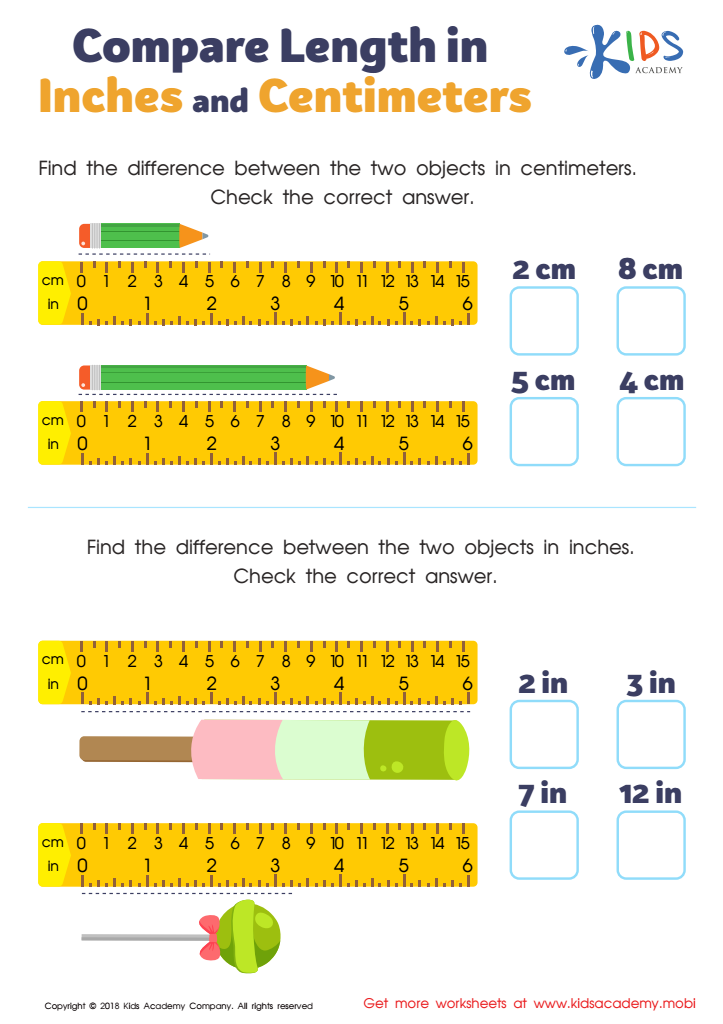
This worksheet has your child measuring objects in both centimeters and inches. The first task requires measuring both objects in centimeters, then finding their difference. The second task is the same but in inches.
Compare Length in Inches and Centimeters Worksheet
Worksheet
Measuring Quest: Inches and Centimeters Worksheet

Measuring Quest: Inches and Centimeters Worksheet

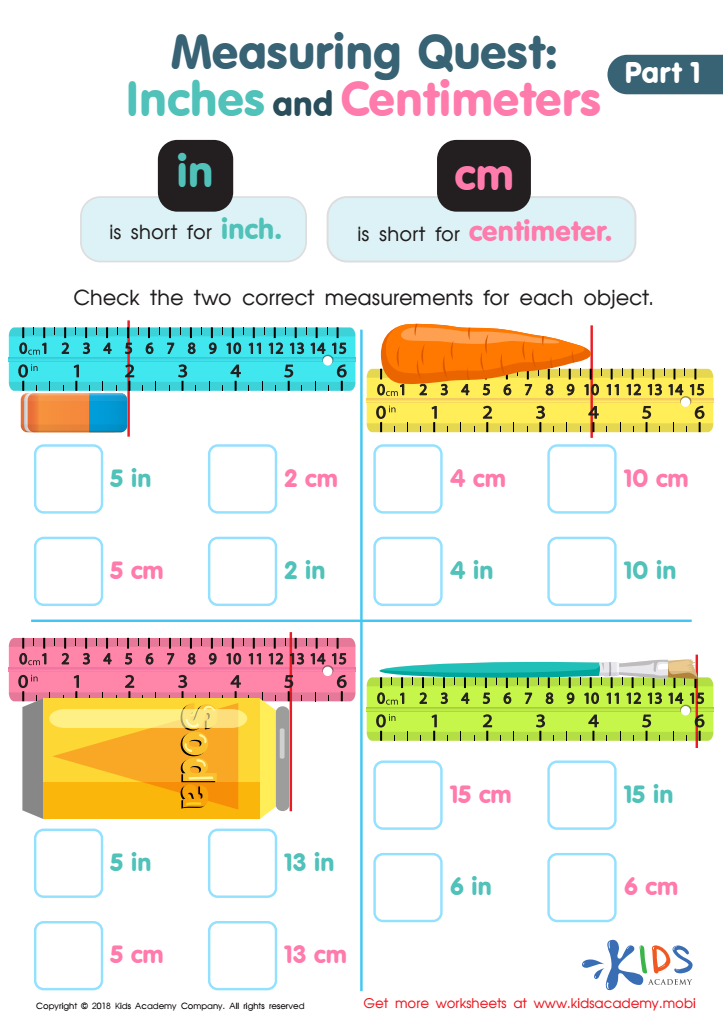
Your child will measure items in both inches and centimeters and check the correct measurements from the options given. The metric ruler states 2.5 cm equals 1 inch, and 15 cm equals 6 inches. This worksheet helps ensure accurate measurements, despite the different figures.
Measuring Quest: Inches and Centimeters Worksheet
Worksheet
Seedling Measure Line Plot Worksheet

Seedling Measure Line Plot Worksheet

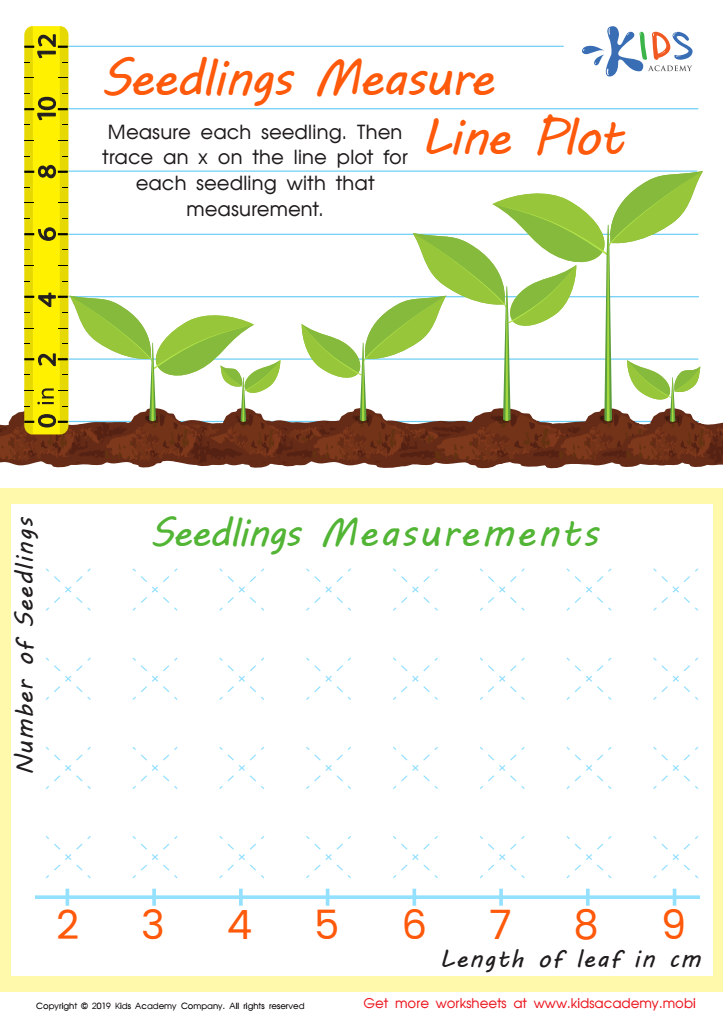
Help your kids adjust to learning line plots with this fun tracing sheet. Measure each seedling in the picture, then trace an x on the line plot for each one. Assist them in completing this easy exercise!
Seedling Measure Line Plot Worksheet
Worksheet
Steve's House: Measuring Length Worksheet

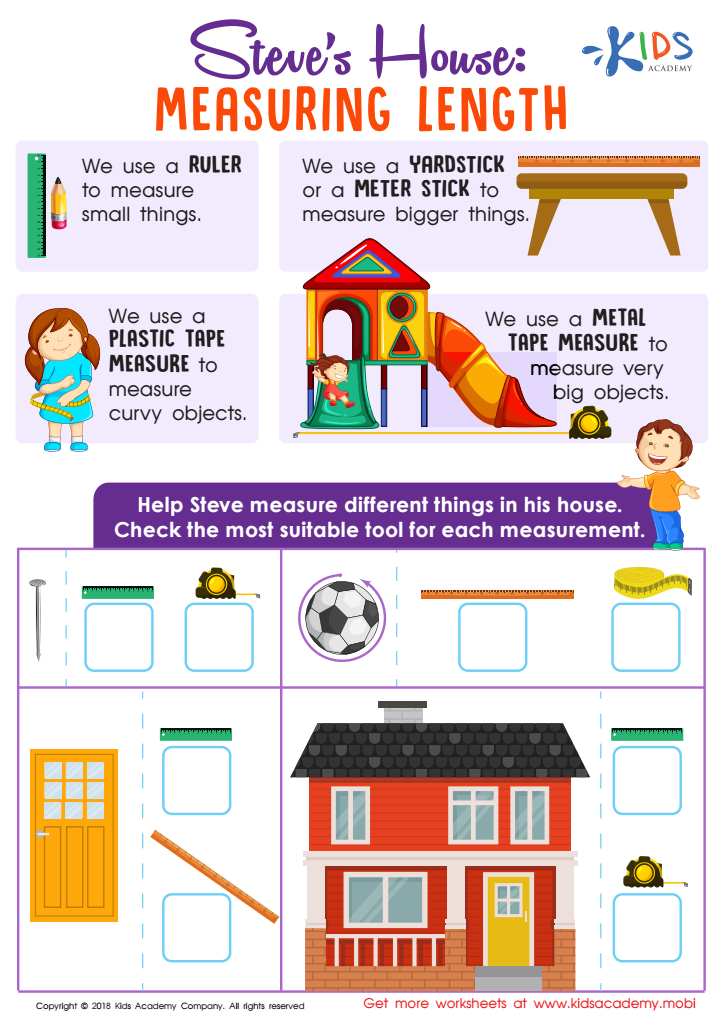
Steve's House: Measuring Length Worksheet

Introduce your kids to the various measuring tools and their uses. Explain how a ruler, plastic tape, yard stick, and metal tape measure are used to measure different objects. Guide them as they help Steve measure things in his home with the correct tool.
Steve's House: Measuring Length Worksheet
Worksheet
Length word problems for Grade 2

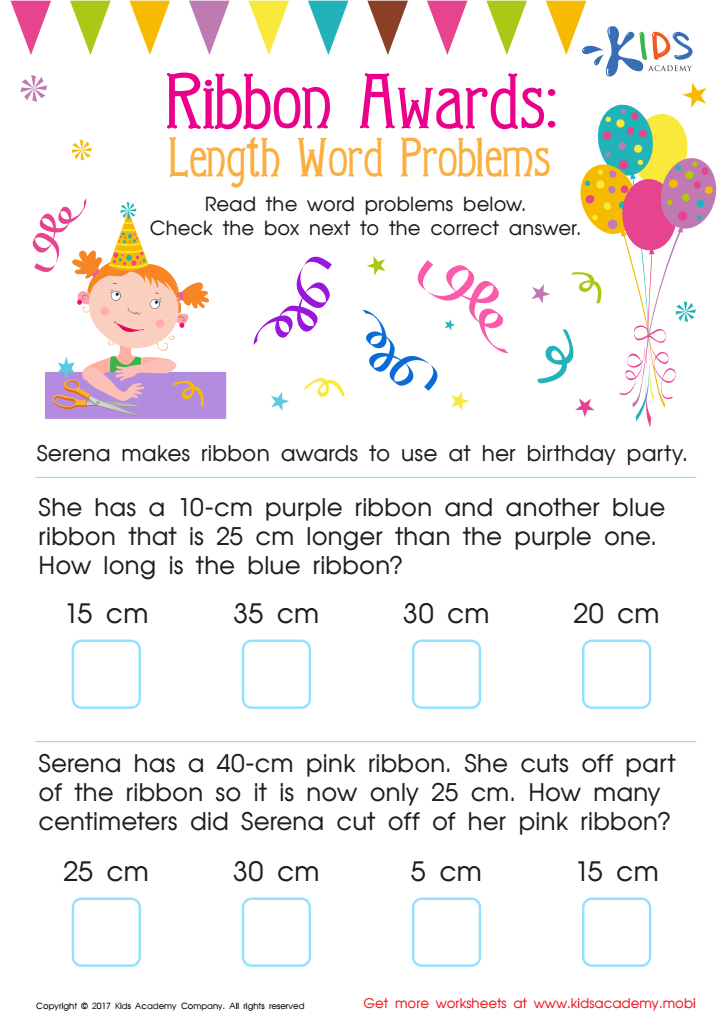
Length Word Problems Worksheet

Word problems help grade 2 students practice measurement using everyday scenarios. This worksheet provides practice in working with centimeters and inches, like measuring ribbon. It's a great way to learn and apply math skills.
Length Word Problems Worksheet
Worksheet
Compare Length in Centimeters Worksheet
Compare Length in Centimeters Worksheet

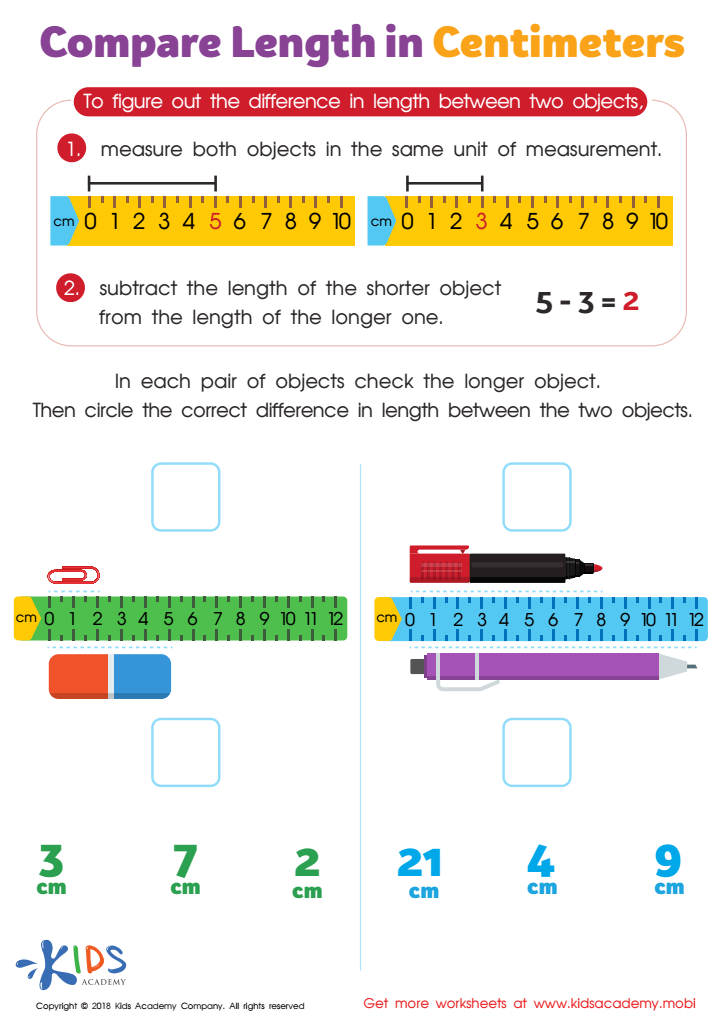
To do this worksheet, your child needs to be able to measure accurately, add and subtract. They must measure both items and subtract the shorter from the longer to work out the difference in length.
Compare Length in Centimeters Worksheet
Worksheet
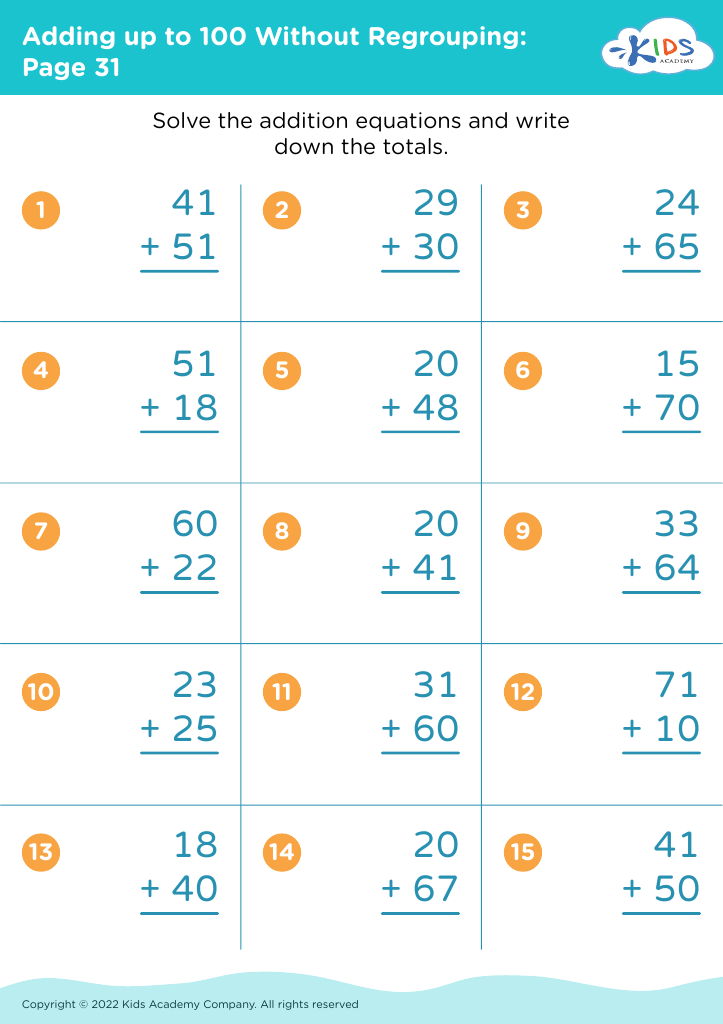
Adding up to 100 Without Regrouping: Page 31
Worksheet
Length Comparison Quest Worksheet

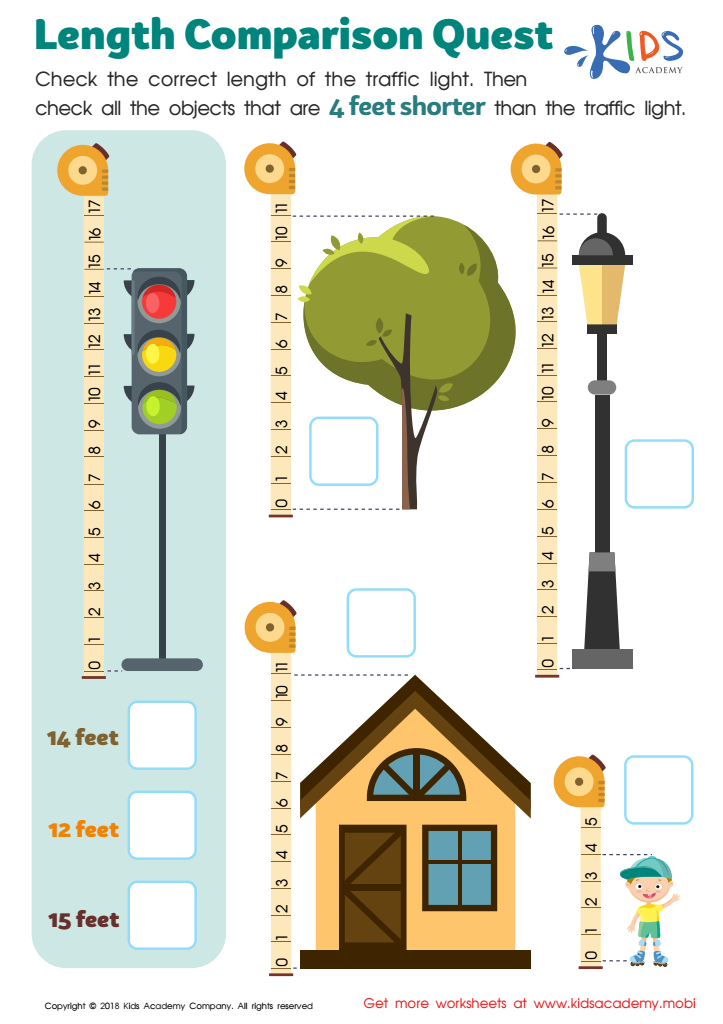
Length Comparison Quest Worksheet

Knowing measurement tools and how to use them is just the start. To be proficient, your kid must be able to accurately compare objects and their lengths. With the 'Length Comparison Quest' worksheet, they will check the correct length of the traffic light in the picture and then compare other objects to it, marking those that measure 4 feet shorter.
Length Comparison Quest Worksheet
Worksheet
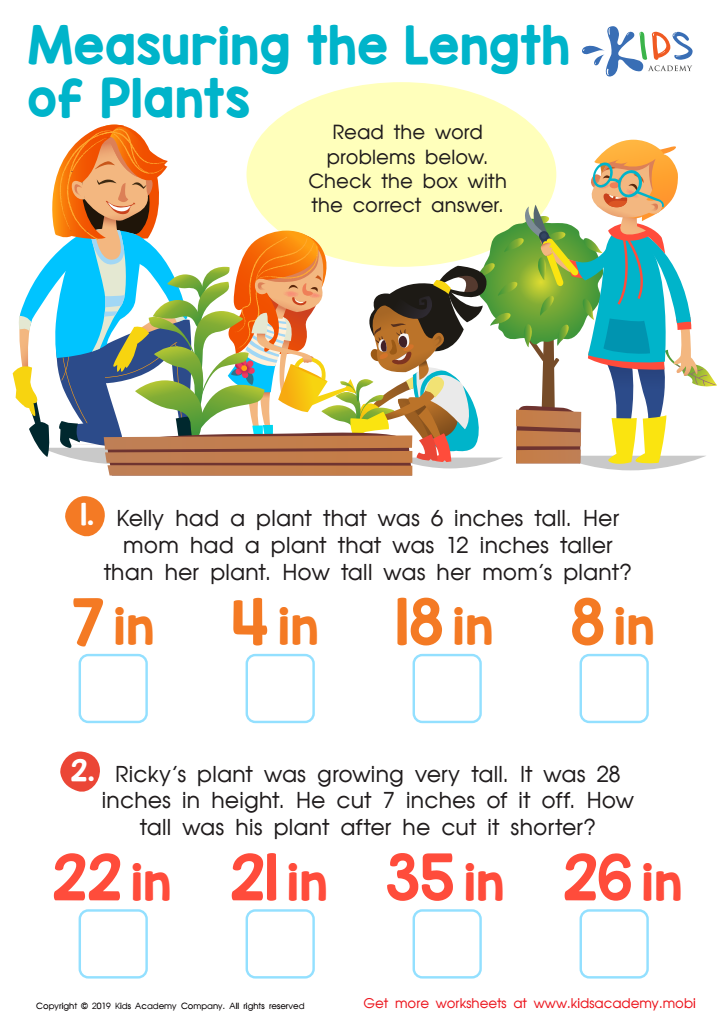
Measuring the Length of Plants Worksheet

Measuring the Length of Plants Worksheet

Help your kids practice their math skills with this worksheet. Read the word problems in the picture and help them check the correct box. Word problems are equations written in sentence form, so they must be interpreted and understood to be solved correctly.
Measuring the Length of Plants Worksheet
Worksheet
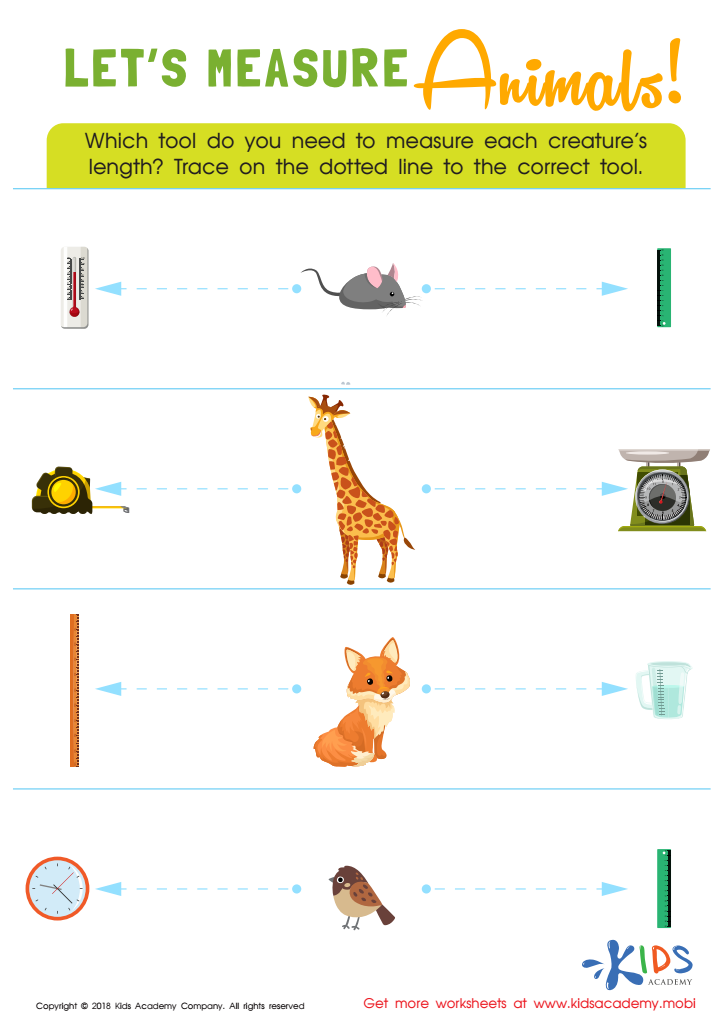
Let's Measure Animals! Worksheet


Let's Measure Animals! Worksheet

Have your students measure the length of animals like a mouse, giraffe, fox, and bird using this fun tracing sheet. They must carefully follow the dotted lines to the correct measuring tool, and by the end of the colorful worksheet, they'll know more about measuring and the different tools used.
Let's Measure Animals! Worksheet

Worksheet


Comparing lengths for children aged 8-9 is a crucial aspect of early mathematics education, serving as a foundational skill that enhances their understanding of measurement and geometry. At this developmental stage, children are ready to grasp more complex mathematical concepts, and understanding length comparison directly contributes to this growth.

Firstly, comparing lengths helps in developing critical thinking and problem-solving abilities. Children learn to make observations, form hypotheses, and determine outcomes based on those observations, which are essential skills across all areas of learning and daily life. Secondly, familiarity with lengths and measurements is rooted in everyday activities—whether it’s comparing the height of trees in the park, choosing the right-sized clothing, or baking with precise ingredient measurements.

Moreover, understanding length also directly ties into other academic subjects, such as science (e.g., measuring distance during experiments) and geography (e.g., comprehending maps). It also lays the groundwork for more advanced mathematical concepts such as area, volume, and even algebra.

Investing time to teach length comparisons through fun, engaging activities can foster a sense of accomplishment and confidence in numerical abilities, nurturing a positive attitude toward learning. Hence, both parents and teachers should emphasize this skill to connect classroom learning with real-world application, paving the way for well-rounded cognitive development.