Comparing sizes Worksheets for Ages 8-9
3 filtered results
-
From - To
Welcome to our "Comparing Sizes Worksheets" page for children aged 8-9! These engaging, printable worksheets are designed to help young learners grasp the concept of comparing sizes through fun activities and exercises. Students will explore various scenarios that encourage them to measure, analyze, and differentiate between small, medium, and large objects. Our resources promote critical thinking and enhance vocabulary related to measurements. Ideal for home or classroom use, these worksheets make learning enjoyable and interactive. Empower your child’s mathematical skills while sparking their curiosity about the world around them with our thoughtfully curated activities!
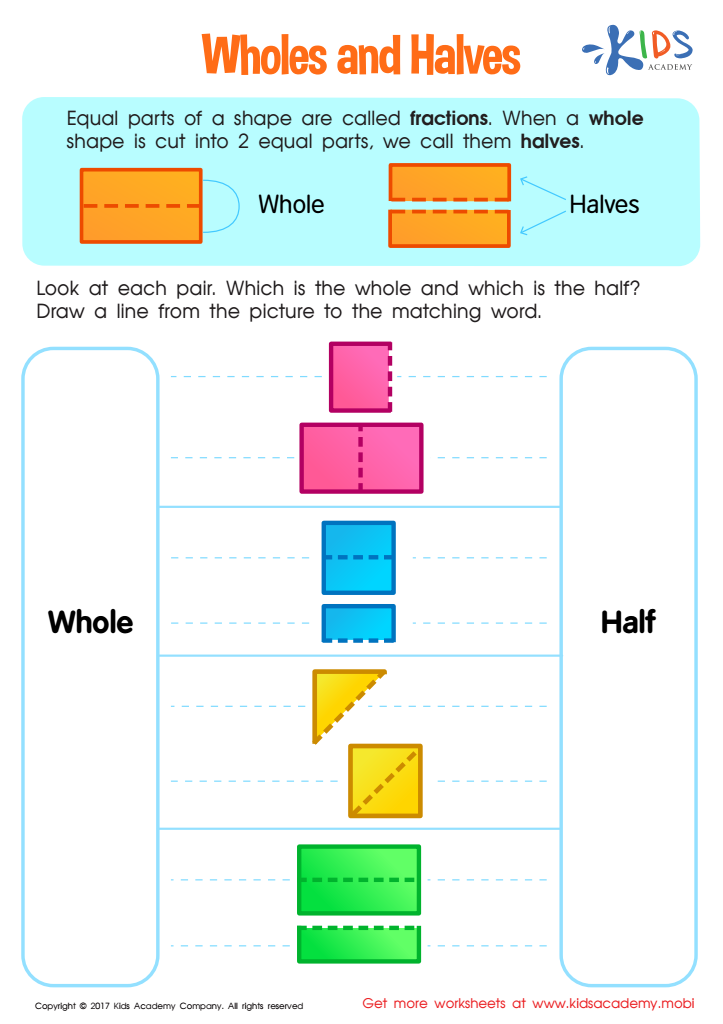
Wholes and Halves Worksheet
 Assign to My Students
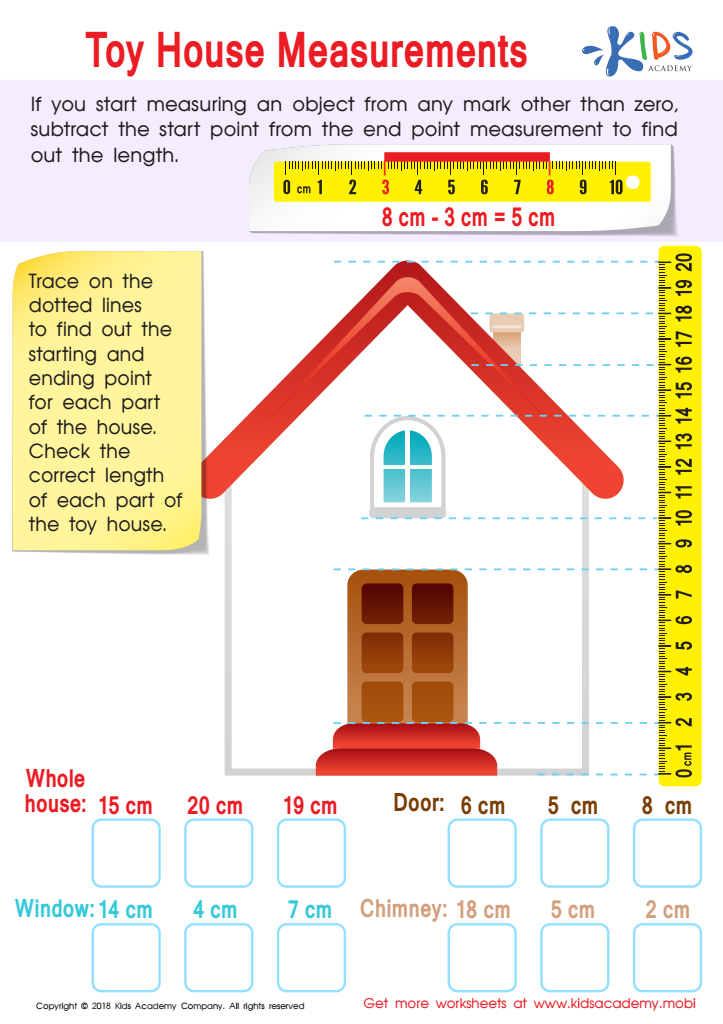
Toy House Measurements Worksheet
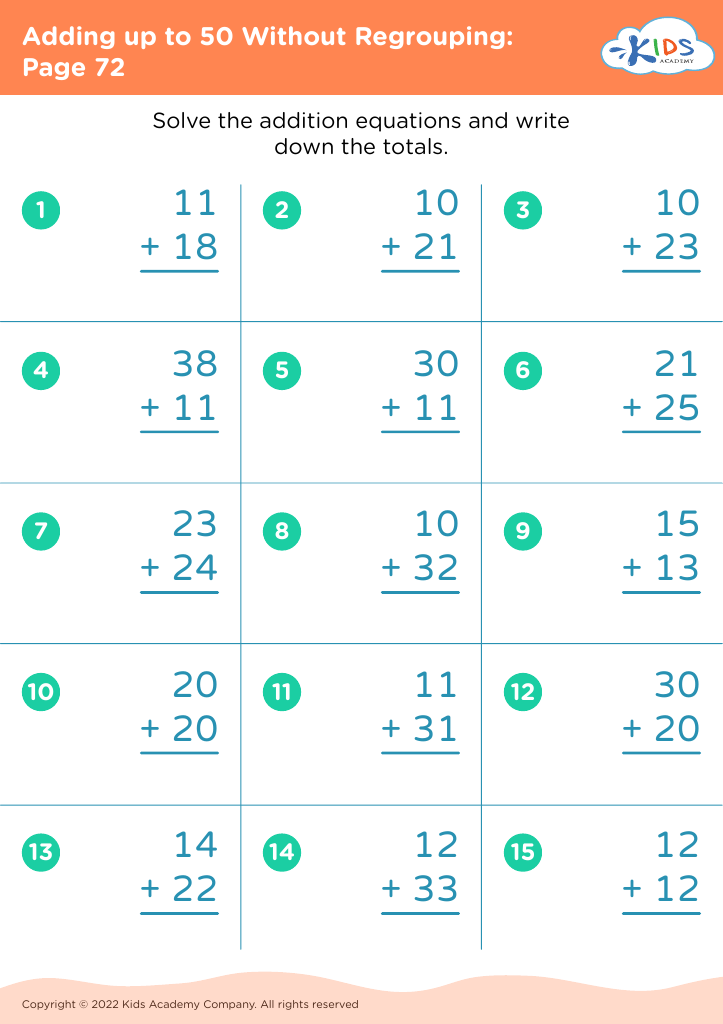



.jpg)



Comparing sizes is an essential skill for children ages 8-9, as it lays the groundwork for more advanced mathematical concepts and logical reasoning. During this stage, children are developing a stronger sense of measurement, which is not only vital in mathematics but also in everyday life. When parents and teachers engage children in activities that involve size comparison, they are enhancing their understanding of scales, proportions, and spatial awareness.
Learning to compare sizes encourages critical thinking and problem-solving abilities. For instance, when children measure objects or compare lengths, they learn to make estimations and recognize relationships between different items. This not only builds their mathematical prowess but also supports cognitive development.
Additionally, understanding size comparison can boost confidence among children. When they master this skill, it often translates to seeing their progress in other areas of learning, fostering a positive attitude towards math.
Developing this skill in a playful and engaging way can also facilitate better communication among peers, as children articulate their observations and reasons behind their comparisons. Ultimately, parents and teachers should care about comparing sizes for this age group, as it equips them with essential tools for academic success and real-world application.








