
Fraction Addition Worksheets for Ages 8-9
17 filtered results
Difficulty Level
Grade
Age
-
From - To
Subject
Activity
Standards
Welcome to our Fraction Addition Worksheets for Ages 8-9! Designed to support young learners as they navigate the world of fractions, these engaging worksheets provide a variety of fraction addition problems suitable for 3rd and 4th graders. Each worksheet encourages students to practice essential skills, solve problems, and build confidence in their mathematical abilities. With visually appealing designs, fun exercises, and step-by-step guidance, these resources make learning fractions exciting. Perfect for individual or classroom use, our worksheets foster critical thinking and promote a deeper understanding of addition involving fractions. Download them today and help your child master this essential skill!
Favorites
With answer key
Interactive
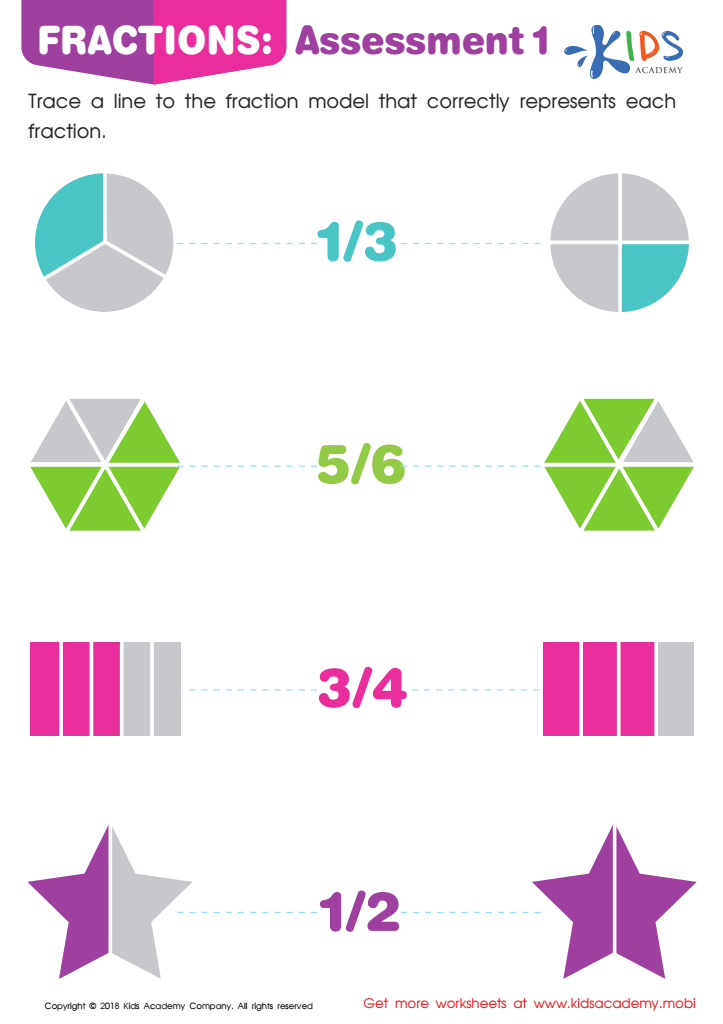
Fractions: Assessment 1 Worksheet
Master fractions easily with this worksheet! It has four sets of fraction models and fraction equations with two models each. Guide your kids to trace a line to the correct fraction model for each equation.
 Assign to My Students
Fractions: Assessment 1 Worksheet
Worksheet
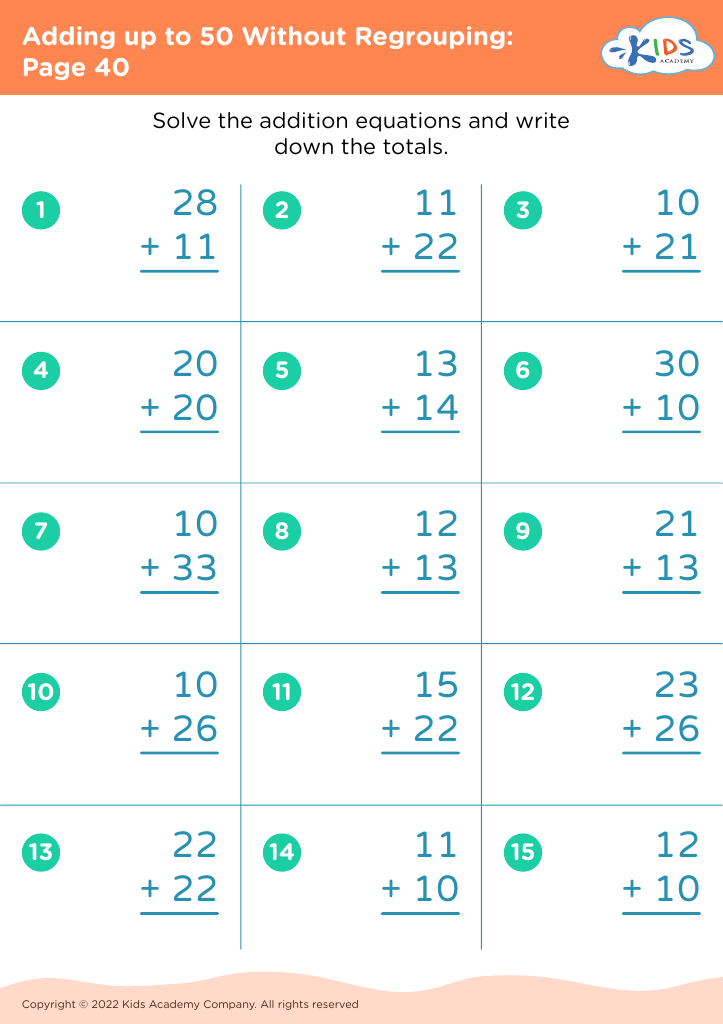
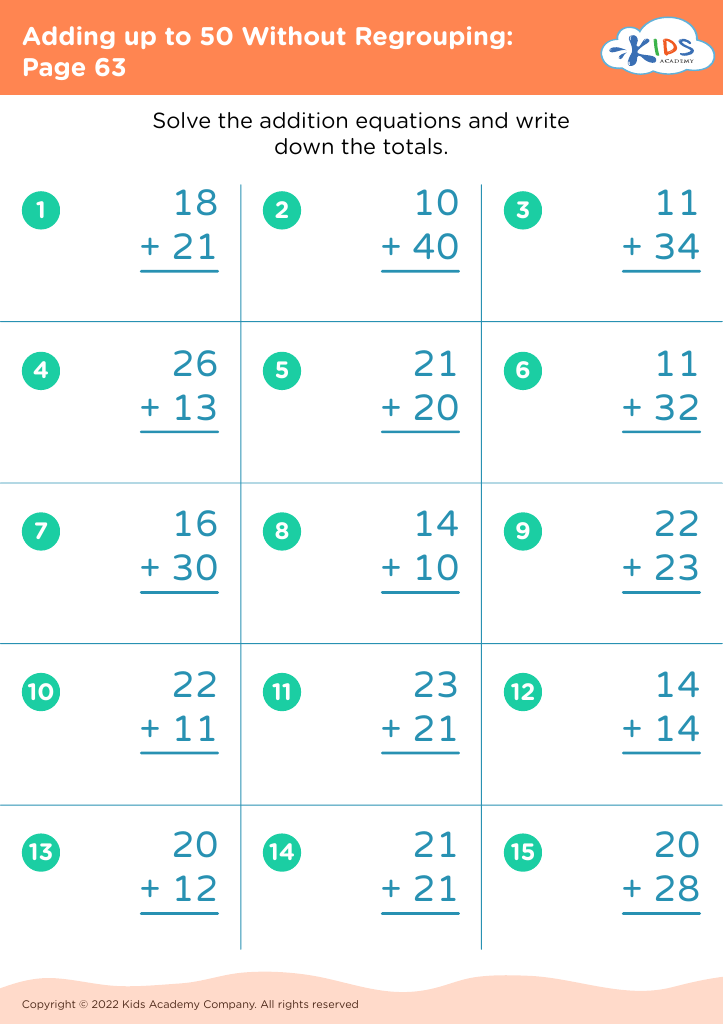
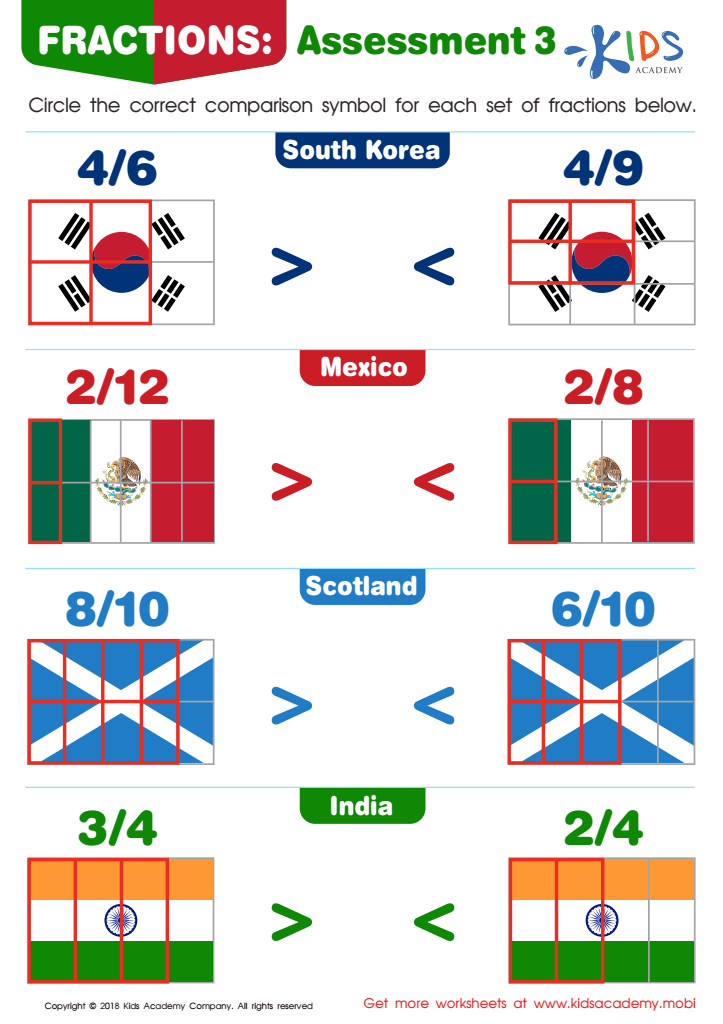
Fractions: Assessment 3 Worksheet
This worksheet helps teach kids about fractions and introduces them to countries and their flags. Have them read the country names and point to the flags. Then help them assess the fractions, and ask them to circle the symbol that shows their values.
Fractions: Assessment 3 Worksheet
Worksheet
Join Kids Academy for Free
Who is primarily going to use this learning content?








Understanding fraction addition is crucial for children aged 8-9 as it lays the groundwork for more complex mathematical concepts. At this age, students begin to encounter fractions in various real-world contexts, such as cooking or measuring. By mastering fraction addition, they develop critical thinking and problem-solving skills that extend beyond mathematics.
Parents and teachers should care because strong foundational skills in fractions can enhance a child's confidence and interest in math. This understanding helps prevent future difficulties as they encounter advanced topics, such as algebra and ratios. Furthermore, learning to add fractions nurtures logical reasoning, as students must find common denominators, simplifying the process and connecting various mathematical concepts.
Engaging with fraction addition also promotes collaboration in the classroom and at home, encouraging parents and teachers to work with students on practical applications. Using everyday situations for practice makes learning more relatable and enjoyable. Finally, successfully grasping fractions at this stage sets the stage for academic success and a positive attitude toward lifelong learning. Overall, focusing on fraction addition at this critical developmental age enables children to build essential skills for their futures.








