Discover our engaging "Interpreting Data Worksheets for Ages 8-9" designed to enhance young learners' analytical skills. These printable resources focus on essential concepts such as reading charts, graphs, and tables, empowering students to interpret and visualize data effectively. Our worksheets promote critical thinking and foundation-building in mathematics, making learning both fun and interactive. With a variety of exercises, your child will practice extracting information, comparing data sets, and making predictions. Perfect for classrooms or home learning environments, these worksheets stimulate curiosity and foster a deeper understanding of data interpretation. Equip your child with the skills they need for future academic success!

Check out this FREE "Interpreting data" Trial Lesson for age 8-9!

Compare Numbers with 2 and 3 digits

Favorites
With answer key
Interactive
  • 8-9
  • Interpreting data
Rounding Influences Food Choices Worksheet

Rounding Influences Food Choices Worksheet

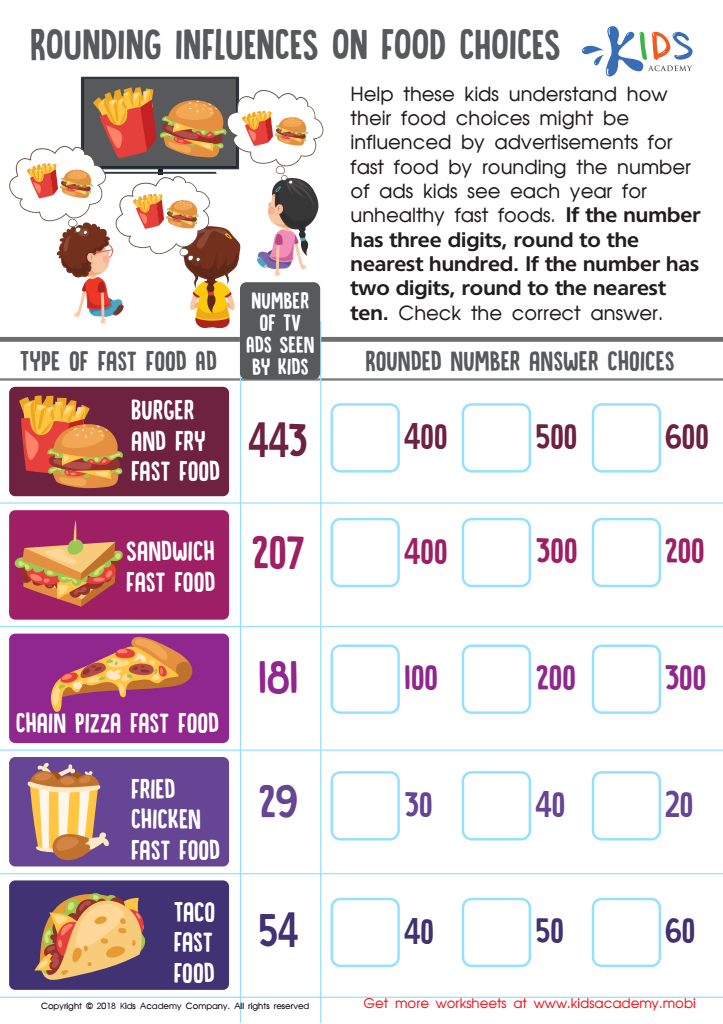
Kids find math more enjoyable when it reflects real-life scenarios. This free worksheet combines math and health! Kids view data on the number of ads they're exposed to in a year and must round the numbers to the nearest ten or hundred. Solve and check the correct answers to finish.
Rounding Influences Food Choices Worksheet
Worksheet
Interpret the line plot worksheet

Interpret Line Plot Worksheet

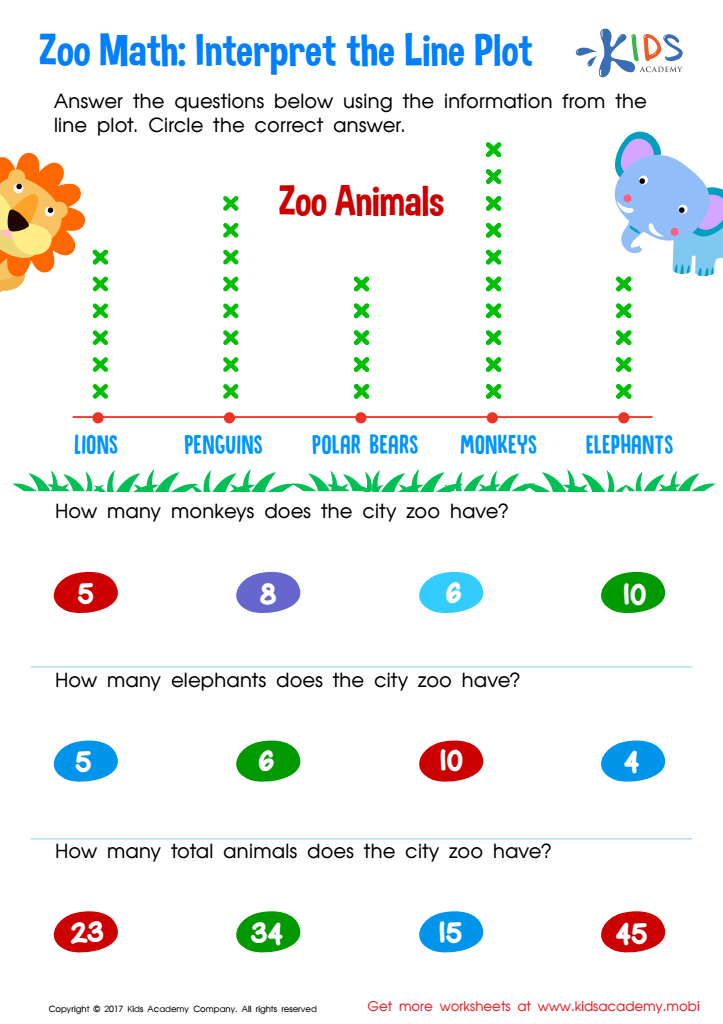
Kids can learn to read graphs and analyze data easily with line plots. A fun zoo animal worksheet motivates kids to answer questions by reading the line plot and finding out how many animals a local zoo has.
Interpret Line Plot Worksheet
Worksheet
Leaf Bar Graph Worksheet

Leaf Bar Graph Worksheet

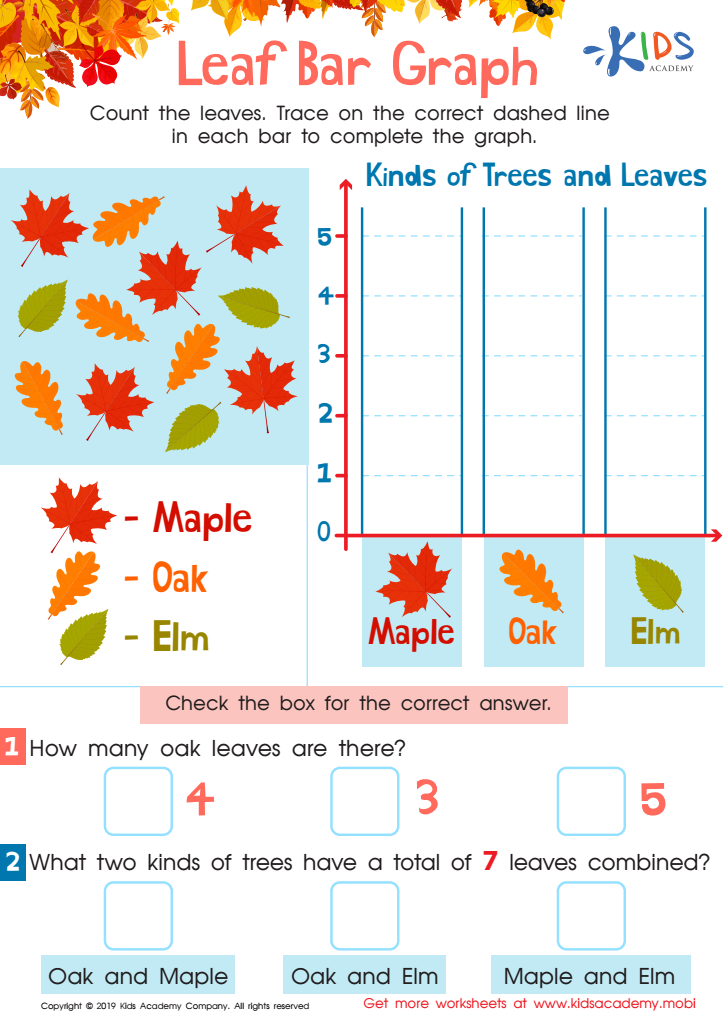
You can help your kids make learning easier and more enjoyable. While their teachers provide lessons and homework, you can take their education further. This worksheet can assist them in mastering bar charts. Count the leaves, then trace the correct line for each bar to complete the graph.
Leaf Bar Graph Worksheet
Worksheet
Comparing Biodiversity: Rainforest Plants Worksheet

Comparing Biodiversity: Rainforest Plants Worksheet

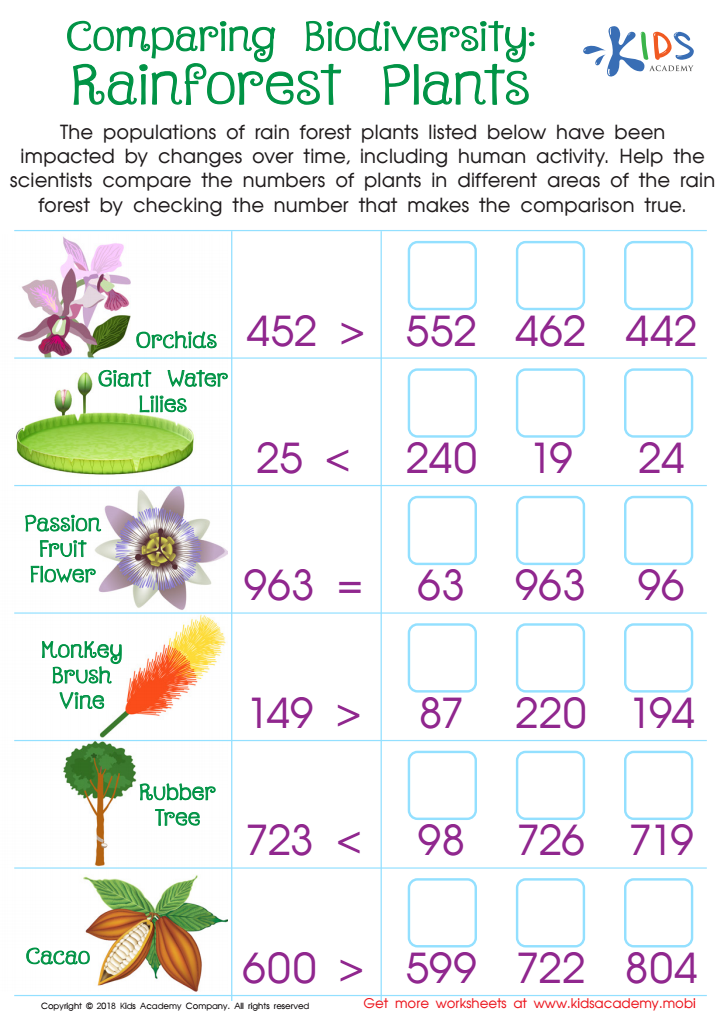
Have your students learn about biodiversity in the rainforest and practice number sense and reasoning with this colorful PDF worksheet. Comparing the numbers of plants found in different areas of the rainforest, they'll combine eco-friendly science and math to make the number comparisons true.
Comparing Biodiversity: Rainforest Plants Worksheet
Worksheet
Compare Length in Centimeters Worksheet

Compare Length in Centimeters Worksheet

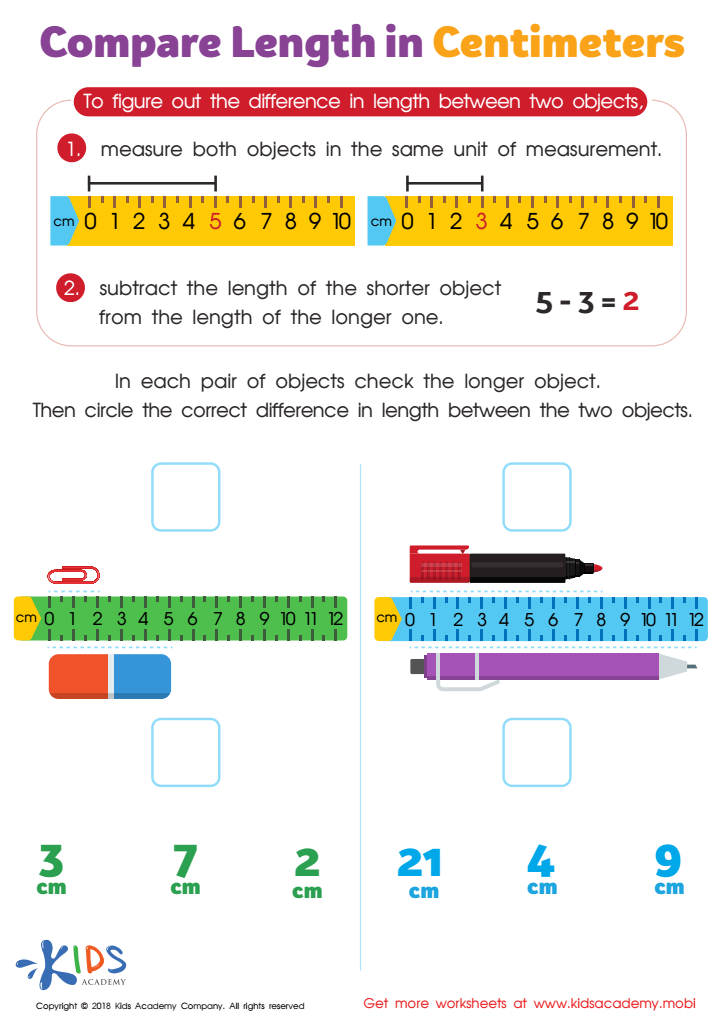
To do this worksheet, your child needs to be able to measure accurately, add and subtract. They must measure both items and subtract the shorter from the longer to work out the difference in length.
Compare Length in Centimeters Worksheet
Worksheet
Pencil Case Line Plot Worksheet

Pencil Case Line Plot Worksheet

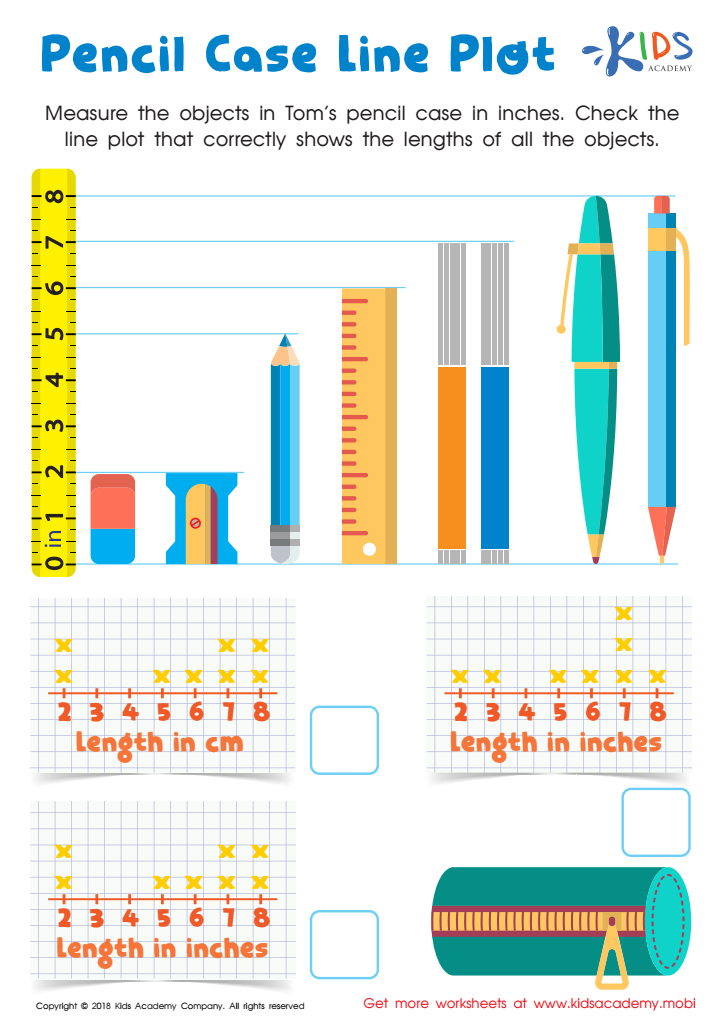
Explain to your child that a line plot is a way to organize information. For example, if they need to arrange objects, they should draw a line plot. Now, have them help Tom measure the objects in his pencil case in inches. Then, have them check the line plot that accurately shows the length.
Pencil Case Line Plot Worksheet
Worksheet
Family Line Plot Worksheet


Family Line Plot Worksheet

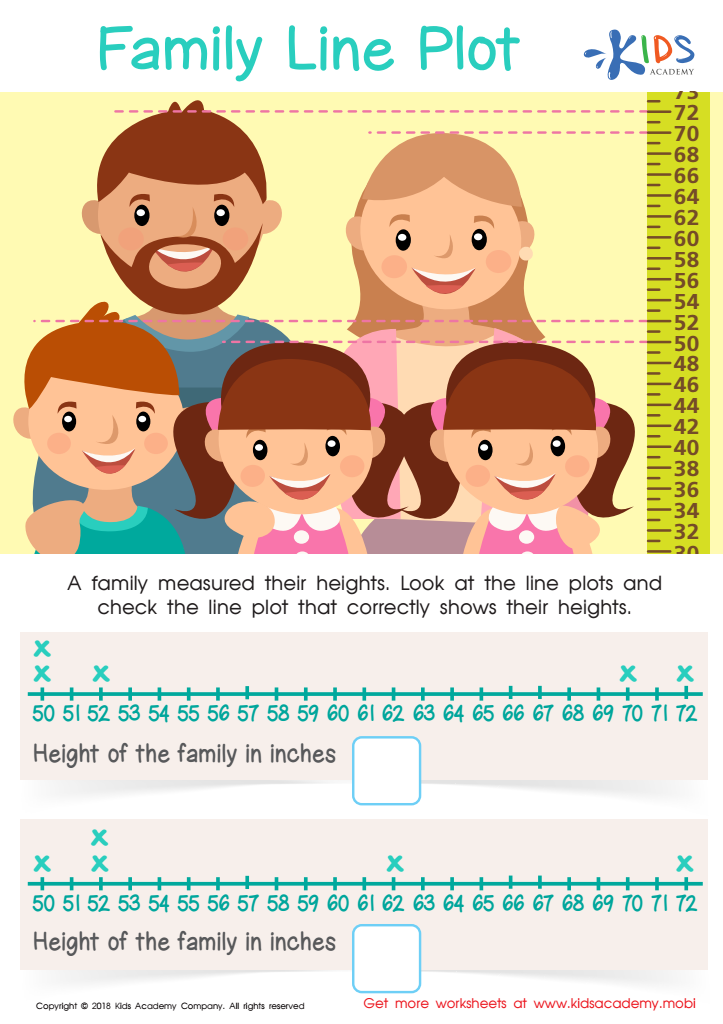
Have you and your kids ever done a family height measurement? How did it go? If they're familiar with it, this worksheet may be simpler. The picture shows a family with their heights recorded. Get your kid to look at the line plots and choose the one that shows the family's heights accurately.
Family Line Plot Worksheet
Worksheet


Interpreting data for children aged 8 to 9 is crucial for parents and teachers as it lays the foundation for essential skills that are vital in today’s data-driven world. At this age, children are beginning to develop analytical thinking and problem-solving abilities. Understanding data encourages them to critically evaluate information, make informed decisions, and develop reasoning skills that will serve them in academics and everyday life.

Moreover, proficiency in interpreting data fosters mathematical literacy, a key component of the curriculum. As children are introduced to concepts like graphs, charts, and statistics, they learn how to convey information visually and derive meaning from numerical contexts. This skill not only aids in subjects like math and science but also enhances literacy by improving comprehension and analytical skills when reading texts that include statistical data.

Parents and teachers who emphasize the importance of data interpretation can motivate children to engage with subjects more deeply, enhancing their creativity and curiosity. By doing so, they prepare students to thrive in high school and beyond, where data literacy is increasingly important. Ultimately, fostering these skills at a young age equips children with necessary tools for future success in judgment, decision-making, and understanding the world around them.