Mental math improvement Worksheets for Ages 8-9
7 filtered results
-
From - To
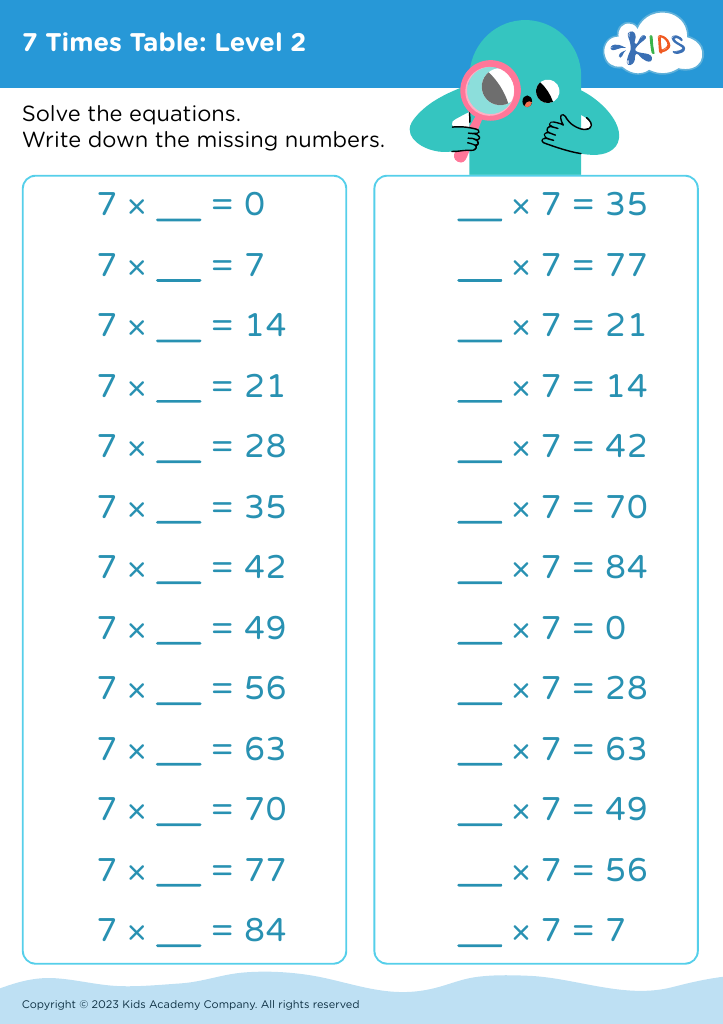
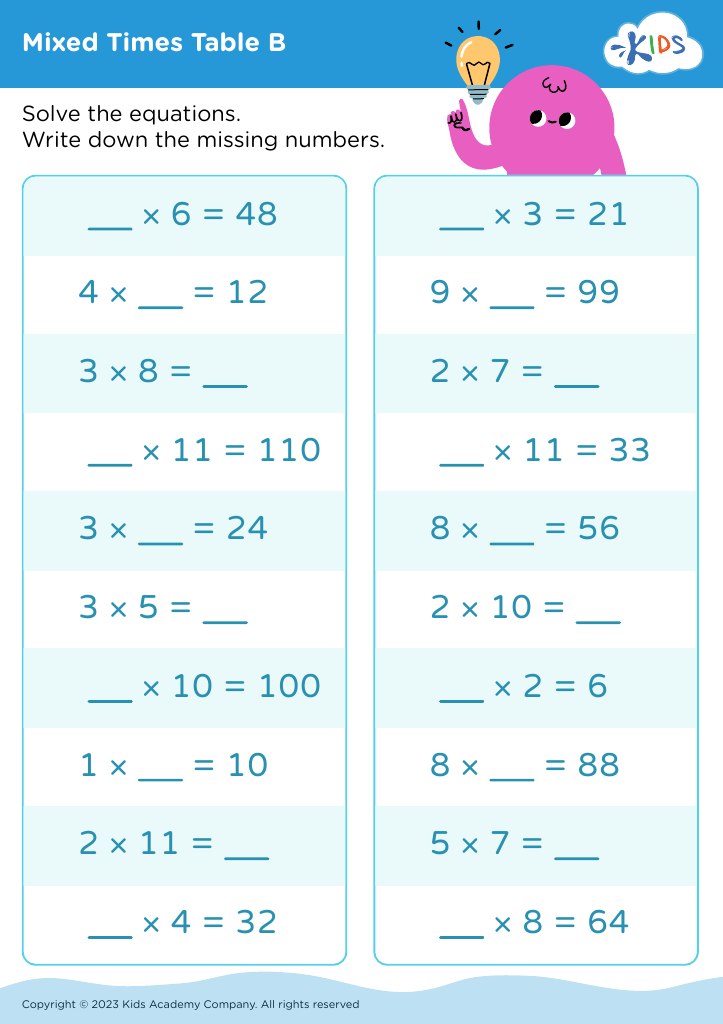
Unlock your child's mathematical potential with our Mental Math Improvement Worksheets for ages 8-9. Crafted by educational experts, these engaging and interactive resources help young learners sharpen their addition, subtraction, multiplication, and division skills. Our worksheets provide a diverse range of problems that enhance calculation speed, boost confidence, and improve problem-solving abilities. Perfect for in-class activities or at-home practice, these worksheets turn learning into a fun and rewarding experience. Build a strong mathematical foundation and keep your child excited about numbers with practical exercises designed to develop critical mental math skills. Start your child's journey to math mastery today!
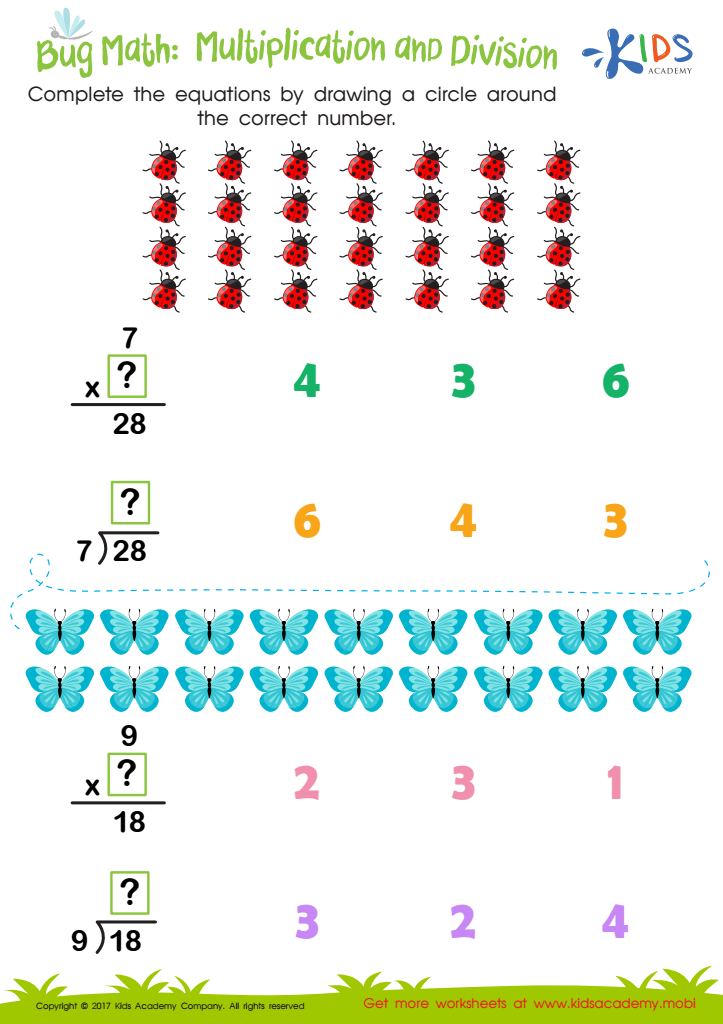
Multiplication and Division Worksheet
 Assign to My Students
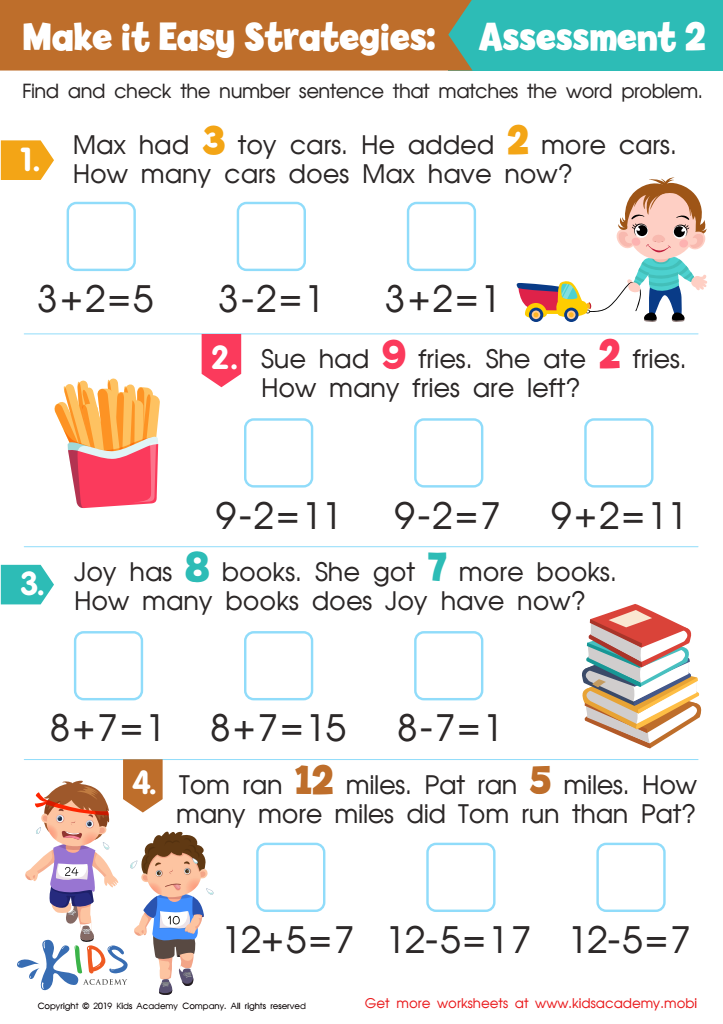
Make it Easy Strategies: Assessment 2 Worksheet
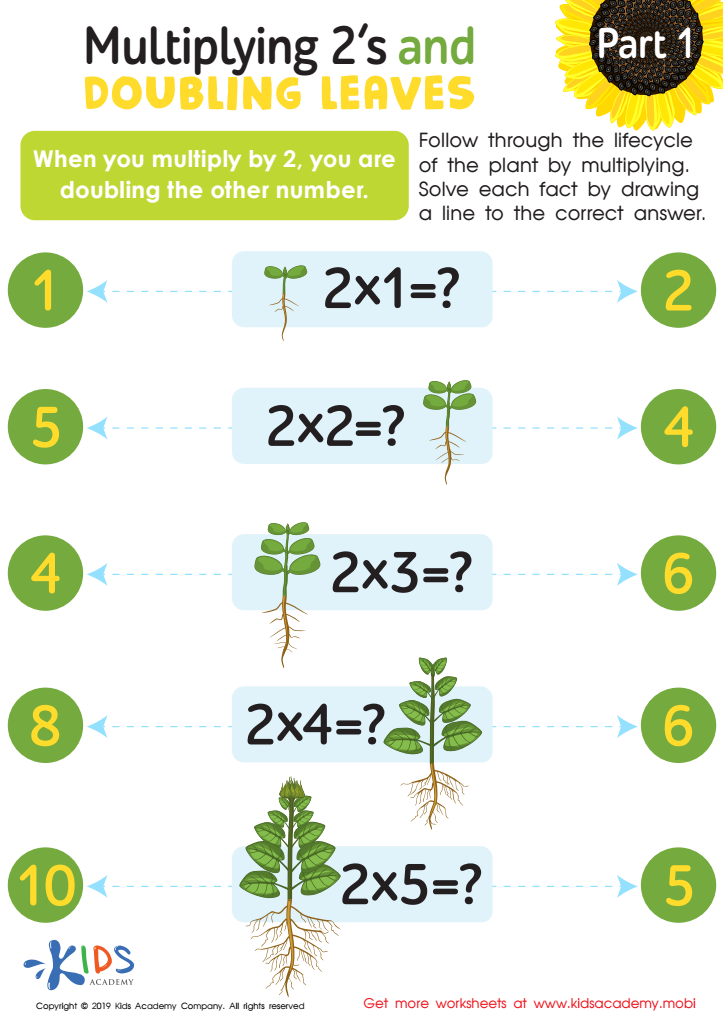
Multiplying 2’s and Doubling Leaves Part 1 Worksheet
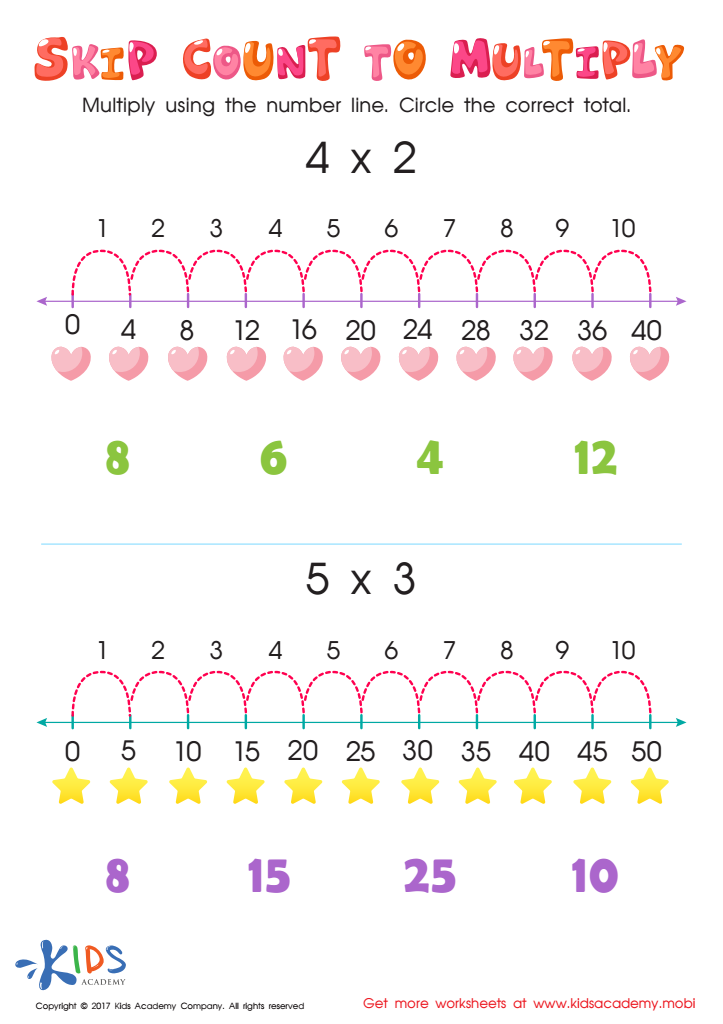
Skip Count Multiplication Worksheet







Mental math improvement for children aged 8-9 is essential and should be a priority for parents and teachers for several compelling reasons. Firstly, enhancing mental math skills at this stage fosters cognitive development. During these formative years, children's brains are exceptionally adaptable and able to form new neural connections easily. By practicing mental arithmetic, they improve memory, problem-solving abilities, and logical thinking.
Secondly, early mental math proficiency builds a solid foundation for future academic success. Mathematics is cumulative; understanding basic concepts is crucial for grasping more complex ones later on. Building confidence through mental math not only makes math feel less intimidating but also promotes a positive attitude towards learning in general.
Thirdly, mental math sharpens concentration and boosts quick decision-making skills. In today's fast-paced world, the ability to quickly analyze and respond to information is invaluable. Children who are adept at mental calculations tend to perform better under pressure, both in academic settings like tests and in real-life situations where quick thinking is required.
Finally, improving mental math skills encourages self-reliance and independence. Children learn that they can solve problems without always relying on calculators or external aids. This fosters a sense of personal accomplishment and autonomy that benefits them throughout their educational journey and beyond.








