
Recognizing Patterns Worksheets for Ages 8-9
25 filtered results
Difficulty Level
Grade
Age
-
From - To
Subject
Activity
Standards
Explore our engaging "Recognizing Patterns Worksheets" specifically designed for children ages 8-9! These interactive printable resources help young learners identify, create, and extend patterns through fun activities. The worksheets incorporate various patterns using shapes, colors, and numbers, fostering critical thinking and reasoning skills. Perfect for classroom or home use, they support the development of essential mathematical concepts while keeping students entertained. Our user-friendly format allows for easy printing and can be tailored to individual learning needs. Enhance your child’s cognitive abilities and nurture their love for learning with our diverse pattern recognition exercises. Start the journey of pattern exploration today!
Favorites
With answer key
Interactive
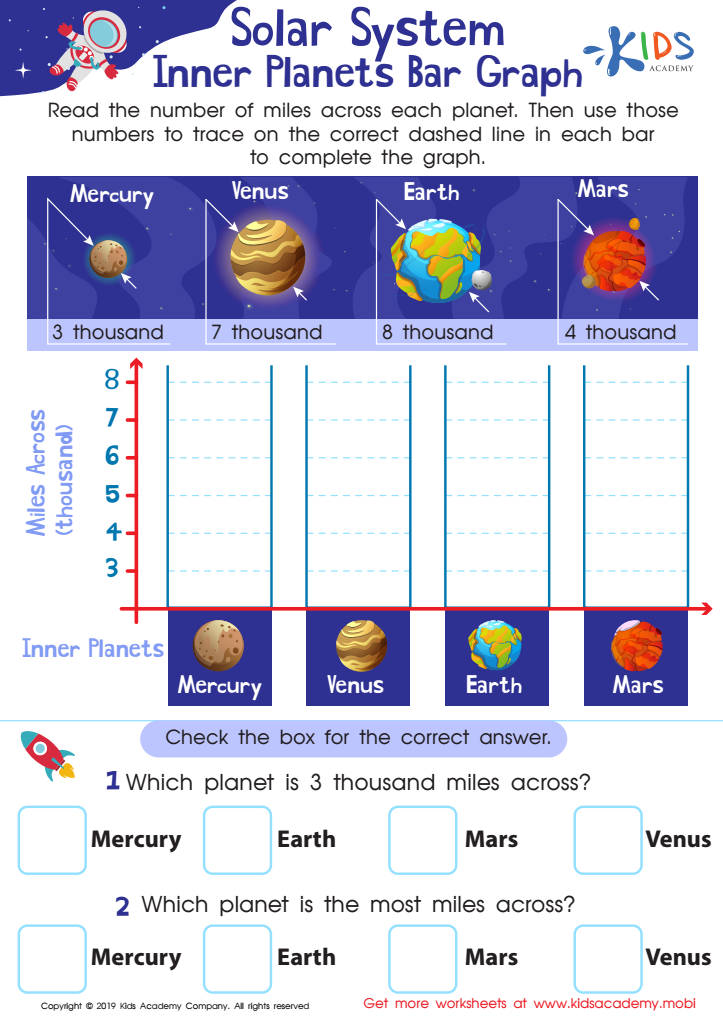
Planets Bar Graph Worksheet
With this fun, educational worksheet, kids can learn about bar graphs and the solar system simultaneously. Introduce them to the concept by reading out the number of miles for each planet, then help them trace the dashed lines in each bar to complete the graph.
 Assign to My Students
Planets Bar Graph Worksheet
Worksheet
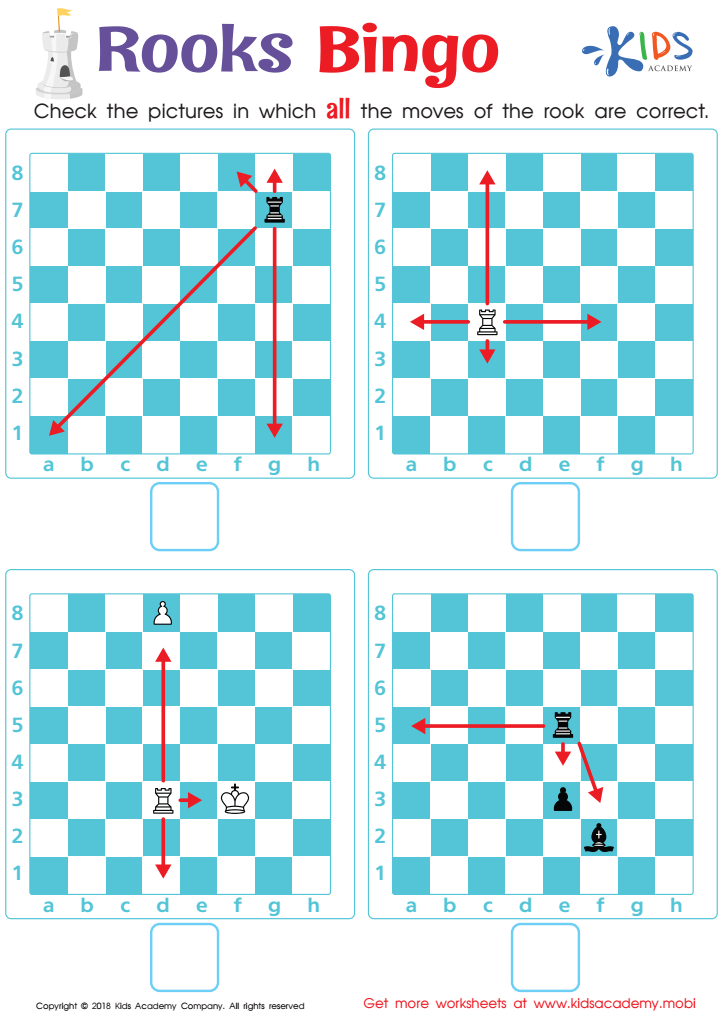
Rooks Bingo Worksheet
Can your child accurately move the rook pieces in a game of chess? Do they understand the moves a rook can and can't make? Check the worksheet with them to ensure the pictures correctly depict the rook's movements. Confirm only those with correct moves.
Rooks Bingo Worksheet
Worksheet
Join Kids Academy for Free
Who is primarily going to use this learning content?








Recognizing patterns is a fundamental skill that significantly enhances critical thinking and cognitive development in children aged 8-9. At this developmental stage, children are transitioning from concrete to more abstract thinking, making pattern recognition vital for their intellectual growth. It lays the groundwork for more complex mathematical concepts, such as algebra, geometry, and problem-solving.
For parents and teachers, encouraging pattern recognition fosters curiosity and engagement in learning. When children identify patterns, whether in numbers, shapes, or daily routines, they learn to predict outcomes, an essential skill across subjects. This ability also enhances their analytical skills, helping them draw connections between different ideas and concepts.
Moreover, recognizing patterns is more than just a math skill; it extends into reading, science, and even social contexts. For example, it helps in story comprehension through understanding character roles and plot structures, as well as forecasting seasonal changes in science.
Ultimately, investing time and resources in teaching recognizing patterns not only supports academic performance but also equips children with critical life skills. It fosters independence in learning and lays a strong foundation for future learning challenges. Encouraging this skill is a pivotal step towards nurturing well-rounded, capable individuals.








