Check out this FREE "Shape Recognition" Trial Lesson for age 8-9!

Cut Rectangles: Halves and Wholes

Favorites
With answer key
Interactive
  • 8-9
  • Shape Recognition
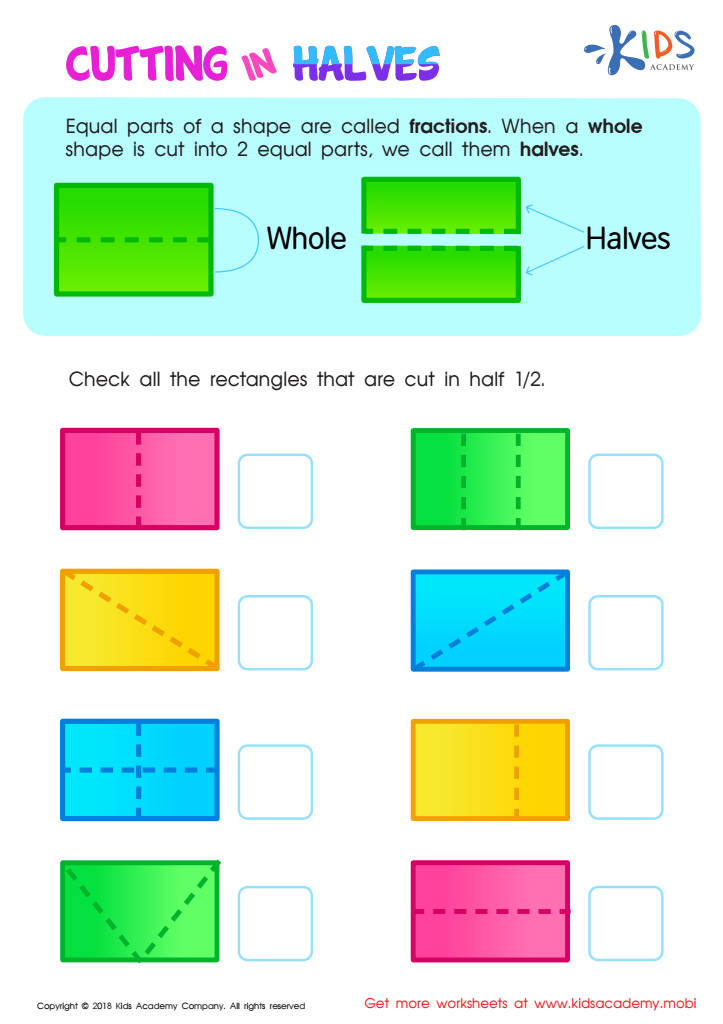
Cutting in Halves Worksheet

Cutting in Halves Worksheet

Show your child how to divide a whole shape, like a square, into smaller pieces to become fractions. Point out when a shape is divided into two equal parts, it's called a half. Look at the worksheet together, and identify all rectangles that are cut in half (½).
Cutting in Halves Worksheet
Worksheet
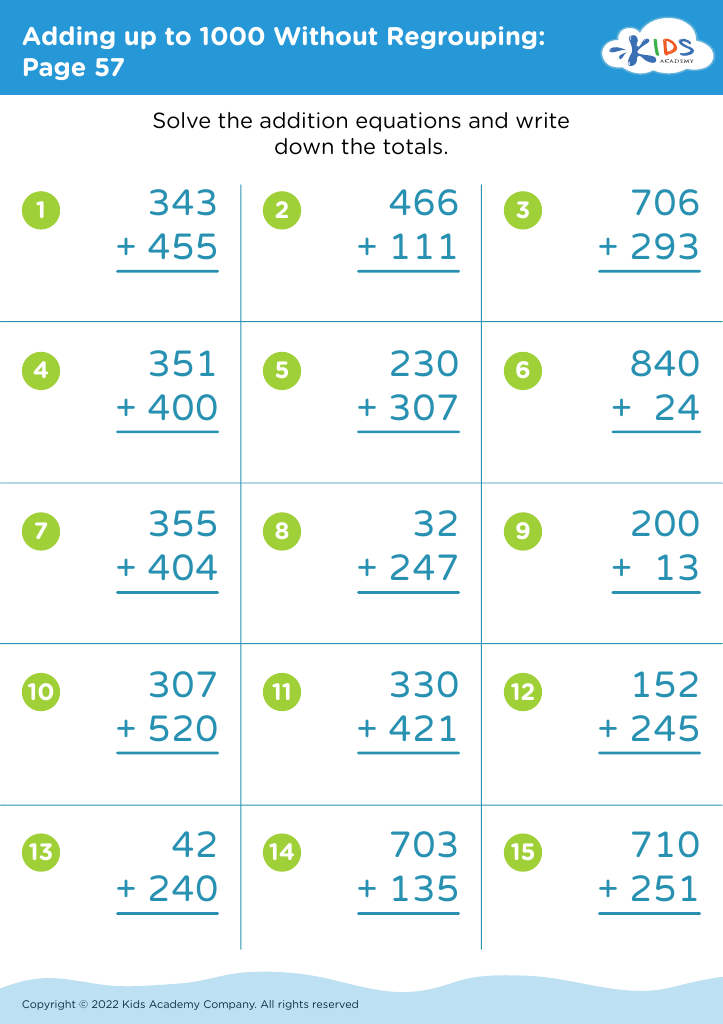
Adding up to 1000 Without Regrouping: Page 57
Worksheet
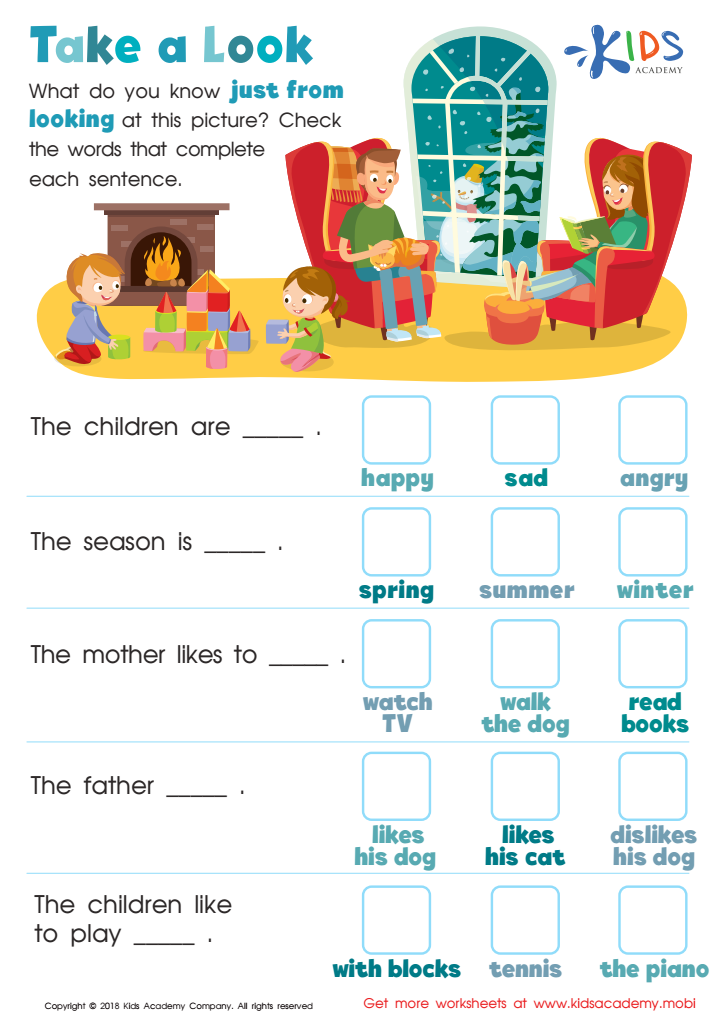
Take a Look - Part 1 Worksheet

Take a Look - Part 1 Worksheet

Young learners gain understanding when using picture clues when reading. Looking at illustrations can help students learn the meaning of key vocabulary when reading fiction or informational text. Ask your students to look at the worksheet and observe what they can learn from the picture. It's a great comprehension strategy for early readers.
Take a Look - Part 1 Worksheet
Worksheet
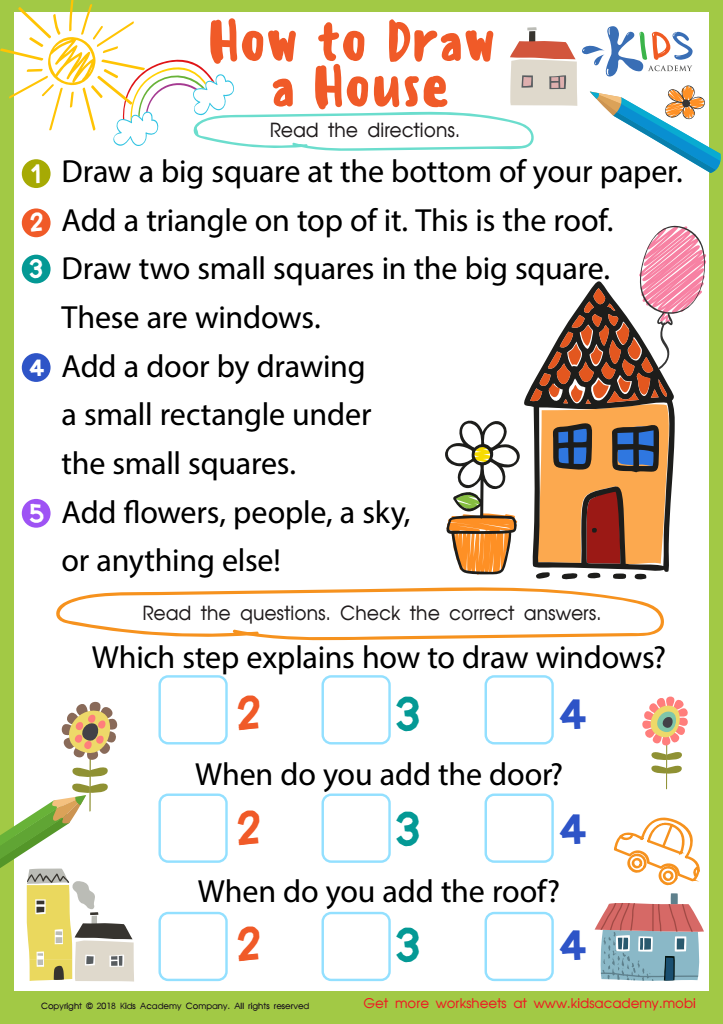
How to Draw House Worksheet

How to Draw House Worksheet

Does your child love to draw? Why not try teaching them some easy tricks? Get them to follow directions on this worksheet and learn how to draw a house. Read the questions at the end and ensure they get the answers right. Your kids will surely love it!
How to Draw House Worksheet
Worksheet
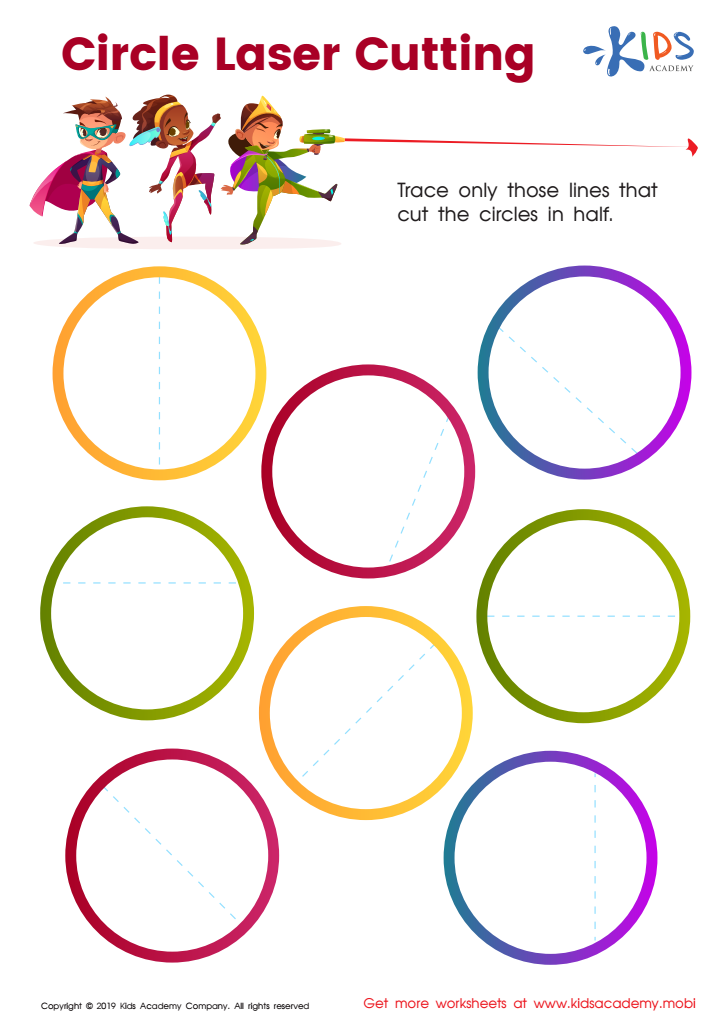
Circle Laser Cutting Worksheet
Circle Laser Cutting Worksheet

Encourage your kids to learn geometry! Remind them that when shapes are cut into two equal parts, they are called halves. Have them look at the circles in the worksheet, and trace the lines that cut the circles in half. Geometry is an essential part of education, and although it may not be exciting, it's a valuable skill to have.
Circle Laser Cutting Worksheet
Worksheet
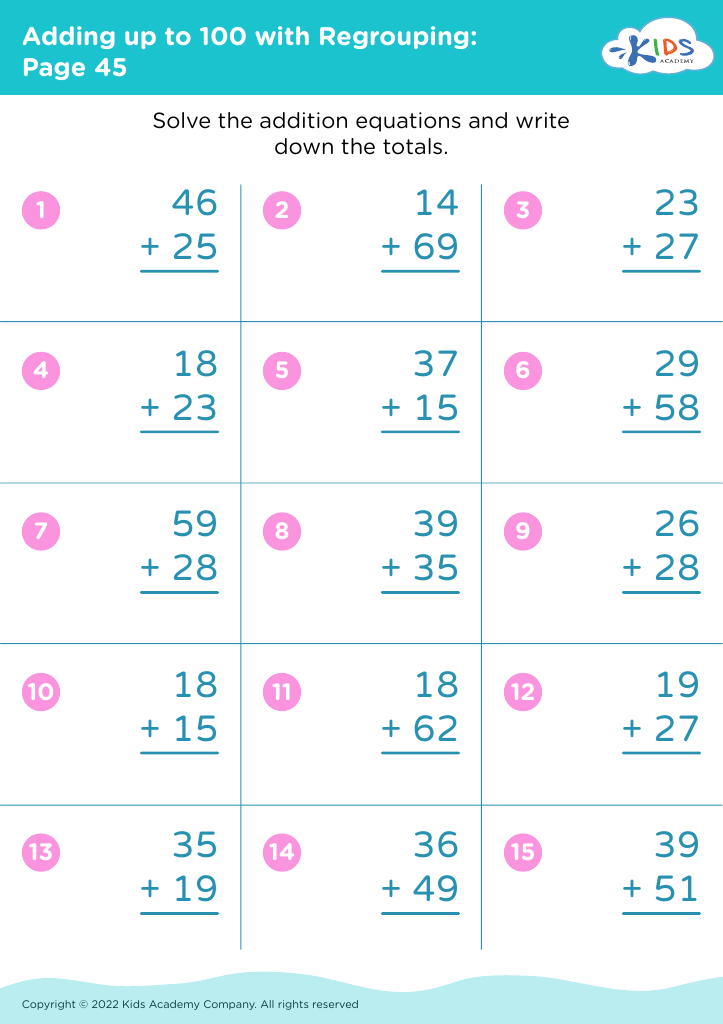
Adding up to 100 with Regrouping: Page 45
Worksheet
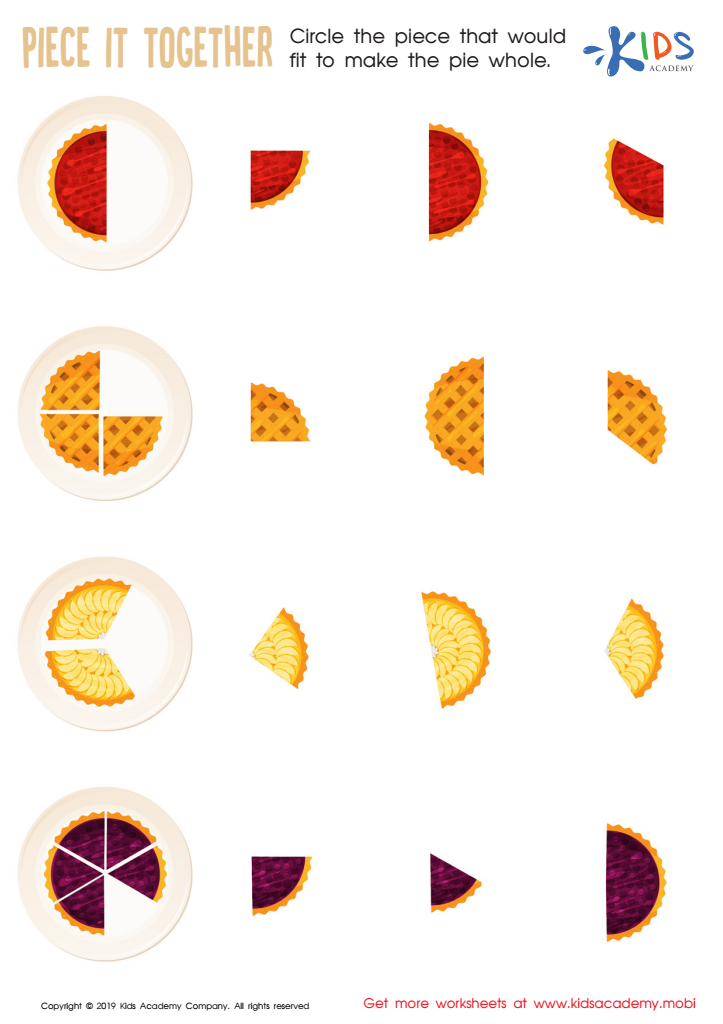
Piece it together Worksheet

Piece it together Worksheet

Help your kids learn fractions! Even if they're not eager, teach them as they get older. Teachers will provide enough lessons and homework, but you can go a step further. Look at a worksheet with your kids and help them circle the piece that would make the pie whole.
Piece it together Worksheet
Worksheet
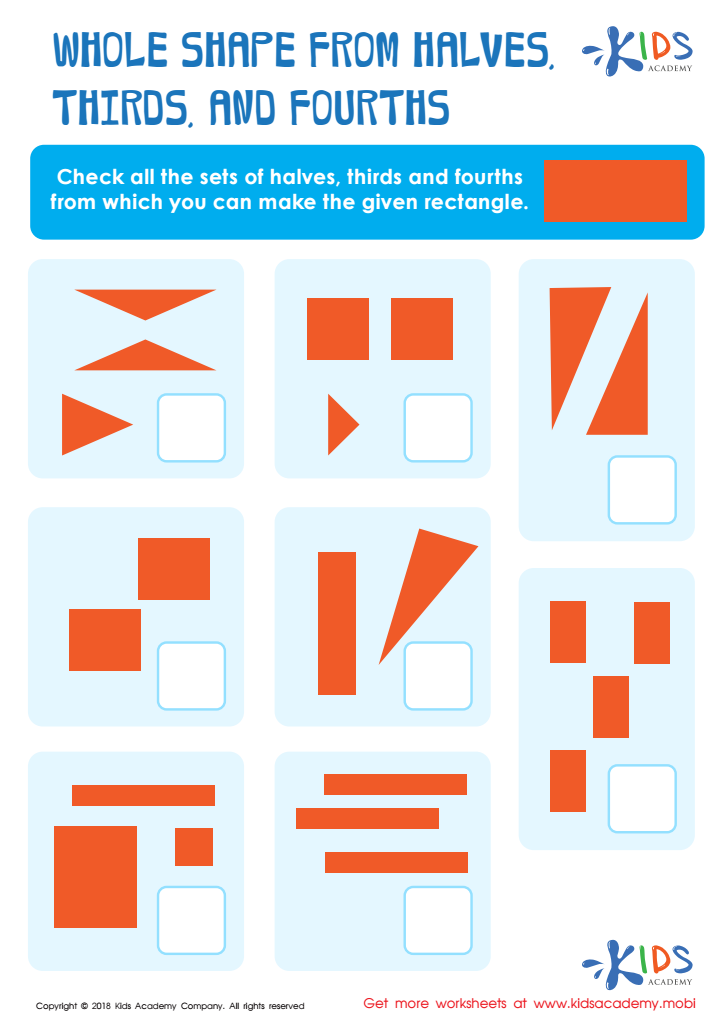
Whole Shape from Halves, Thirds and Fourths Worksheet
Whole Shape from Halves, Thirds and Fourths Worksheet
Explain to your students that they can make a new shape by combining halves, thirds, and fourths of a shape. Show them the worksheet with the rectangle at the top and ask them to find which sets of halves, thirds, and fourths make it. Have them check all the correct sets.
Whole Shape from Halves, Thirds and Fourths Worksheet
Worksheet
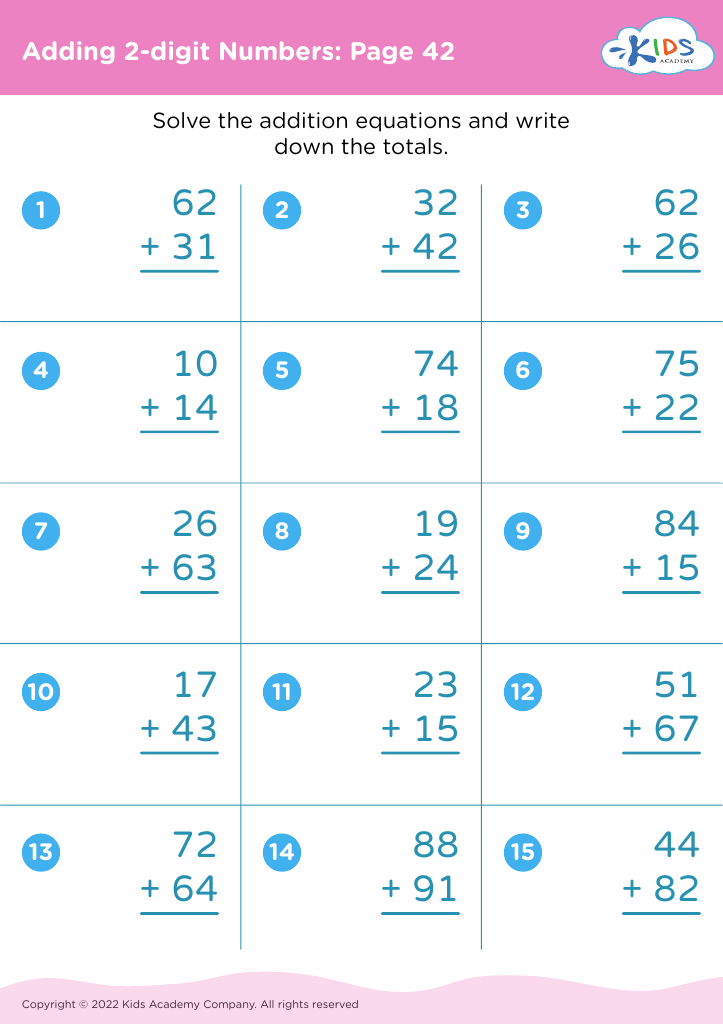
Adding 2-digit Numbers: Page 42

Adding 2-digit Numbers: Page 42

Adding 2-digit Numbers: Page 42
Worksheet
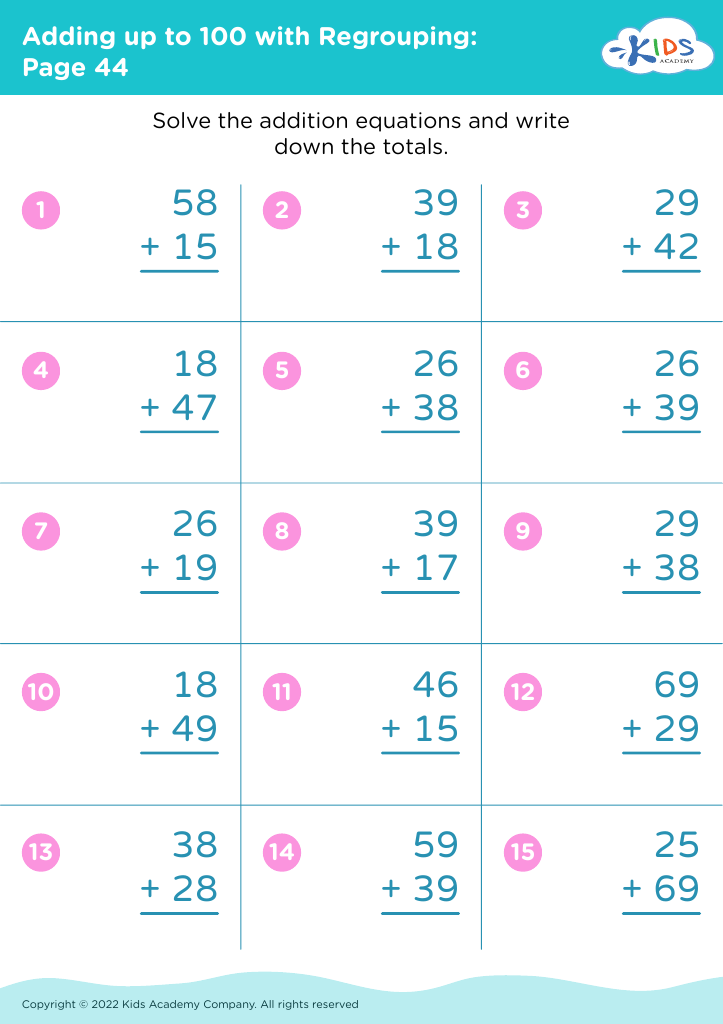
Adding up to 100 with Regrouping: Page 44
Worksheet
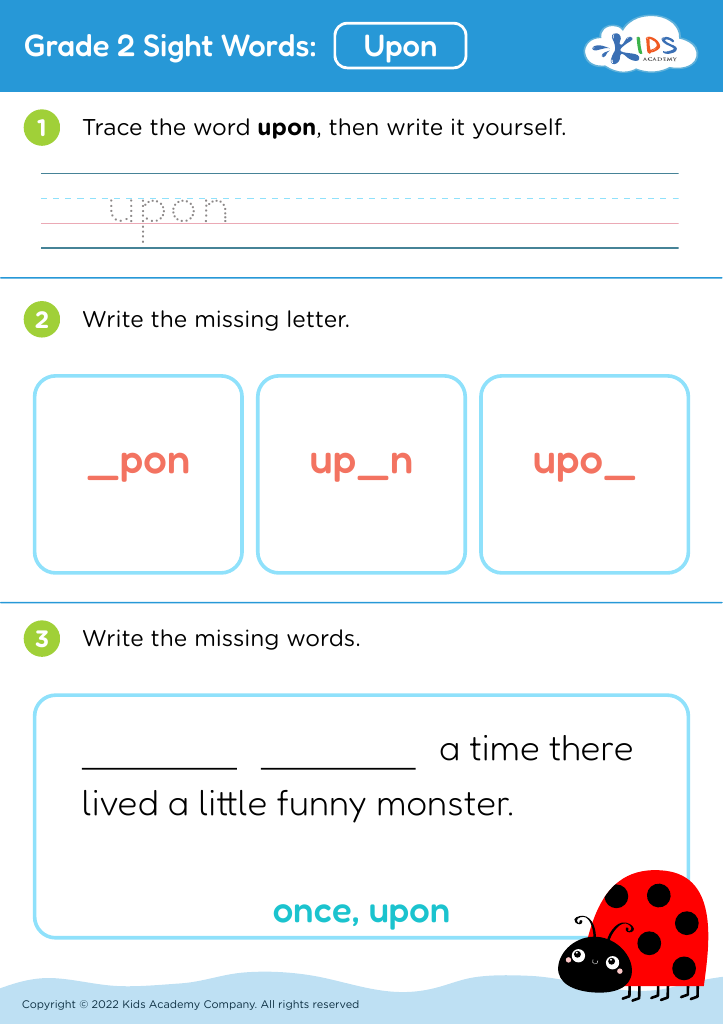
Grade 2 Sight Words: Upon

Grade 2 Sight Words: Upon

Grade 2 Sight Words: Upon
Worksheet
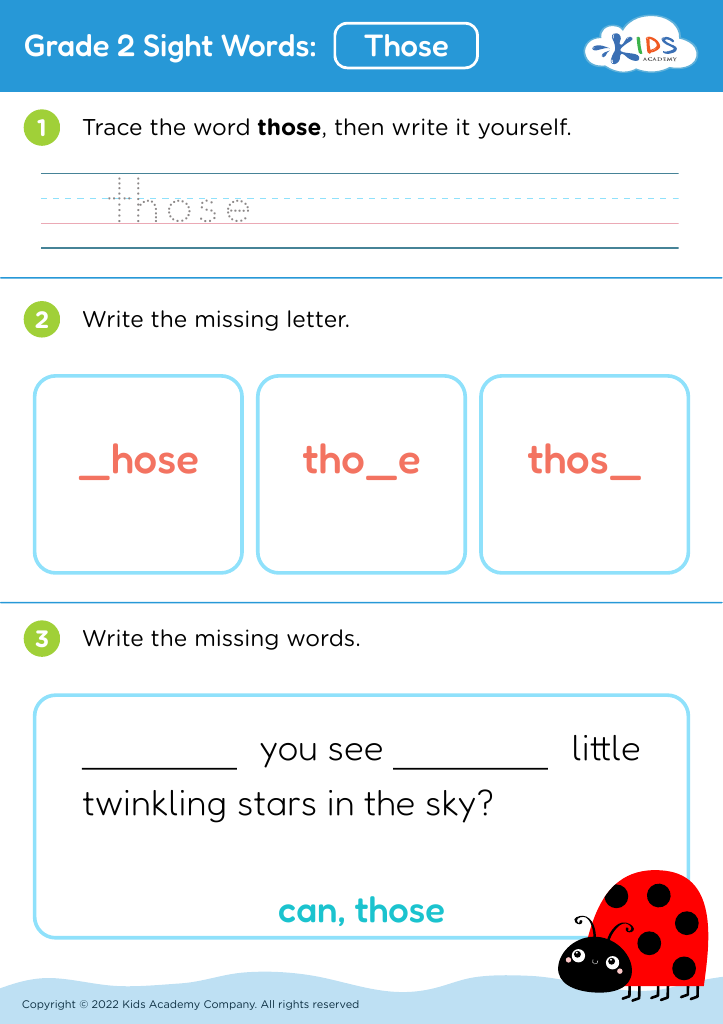
Grade 2 Sight Words: Those

Grade 2 Sight Words: Those

Grade 2 Sight Words: Those
Worksheet
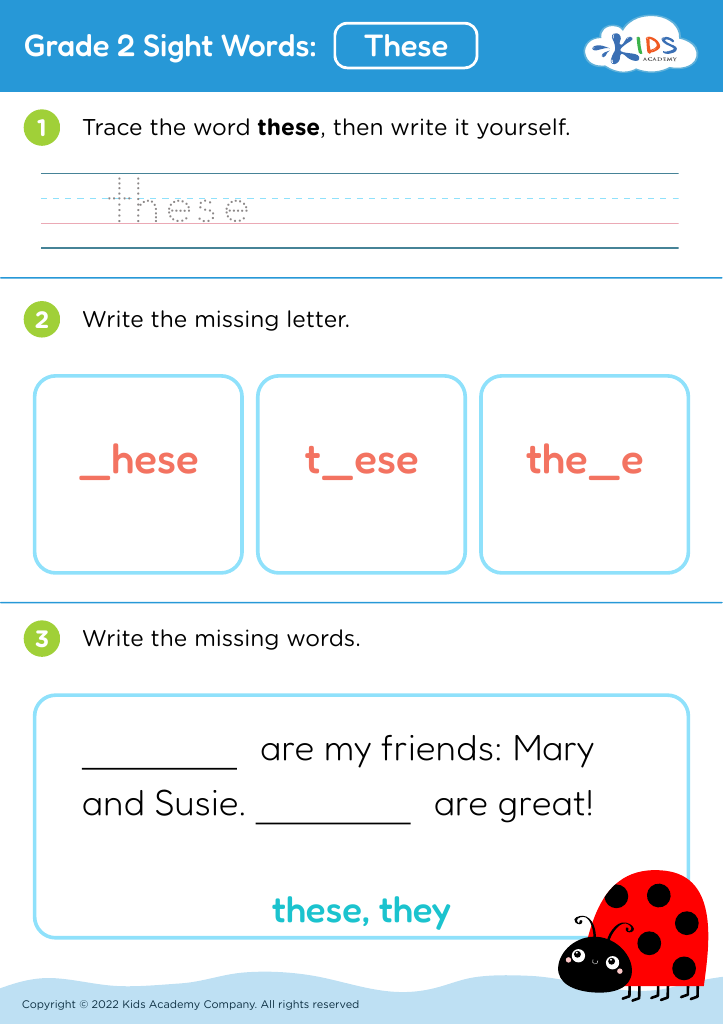
Grade 2 Sight Words: These

Grade 2 Sight Words: These

Grade 2 Sight Words: These
Worksheet
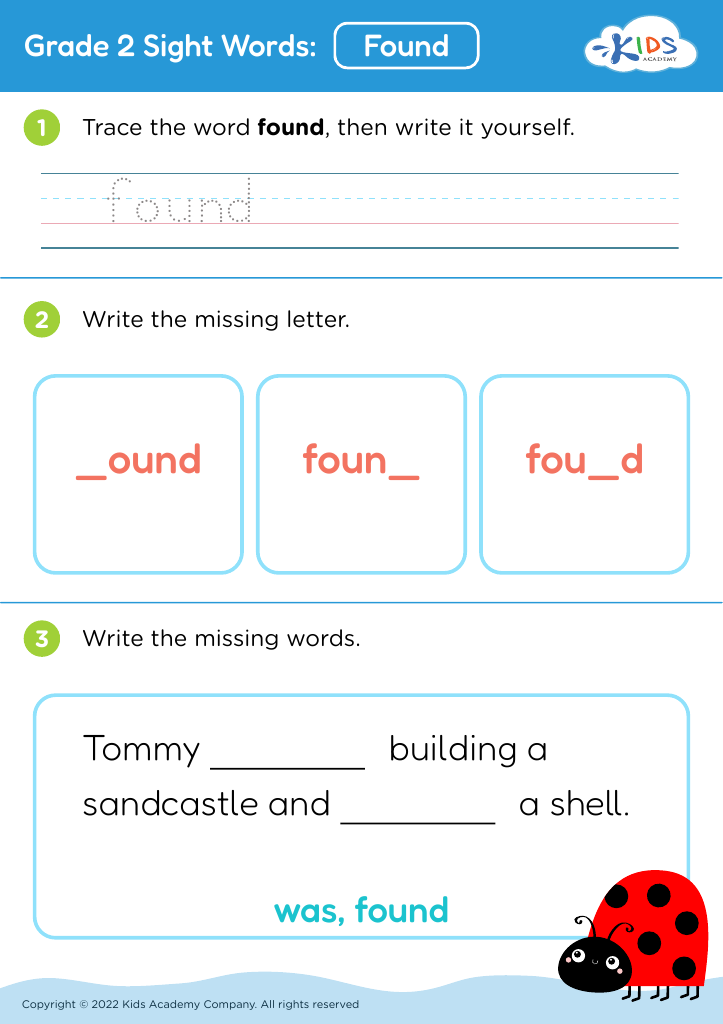
Grade 2 Sight Words: Found

Grade 2 Sight Words: Found

Grade 2 Sight Words: Found
Worksheet
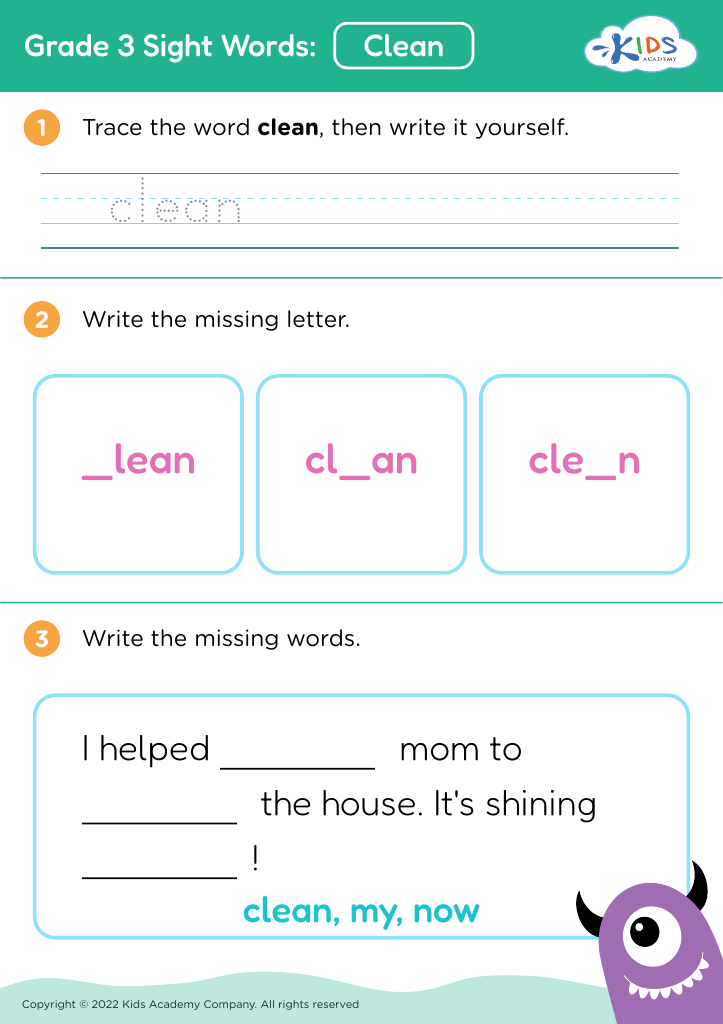
Grade 3 Sight Words: Clean

Grade 3 Sight Words: Clean

Grade 3 Sight Words: Clean
Worksheet


... 2 3

Shape recognition is crucial for children aged 8-9 as it serves as a foundational skill for various academic subjects and essential life skills. At this age, children are transitioning from basic identification to understanding concepts like geometry, symmetry, and spatial reasoning. Mastering shape recognition enhances their problem-solving abilities, critical thinking, and cognitive development, making it easier for them to tackle mathematical concepts in the future.

For parents and teachers, fostering shape recognition helps promote fine motor skills through activities like drawing and modeling shapes, which are valuable for artistic expression and handwriting. Furthermore, it encourages observational skills as children start to relate shapes to objects in their environment, promoting curiosity and exploration.

Understanding shapes also lays the groundwork for more complex concepts such as fractions and measurement, ensuring students are adequately prepared for higher-level math. Additionally, recognizing patterns and symmetries in shapes can improve logical reasoning skills. This knowledge instills confidence and a positive attitude towards learning, setting the stage for academic success. Thus, by prioritizing shape recognition, parents and teachers nurture well-rounded, capable students equipped to understand and engage with the world around them effectively.