Time-telling skills Worksheets for Ages 8-9
4 filtered results
-
From - To
Discover our engaging and educational Time-Telling Skills Worksheets designed specifically for children aged 8-9. These worksheets offer diverse activities that make learning how to read and tell time both fun and interactive. Students will explore various time formats, including both digital and analog clocks, as well as real-life scenarios to enhance their understanding. Perfect for reinforcing classroom lessons or supplementing home study, our worksheets help develop critical thinking and time management skills. With colorful visuals and age-appropriate challenges, your child will gain confidence and mastery in this essential life skill. Start your time-telling journey today!
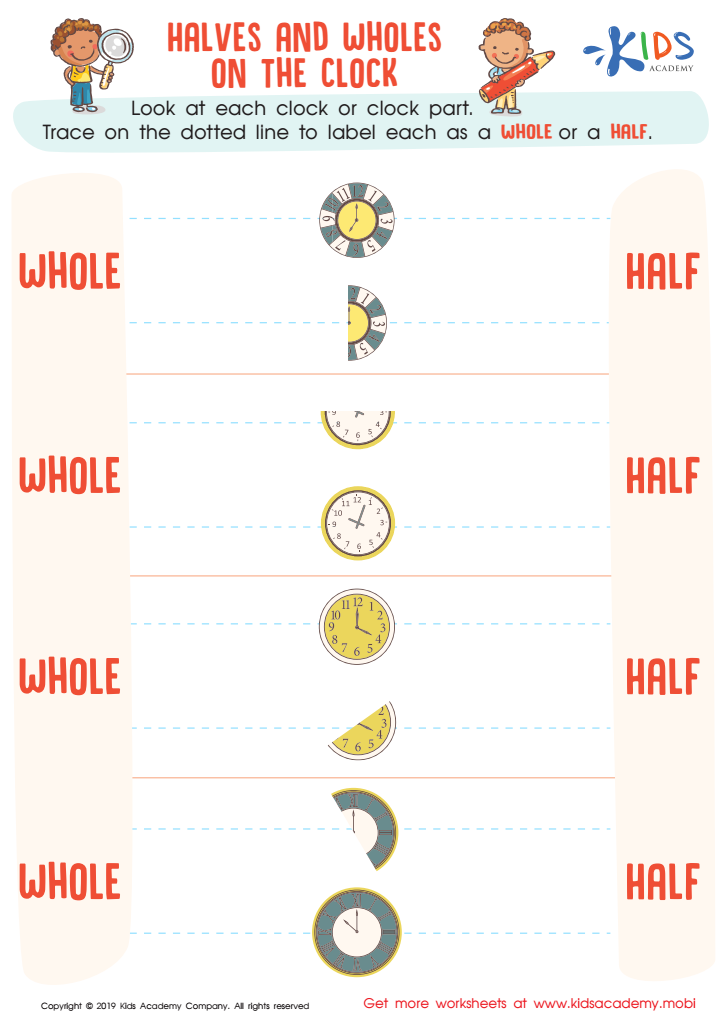
Halves and Wholes on the Clock Worksheet
 Assign to My Students
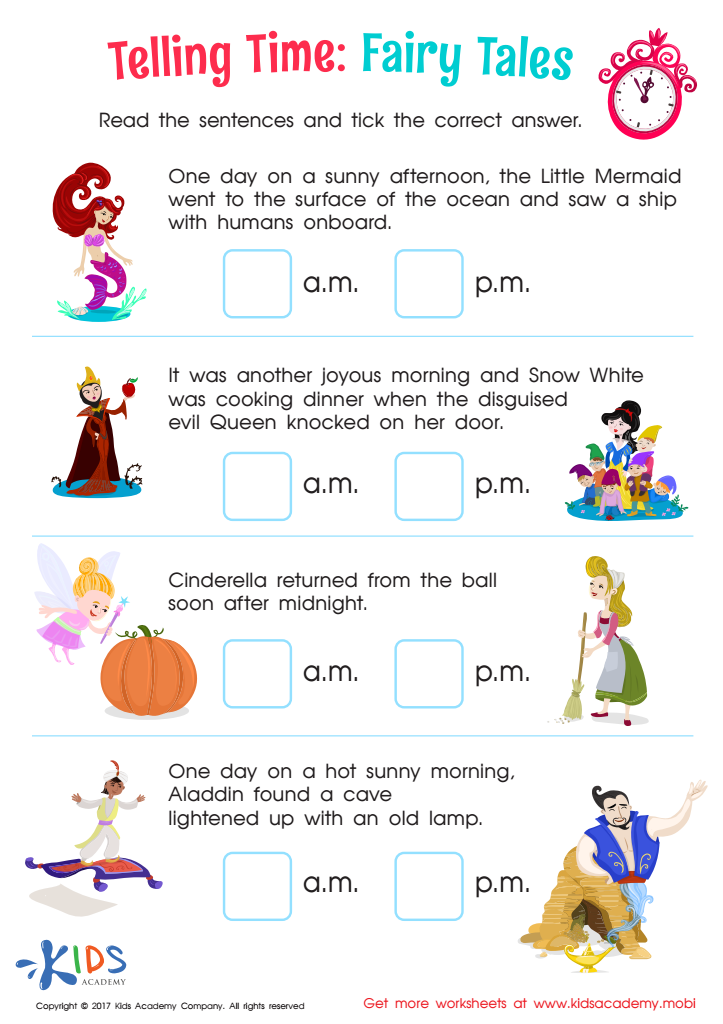
Telling Time: Fairy Tales Worksheet
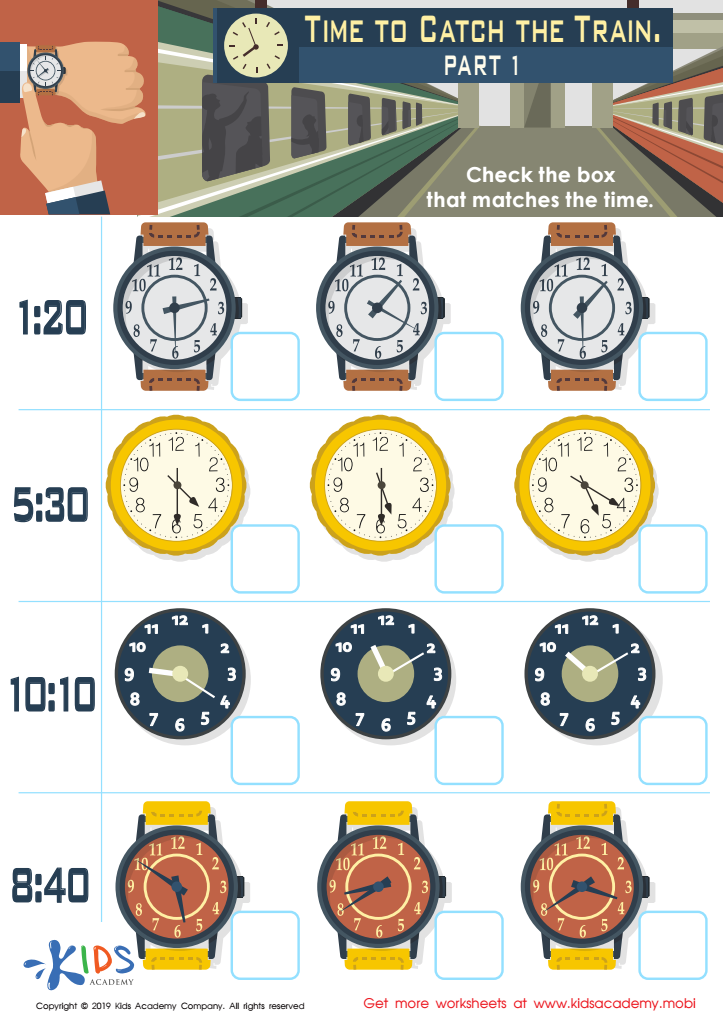
Time to Catch the Train Part 1 Worksheet








Time-telling skills are essential for children aged 8-9, encompassing more than just the ability to read a clock. At this developmental stage, children are honing their critical thinking and problem-solving skills, and understanding time plays a vital role in these areas. Time-telling helps children develop organizational skills, as managing their daily schedules, whether for school, chores, or leisure activities, is tied to their understanding of time.
Additionally, knowing how to tell time increases a child's independence and reduces reliance on adults for time management, fostering confidence from an early age. This skill corresponds to various subjects, such as math, wherein they practice counting, fractions, and the concept of measurement.
Furthermore, time-telling can enhance a child's social skills by aligning their awareness of time with the plans and routines of their peers, promoting punctuality and cooperation during group activities. In the digital age, where students are inundated with screens showing digital time, underscoring traditional analog clocks ensures a well-rounded understanding. Consequently, parents and teachers should prioritize time-telling as a critical life skill, fostering essential competencies that extend well beyond the classroom into everyday experiences and lifelong learning.








