Understanding biodiversity Worksheets for Ages 8-9
4 filtered results
-
From - To
Explore the fascinating world of biodiversity with our engaging worksheets designed for children aged 8-9. These carefully crafted resources help young learners understand the variety of life on Earth, including different species, ecosystems, and habitats. Through fun activities, such as coloring, matching, and interactive quizzes, students will develop a deeper appreciation for the environment and the importance of protecting it. Our worksheets encourage critical thinking and creativity, making learning about biodiversity both enjoyable and informative. Perfect for classroom or home use, these resources will inspire curiosity and environmental awareness in your child. Dive into the wonders of nature today!
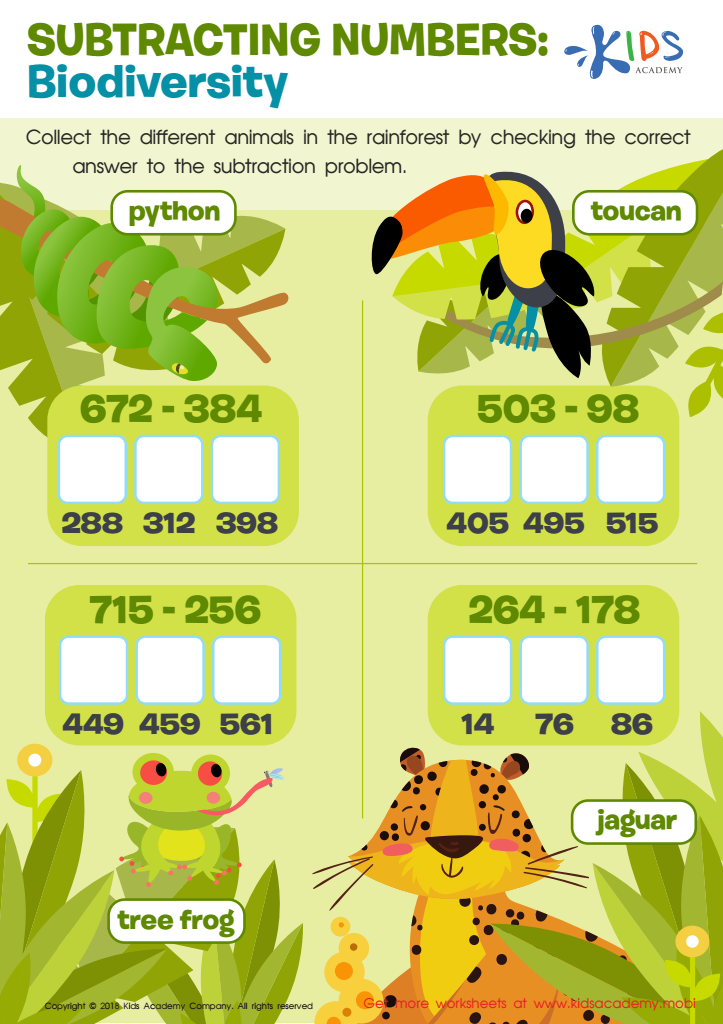
Subtracting Numbers: Biodiversity Worksheet
 Assign to My Students
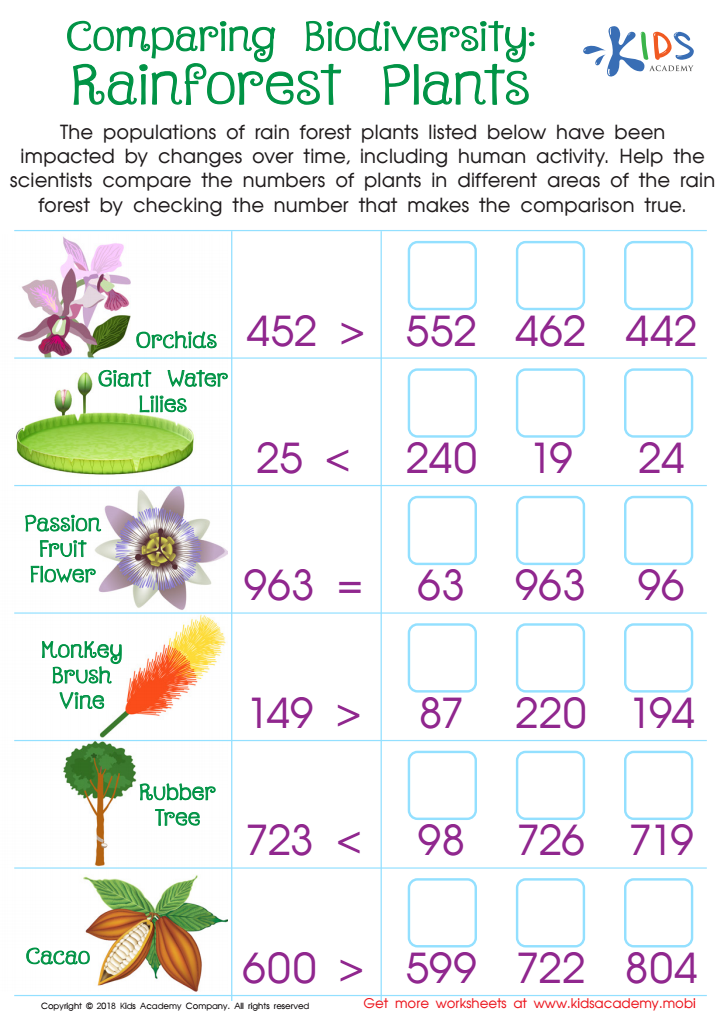
Comparing Biodiversity: Rainforest Plants Worksheet
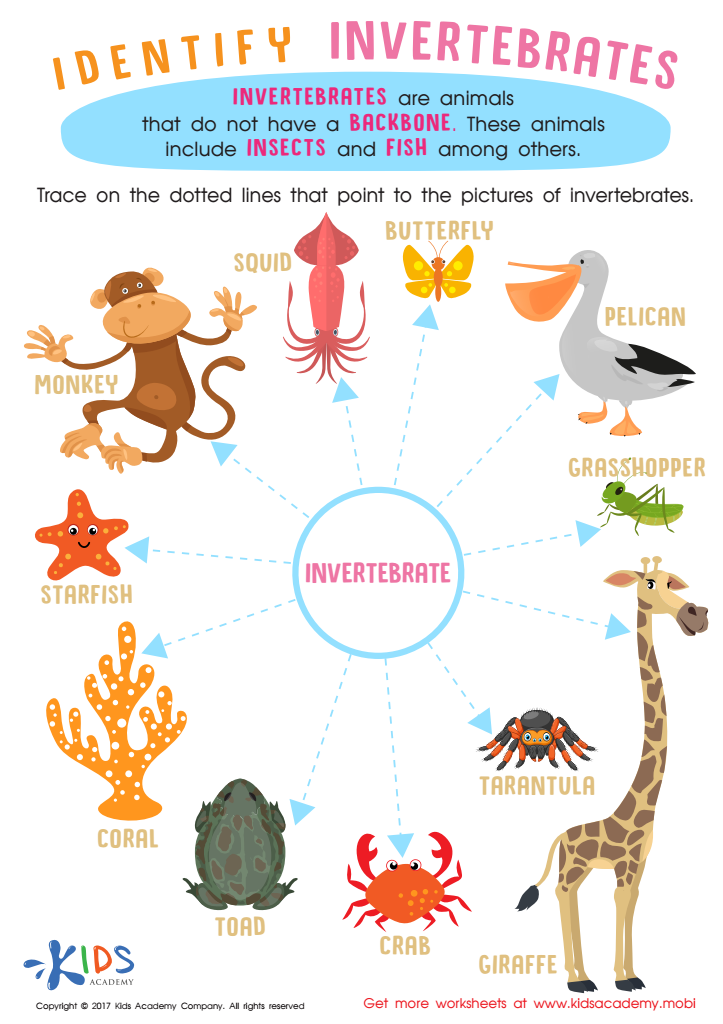
Invertebrates Worksheet for Grade 3
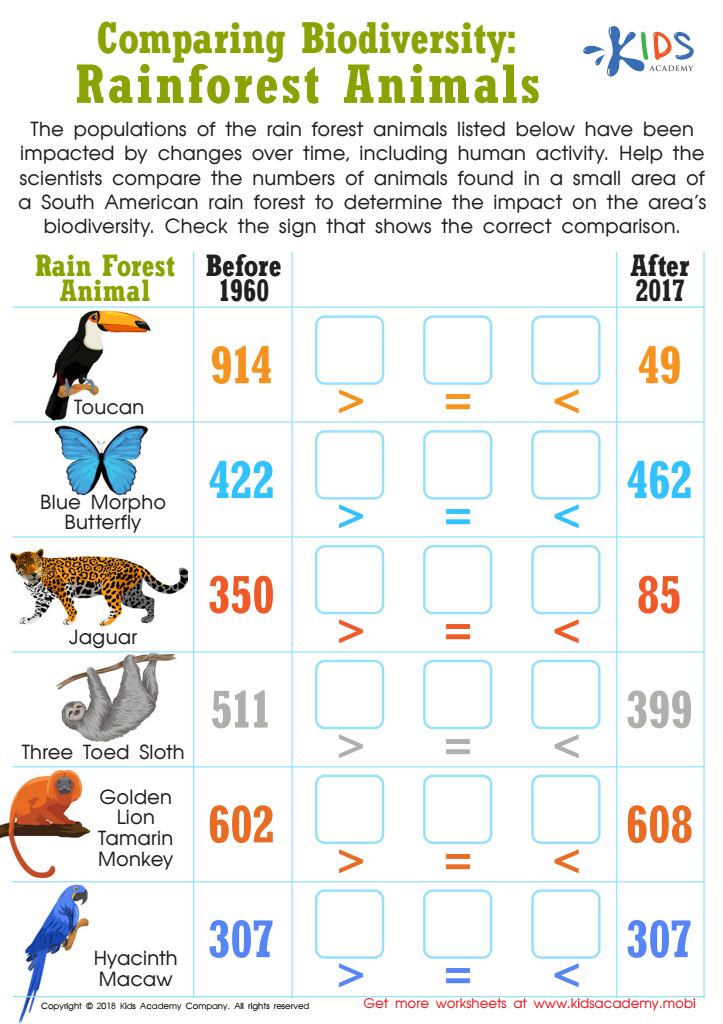
Comparing Biodiversity: Rainforest Animals Worksheet




.jpg)

Understanding biodiversity is crucial for children aged 8-9 as it lays the foundation for their connection to nature, awareness of environmental issues, and appreciation for living organisms. At this age, children are curious and eager to learn about the world around them. By exploring biodiversity, they discover the variety of plants, animals, and ecosystems, which fosters a sense of wonder and respect for life.
Educators and parents should care about this topic because early exposure to biodiversity helps cultivate environmental stewardship. As young learners comprehend how different species and their habitats interact, they develop empathy and a sense of responsibility towards their environment. This knowledge can motivate them to engage in eco-friendly practices and advocate for conservation efforts.
Moreover, biodiversity teaches important concepts such as adaptability, ecosystems, and interdependence. Such lessons are not only vital for scientific literacy but also enhance critical thinking and problem-solving skills. In an increasingly diverse world, discussing biodiversity allows children to appreciate not just natural diversity but also cultural diversity, promoting inclusivity and understanding.
Therefore, nurturing an understanding of biodiversity in children contributes to forming environmentally responsible citizens and instills a lifelong love for nature and the values of sustainability.








