Check out this FREE "Understanding fractions" Trial Lesson for age 8-9!

Sorting Objects into 3 Categories

Favorites
With answer key
Interactive
  • 8-9
  • Understanding fractions
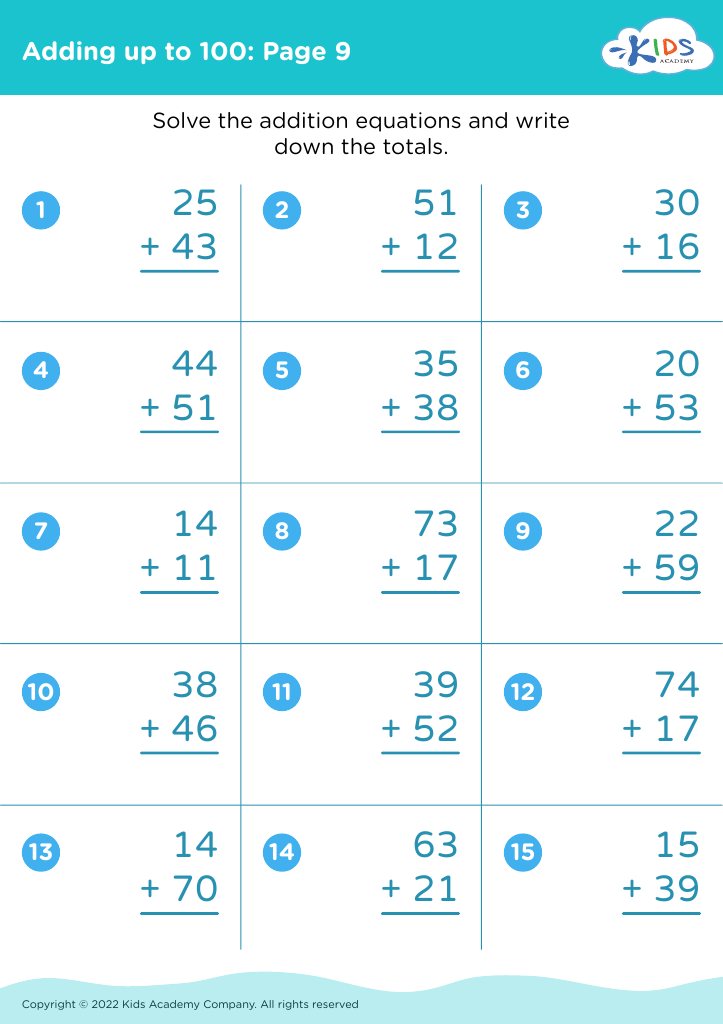
Adding up to 100: Page 9

Adding up to 100: Page 9

Adding up to 100: Page 9
Worksheet
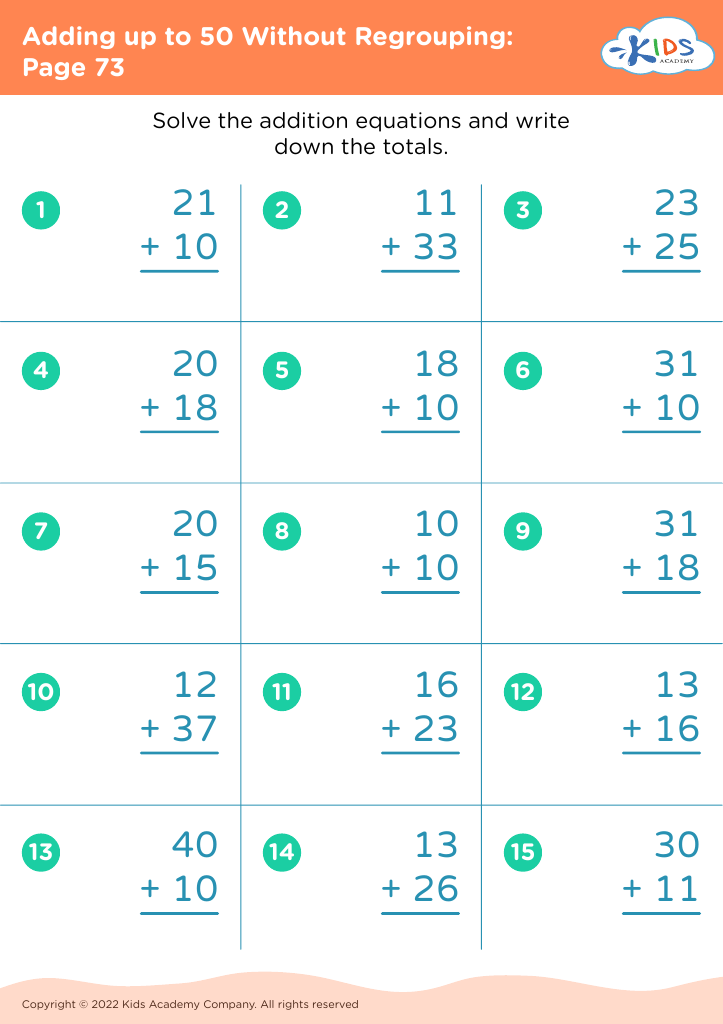
Adding up to 50 Without Regrouping: Page 73
Worksheet
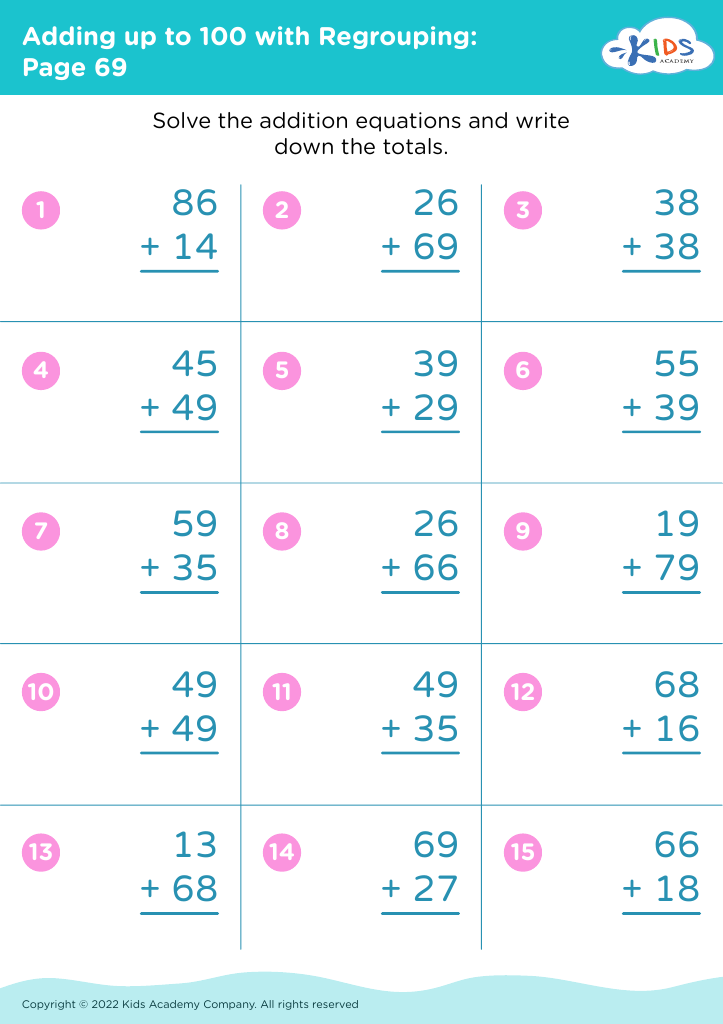
Adding up to 100 with Regrouping: Page 69
Worksheet
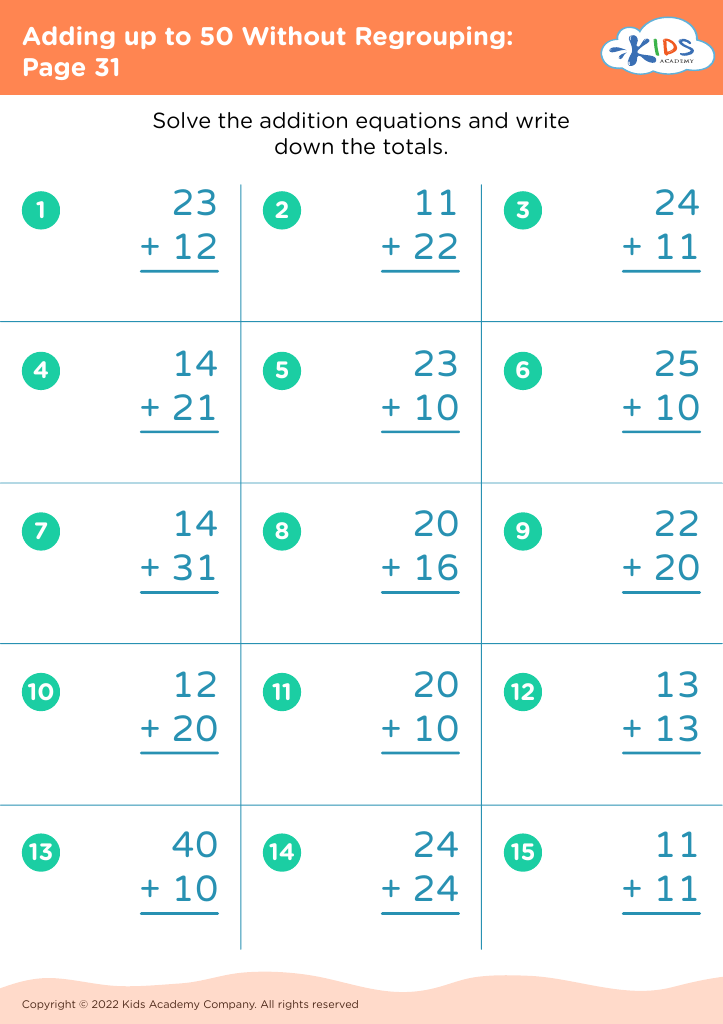
Adding up to 50 Without Regrouping: Page 31
Worksheet
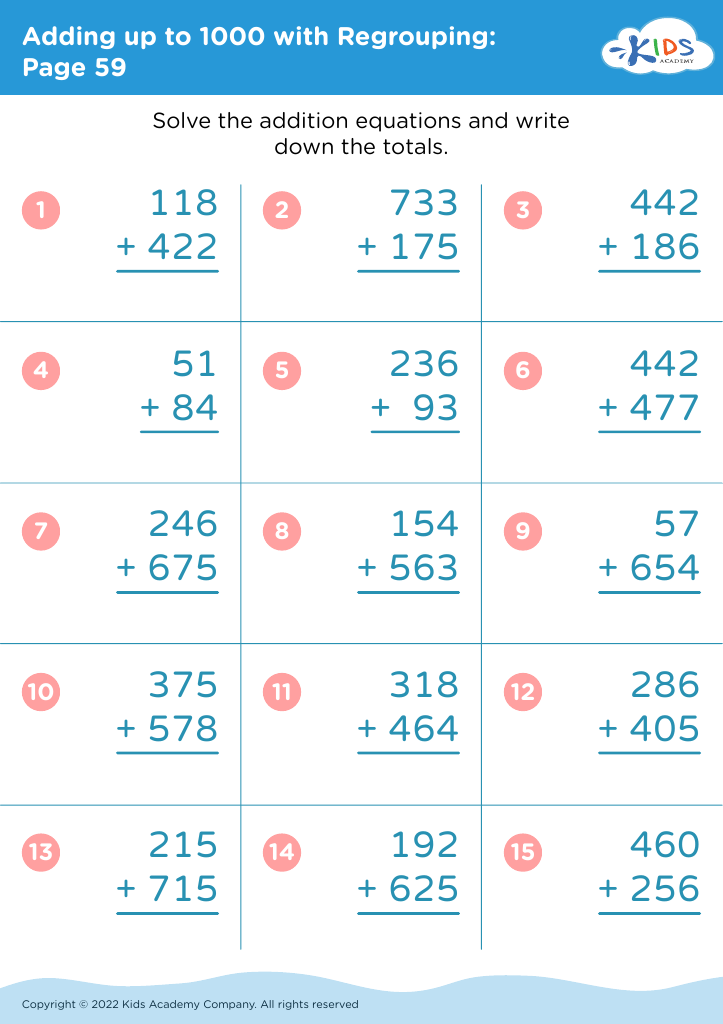
Adding up to 1000 with Regrouping: Page 59
Worksheet
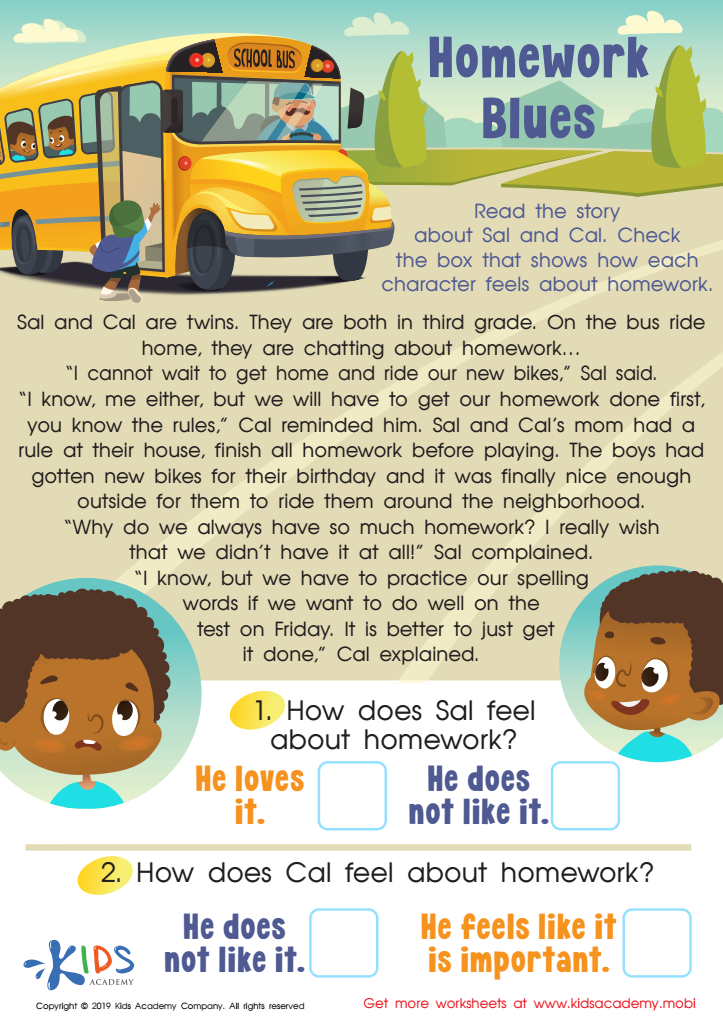
Homework Blues Worksheet

Homework Blues Worksheet

Cal and Sal don't love doing homework, just like your kids. Use this worksheet to help your children understand why homework is important. Read the passage together and then answer the questions at the bottom of the page. It's a fun way to learn together!
Homework Blues Worksheet
Worksheet
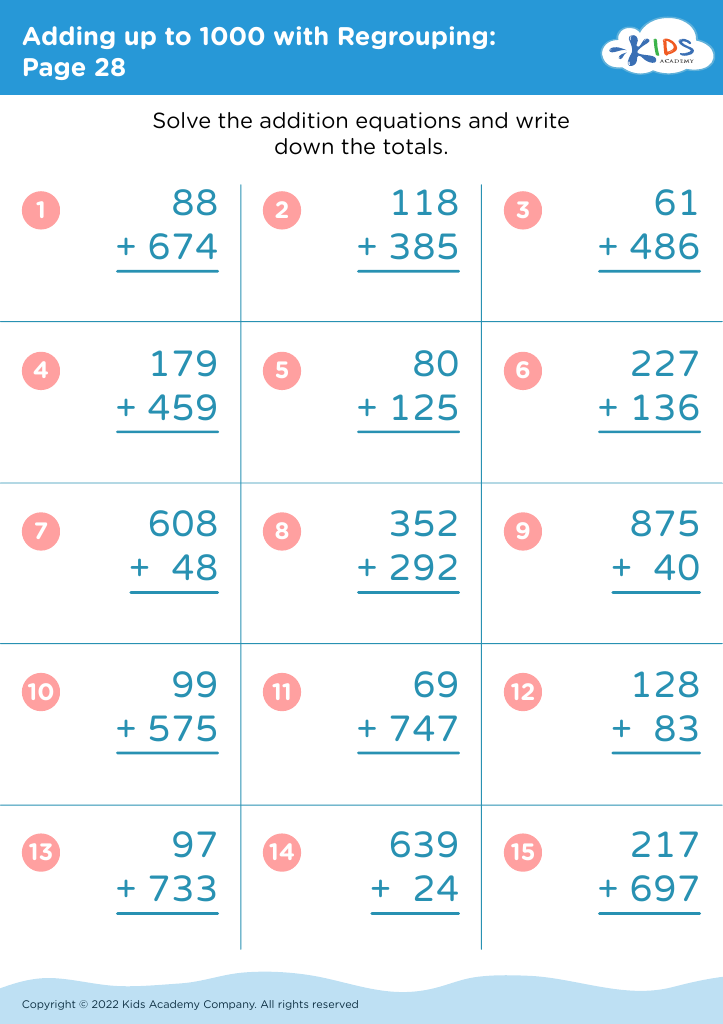
Adding up to 1000 with Regrouping: Page 28
Worksheet
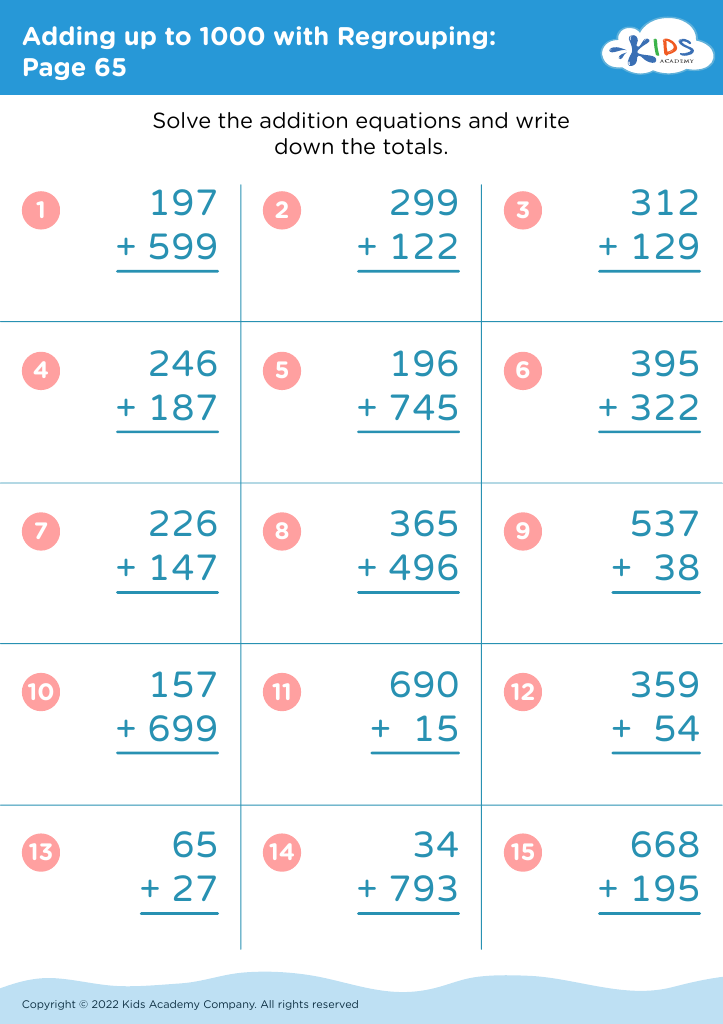
Adding up to 1000 with Regrouping: Page 65
Worksheet
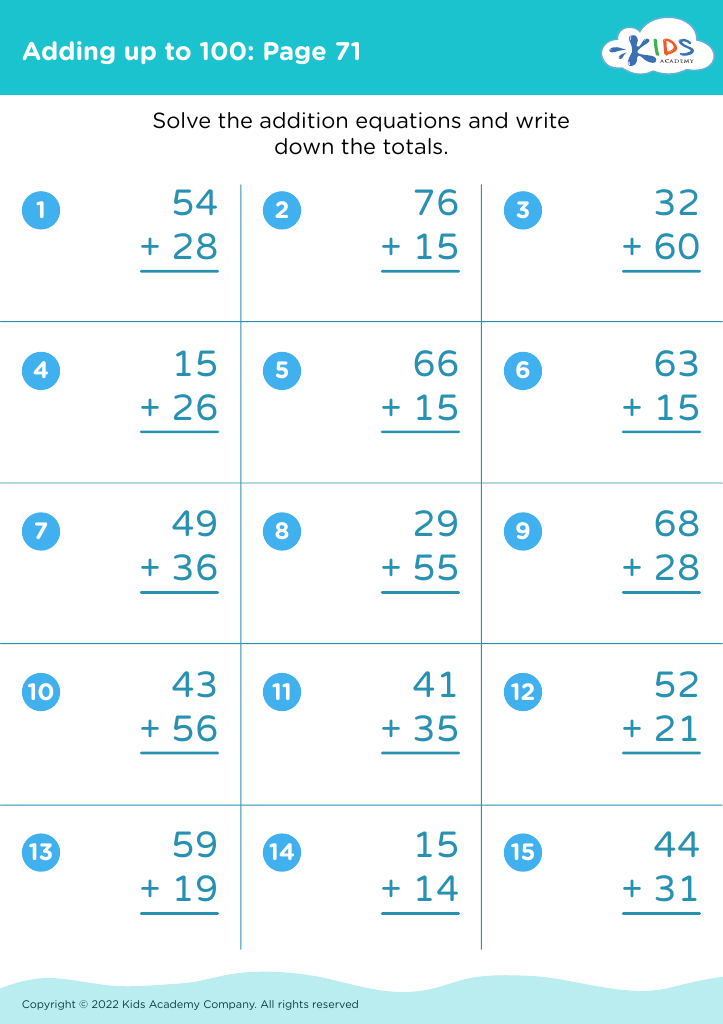
Adding up to 100: Page 71

Adding up to 100: Page 71

Adding up to 100: Page 71
Worksheet
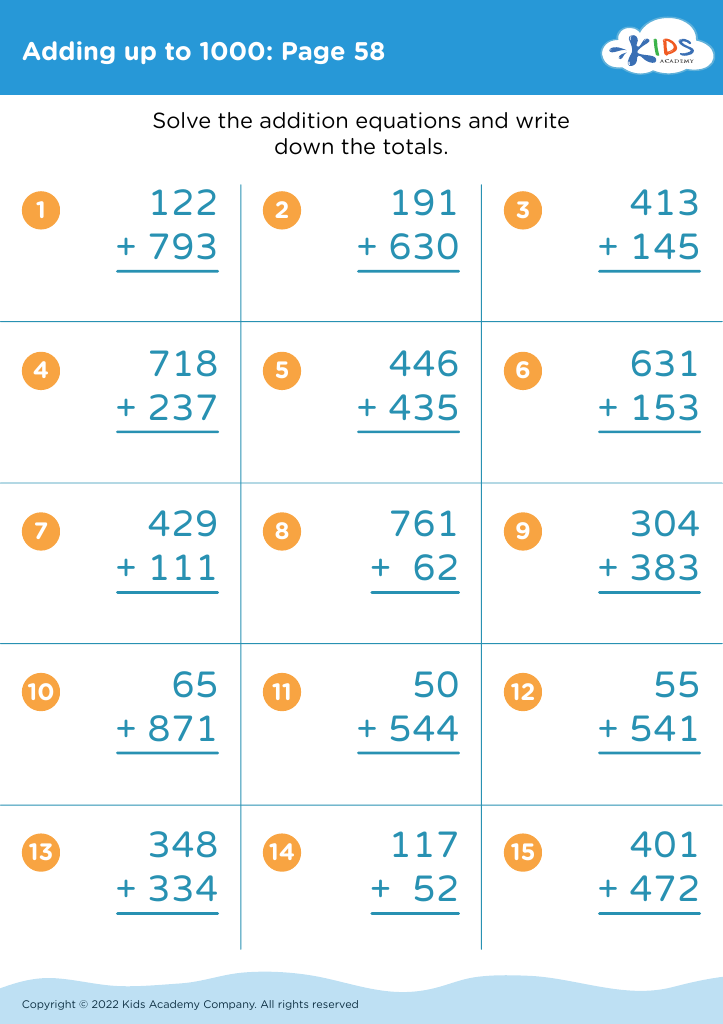
Adding up to 1000: Page 58

Adding up to 1000: Page 58

Adding up to 1000: Page 58
Worksheet
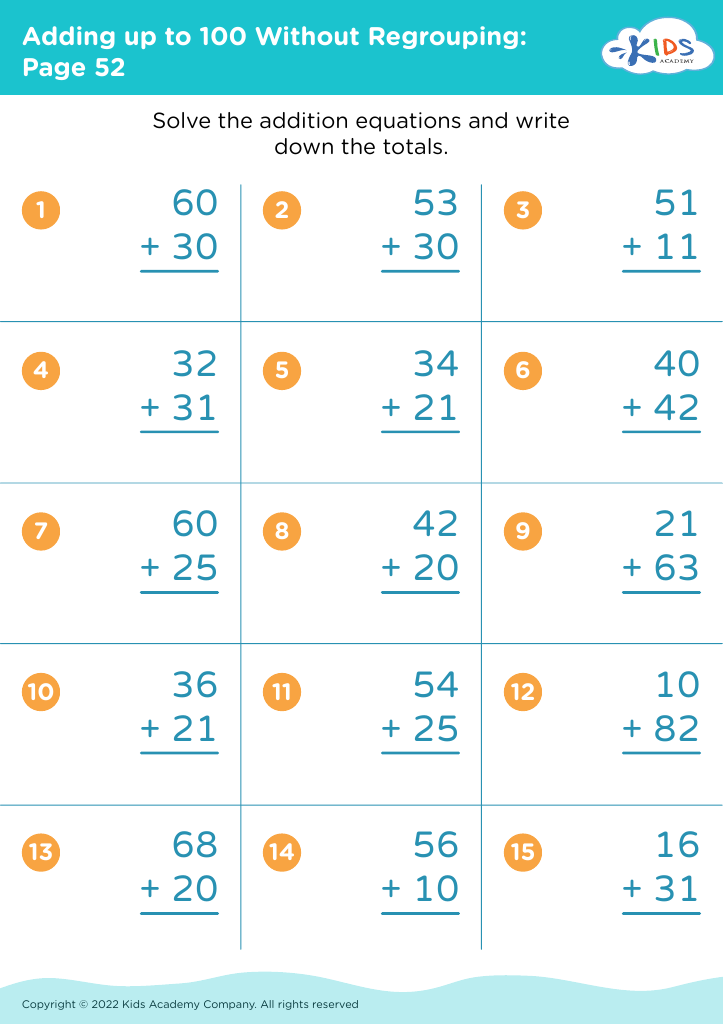
Adding up to 100 Without Regrouping: Page 52
Worksheet
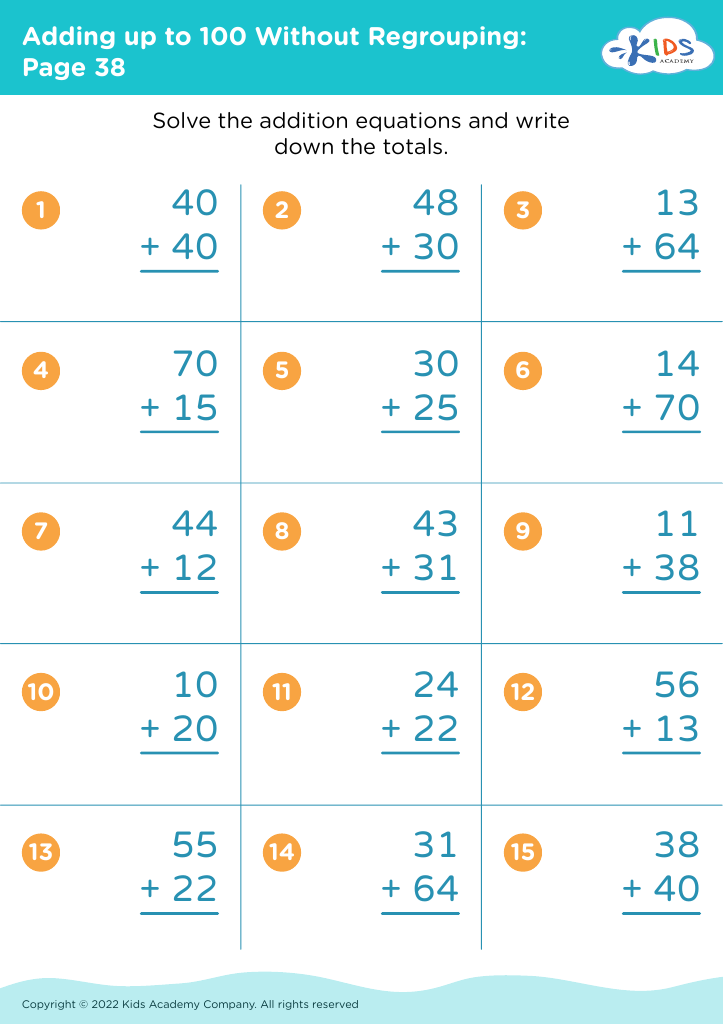
Adding up to 100 Without Regrouping: Page 38
Worksheet
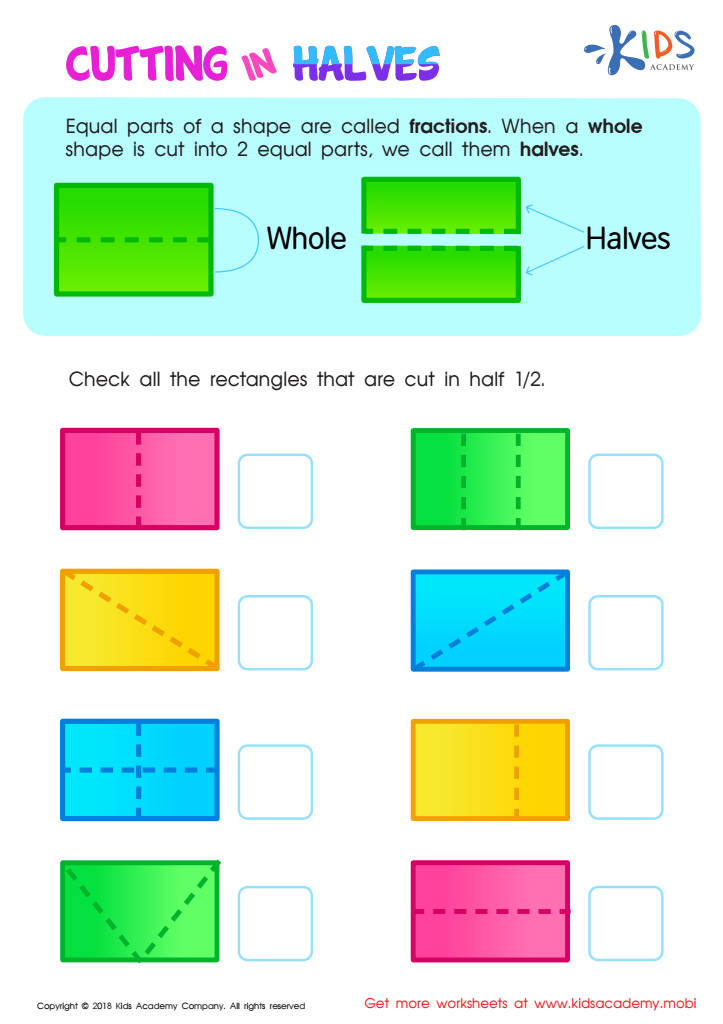
Cutting in Halves Worksheet

Cutting in Halves Worksheet

Show your child how to divide a whole shape, like a square, into smaller pieces to become fractions. Point out when a shape is divided into two equal parts, it's called a half. Look at the worksheet together, and identify all rectangles that are cut in half (½).
Cutting in Halves Worksheet
Worksheet
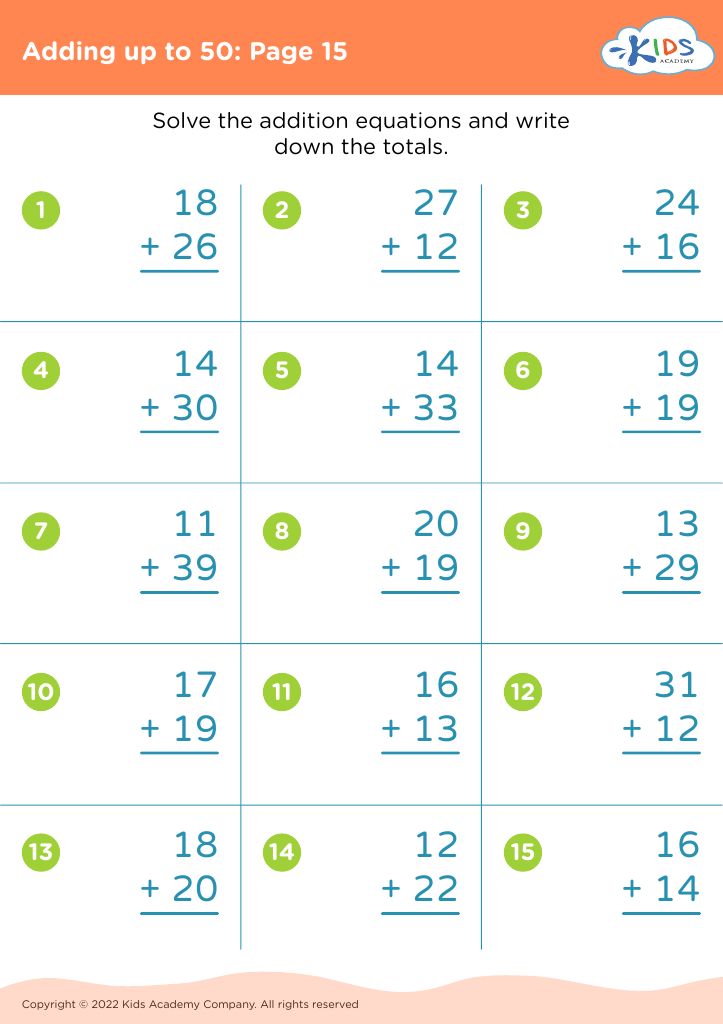
Adding up to 50: Page 15

Adding up to 50: Page 15

Adding up to 50: Page 15
Worksheet
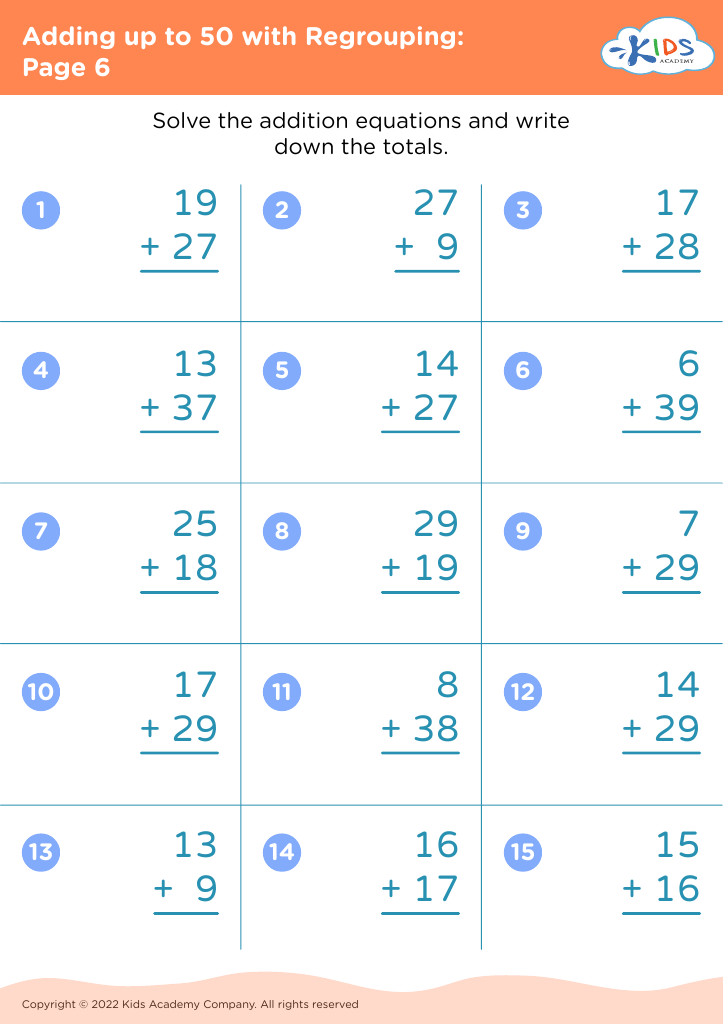
Adding up to 50 with Regrouping: Page 6
Worksheet
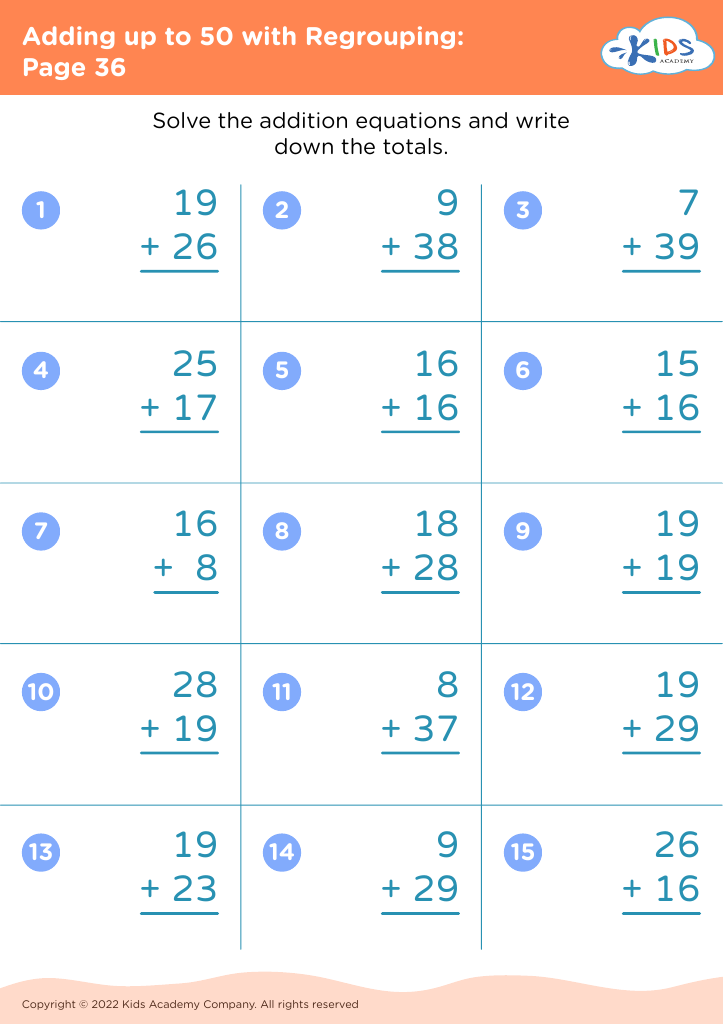
Adding up to 50 with Regrouping: Page 36
Worksheet
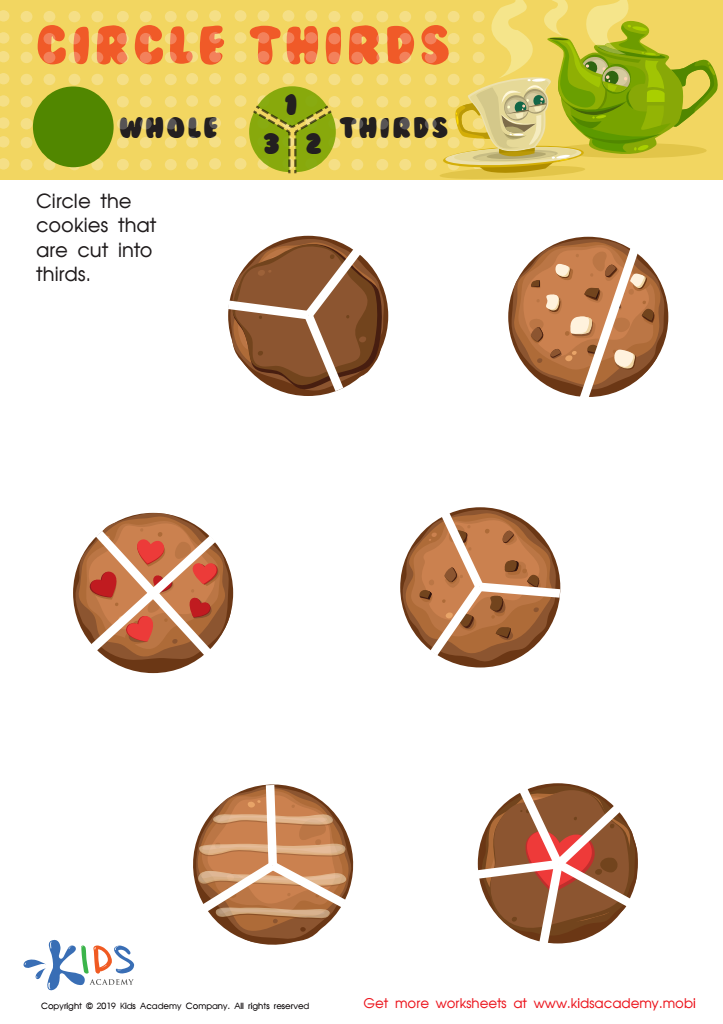
Circle Thirds Worksheet
Circle Thirds Worksheet
Remind your kids of the different ways shapes can be divided: wholes, halves, thirds, and fourths. Now, look at the shapes in the worksheet and have them circle the cookies cut into thirds.
Circle Thirds Worksheet
Worksheet
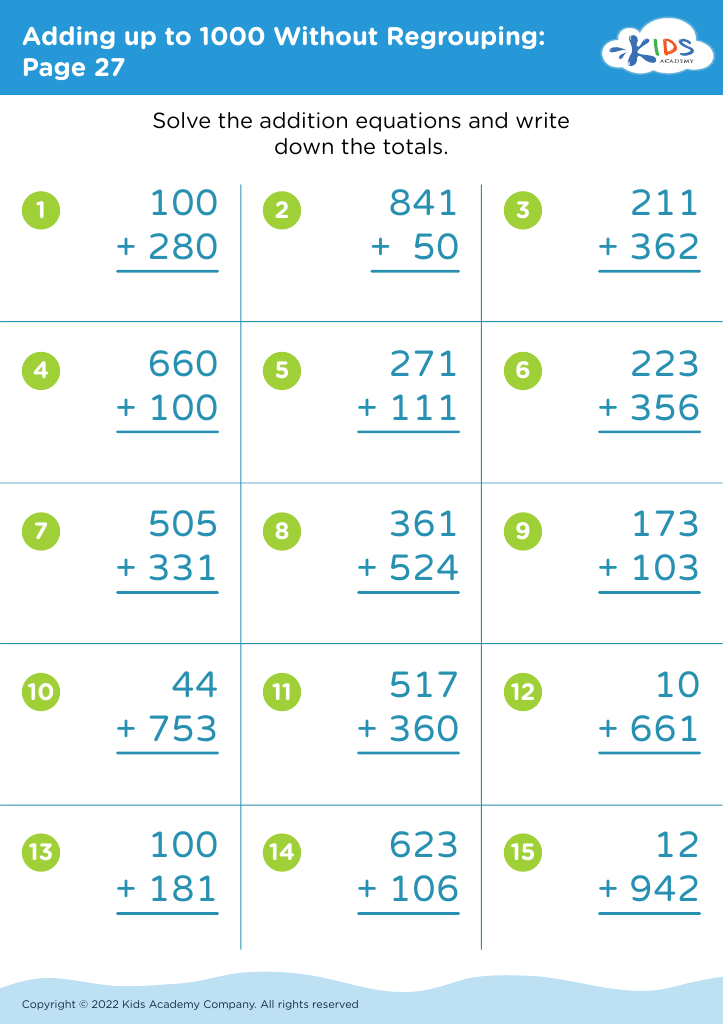
Adding up to 1000 Without Regrouping: Page 27
Worksheet
Fractions of Shapes Printable Worksheet

Fractions of Shapes Worksheet
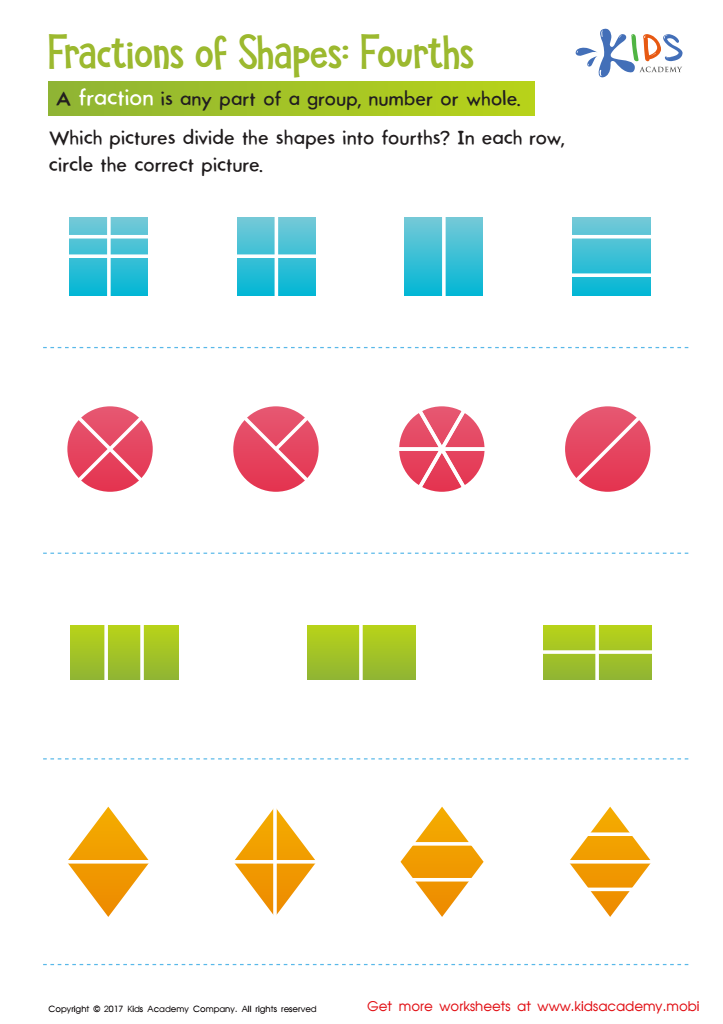
It will also show them how fractions are represented in everyday shapes.
Fractions of Shapes Worksheet
Worksheet
Fraction Matching Worksheet
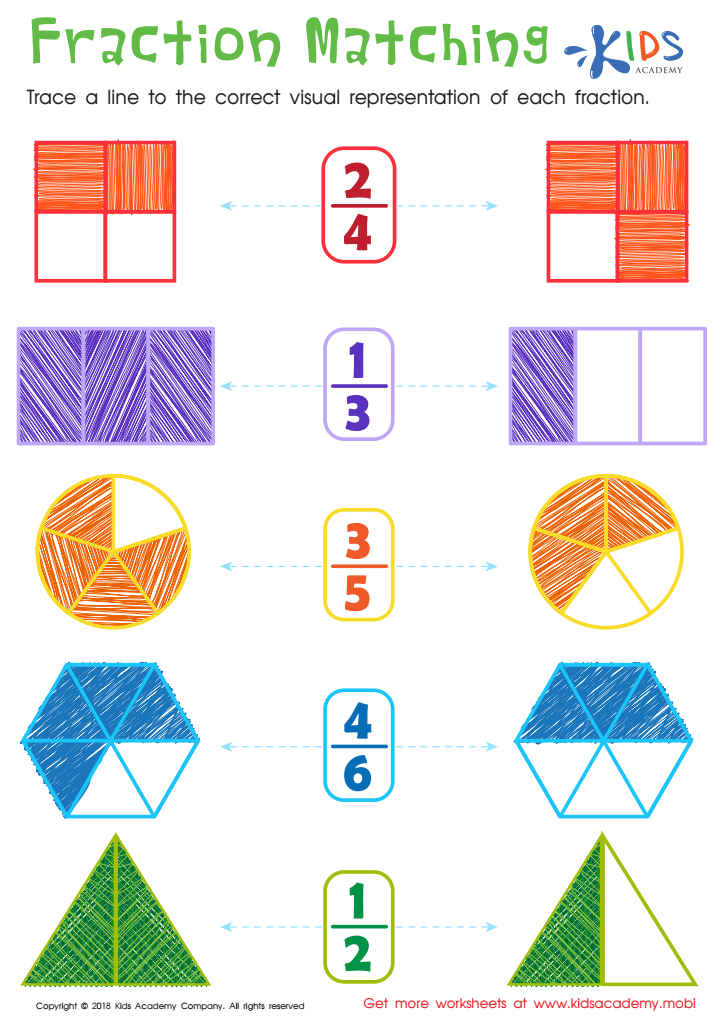
Fraction Matching Worksheet
Teach your kindergartners fractions with this colorful worksheet. Make sure they understand numerators and denominators, then have them trace a line to the correct visual representation of each equation. There are five fractions for them to work on. With the foundation of fractions, mathematics will be much easier for them.
Fraction Matching Worksheet
Worksheet
Adding 2-digit Numbers: Page 57

Adding 2-digit Numbers: Page 57

Adding 2-digit Numbers: Page 57
Worksheet
Adding up to 100 Without Regrouping: Page 23
Worksheet
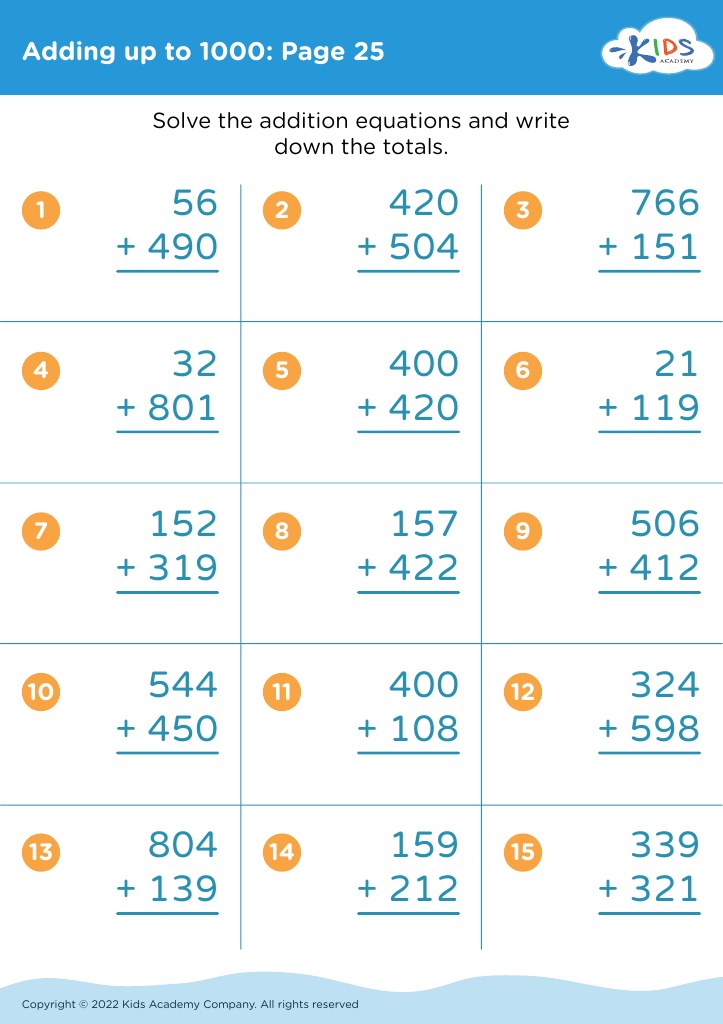
Adding up to 1000: Page 25

Adding up to 1000: Page 25

Adding up to 1000: Page 25
Worksheet
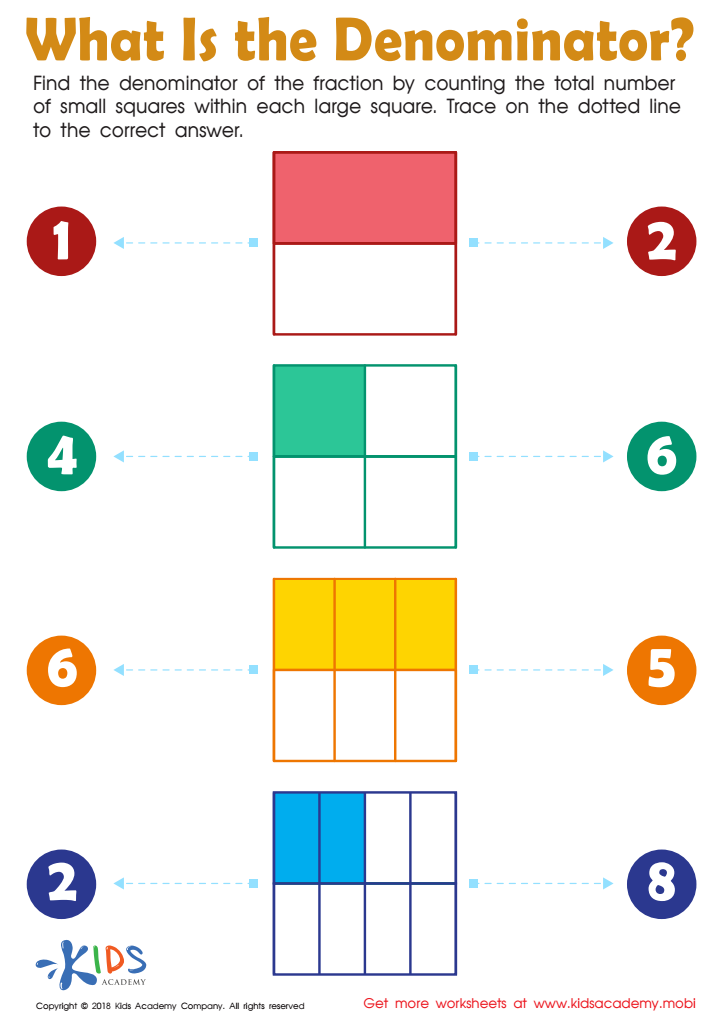
What Is the Denominator? Worksheet


What Is the Denominator? Worksheet

If your kindergartener is struggling with fractions, don't worry. Use this worksheet to help them understand better. Ask them to count the total small squares in each large square to find the denominator, then trace on the dotted line to answer. This printable tracing sheet will help them learn fractions easier.
What Is the Denominator? Worksheet

Worksheet


Understanding fractions is crucial for children aged 8-9 as it serves as a foundational skill for their mathematical development and everyday life. At this age, children transition from basic arithmetic to more complex mathematical concepts. Grasping fractions enhances critical thinking skills, encourages problem-solving abilities, and builds a solid groundwork for advanced topics such as ratios, proportions, and percentages, encountered in later grades.

Moreover, fractions are not limited to math class; they are applicable in real-world scenarios, such as cooking, budgeting, and understanding time. This knowledge fosters independence and practical life skills. Engaging with fractions also nurtures a child's ability to comprehend numbers as part of a whole, enhancing their overall number sense.

Parents and teachers play a pivotal role in fostering an understanding of fractions through interactive and relatable methods. Creating a supportive environment where questions are encouraged helps instill confidence in young learners. As they connect with the material, students begin to appreciate the beauty and utility of mathematics, resulting in a more positive attitude toward learning. When parents and teachers prioritize fractions education, they equip children with essential skills that will benefit them throughout their academic journeys and daily lives.