Understanding synonyms Worksheets for Ages 8-9
3 filtered results
-
From - To
Discover our engaging "Understanding Synonyms Worksheets" designed specifically for children aged 8-9. These interactive resources help young learners explore the concept of synonyms, enhancing their vocabulary and comprehension skills in a fun and meaningful way. Each worksheet features a variety of exercises, including matching words, filling in blanks, and creative activities, to reinforce synonym recognition and usage. Perfect for classroom learning or at-home practice, these worksheets aim to foster a love for language and boost reading confidence. Support your child's language development with our thoughtfully crafted activities, tailored to make learning about synonyms enjoyable and effective!
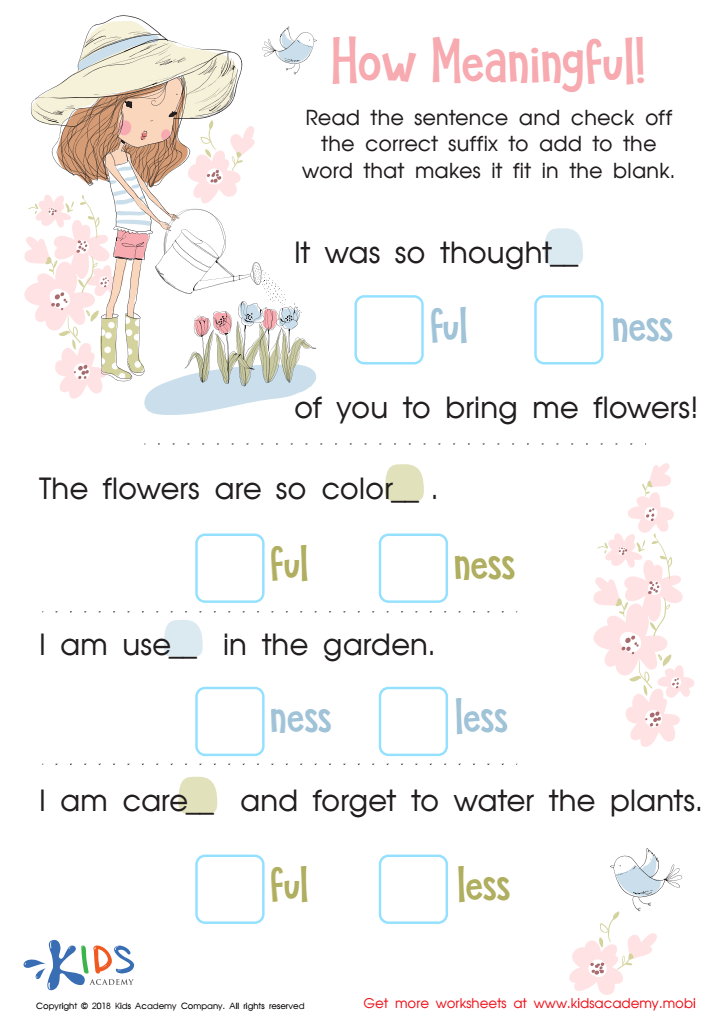
How Meaningful! Worksheet
 Assign to My Students
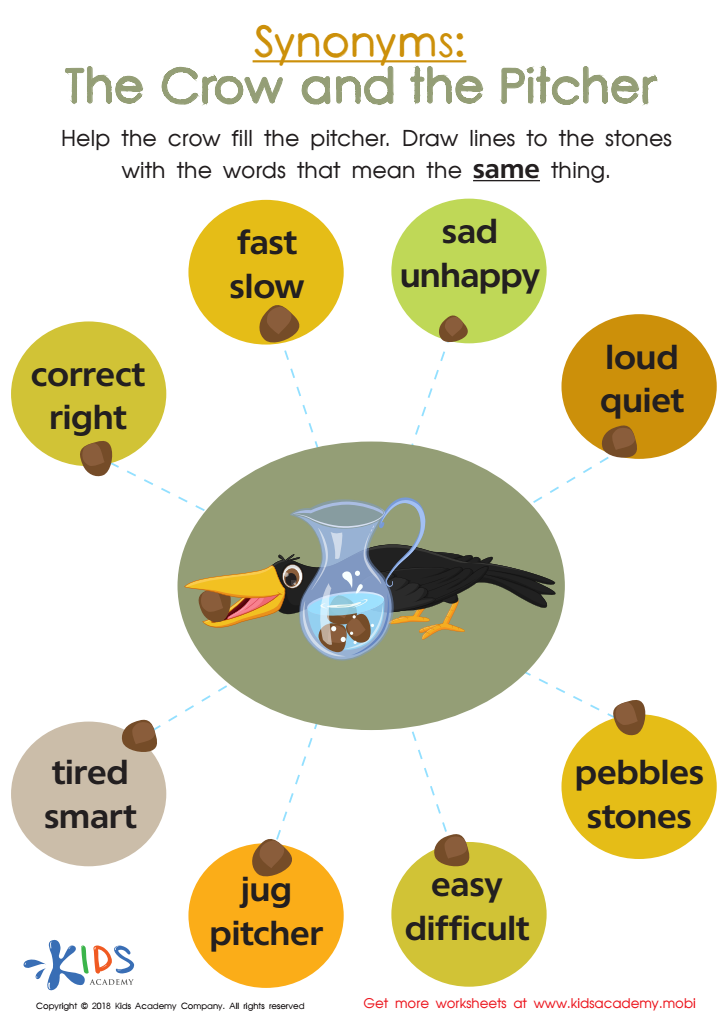
The Crow and the Pitcher Synonyms Worksheet






Understanding synonyms is essential for children aged 8-9 because it enriches their language skills and enhances their communication abilities. At this age, students are developing their vocabulary and becoming more adept at expressing their thoughts and feelings. By learning synonyms, they can discover a variety of words with similar meanings, which enables them to express themselves more precisely and creatively.
Additionally, knowing synonyms helps children comprehend texts better. When they encounter unfamiliar words, understanding synonymous terms can aid in deciphering the meaning of a passage, making reading a more enjoyable and less daunting experience. It also encourages critical thinking, as students learn to evaluate which word is most appropriate in different contexts.
For parents and teachers, emphasizing the importance of synonyms fosters a rich learning environment. It promotes broader language use and encourages children to explore alternative phrases, making their writing more engaging and helping them to communicate more effectively with peers and adults alike. Ultimately, strengthening a child's grasp of synonyms supports their overall literacy development, preparing them for future academic success and improved self-expression. Engaging students in fun activities like synonyms games can make the learning process dynamic and interactive, enhancing their motivation and interest in language.








