Shape identification 2D Shapes Worksheets for Ages 8-9
3 filtered results
Difficulty Level
Grade
Age
-
From - To
Subject
Activity
Standards
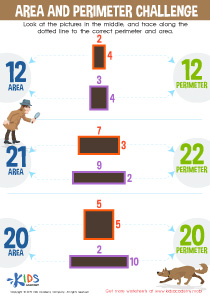
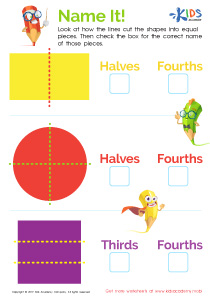
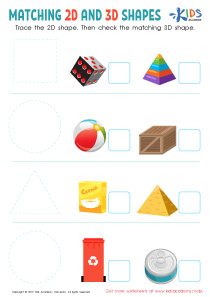
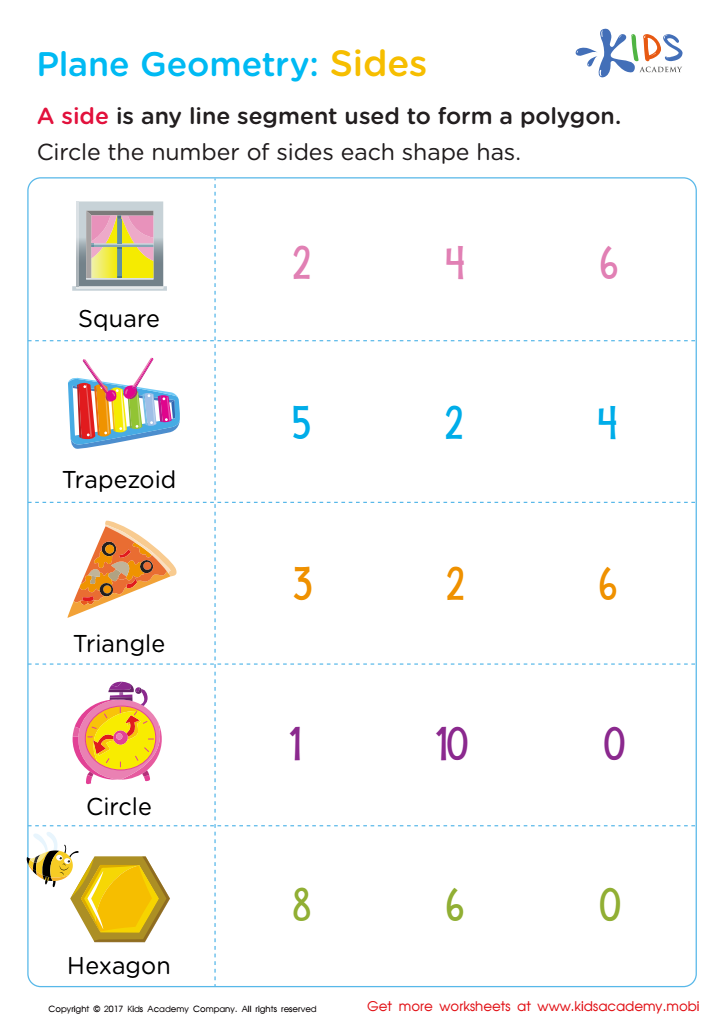
Unlock your child's potential with our Shape Identification 2D Shapes Worksheets designed for ages 8-9. These engaging activities inspire young minds to recognize and identify various geometric shapes while enhancing their critical thinking and problem-solving skills. Each worksheet is meticulously crafted to align with educational standards, ensuring your child masters key concepts in an enjoyable way. Perfect for classroom and home use, our worksheets cater to different learning styles, making math fun and accessible. Nurture a love for learning and develop your child's confidence in geometry with Kids Academy's expertly designed resources.
Favorites
With answer key
Interactive
 Assign to My Students



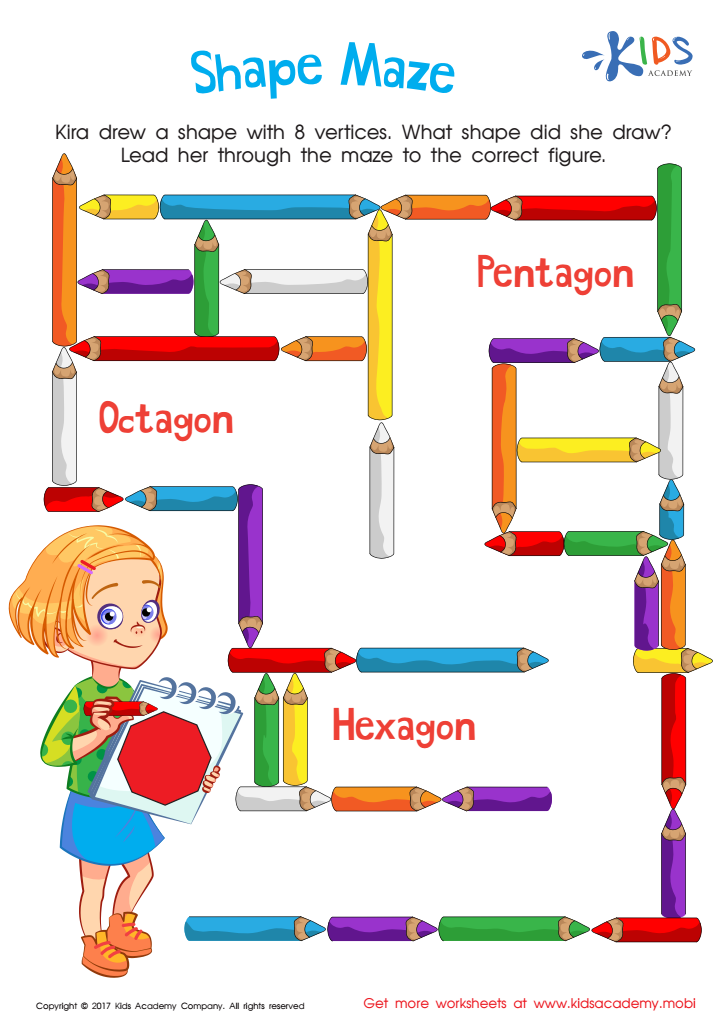
Shape Maze Worksheet
Test your child's geometry knowledge with this fun printable maze! They'll need to identify shapes with 8 vertices to find their way through the maze and get the correct answer.
Shape Maze Worksheet
Worksheet
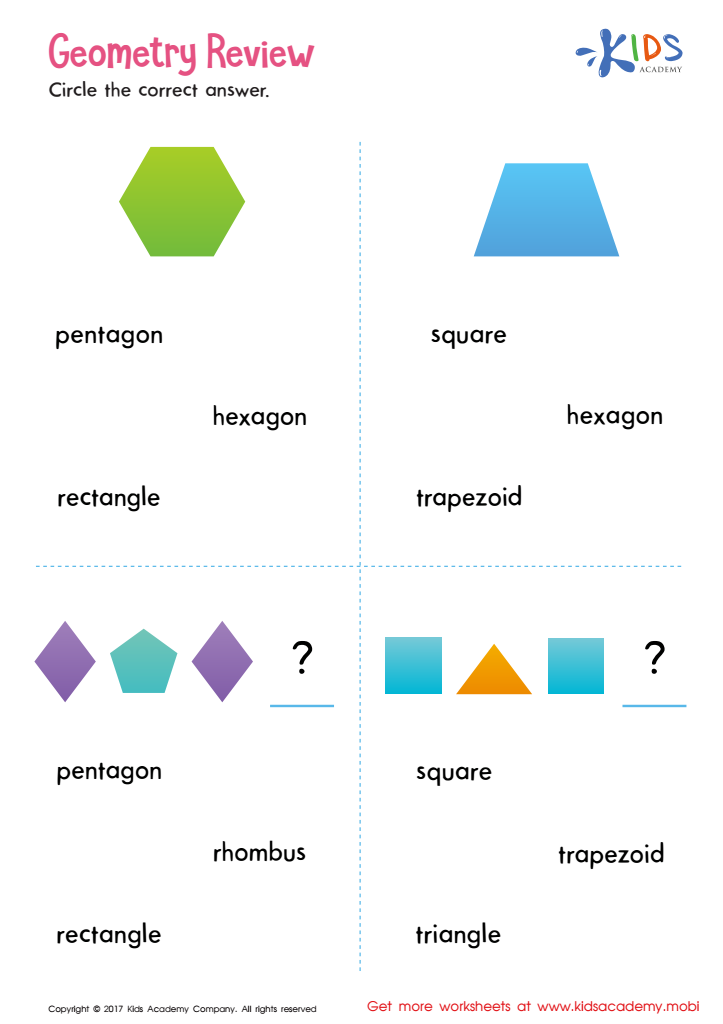
Geometry Review Printable
Repetition is key to success; give your child the practice they need with this geometry worksheet.
Geometry Review Printable
Worksheet
Join Kids Academy for Free
Who is primarily going to use this learning content?








Understanding and identifying 2D shapes at ages 8-9 is crucial for several reasons that profoundly impact a child’s academic and cognitive development. First, recognizing and differentiating shapes enhances spatial awareness, a fundamental skill in daily activities and higher-level concepts such as geometry, which becomes more significant in later educational stages. This early exploration into shapes lays a solid mathematical foundation, helping to clarify concepts such as symmetry, fractions, and area.
Moreover, identifying and classifying shapes fosters critical thinking and problem-solving abilities. As children classify shapes based on various attributes, like the number of sides or angles, they practice analytical skills that are transferable to other academic subjects and real-life situations.
Additionally, learning about 2D shapes promotes creativity and artistic expression. When children see shapes in their environments and understand how they can combine them, they become more adept at creating and interpreting visual information, which is essential in art and many technologies, including computer graphics and design.
Socially and emotionally, mastering shape identification can build confidence. Success in understanding shapes can fuel a sense of achievement and curiosity, motivating children to tackle more complex mathematical tasks. Hence, parents and teachers play a crucial role by making shape identification engaging and supportive, laying the groundwork for a balanced, comprehensive education.