Fine Motor Skills Adding up to 100 Without Regrouping Worksheets for Ages 8-9
4 filtered results
-
From - To
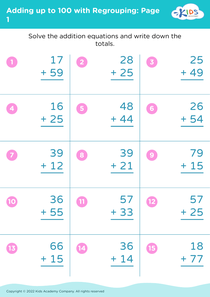
Enhance your child's fine motor skills while mastering addition with our "Adding Up to 100 Without Regrouping" worksheets, specially designed for ages 8-9. These engaging printables not only reinforce essential math concepts but also promote hand-eye coordination and dexterity through playful activities. Each worksheet features enjoyable exercises that encourage creativity as children navigate through colorful numbers and illustrations. As your child practices basic addition skills, they also build confidence and proficiency, laying a strong foundation for future math challenges. Foster both fine motor development and math fluency today—dive into our fun-filled worksheets and watch your child excel!
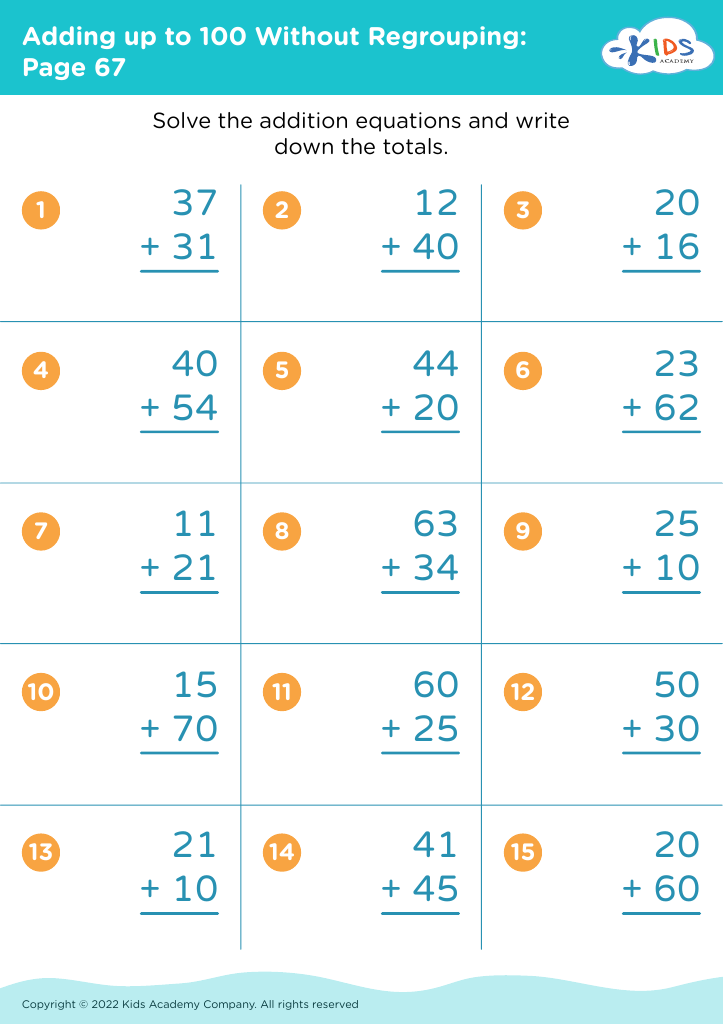
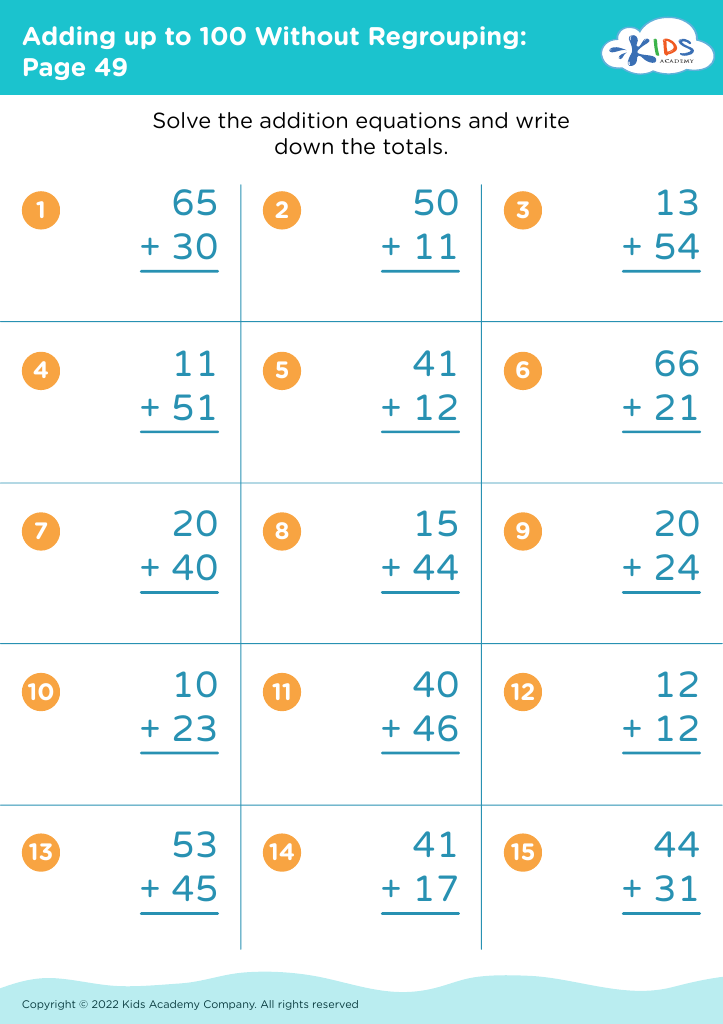
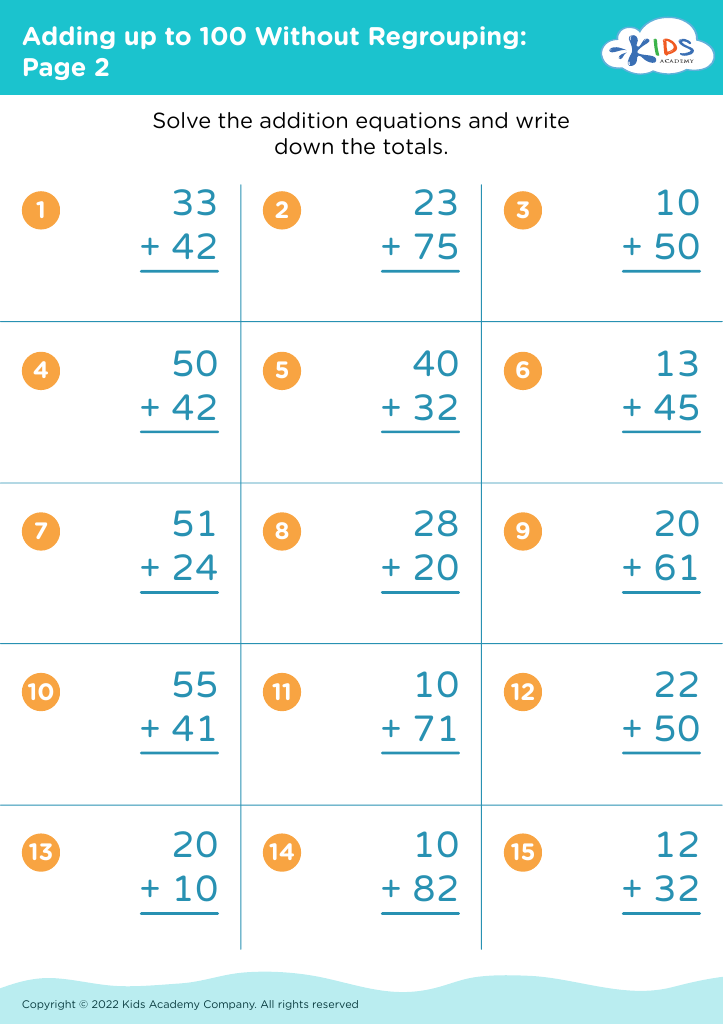
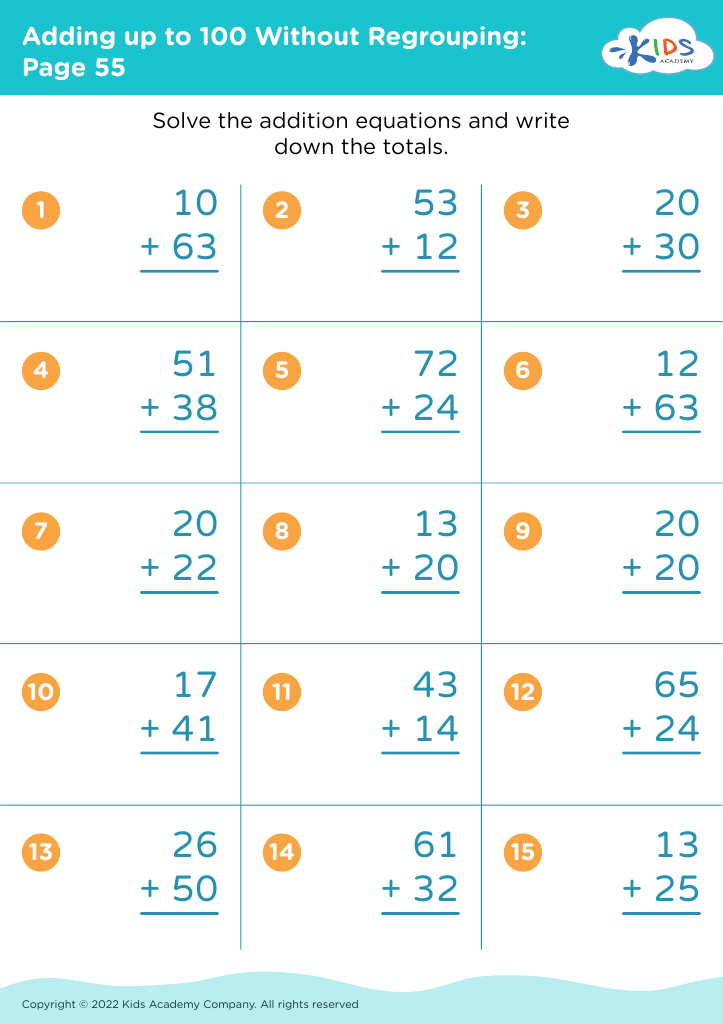




Fine motor skills and the ability to add numbers up to 100 without regrouping are critical competencies for children aged 8-9, and parents or teachers should value their development for several reasons. Firstly, fine motor skills, which involve the coordination of small muscles in hands and fingers, play an essential role in a child's overall academic success. Proficiency in these skills enables children to effectively participate in writing, drawing, and other classroom activities, fostering a positive learning environment.
In addition, mastering addition without regrouping strengthens a child's numerical understanding, which is foundational for more complex mathematical concepts encountered later on. Through the practice of this skill, children enhance their problem-solving abilities, logical reasoning, and confidence in handling numbers.
Moreover, integration of fine motor skill exercises while practicing addition can engage children holistically, making learning more interactive and enjoyable. Such activities often lead to increased retention of concepts and a deeper love for mathematics. Encouraging both fine motor development and addition skills helps children build a strong educational framework that promotes successful learning trajectories, benefiting their social, academic, and emotional growth during these crucial years. Investing time in these areas can create lifelong learners equipped for the challenges ahead.