Counting skills Adding up to 50 Worksheets for Ages 8-9 - Page 2
34 filtered results
-
From - To
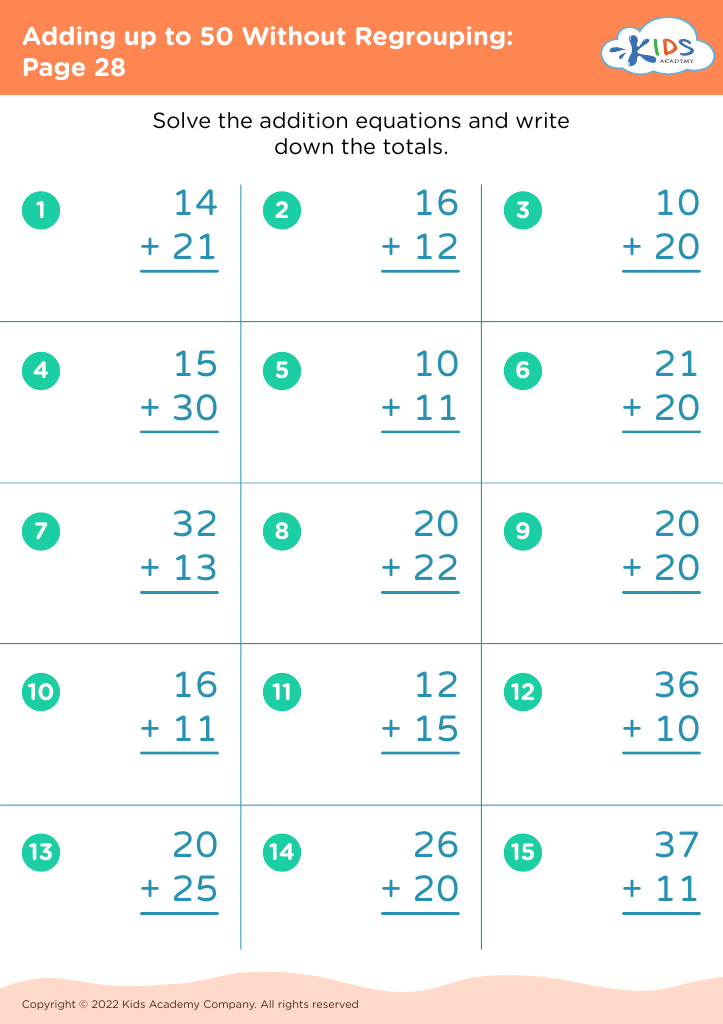
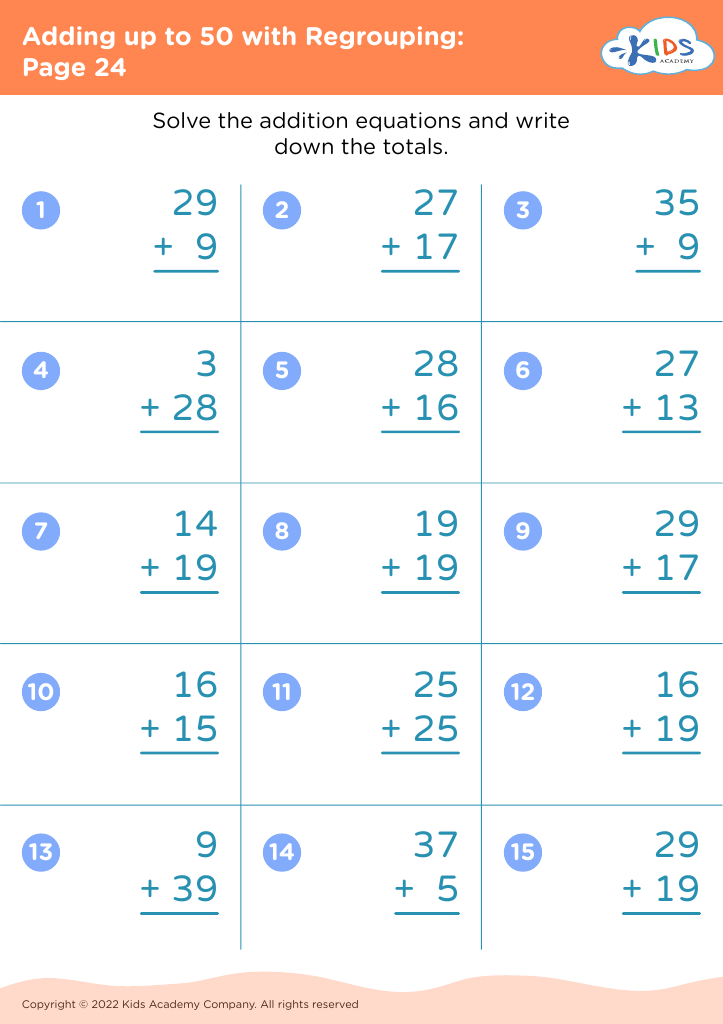
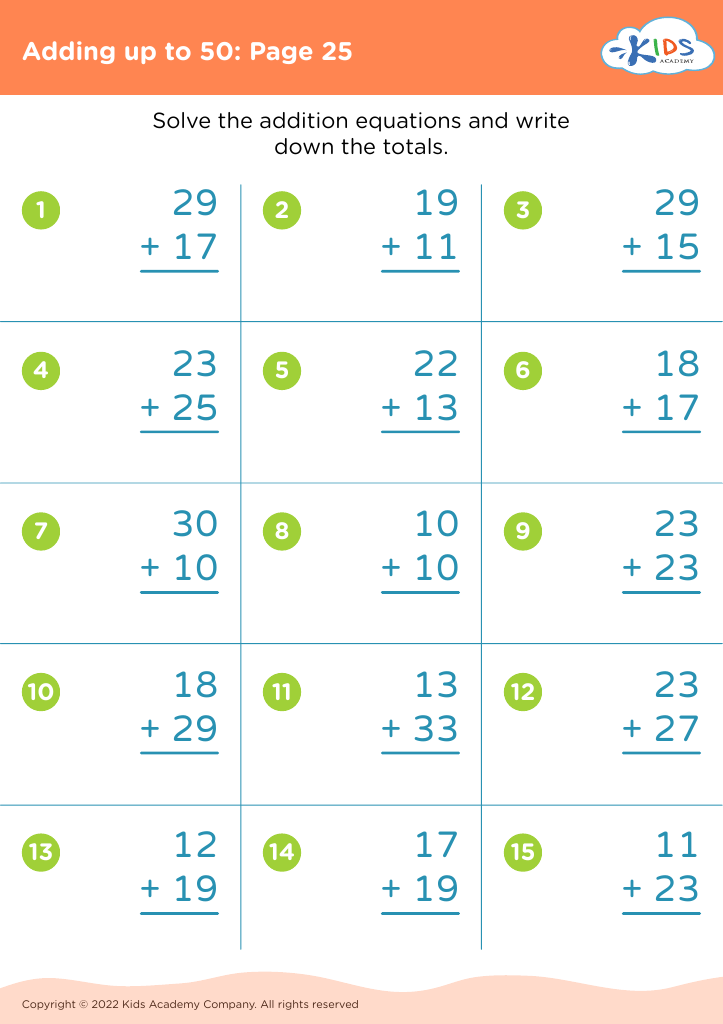
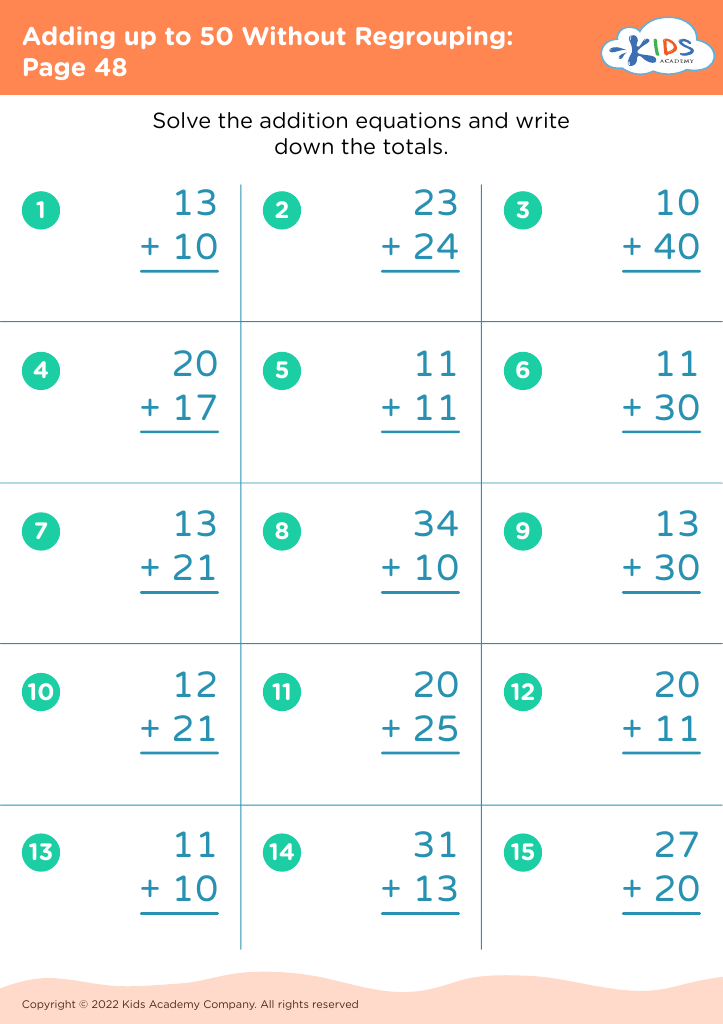
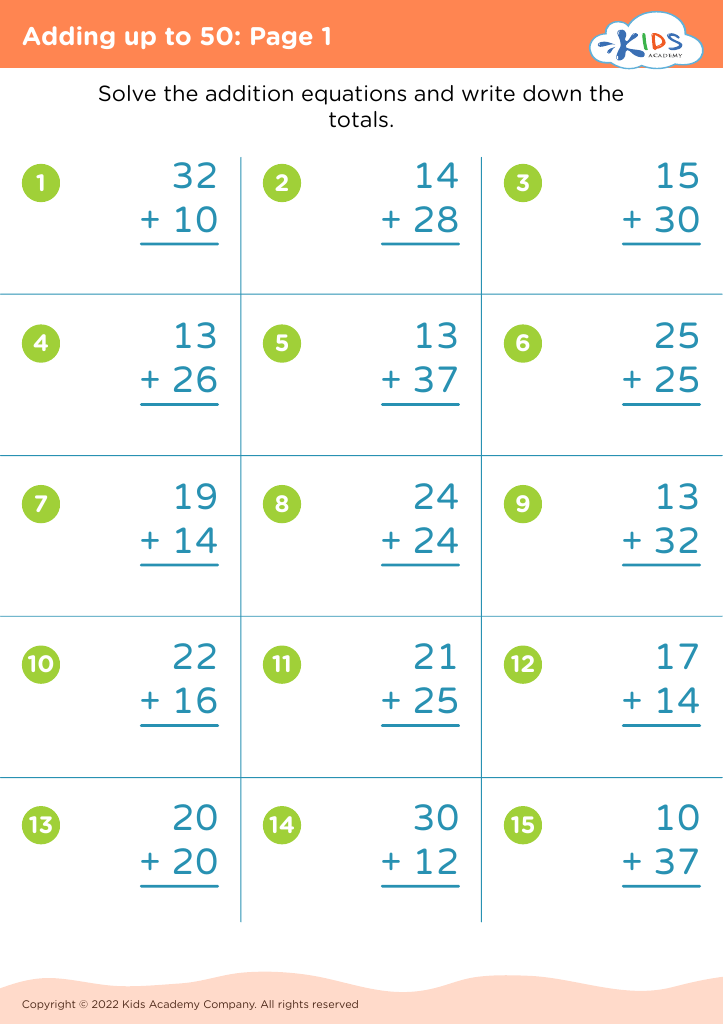
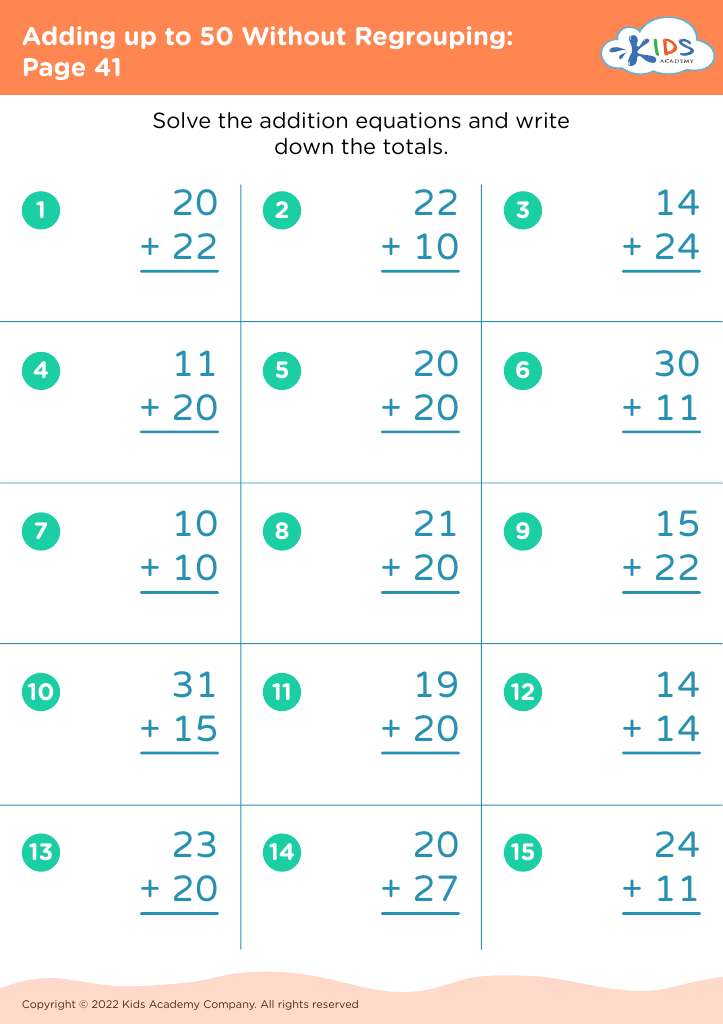
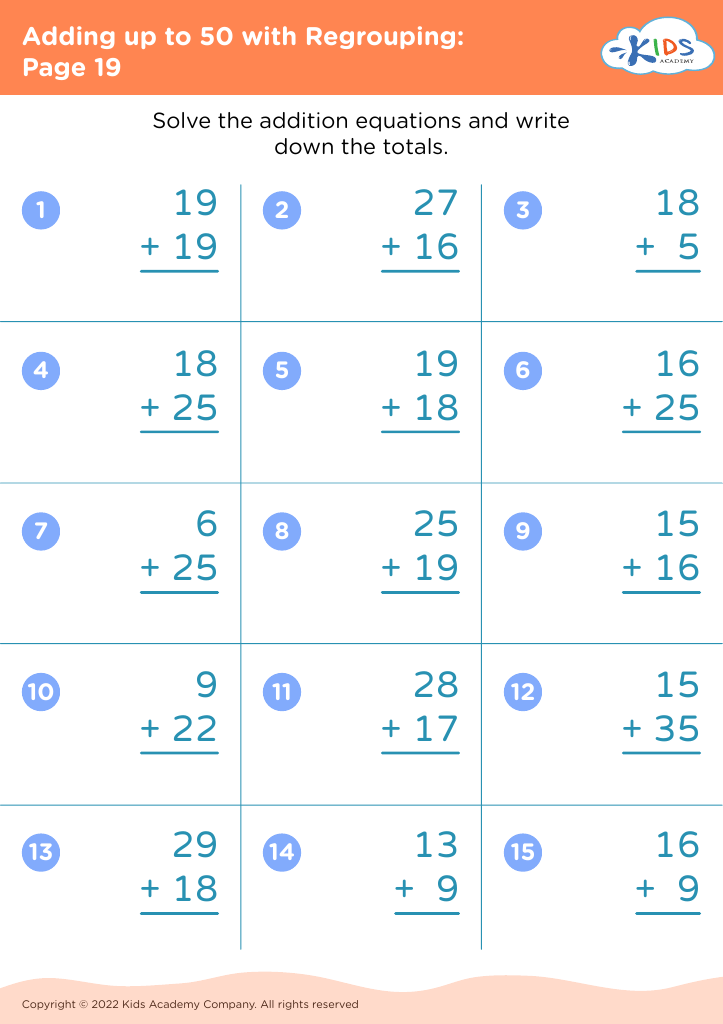
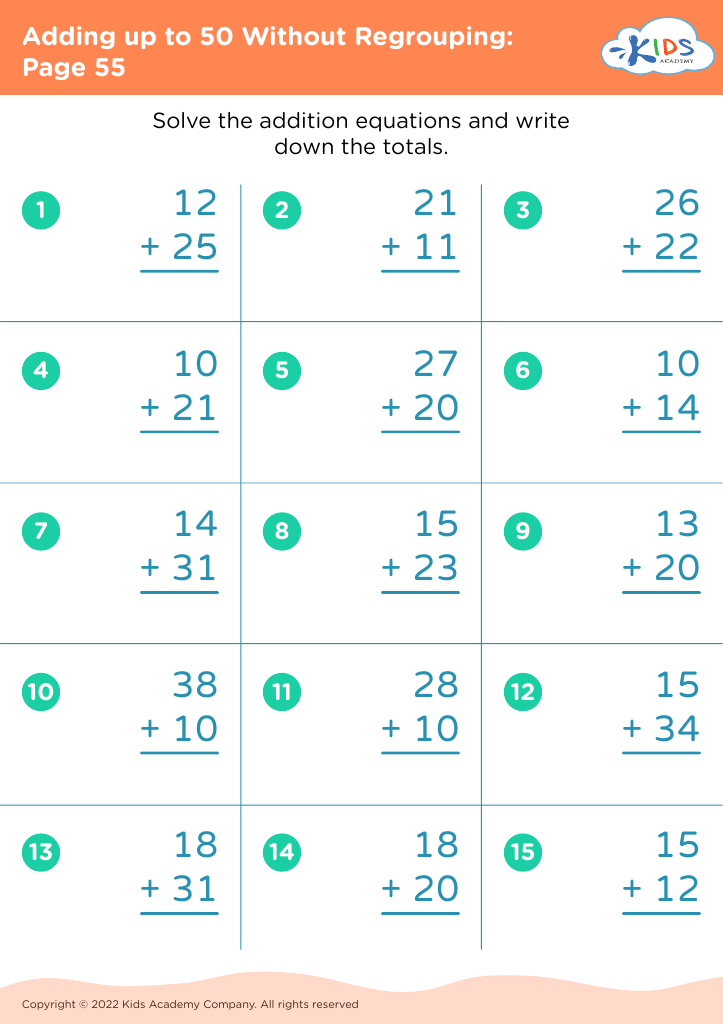
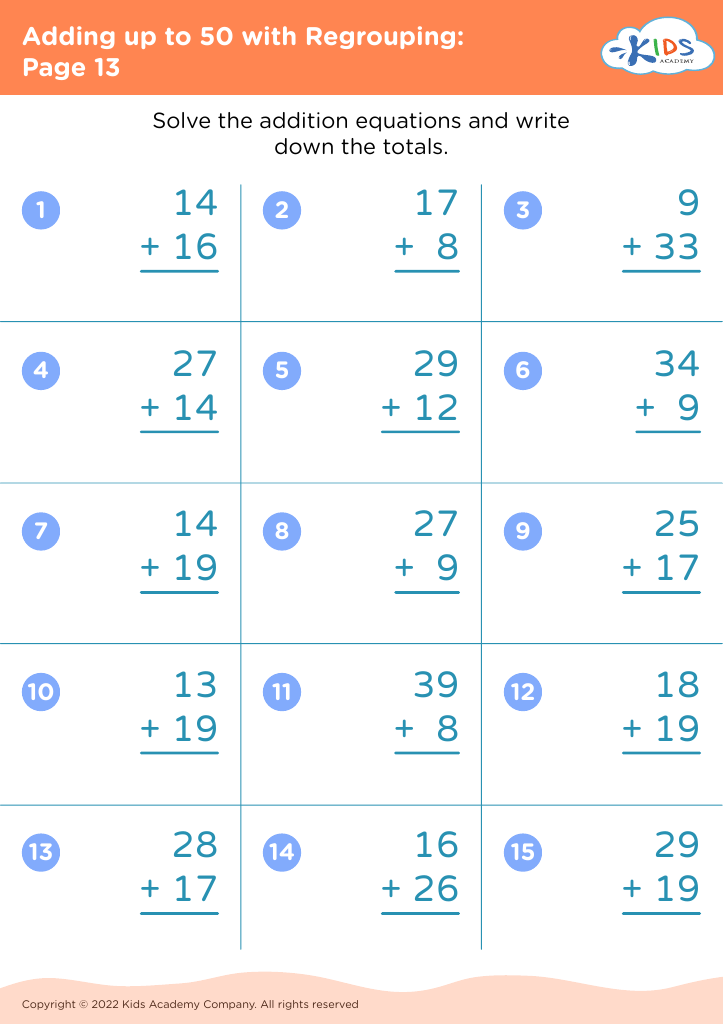
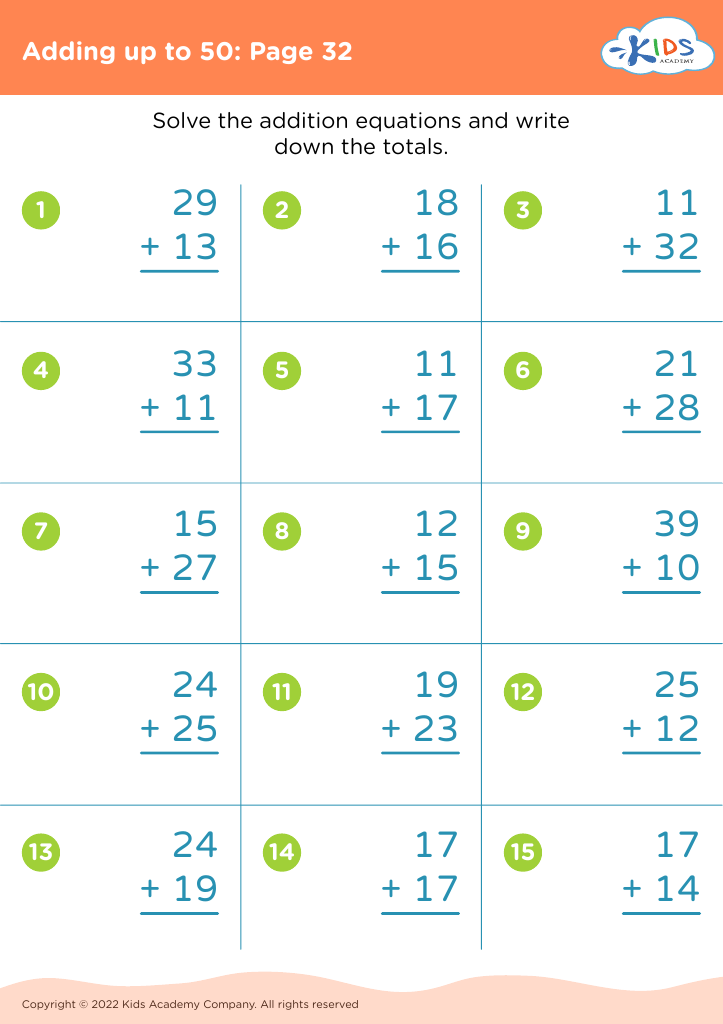




Counting skills, particularly adding up to 50, are crucial for children aged 8-9 as they serve as foundational pillars for more advanced mathematics. At this age, children are transitioning from basic arithmetic to more complex concepts, making it imperative to solidify their understanding of addition.
First, solid counting skills enhance mathematical confidence. When children can confidently add numbers up to 50, they are more likely to engage positively with future math challenges. This builds a strong attitude toward learning that can influence their academic journey.
Second, mastering counting and addition lays the groundwork for essential skills like problem-solving and critical thinking. These skills are not only vital in math but also applicable in everyday situations, helping children navigate tasks like budgeting or time management.
Additionally, parents and teachers who focus on these skills can better track individual progress and identify areas needing support. Early intervention can prevent future difficulties in mathematics, ensuring a smoother educational experience.
Finally, fostering these skills aids in developing a sense of accomplishment and self-esteem. As children reach small milestones in counting and addition, they gain confidence that encourages a lifelong love for learning. By prioritizing these skills, we set students on the path to success both academically and in life.








