
Enhance fine motor skills Addition & Subtraction Worksheets for Ages 8-9
3 filtered results
Difficulty Level
Grade
Age
-
From - To
Subject
Activity
Standards
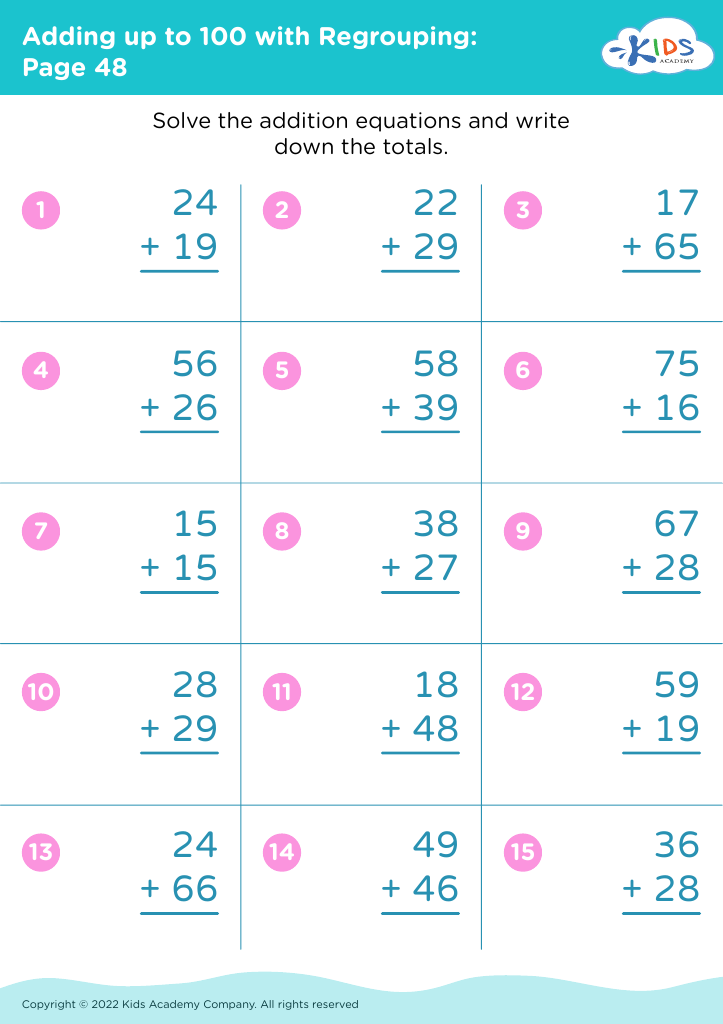
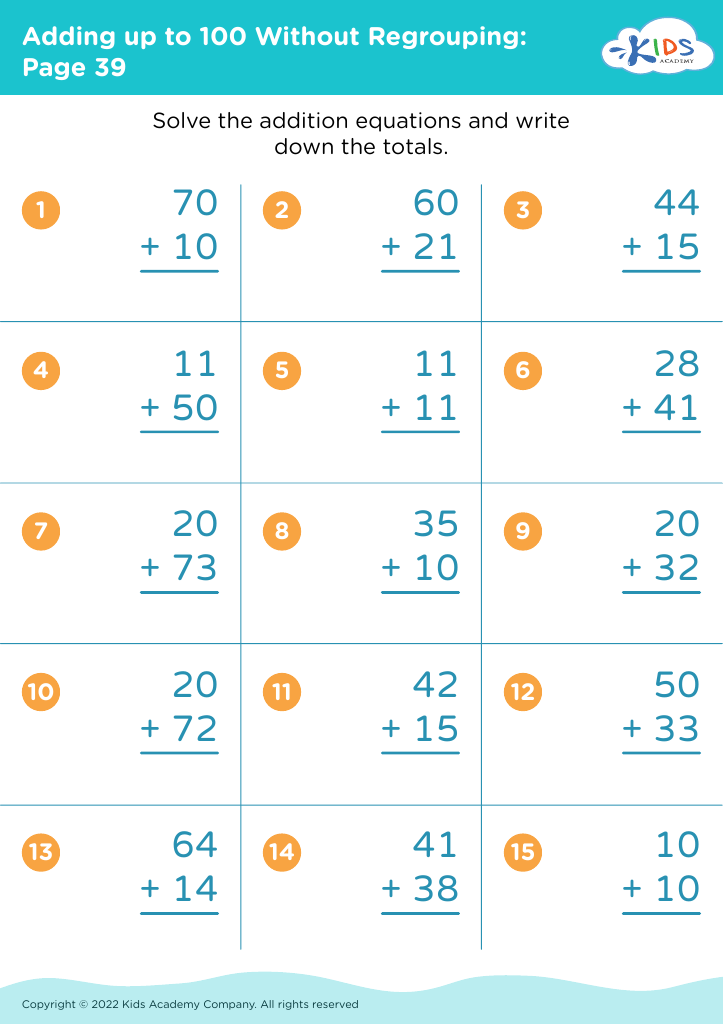
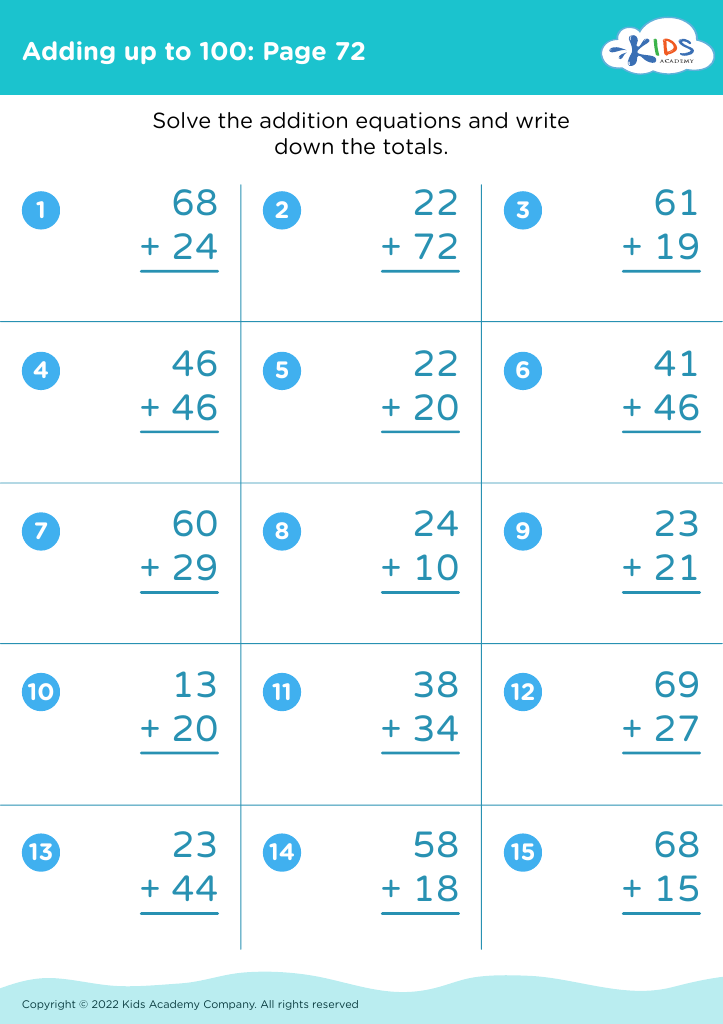
Enhance your child's fine motor skills with our engaging Addition & Subtraction Worksheets designed specifically for ages 8-9! Our printable resources combine mathematical practice with fun n-activity, promoting coordination and dexterity as young learners solve basic arithmetic problems. Each worksheet features colorful graphics and clear instructions, making math enjoyable while also fostering crucial physical skills. As children trace, color, and manipulate to find answers, they gain confidence in their math abilities. Perfect for home or classroom use, these worksheets are an excellent way to support your child’s fine motor development alongside essential addition and subtraction concepts! Download now for fun learning experiences!
Favorites
With answer key
Interactive
Join Kids Academy for Free
Who is primarily going to use this learning content?








Enhancing fine motor skills in conjunction with addition and subtraction for children aged 8-9 is crucial for several reasons. At this age, children are refining their ability to manipulate tools and materials, which supports greater independence in both academic tasks and daily life. Improved fine motor skills allow children to write more neatly, participate in arts and crafts, and engage in hands-on learning activities, all of which boost their confidence and creativity.
When fine motor skills are combined with foundational math concepts like addition and subtraction, children develop a dual set of competencies. Tasks such as holding a pencil correctly for math problems, manipulating manipulative tools, or constructing models help reinforce their understanding of numerical relationships. This multi-sensory approach deepens their comprehension and retention of math concepts, making them more versatile learners.
Moreover, these skills are often interconnected; children with strong fine motor skills may find it easier to navigate mathematical challenges, leading to increased success and encouragement. Thus, investing time and effort into enhancing these skills can cultivate not only academic proficiency but also emotional resilience and motivation, paving the way for lifelong learning abilities. Teachers and parents should prioritize fine motor skill development as part of a holistic educational experience.








