Explore our engaging Counting Skills Addition & Subtraction Worksheets designed specifically for children ages 8-9. This resource aims to strengthen foundational math skills through a variety of fun and interactive exercises. Students will practice counting, adding, and subtracting in a playful manner, helping to enhance their confidence and proficiency in mathematics. Each worksheet is crafted to cater to varying levels of ability, ensuring every child can find success. Perfect for classroom use or homework reinforcement, these worksheets will keep young learners motivated while they master essential counting strategies. Dive into a world of math fun and skill enhancement today!

Check out this FREE Trial Lesson on Addition & Subtraction for age 8-9!

Lesson 5- Place Value Fluency

Favorites
With answer key
Interactive
  • 8-9
  • Enhancing Counting Skills
  • Addition & Subtraction
Equal Groups: Assessment1 Worksheet

Equal Groups: Assessment 1 Worksheet

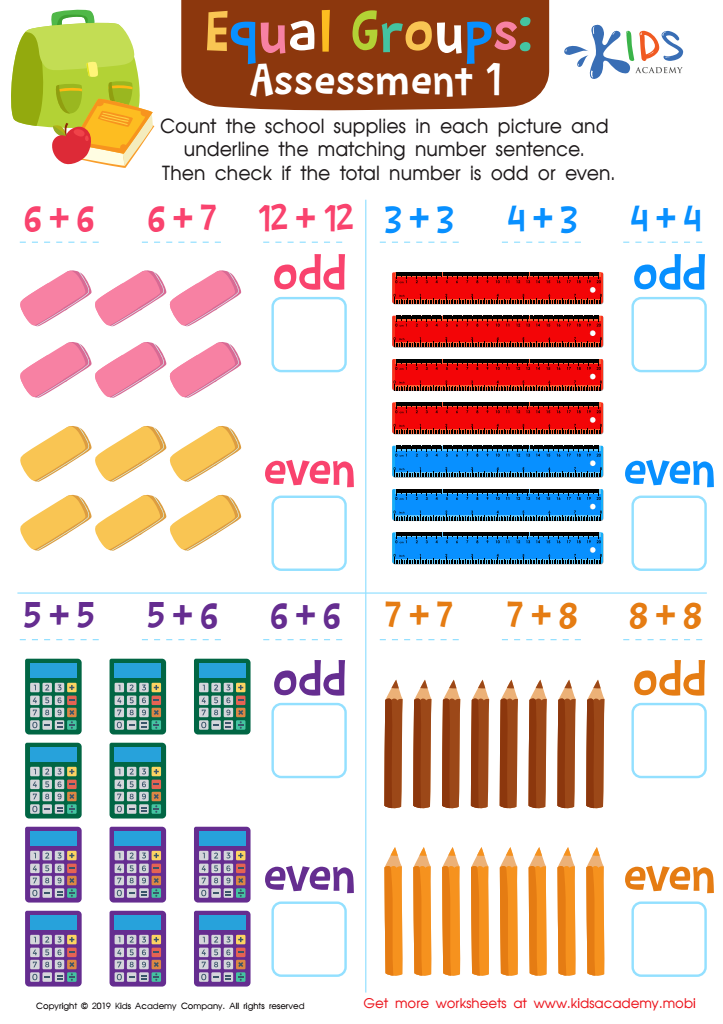
Have your students count the school supplies in each picture. Underline the number sentence that matches. Ask them if the total number is odd or even. Help your eager little preschoolers explore their classroom, which is full of pencils, chairs, desks, a blackboard and the teacher's desk.
Equal Groups: Assessment 1 Worksheet
Worksheet
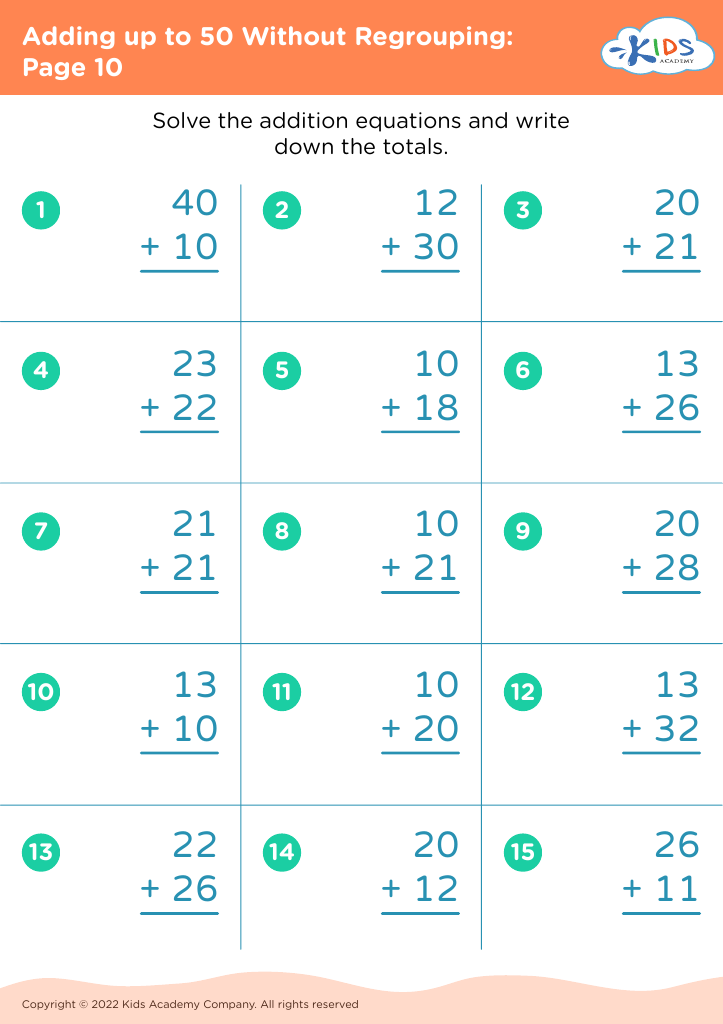
Adding up to 50 Without Regrouping: Page 10
Worksheet
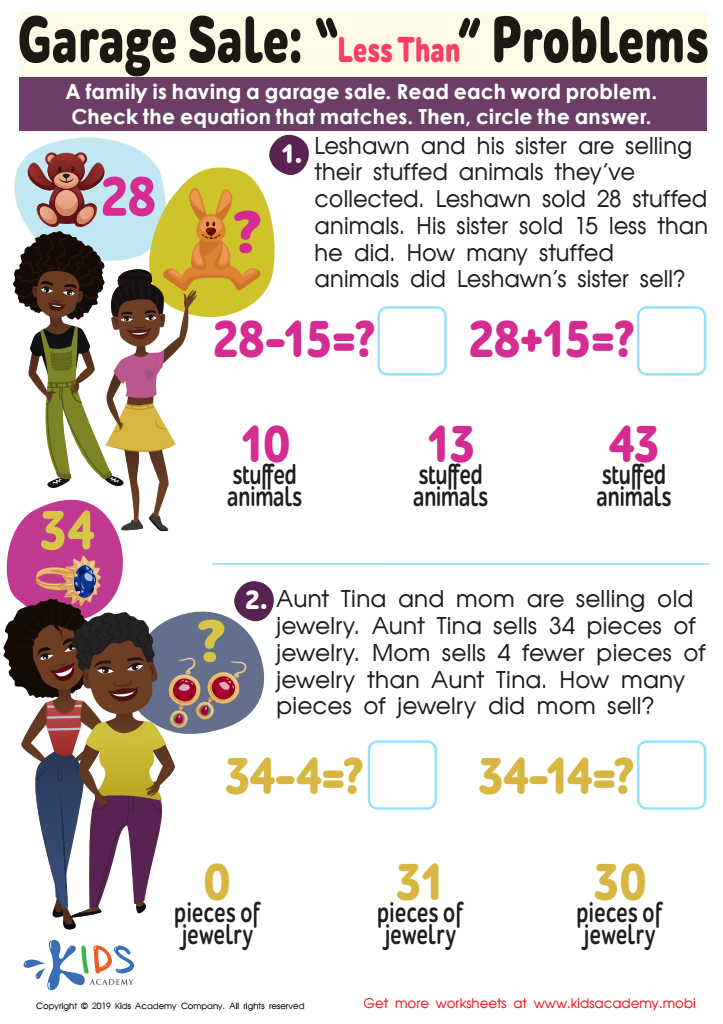
Garage Sale Less Than Worksheet

Garage Sale Less Than Worksheet

Kids often struggle with math word problems. This worksheet offers practice, using a real-world situation: friends having a garage sale. Students read each problem, extract the relevant information, match it with the correct equation and solve. Great for honing those essential problem-solving skills!
Garage Sale Less Than Worksheet
Worksheet
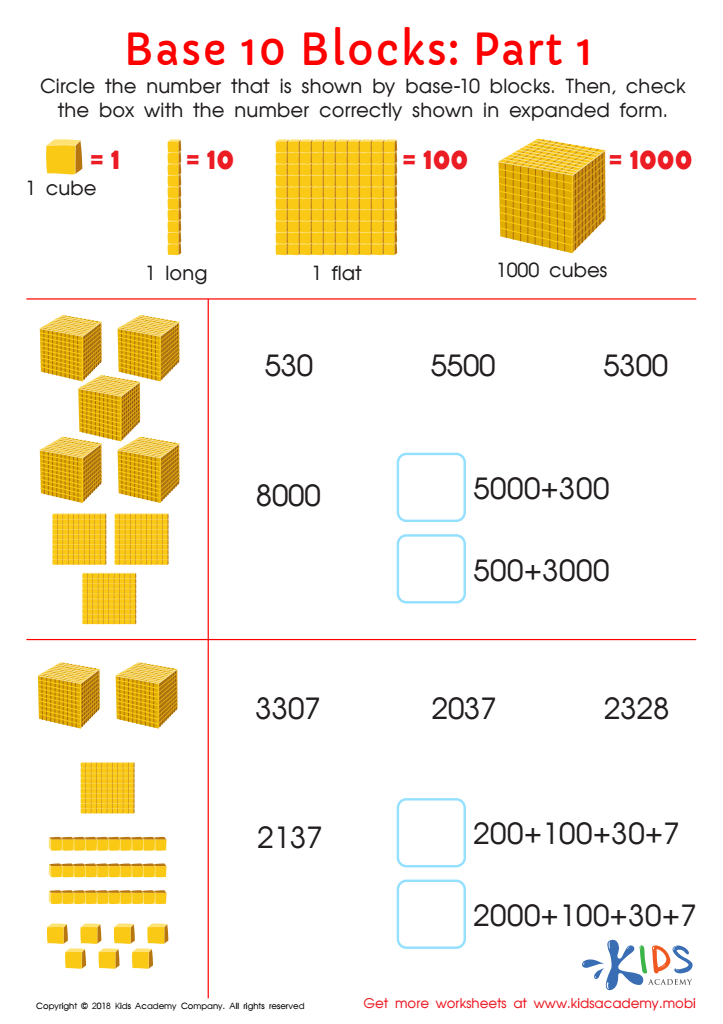
Base 10 Blocks Worksheet: Part 1

Base 10 Blocks Worksheet: Part 1

Need help teaching place value without manipulatives? Kids Academy has you covered! Our printable worksheet will help learners review the language like cubes, longs and flats. Just use the images at the top as a reference and have learners circle the answers and select its expanded form. Kids will master one to four-digit numbers without needing manipulatives.
Base 10 Blocks Worksheet: Part 1
Worksheet
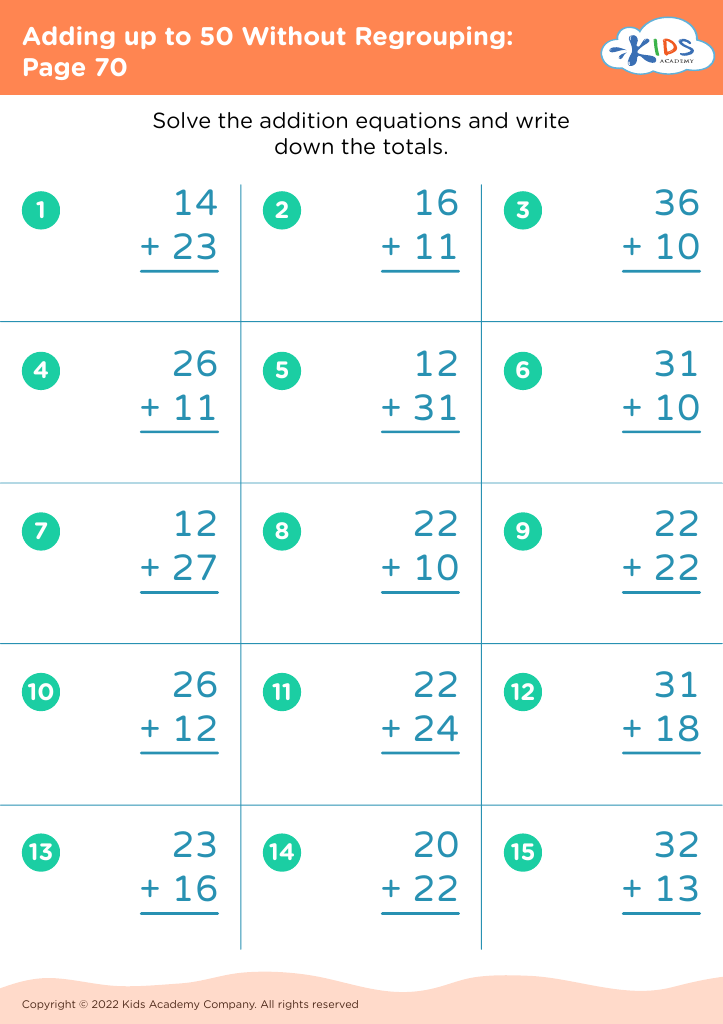
Adding up to 50 Without Regrouping: Page 70
Worksheet
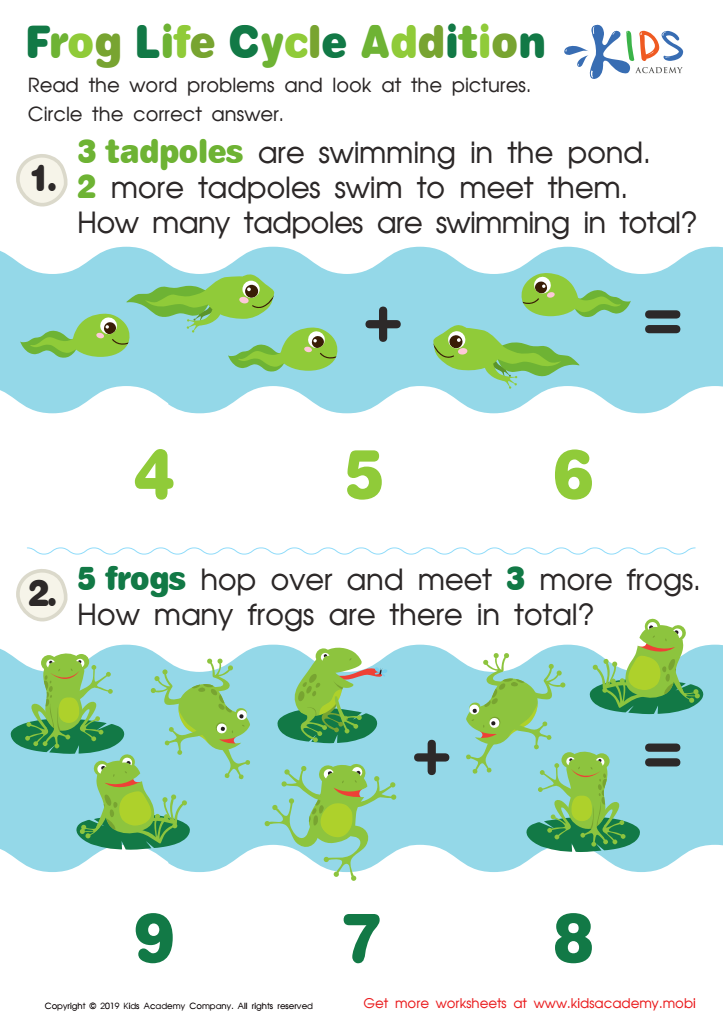
Frog Life Cycle Addition Worksheet
Frog Life Cycle Addition Worksheet

Look at this worksheet with your kids. Read the two word problems aloud, pointing at the pictures showing the frog's life cycle. Help your kids add simple equations and circle the correct answer. Fascinating creatures, frogs go through a cycle before becoming an adult.
Frog Life Cycle Addition Worksheet

Worksheet
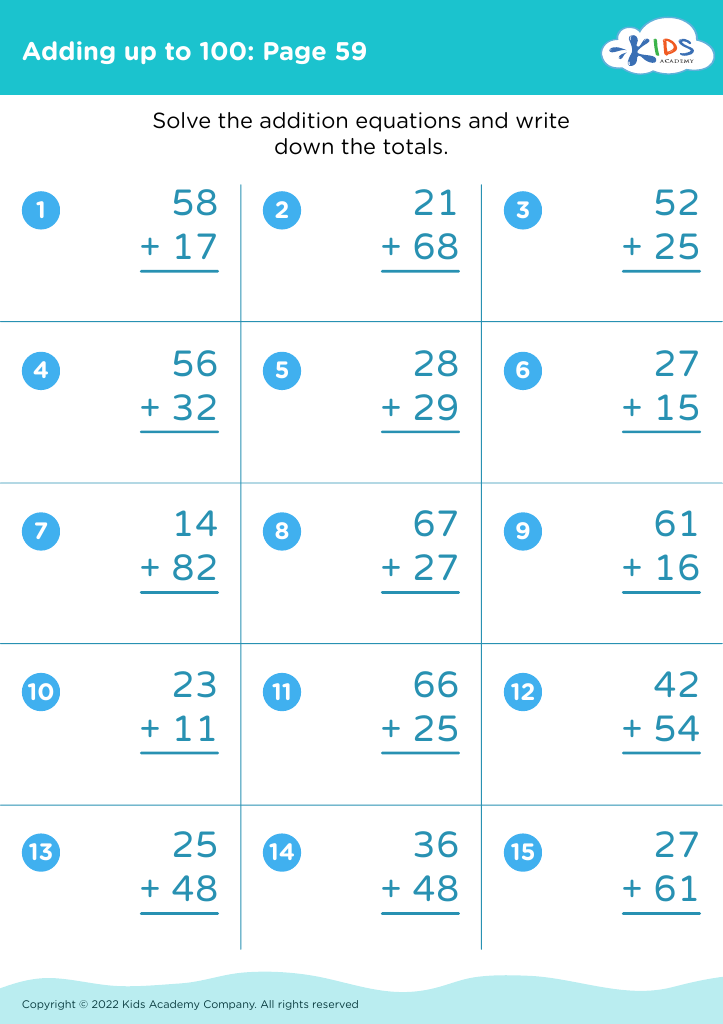
Adding up to 100: Page 59

Adding up to 100: Page 59

Adding up to 100: Page 59
Worksheet
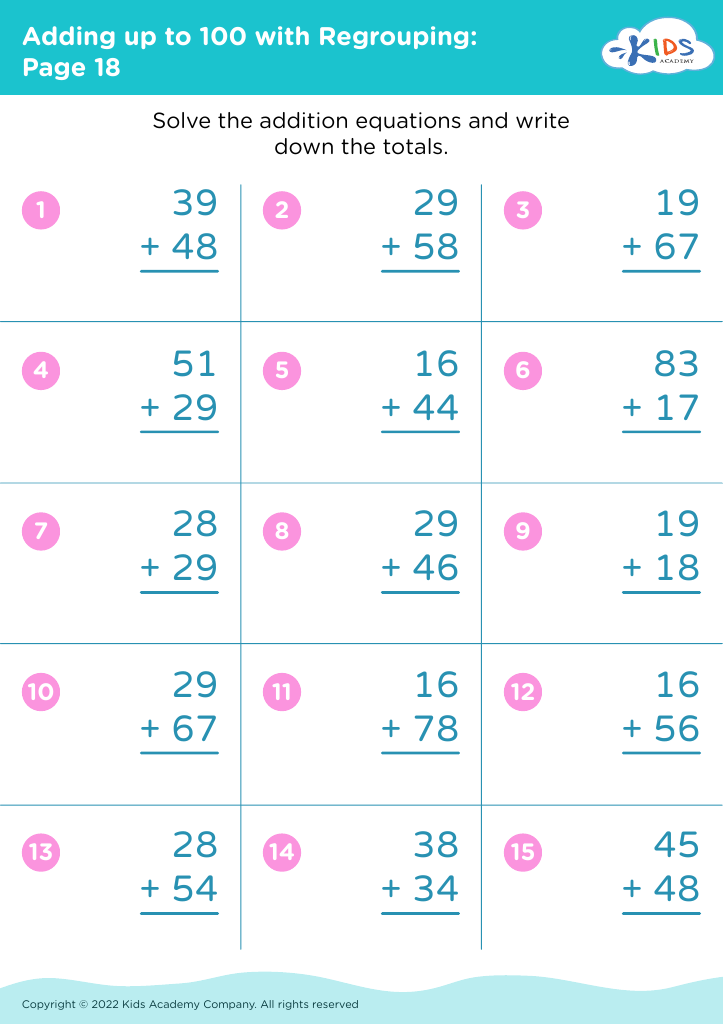
Adding up to 100 with Regrouping: Page 18
Worksheet
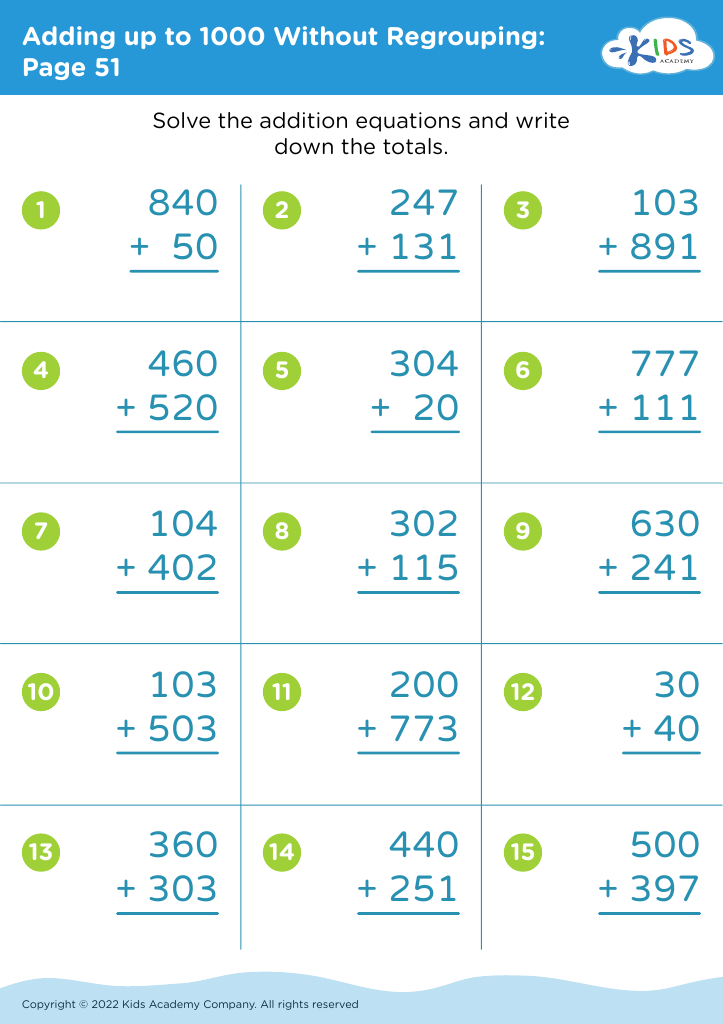
Adding up to 1000 Without Regrouping: Page 51
Worksheet
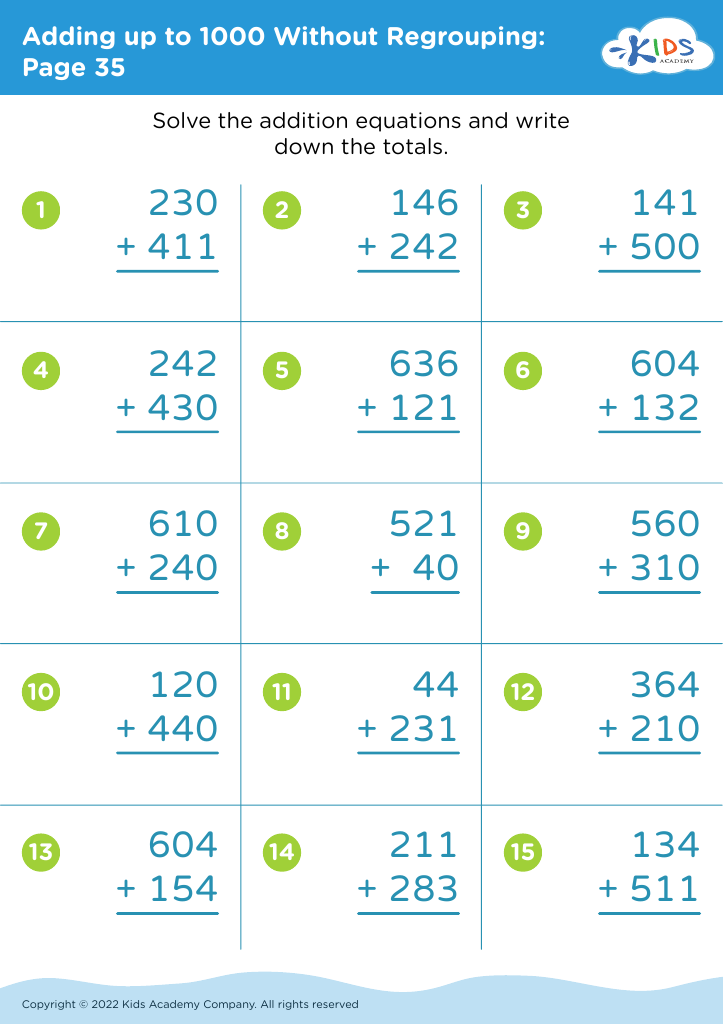
Adding up to 1000 Without Regrouping: Page 35
Worksheet


Enhancing counting skills and the foundational concepts of addition and subtraction for children aged 8-9 is crucial for their overall mathematical development. At this age, children transition from basic arithmetic to more complex mathematical ideas, setting the stage for future learning.

Mastering these skills not only supports academic success but also boosts a child’s confidence. Strong counting and arithmetic abilities help students navigate everyday situations, from managing allowance money to measuring ingredients in cooking. Moreover, foundational skills in counting and operations form the basis for more advanced topics like fractions, early algebra, and problem-solving.

Teachers and parents play an essential role in fostering these skills. Engaging children in fun, interactive activities can make learning enjoyable and effective. This approach helps develop a positive attitude toward math, reducing anxiety that often forms around the subject.

Furthermore, a strong grounding in addition and subtraction enhances critical thinking and analytical skills, preparing children for higher-level math courses. Ultimately, developing these skills is not just about academic performance; it equips children with essential life skills that extend beyond the classroom, enabling them to navigate the world with confidence. Investing in these core competencies now pays dividends in future learning and everyday life.