Learn addition Addition & Subtraction Worksheets for Ages 8-9
3 filtered results
-
From - To
Explore our engaging "Learn Addition & Subtraction Worksheets for Ages 8-9," designed to make math fun and accessible for young learners! Our worksheets feature a variety of activities that reinforce essential addition and subtraction skills, helping children build confidence in their math abilities. With clear instructions and vibrant illustrations, each worksheet encourages independent learning while making the subject enjoyable. Ideal for classrooms or home use, our resources support diverse learning styles and foster a solid arithmetic foundation. Start your child's math journey today and watch them thrive as they master essential concepts with ease! Download your worksheets now for an enriching learning experience!
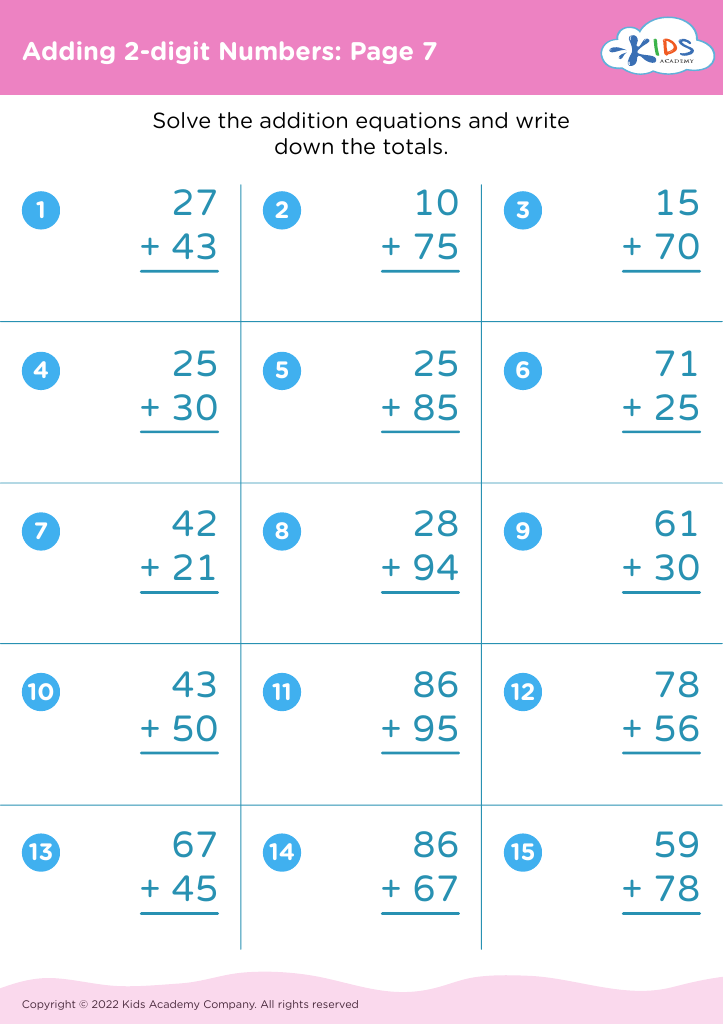
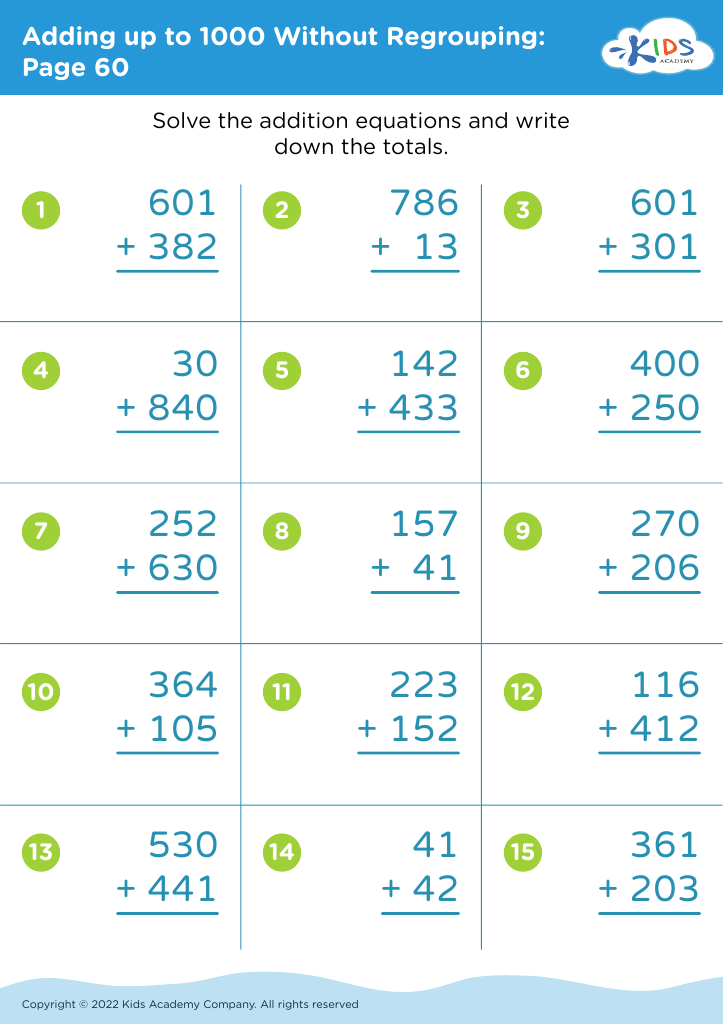
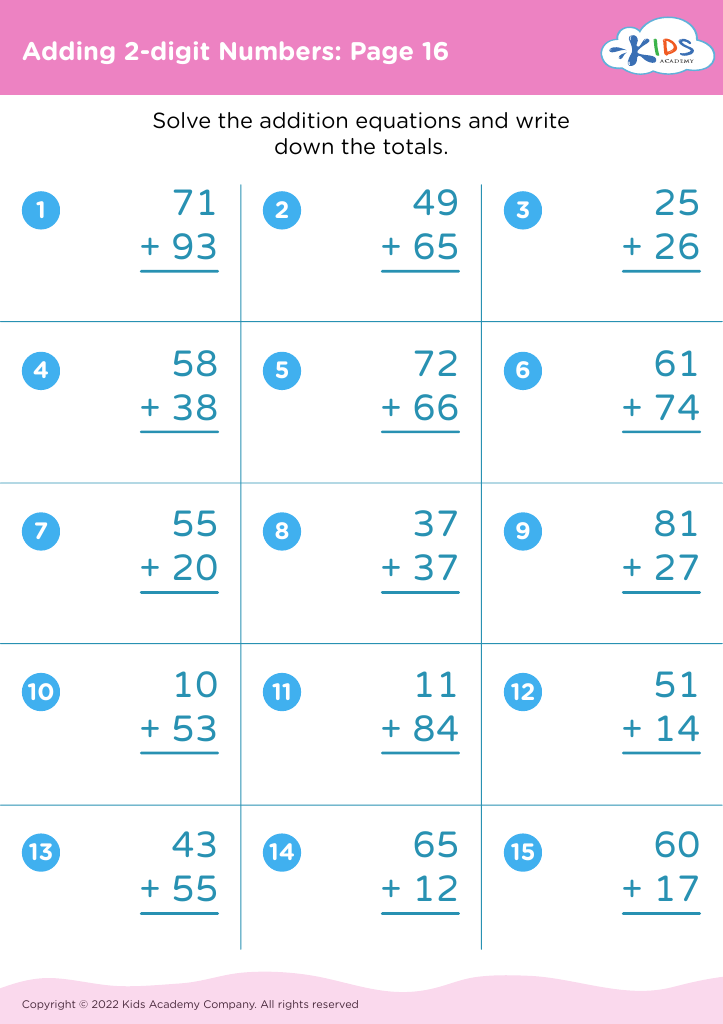








Parents and teachers should prioritize teaching addition and subtraction to children aged 8-9 because these foundational skills are crucial for a child's mathematical development and overall academic success. At this age, students transition from simple arithmetic to more complex concepts, making mastery of these operations vital. Understanding addition and subtraction builds the essential groundwork needed for future math topics, such as multiplication, division, fractions, and even basic algebra.
Moreover, practical applications of these skills are evident in everyday life, from budgeting allowances to measuring ingredients in recipes. Mastering addition and subtraction empowers children to tackle real-world problems confidently. This age is also a critical point for developing a positive attitude toward math; if children struggle with these basics, they may develop math anxiety, hindering their enthusiasm for learning.
Additionally, reinforcing these skills at home and in the classroom supports cognitive development. Engaging activities can promote critical thinking, problem-solving, and perseverance. Ultimately, ensuring that children achieve proficiency in addition and subtraction will not only enhance their mathematical abilities but also bolster their self-esteem and readiness for future educational challenges. Supporting this learning can set the stage for a lifelong appreciation of math and its relevance in everyday life.








