
Mathematical reasoning Addition & Subtraction Worksheets for Ages 8-9
23 filtered results
Difficulty Level
Grade
Age
-
From - To
Subject
Activity
Standards
Welcome to our collection of Mathematical Reasoning Addition & Subtraction Worksheets designed specifically for ages 8-9. These engaging and interactive worksheets help young learners enhance their fundamental math skills while developing critical thinking abilities. Our carefully curated activities focus on real-life problem-solving, ensuring students use addition and subtraction effectively and creatively. Each worksheet challenges kids to think independently, reason through mathematical concepts, and apply strategies across various scenarios. Perfect for classroom use or at-home learning, our worksheets foster a deeper understanding of mathematics while promoting accuracy and confidence. Explore our resources today to inspire a love for math in young learners!
Favorites
With answer key
Interactive
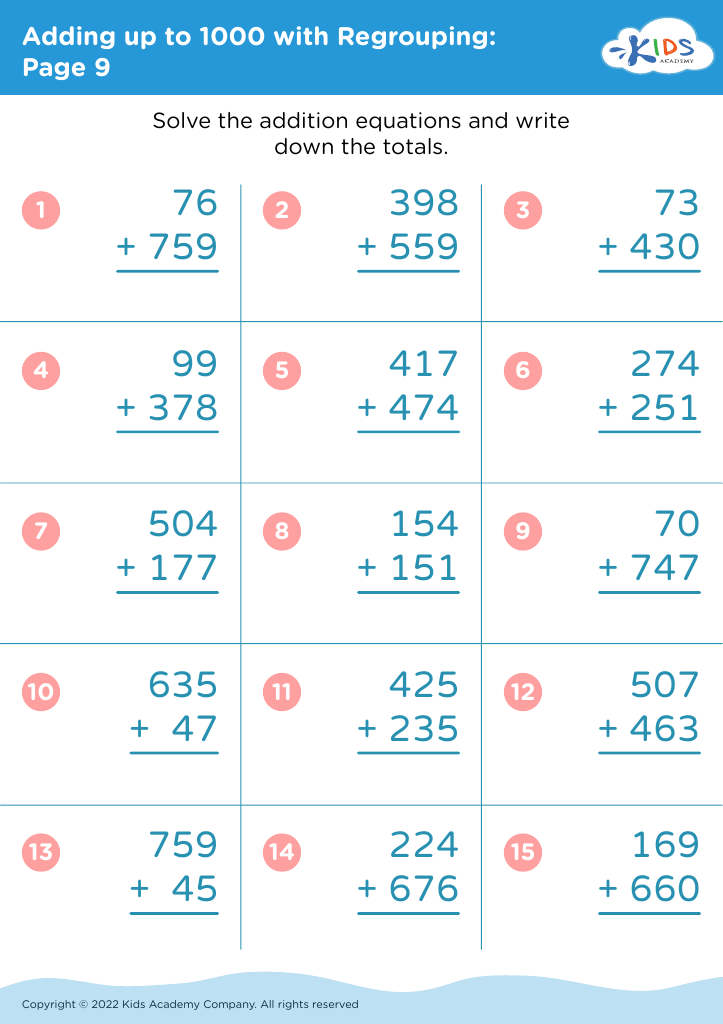
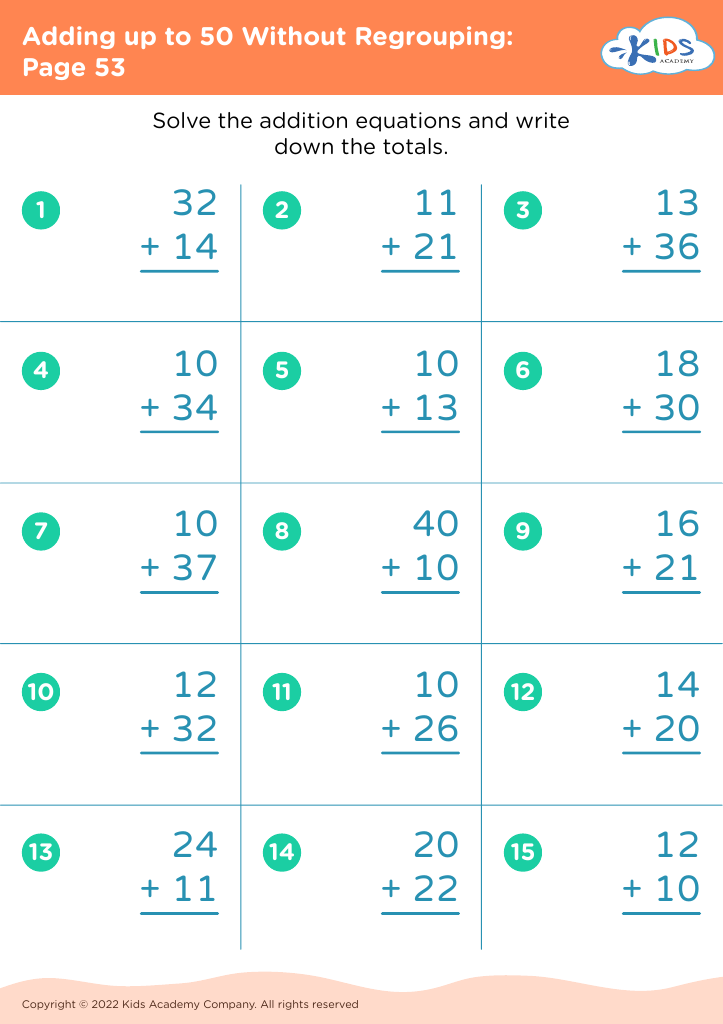
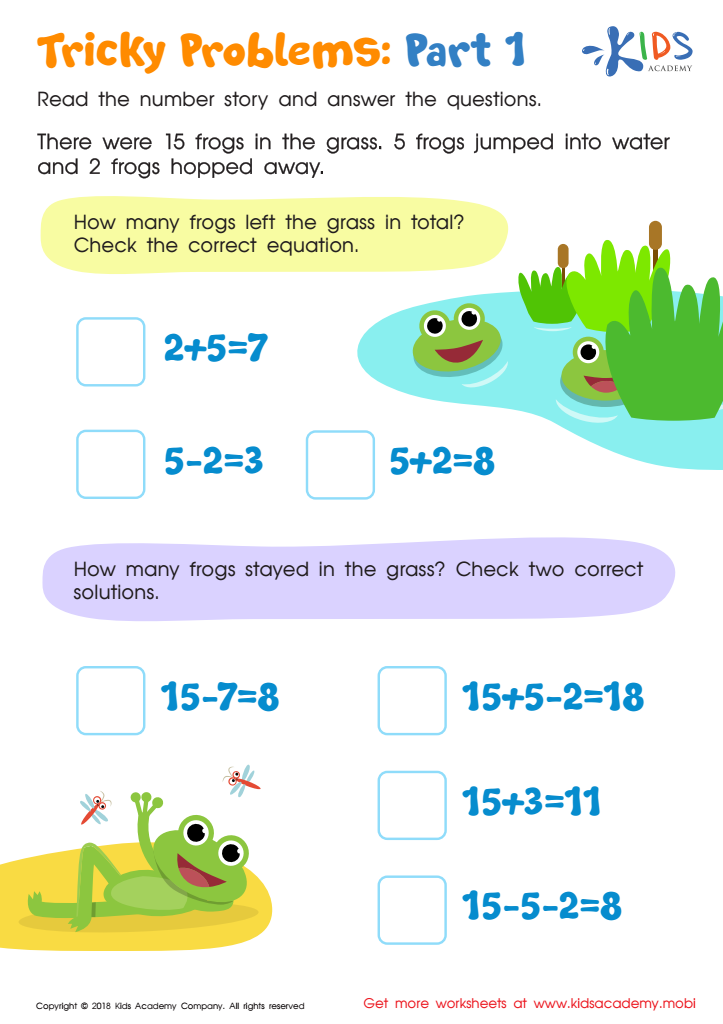
Tricky Problems Worksheet: Part 1
Visualizing word problems can help students solve them. This fun PDF worksheet encourages students to create mental images using math facts, then check boxes to match the equations for basic addition problems. It's a great way to build confidence in solving math.
 Assign to My Students
Tricky Problems Worksheet: Part 1
Worksheet
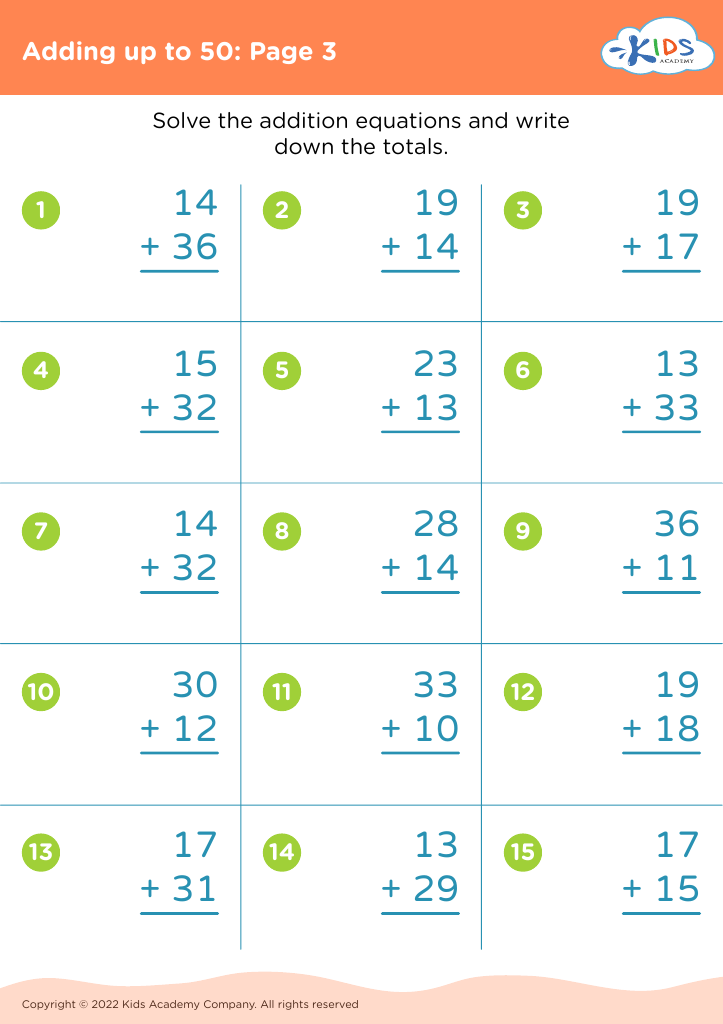
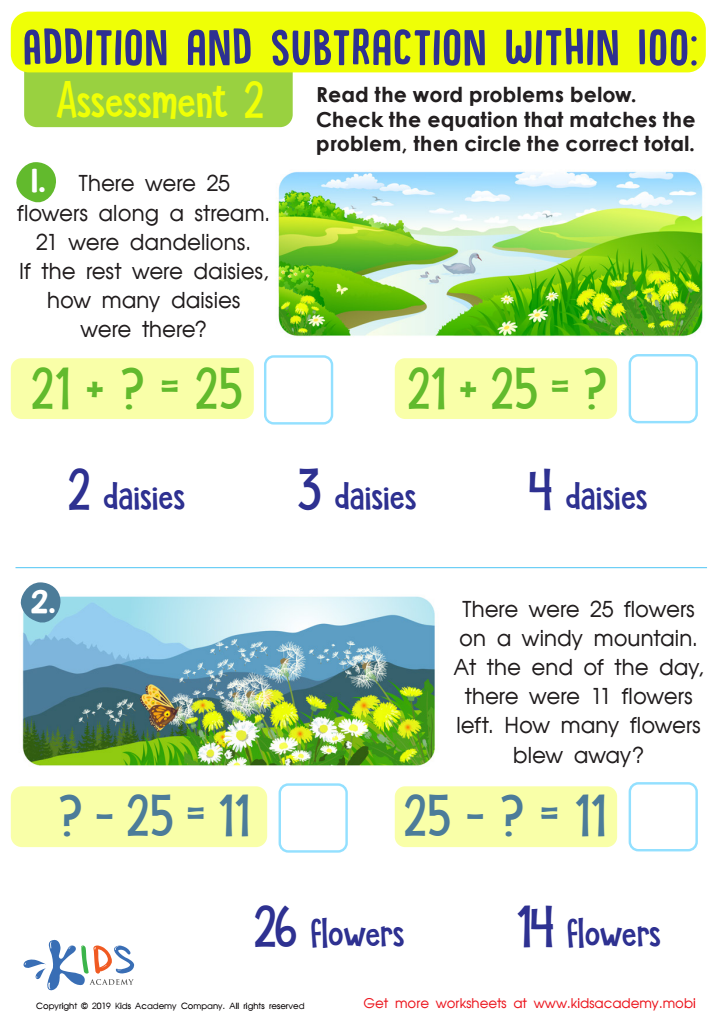
Assessment 2 Math Worksheet
Using fun exercises and pictures, you can get kids excited about math. With practice and reminders of what they've learnt, they'll be solving simple addition and subtraction equations with ease. Read the word problems in the picture to them, then help them check the equation and choose the correct answer.
Assessment 2 Math Worksheet
Worksheet
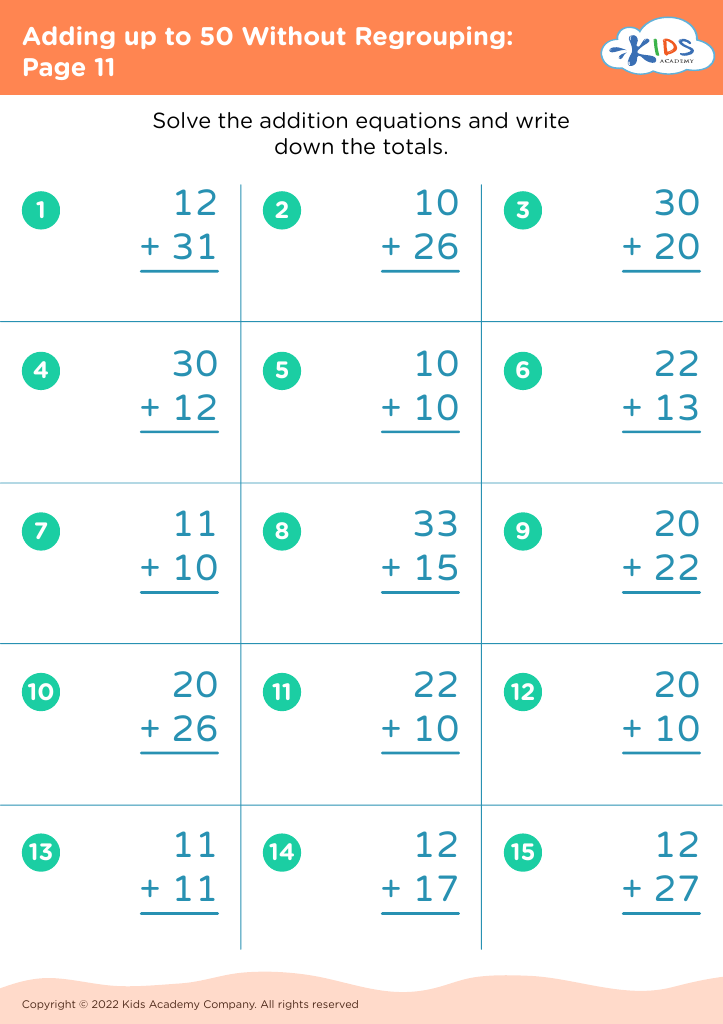
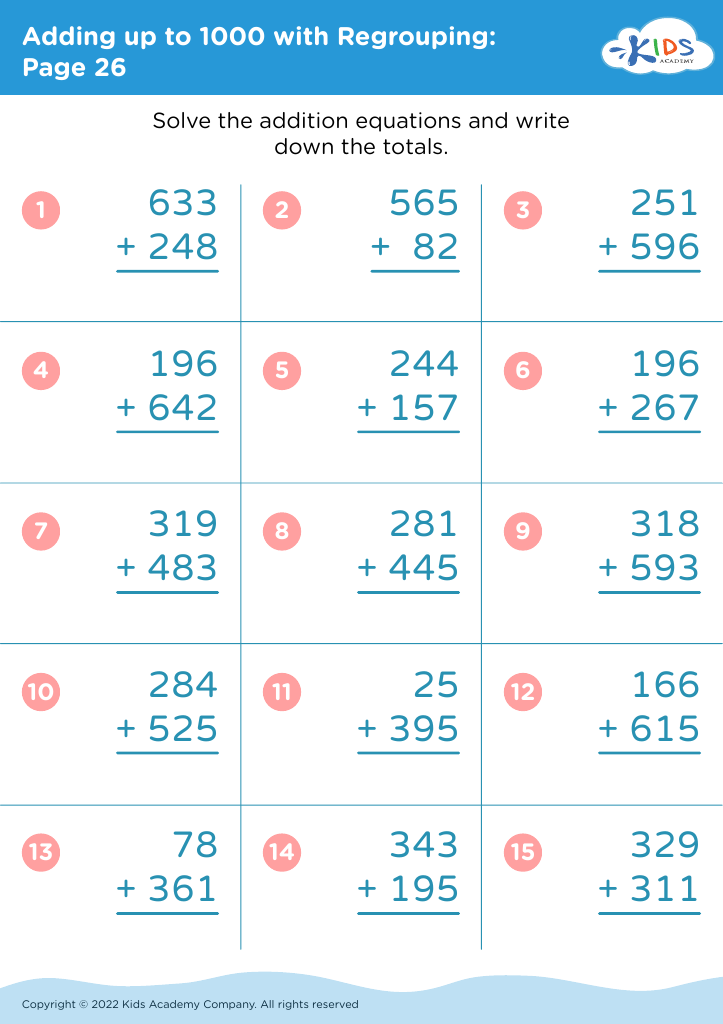
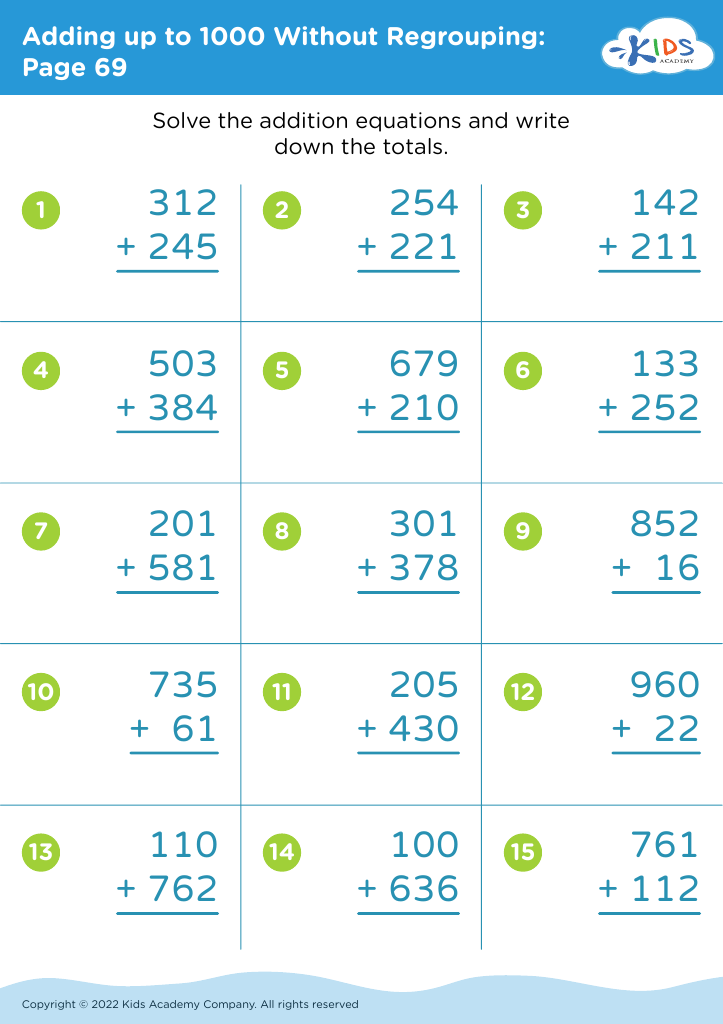
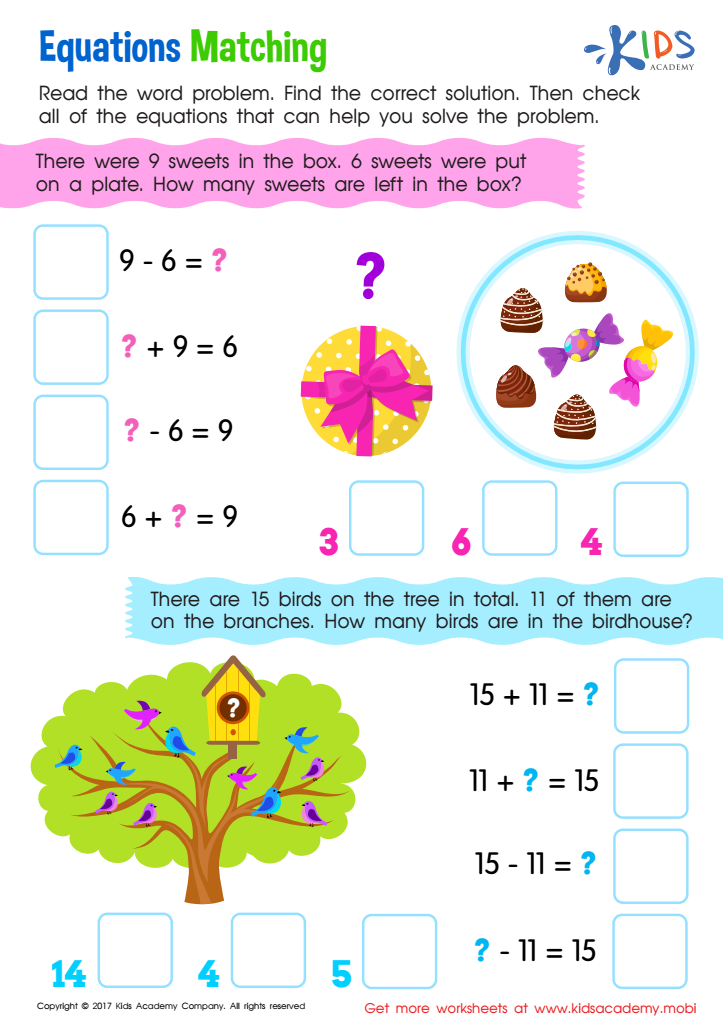
Equations Matching Word Problems Worksheet
Download this worksheet and give your young mathematician practice in solving equations using matching numbers and number family facts. They'll solve word problems, develop critical thinking and algebraic reasoning, and gain success with addition and subtraction.
Equations Matching Word Problems Worksheet
Worksheet
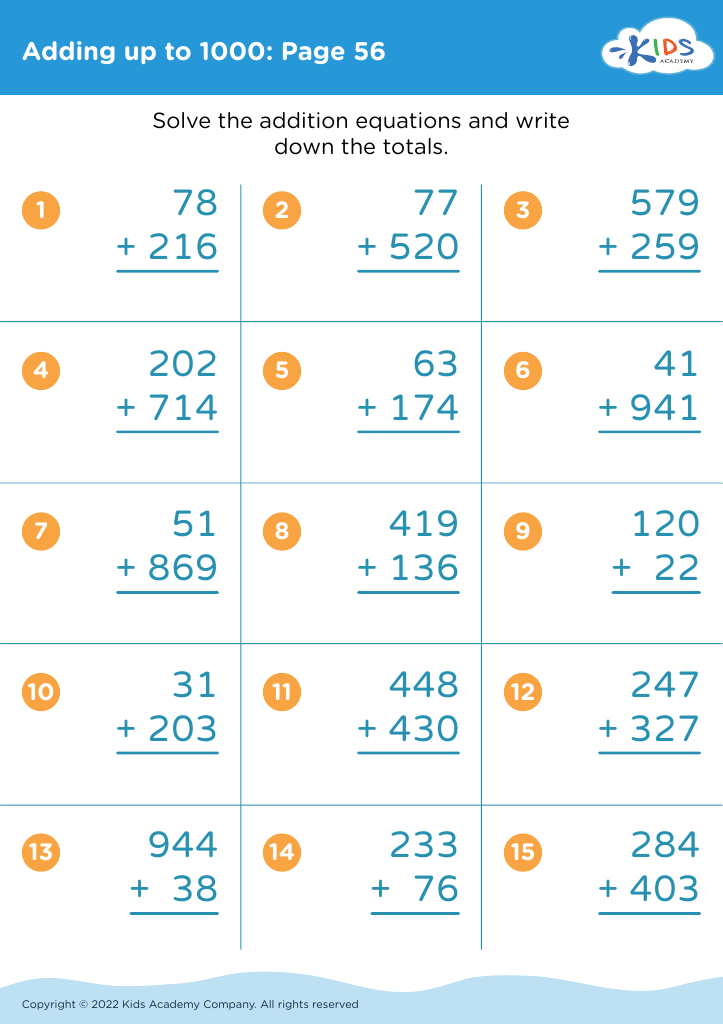
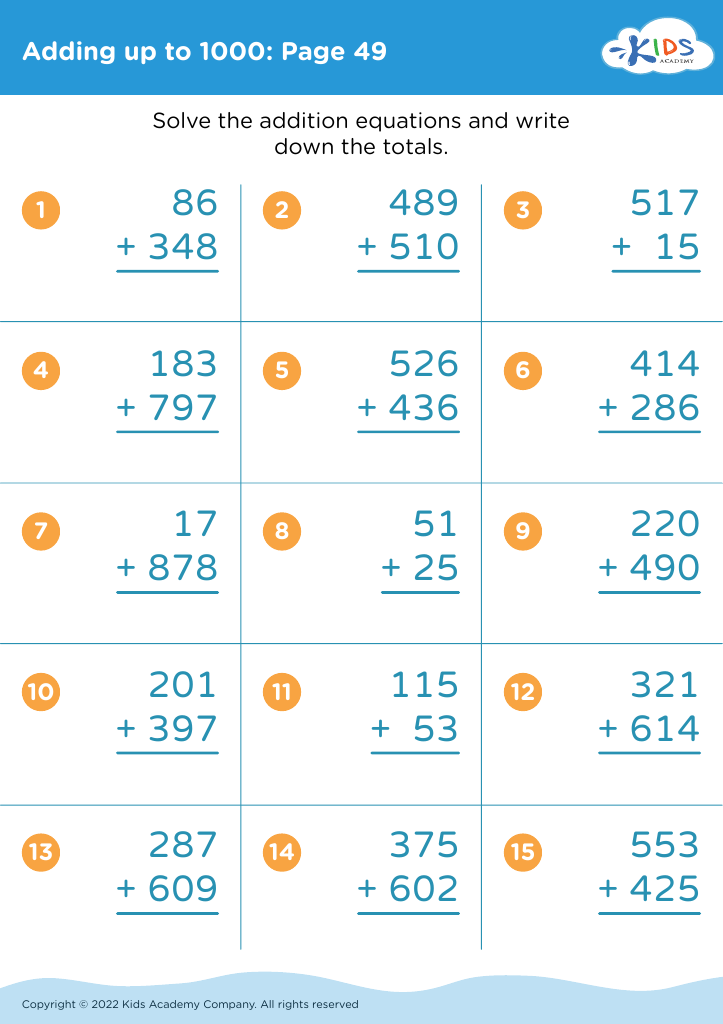
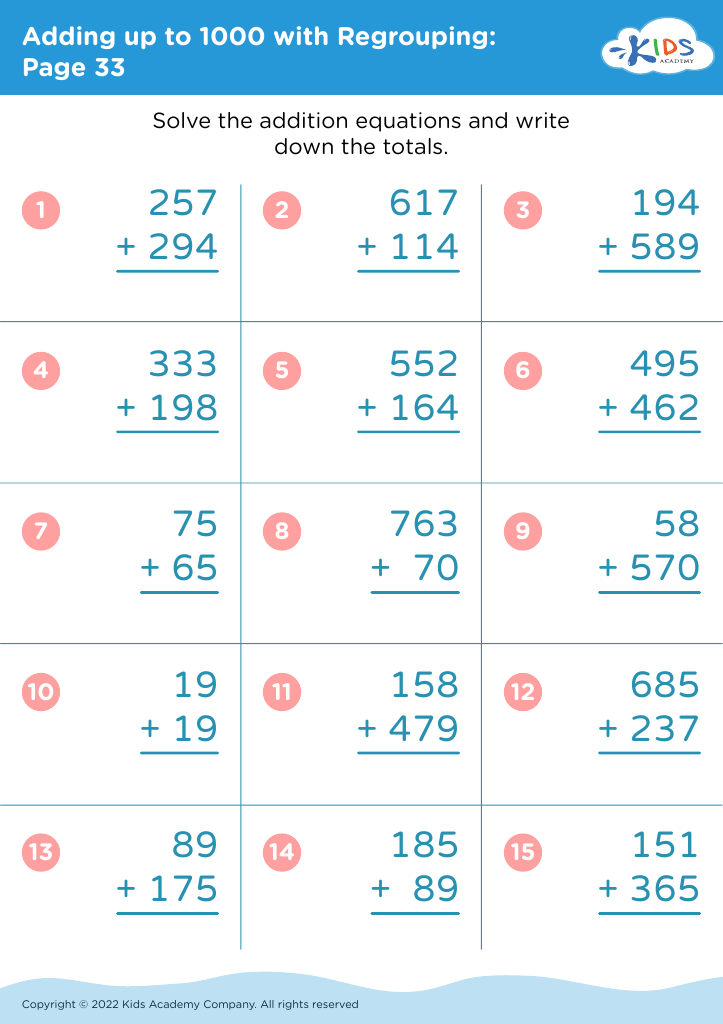
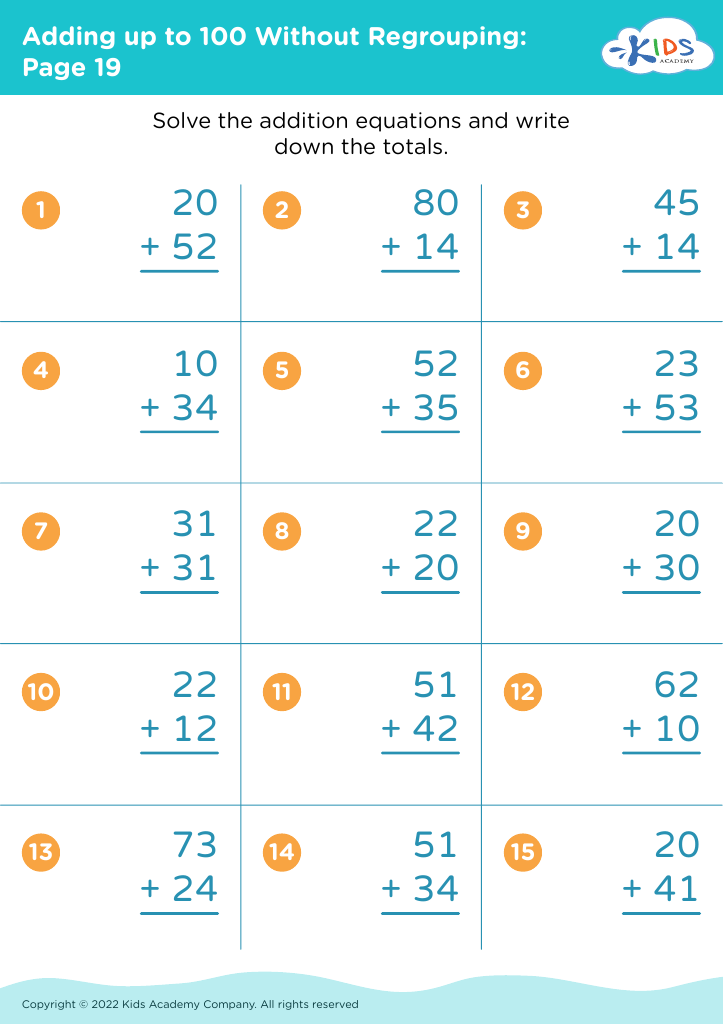
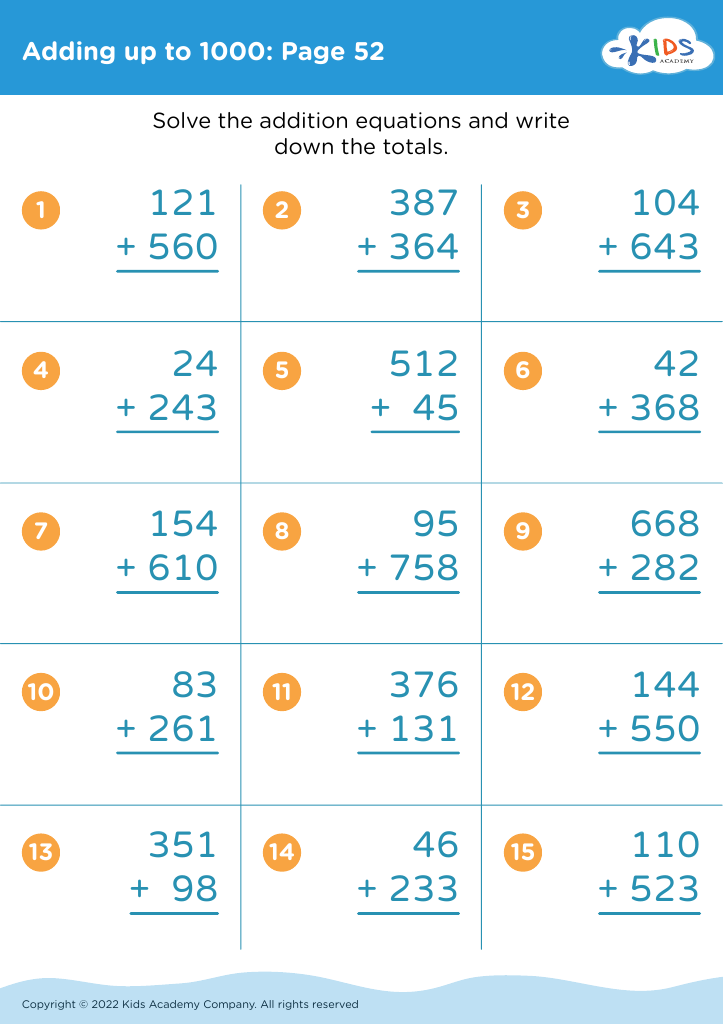
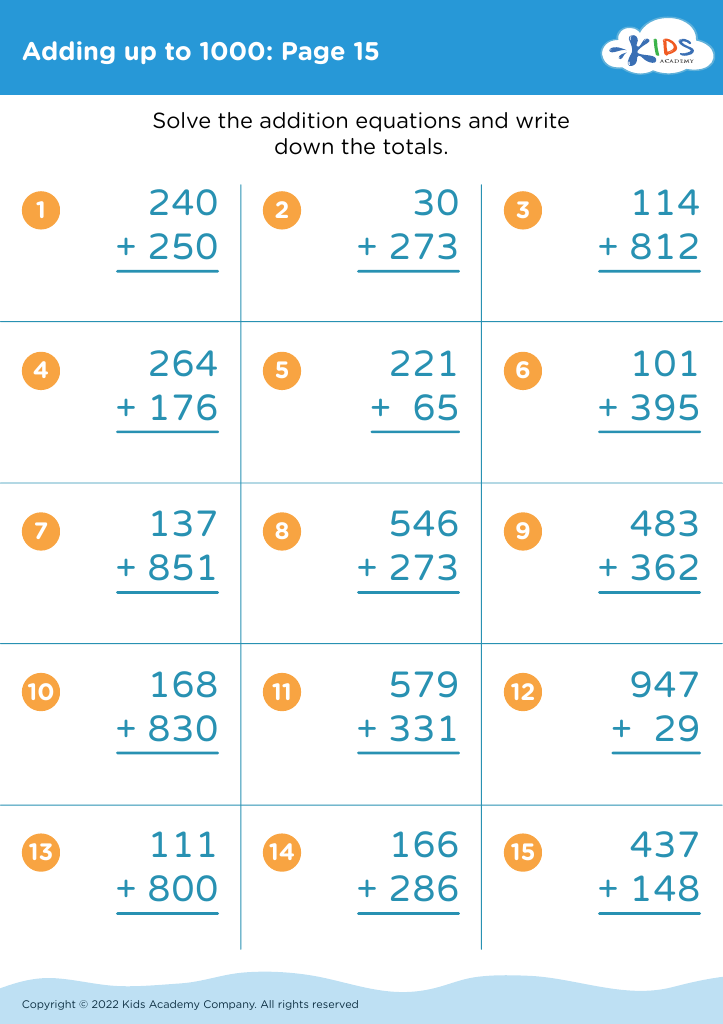
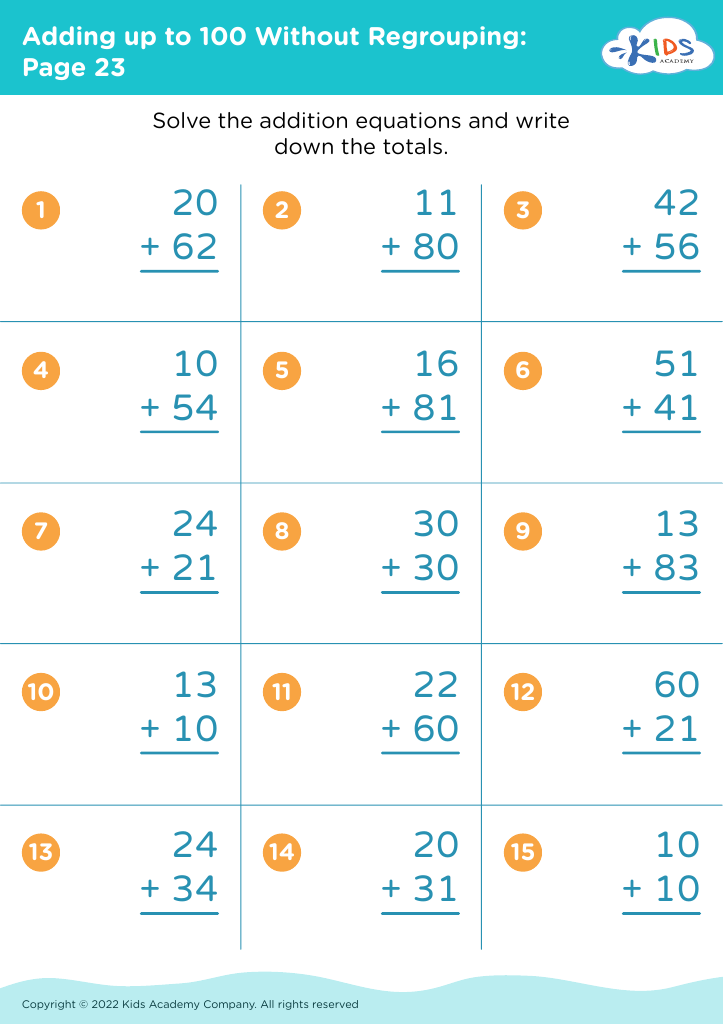
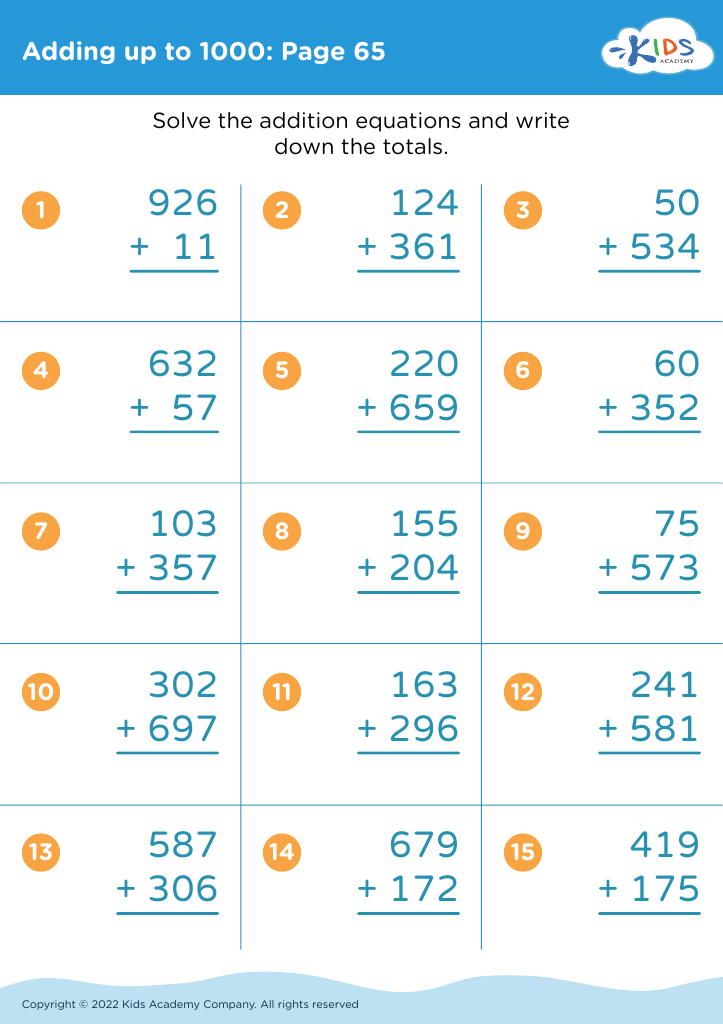
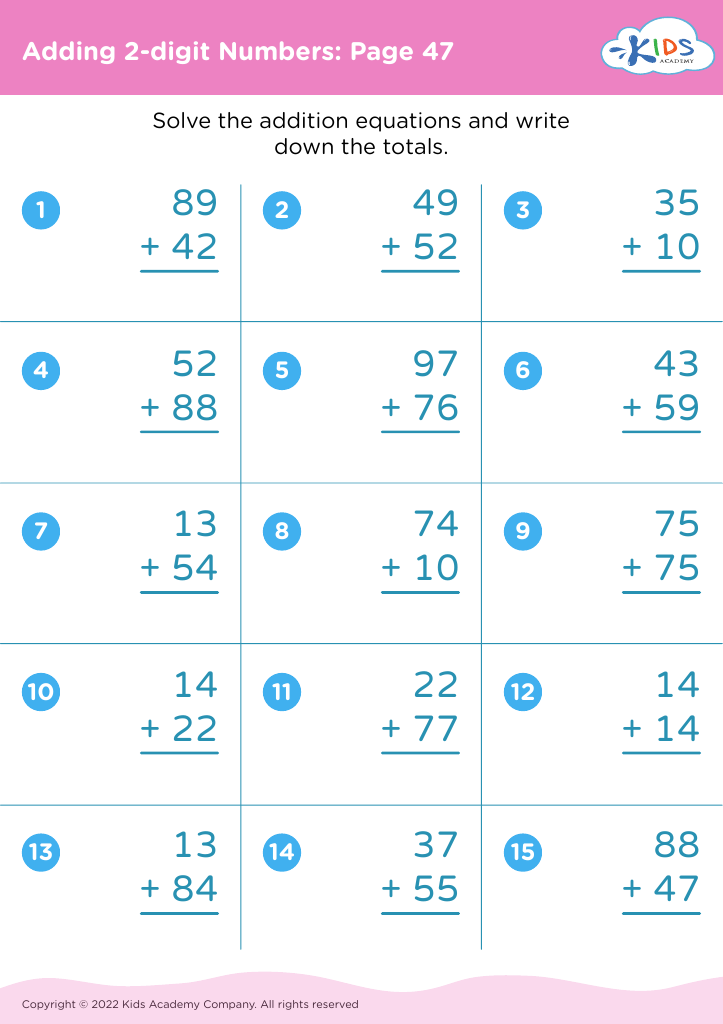
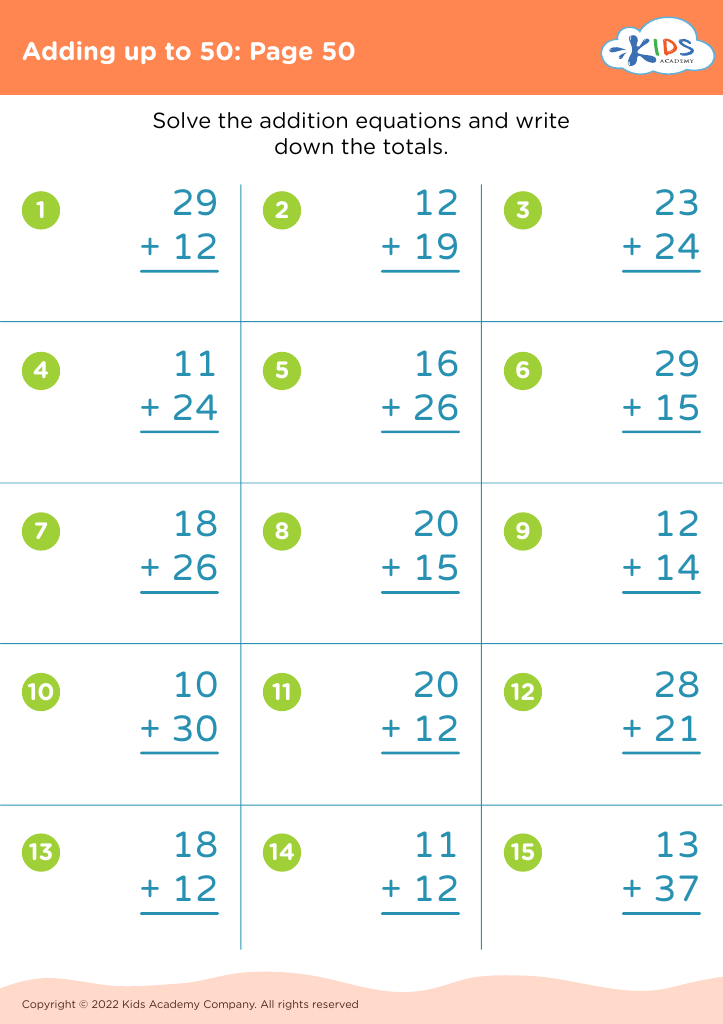
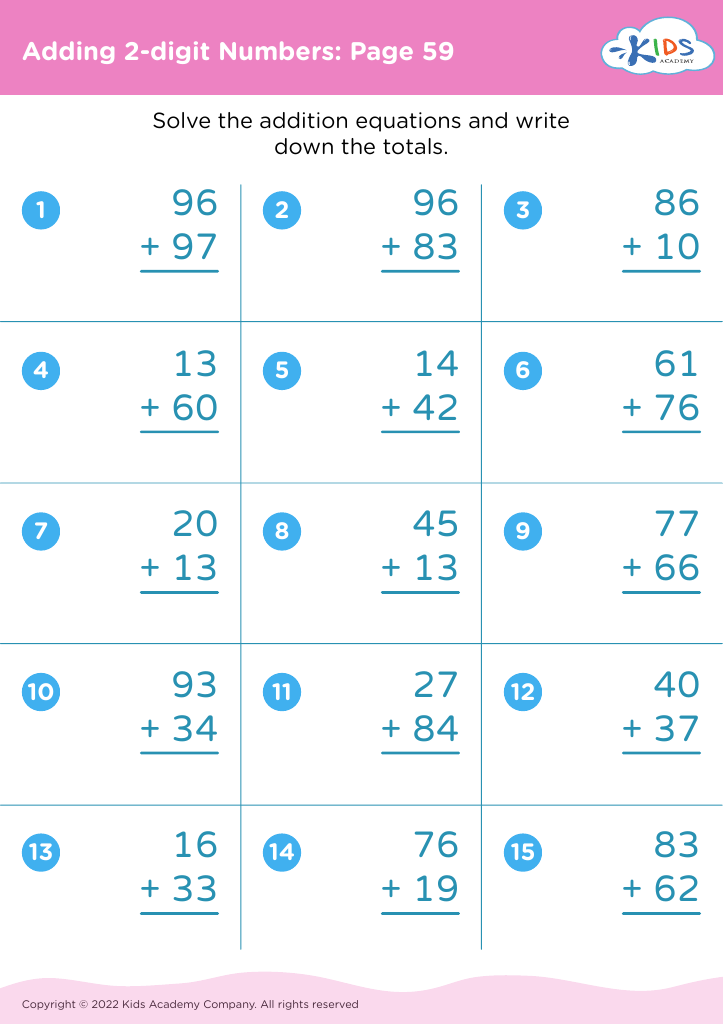
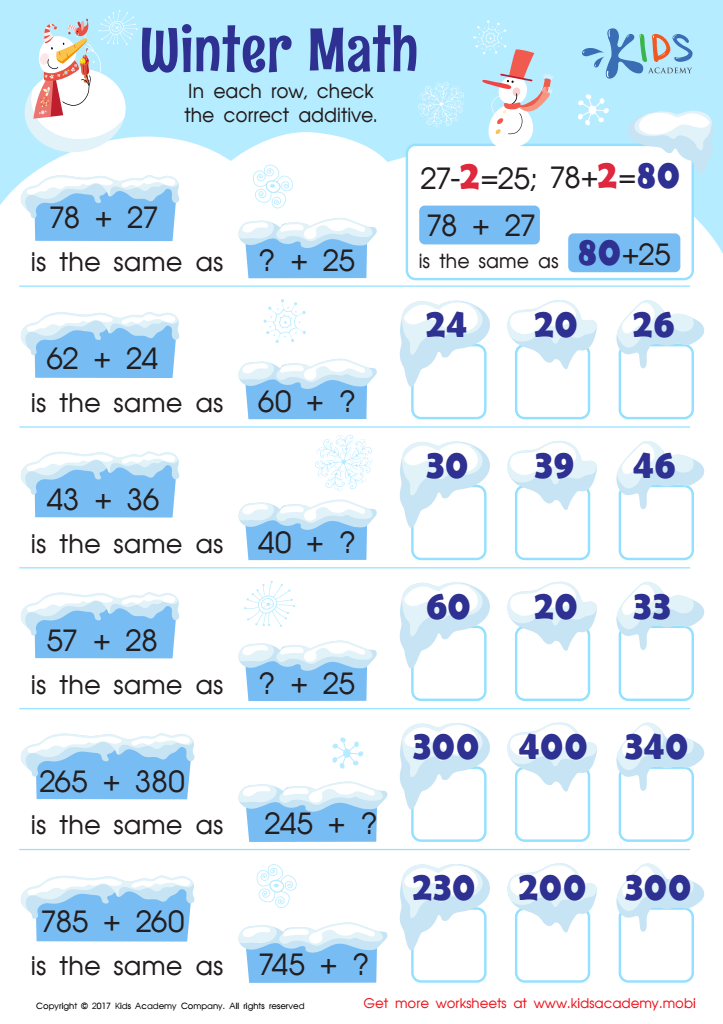
Free Addition Worksheet
Perfect for a wintry day, challenge your 3rd grader to compare addition equations and fill in the missing numbers in the PDF.
This winter-themed worksheet is sure to bring a smile while your 3rd grader practices their addition skills. Perfect for a blustery day, challenge your child to compare addition equations and complete the missing numbers in the PDF.
Free Addition Worksheet
Worksheet
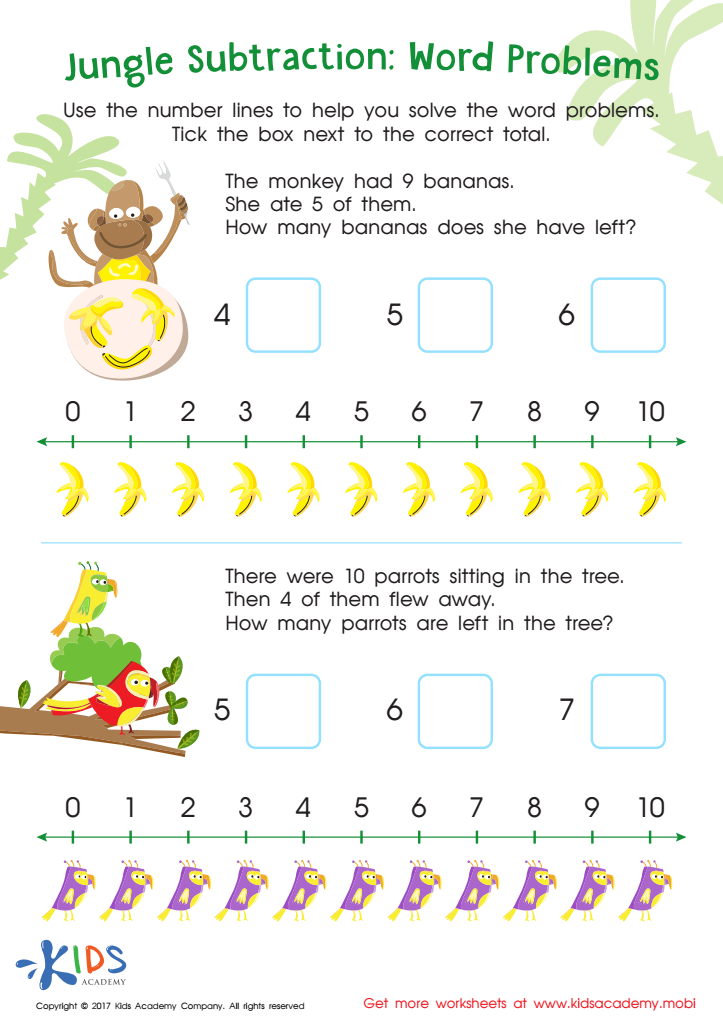
Jungle Subtraction Word Problems Substraction Worksheet
Kids will love this jungle-themed worksheet: subtraction word problems! Help the monkey work out how many bananas he has, using the number line. Encourage your child to use colorful parrots to subtract with ease and make calculations fun!
Jungle Subtraction Word Problems Substraction Worksheet
Worksheet
Join Kids Academy for Free
Who is primarily going to use this learning content?








Mathematical reasoning in addition and subtraction is crucial for children aged 8-9 as it lays the groundwork for more complex mathematical concepts. This stage involves not just knowing how to perform these operations but understanding why they work and how to apply them in various contexts. Engaging with mathematical reasoning helps children develop critical thinking skills and enhances their ability to solve problems effectively.
At this age, when kids encounter more challenging math concepts like multi-digit operations and the foundations of fractions, a strong grasp of addition and subtraction through reasoning supports their overall mathematical fluency. Understanding the relationships between numbers fosters a sense of number sense and helps children approach math with confidence.
Moreover, the ability to explain their thought processes strengthens communication skills and promotes a deeper understanding of math beyond rote memorization. Encouraging reasoning not only enriches their mathematical experience but also cultivates perseverance and resilience, essential traits for future learning.
By supporting the development of mathematical reasoning, parents and teachers contribute to building a solid academic foundation, ensuring that children not only succeed in their current studies but are also equipped for future learning and real-life applications of mathematics.








