Filters

140 filtered results

Clear all filters
Favorites
With answer key
Interactive

140 filtered results

Difficulty Level

Grade


Check out this FREE Trial Lesson on Addition & Subtraction for age 8-9!

Z

Favorites
With answer key
Interactive
  • 8-9
  • Number Recognition
  • Addition & Subtraction
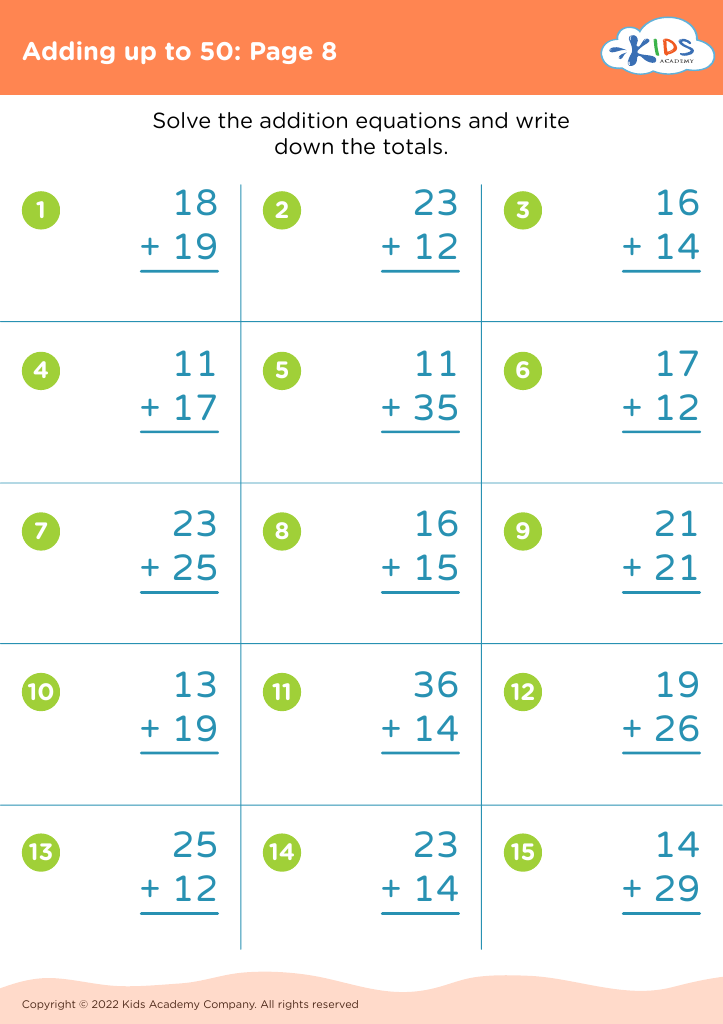
Adding up to 50: Page 8

Adding up to 50: Page 8

Adding up to 50: Page 8
Worksheet
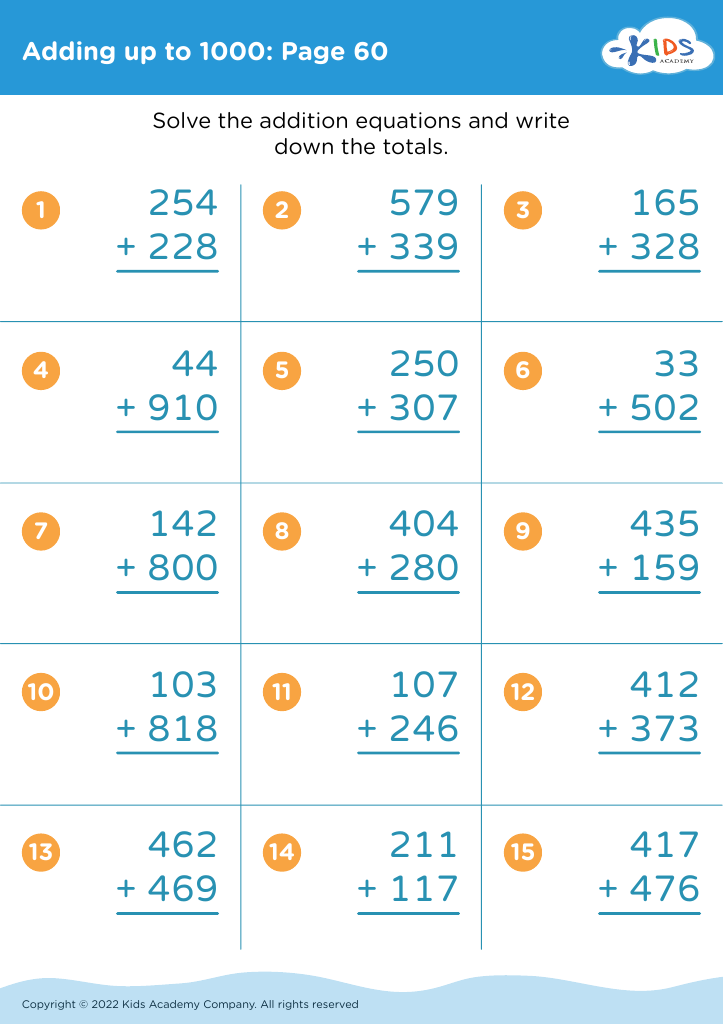
Adding up to 1000: Page 60

Adding up to 1000: Page 60

Adding up to 1000: Page 60
Worksheet
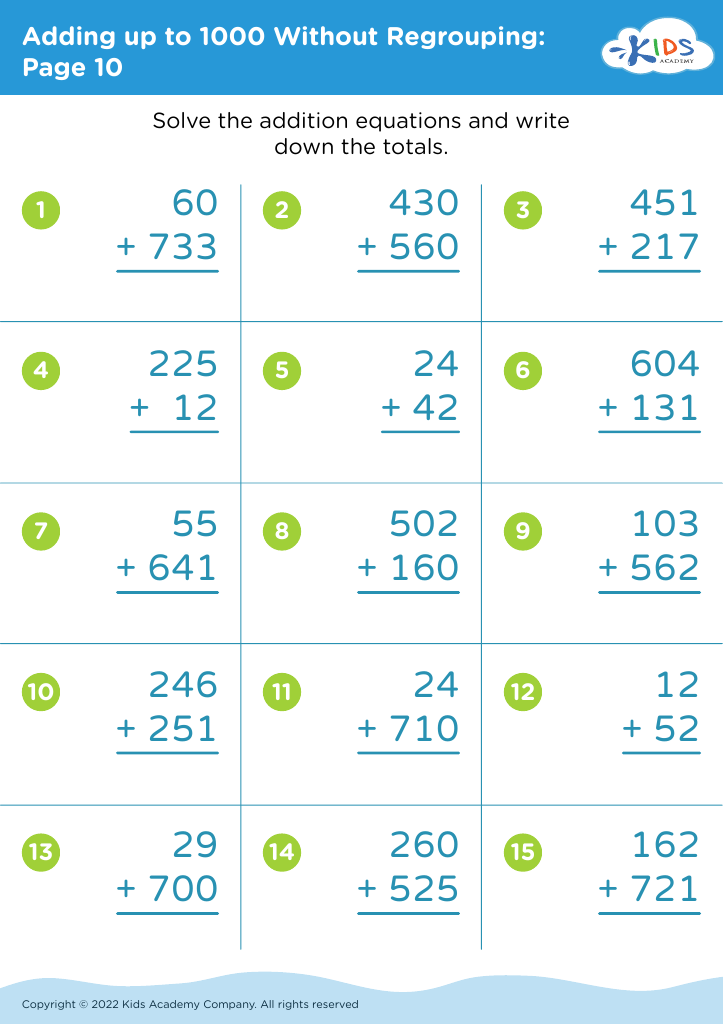
Adding up to 1000 Without Regrouping: Page 10
Worksheet
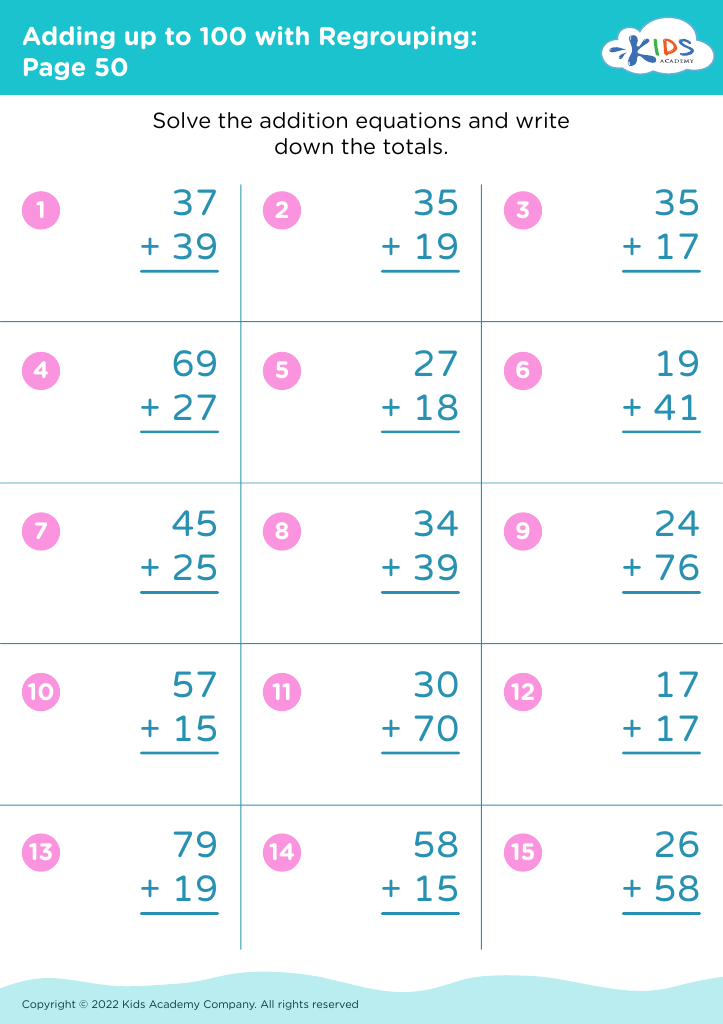
Adding up to 100 with Regrouping: Page 50
Worksheet
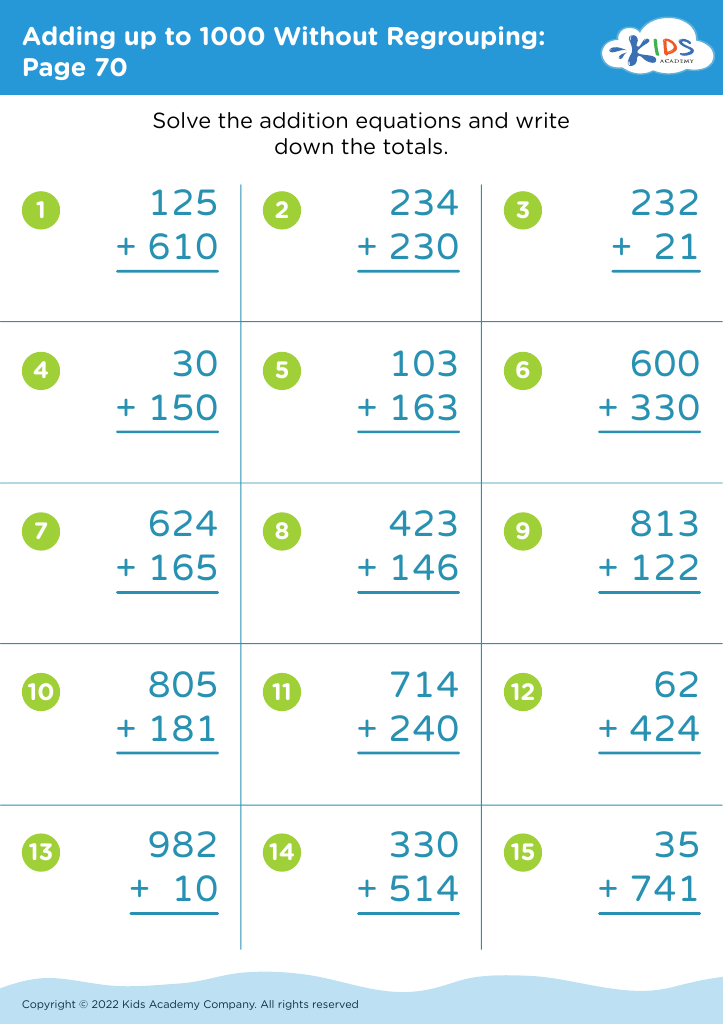
Adding up to 1000 Without Regrouping: Page 70
Worksheet
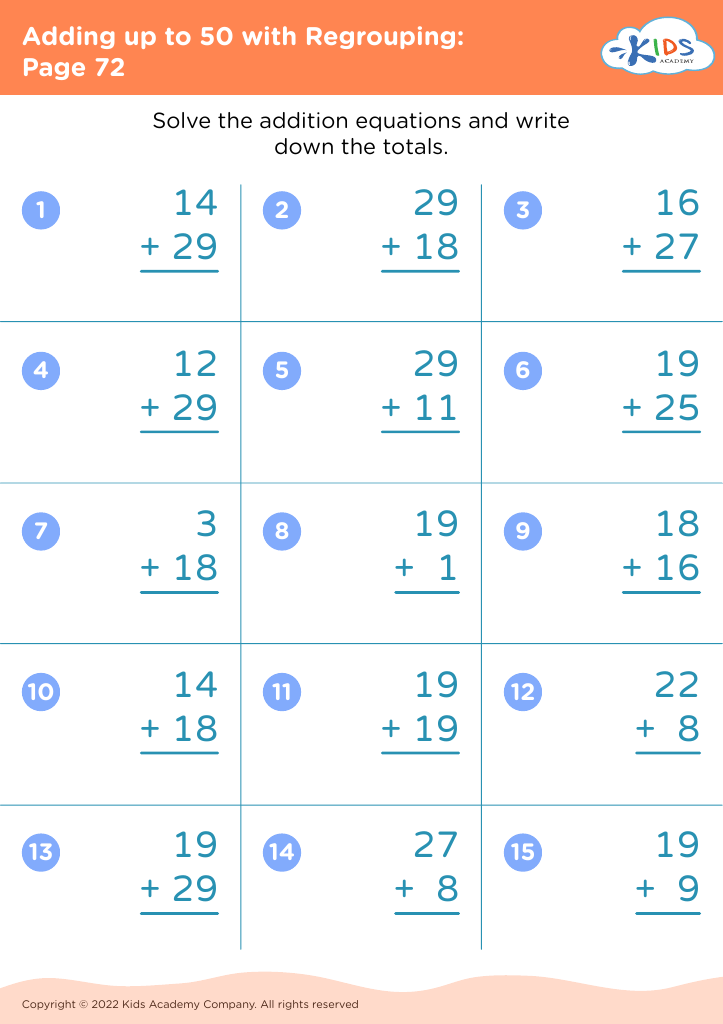
Adding up to 50 with Regrouping: Page 72
Worksheet
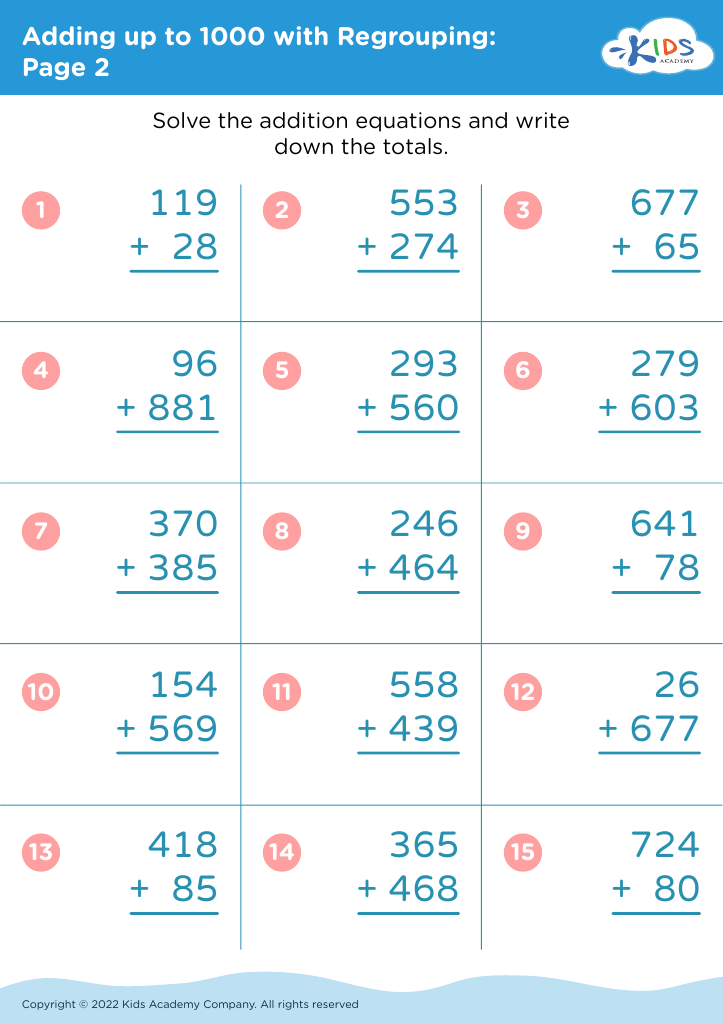
Adding up to 1000 with Regrouping: Page 2
Worksheet
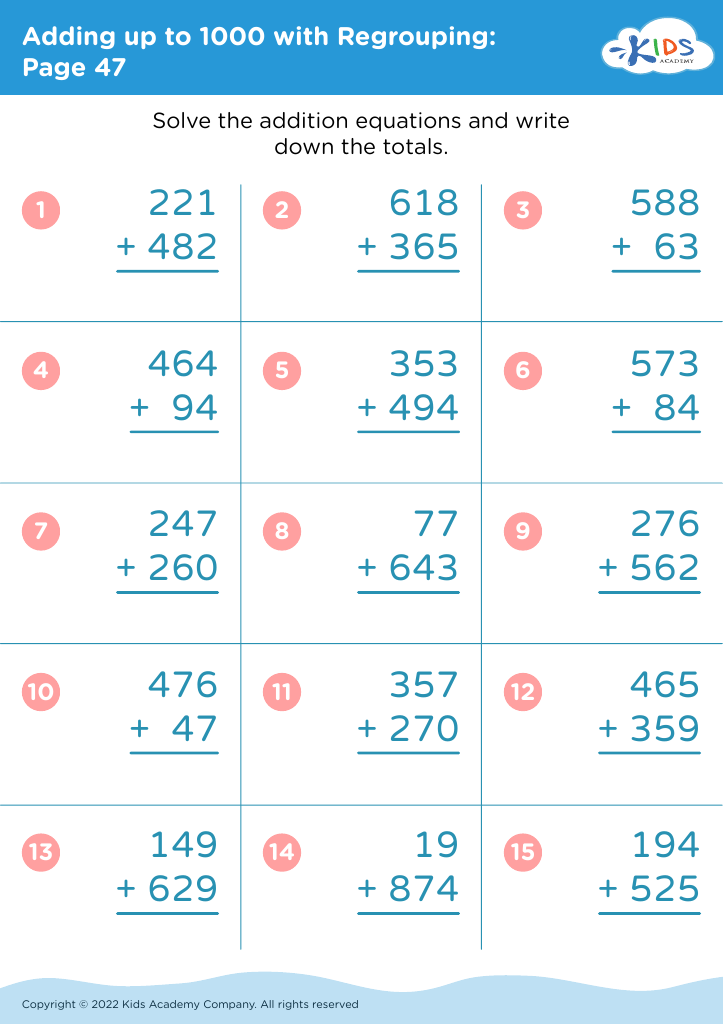
Adding up to 1000 with Regrouping: Page 47
Worksheet
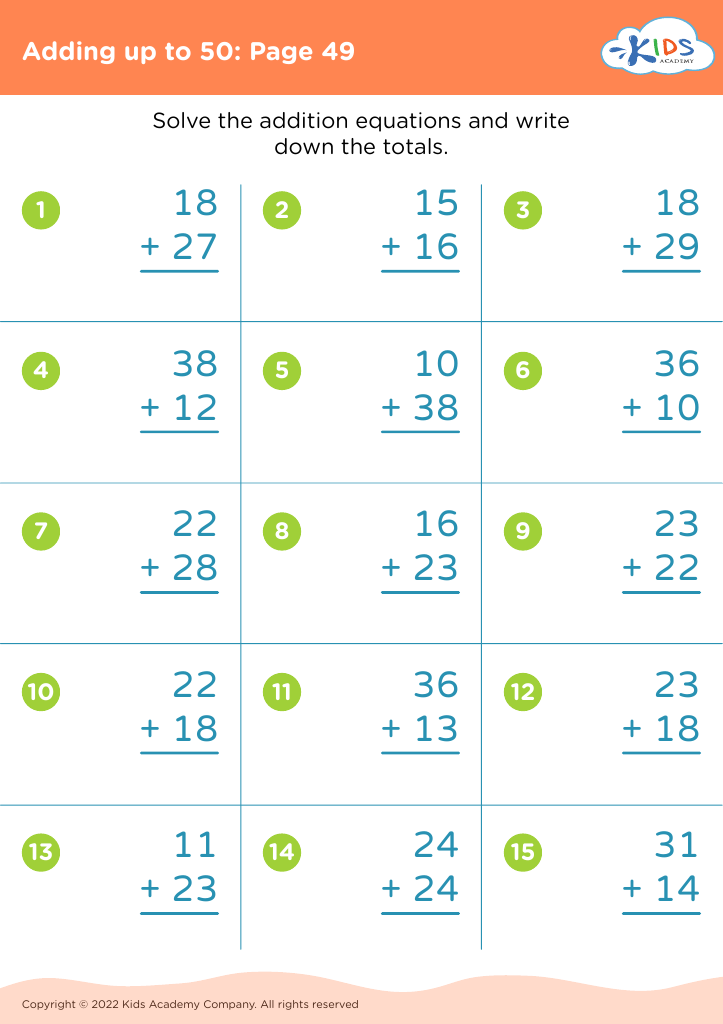
Adding up to 50: Page 49

Adding up to 50: Page 49

Adding up to 50: Page 49
Worksheet
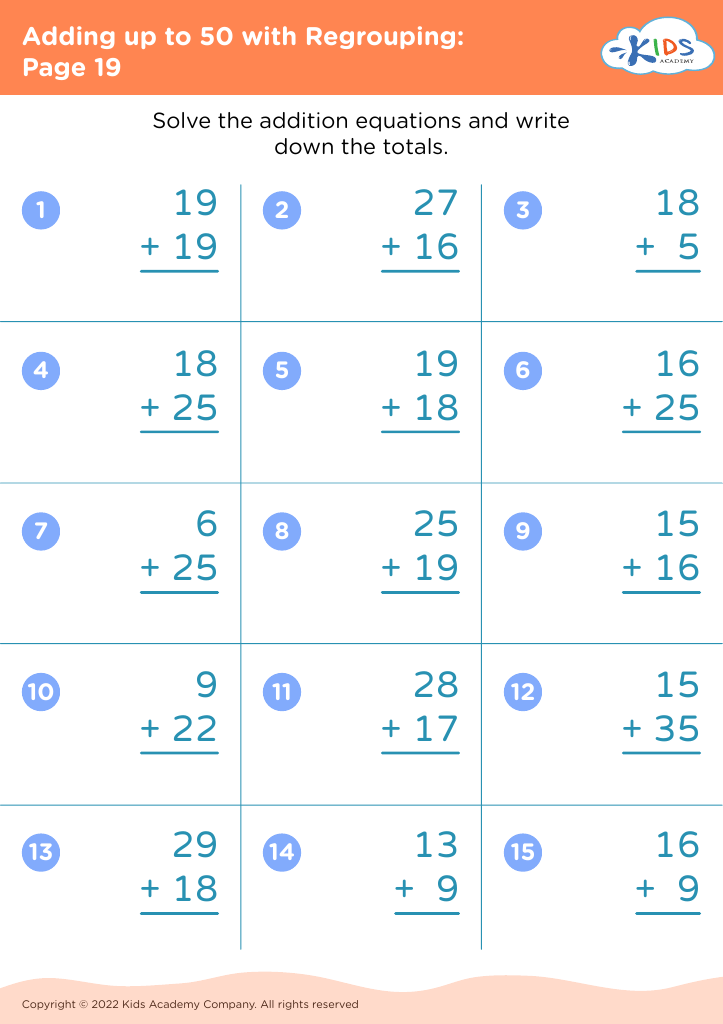
Adding up to 50 with Regrouping: Page 19
Worksheet
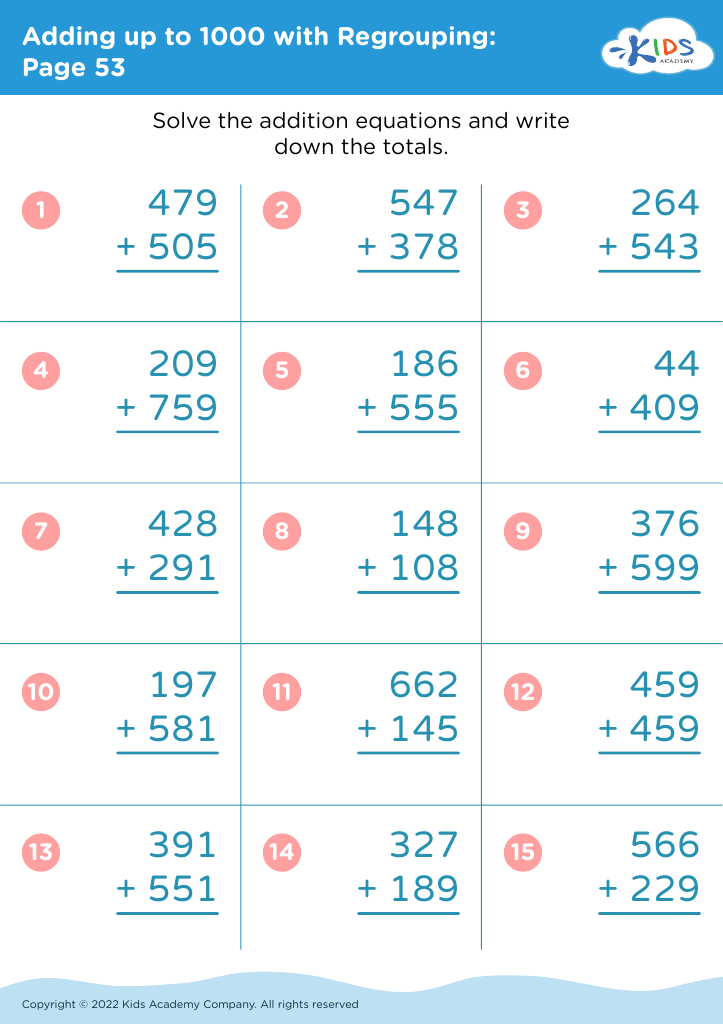
Adding up to 1000 with Regrouping: Page 53
Worksheet
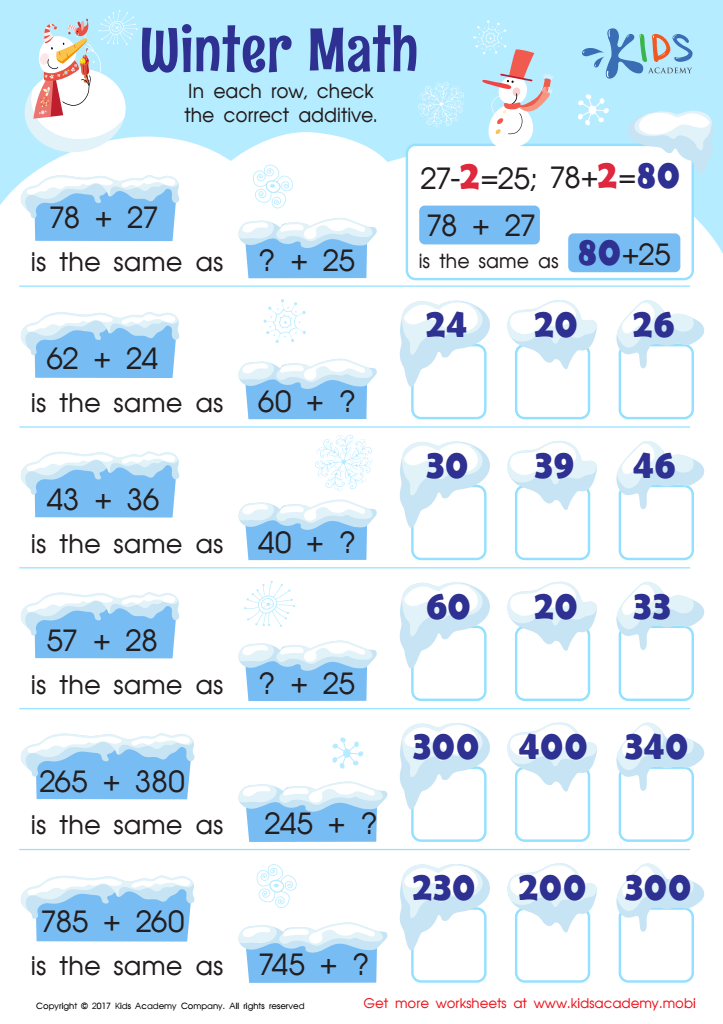
Free addition PDF worksheet for 3rd grade

Free Addition Worksheet

Perfect for a wintry day, challenge your 3rd grader to compare addition equations and fill in the missing numbers in the PDF. This winter-themed worksheet is sure to bring a smile while your 3rd grader practices their addition skills. Perfect for a blustery day, challenge your child to compare addition equations and complete the missing numbers in the PDF.
Free Addition Worksheet
Worksheet
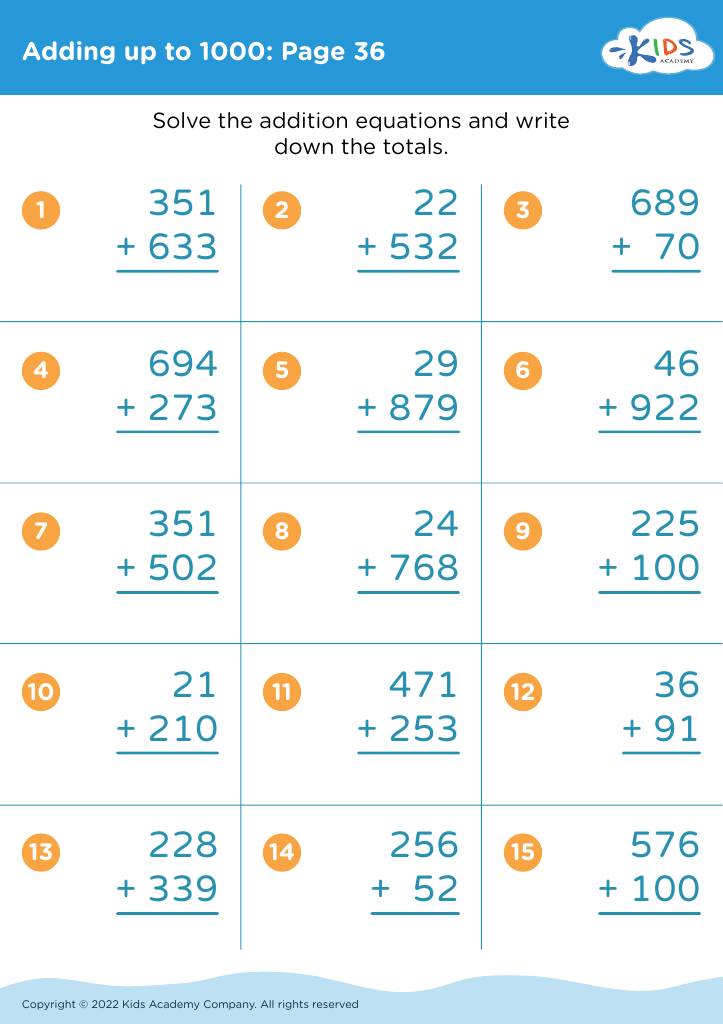
Adding up to 1000: Page 36

Adding up to 1000: Page 36

Adding up to 1000: Page 36
Worksheet
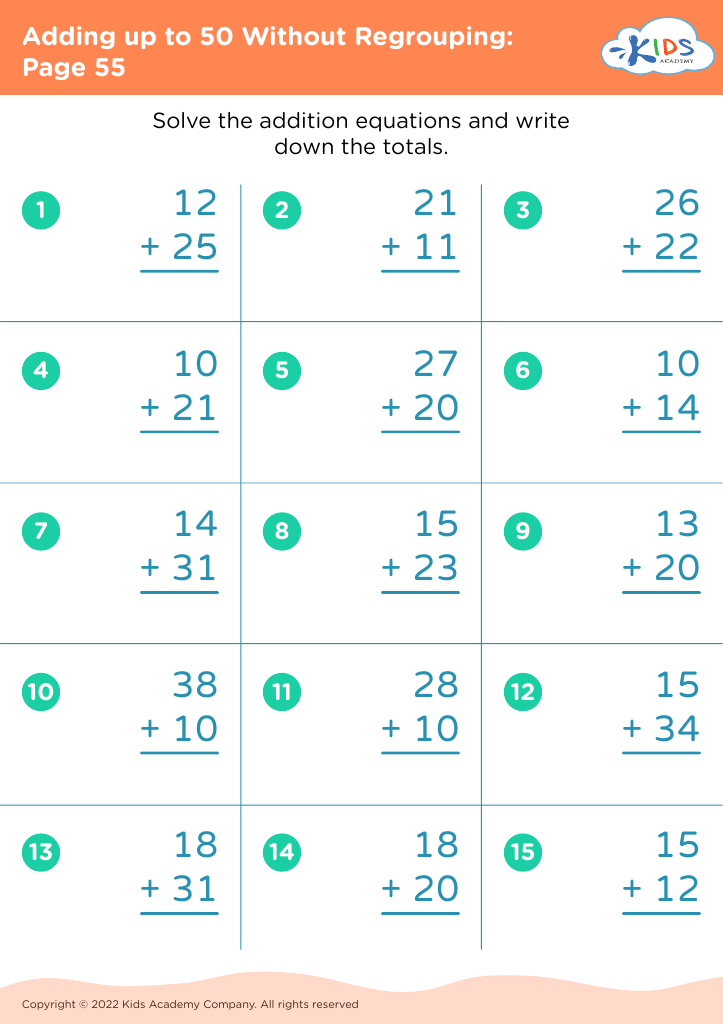
Adding up to 50 Without Regrouping: Page 55
Worksheet
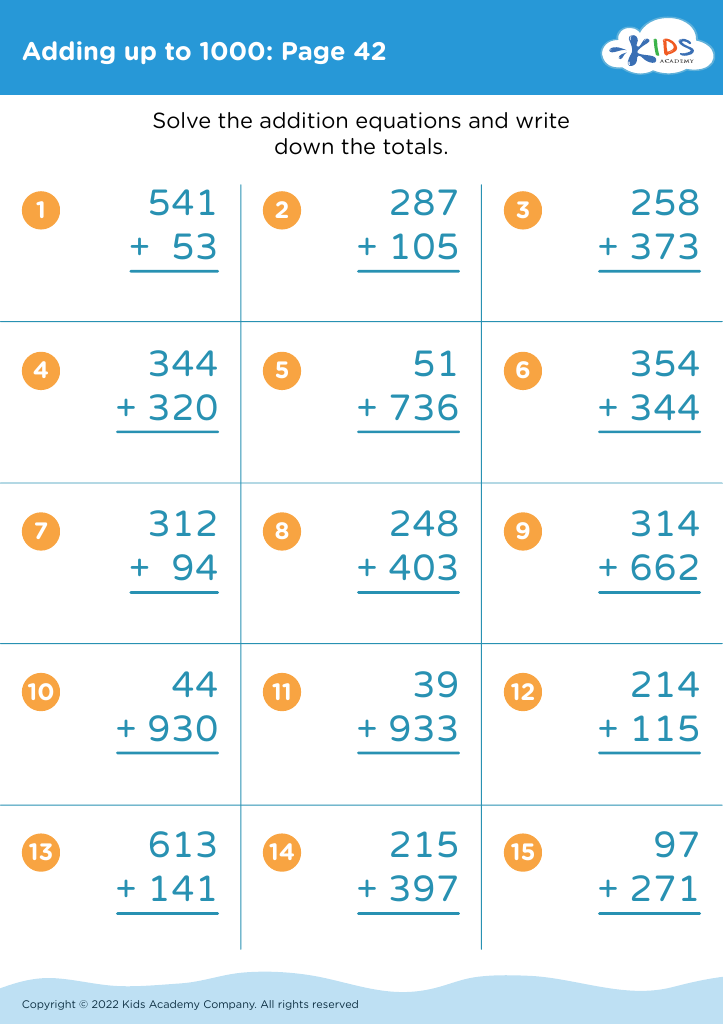
Adding up to 1000: Page 42

Adding up to 1000: Page 42

Adding up to 1000: Page 42
Worksheet
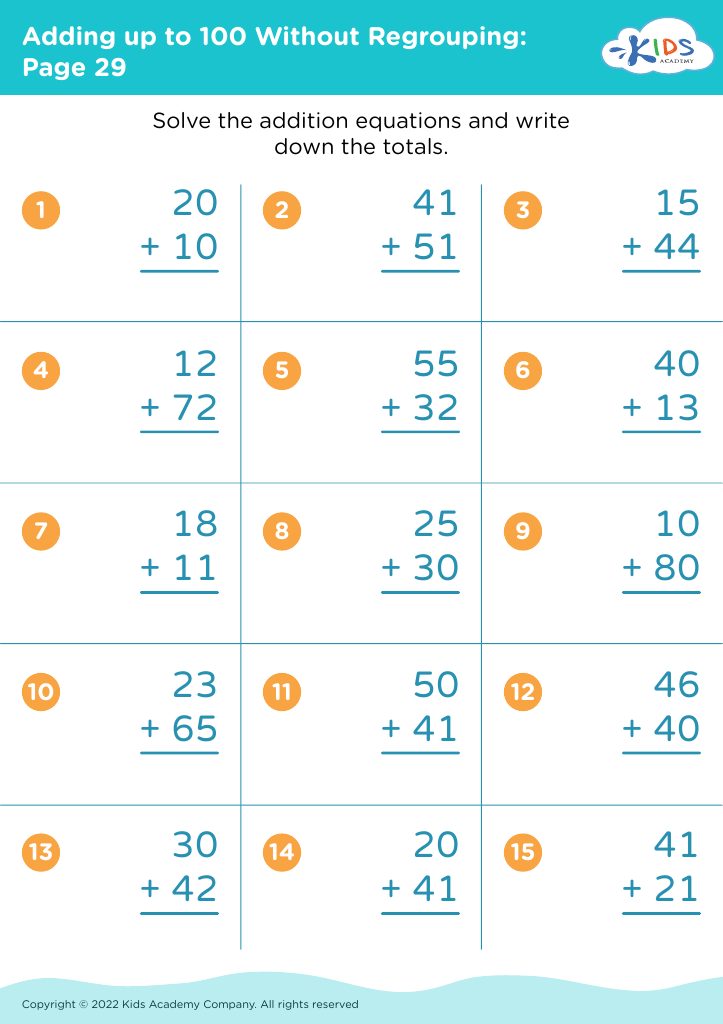
Adding up to 100 Without Regrouping: Page 29
Worksheet
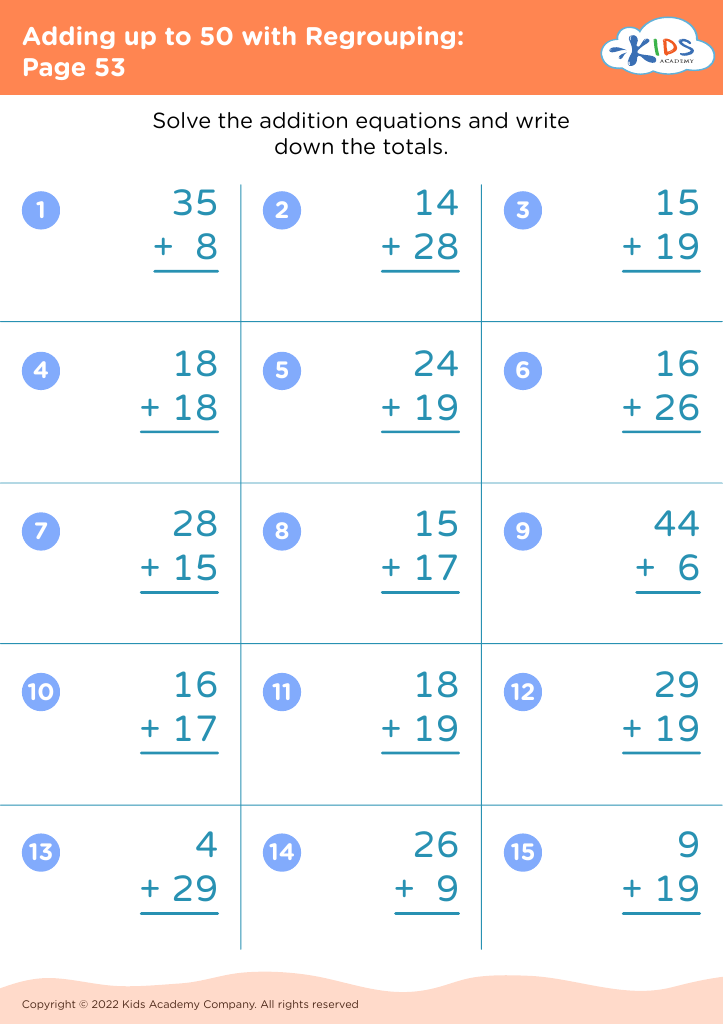
Adding up to 50 with Regrouping: Page 53
Worksheet
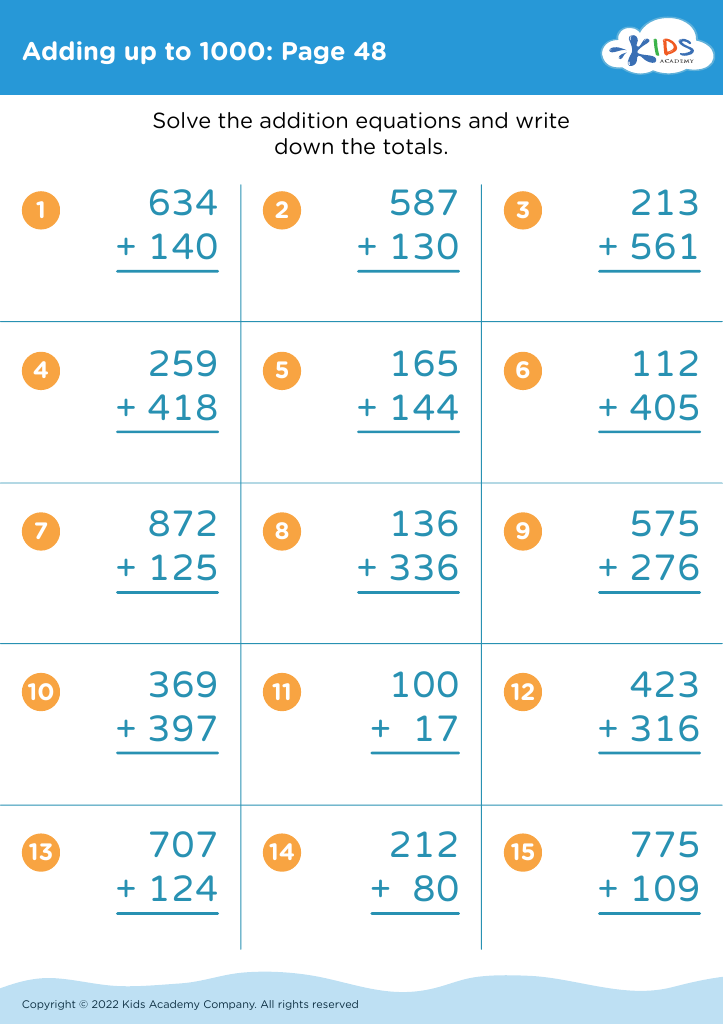
Adding up to 1000: Page 48

Adding up to 1000: Page 48

Adding up to 1000: Page 48
Worksheet
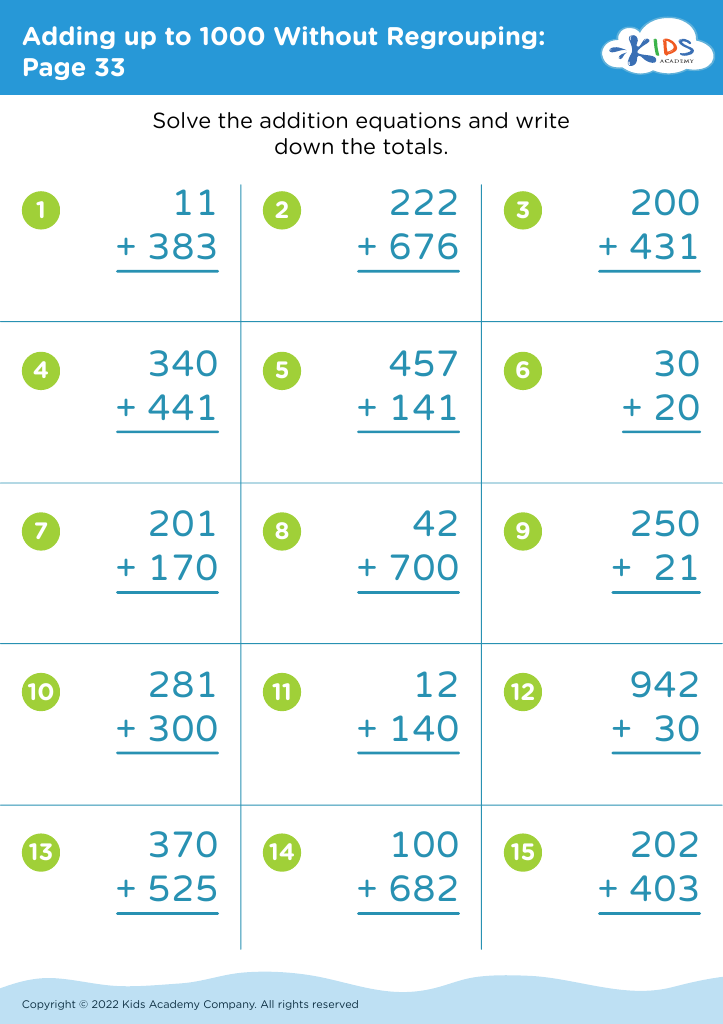
Adding up to 1000 Without Regrouping: Page 33
Worksheet
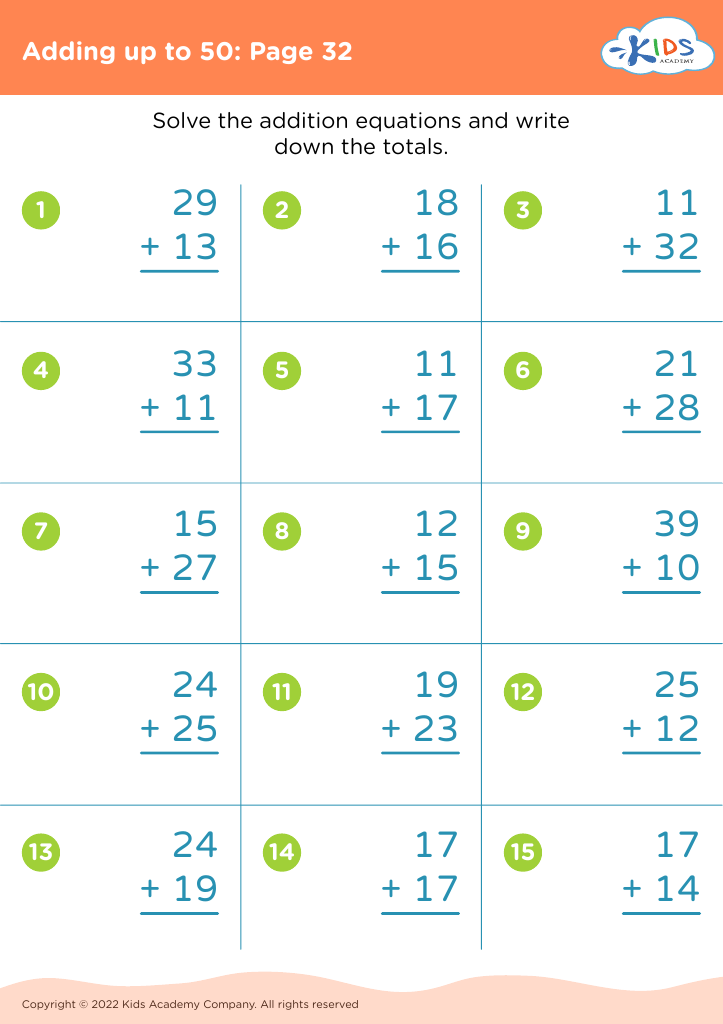
Adding up to 50: Page 32

Adding up to 50: Page 32

Adding up to 50: Page 32
Worksheet


... 5 6

Number recognition, addition, and subtraction are foundational skills in mathematics, particularly for children aged 8-9. At this developmental stage, kids transition from basic counting to more complex mathematical operations, making it crucial for their academic growth.

Firstly, number recognition is paramount because it allows children to identify and work with numbers confidently. This forms the basis for all subsequent mathematical learning. If children struggle with recognizing numbers, they will find it challenging to engage in more advanced math lessons.

Addition and subtraction are equally critical as they are the building blocks for all future math concepts, including multiplication, division, fractions, and algebra. Mastery of these operations promotes logical thinking and problem-solving skills, essential not only in math but also in everyday life.

Moreover, early success in mathematics can boost a child's confidence and encourage a positive attitude towards learning. When children grasp these concepts early, they are more likely to enjoy math, participate actively in class, and perform better academically.

Parents' and teachers' involvement in this process cannot be understated. Providing supportive and engaging learning environments helps children practice and master these skills. Thus, focusing on number recognition, addition, and subtraction at this age is investing in a child's educational future and overall intellectual development.