Practice problem-solving Addition & Subtraction Worksheets for Ages 8-9
4 filtered results
-
From - To
Our "Practice Problem-solving Addition & Subtraction Worksheets for Ages 8-9" are designed to cultivate math skills in a fun and engaging way. Tailored for third graders, these resources emphasize mastering basic operations and enhancing critical thinking. Each worksheet presents diverse challenges that stimulate students' problem-solving abilities while reinforcing their knowledge of addition and subtraction. Ideal for both classroom use and home practice, these exercises help kids build confidence and proficiency in math. Committed to fostering strong foundational skills, our worksheets make learning enjoyable for young minds ready to excel in mathematics. Network your child's potential with specially curated math activities.
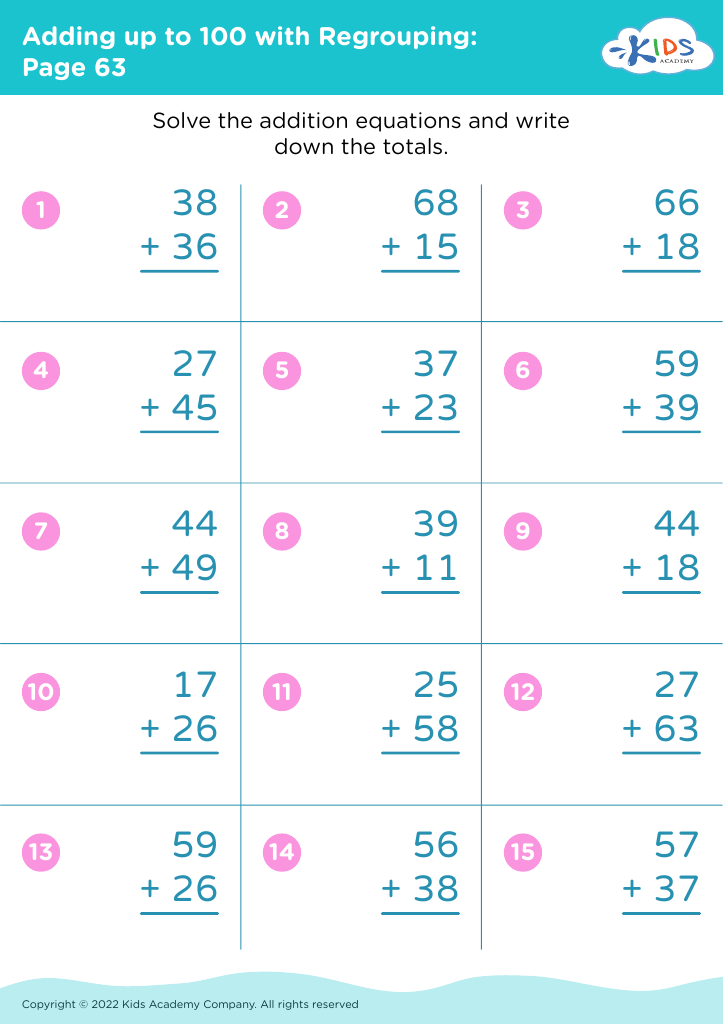
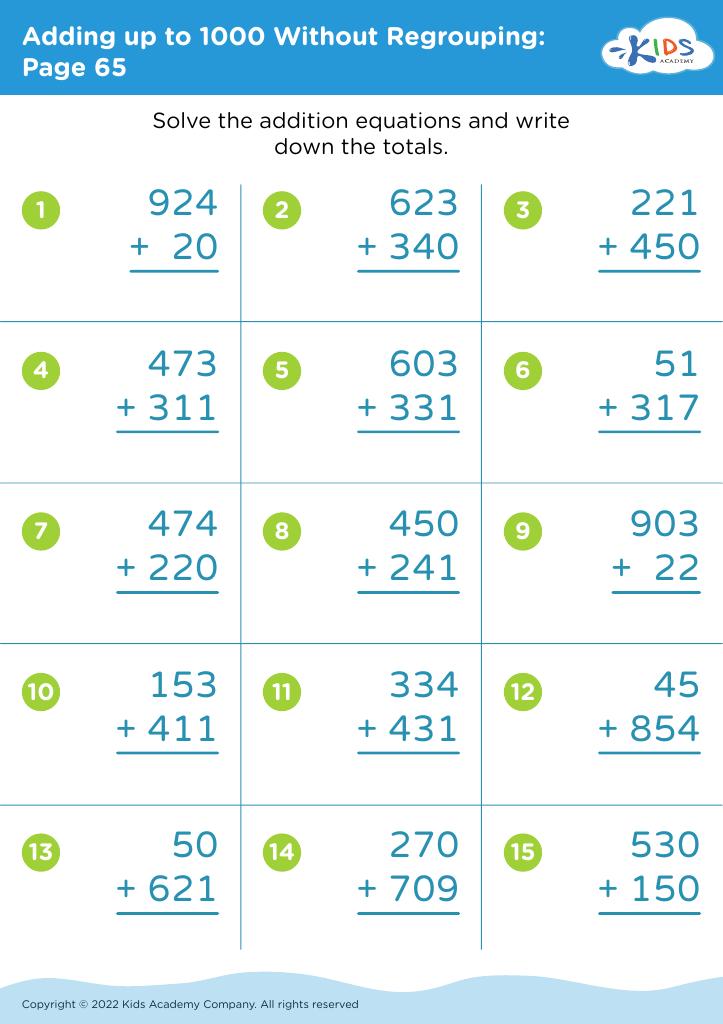
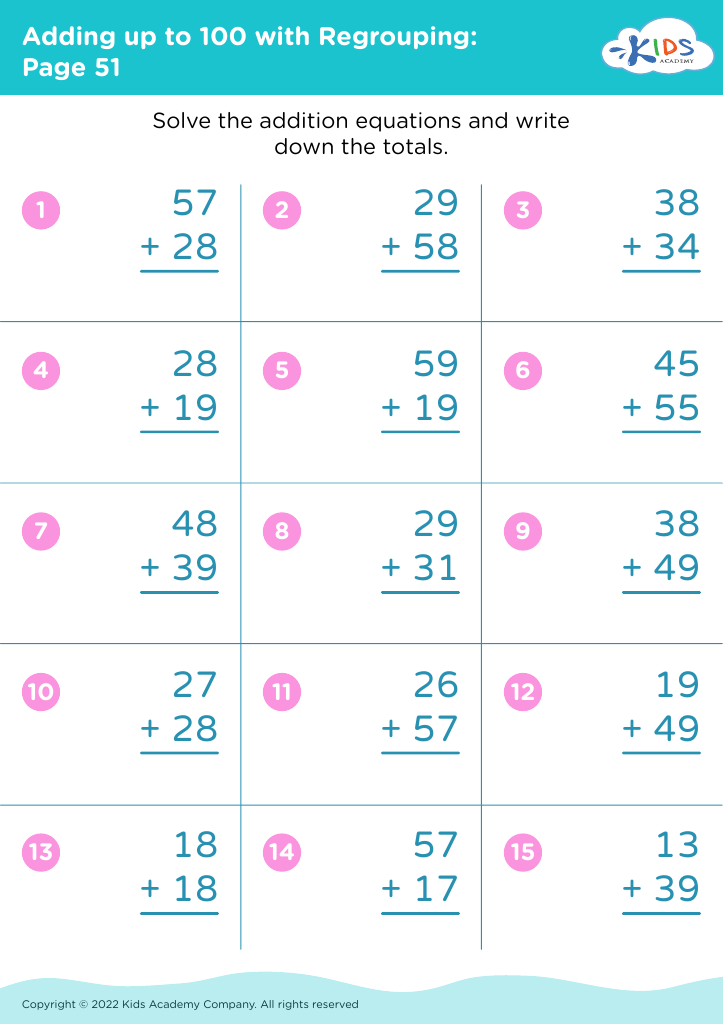
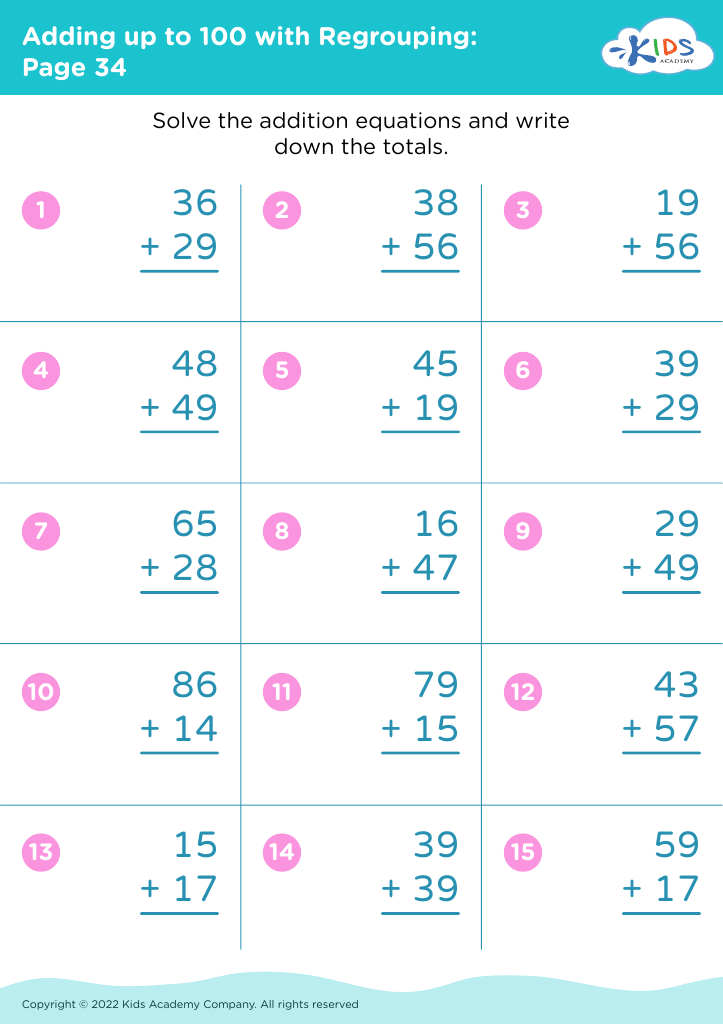








Parents and teachers should prioritize practice in problem-solving for addition and subtraction for children aged 8-9 because it lays a critical foundation for future mathematical learning and everyday life skills. At this age, mastering these basic operations boosts confidence and encourages a positive attitude toward math. Fluency in addition and subtraction helps children tackle more complex mathematical concepts later, including multiplication, division, fractions, and beyond.
Moreover, practicing problem-solving cultivates critical thinking and analytical skills. When children solve addition and subtraction problems, they learn to process information, reason logically, and develop strategies for finding solutions. This kind of mental exercise enhances cognitive development, improving overall academic performance and attention to detail.
Real-life applications of math are omnipresent—children use addition and subtraction when handling money, measuring materials for crafts or recipes, and even organizing their time. Strong skills in these operations empower them to make informed decisions and handle practical tasks efficiently.
Furthermore, early proficiency in math correlates with better outcomes in other subject areas, as it supports patterns of logical thought and persistence. Therefore, consistent practice not only prepares children for future academic challenges but also equips them with vital life skills.
In summary, focusing on addition and subtraction problem-solving at an early age nurtures intellectual growth, practical competence, and a lasting appreciation for learning.








