Reading comprehension Addition & Subtraction Worksheets for Ages 8-9 - Page 3
54 filtered results
-
From - To
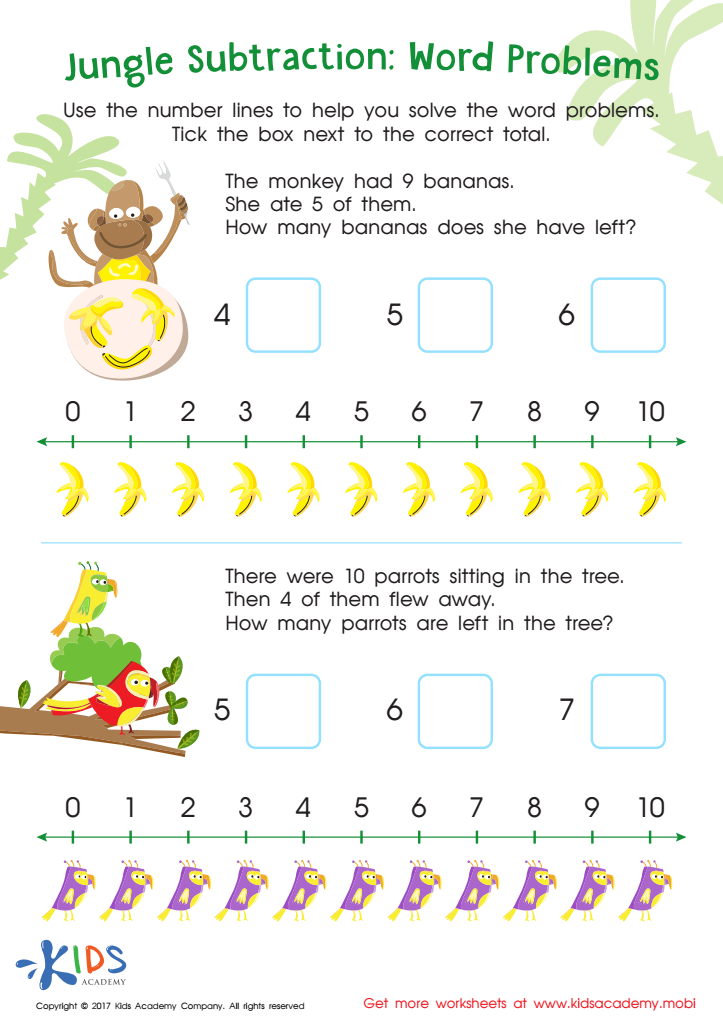
Jungle Subtraction Word Problems Substraction Worksheet
 Assign to My Students
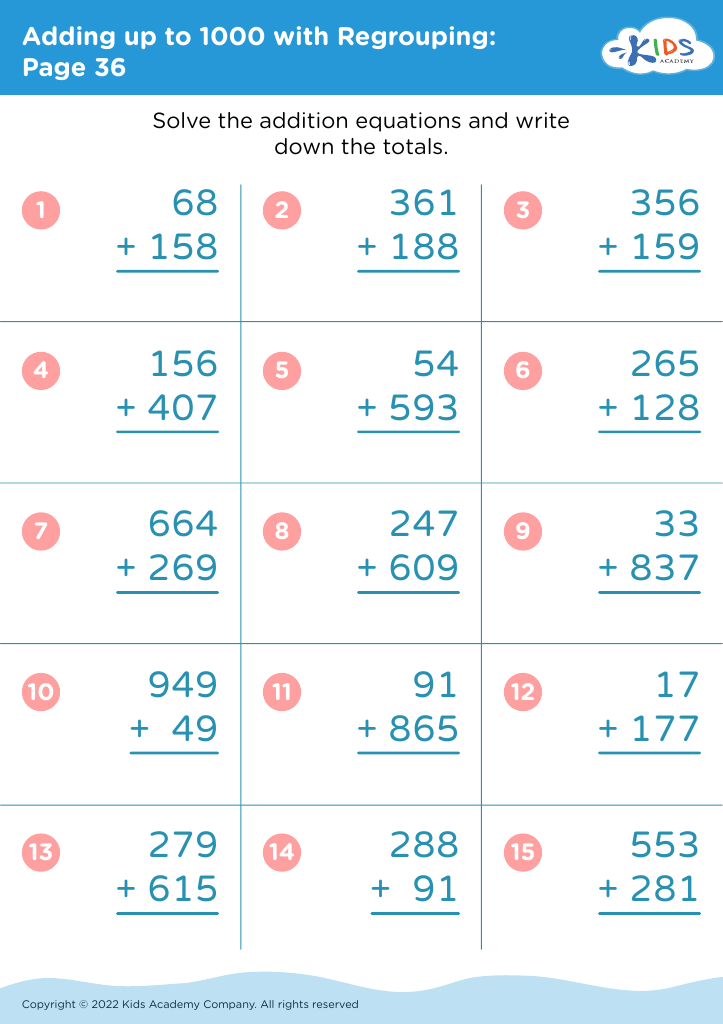
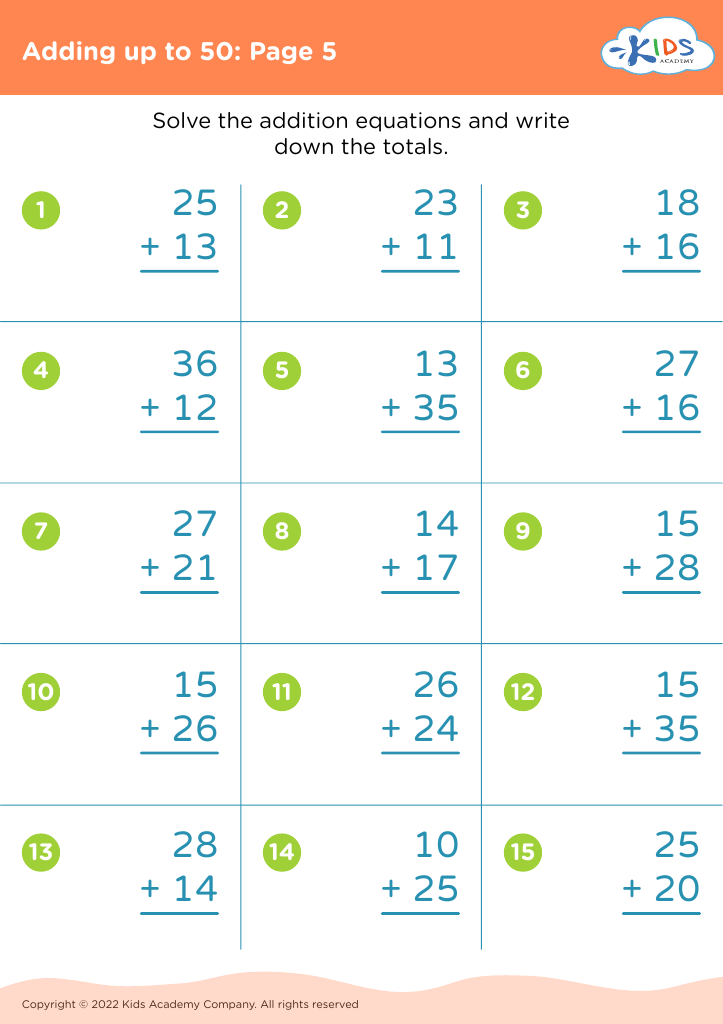



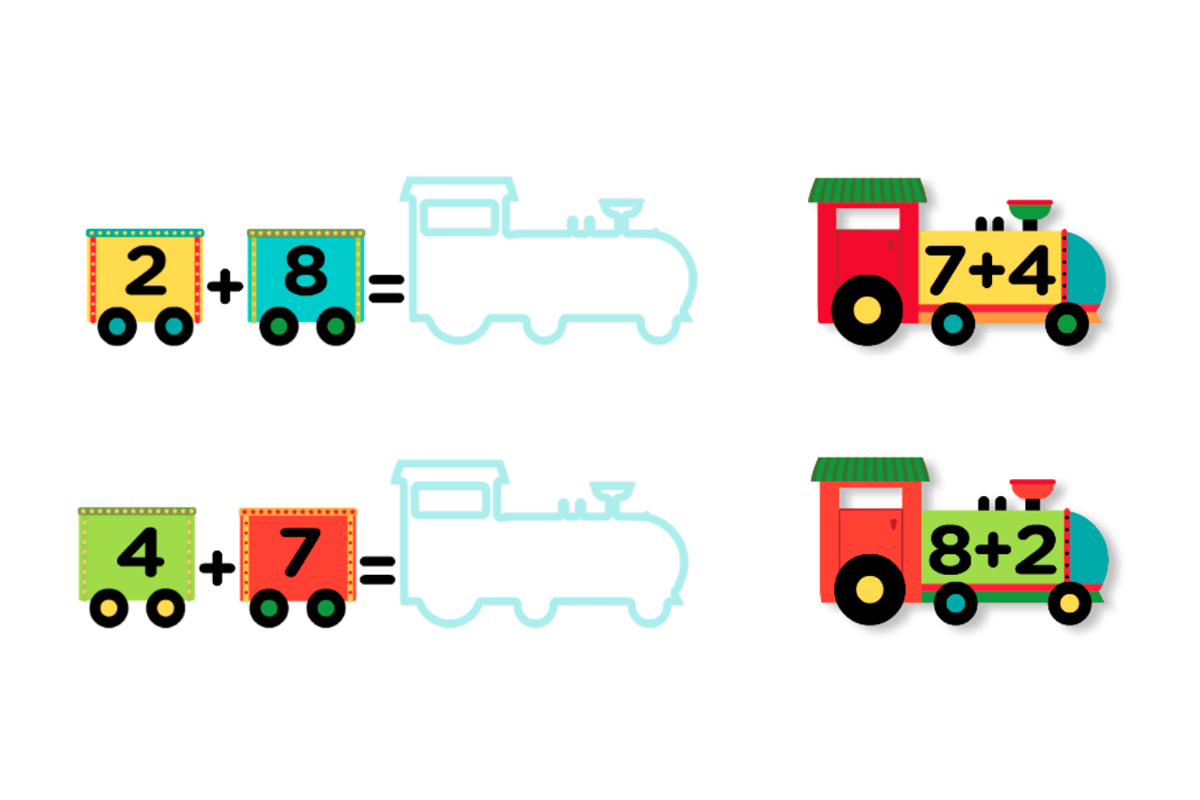




Parents and teachers should prioritize reading comprehension alongside addition and subtraction for children aged 8-9 because both skills are essential for academic success and holistic development. At this stage, students face more complex texts and mathematical concepts, so understanding what they read is crucial. Reading comprehension enables children to decode and interpret word problems in math, making it easier for them to grasp addition and subtraction within contexts they encounter in their studies and real life.
Moreover, strong reading skills foster critical thinking and problem-solving abilities, as children learn to analyze situations and deduce answers from textual information. Integrating these skills encourages a deep understanding of mathematics beyond rote memorization. When children can comprehend the language of numbers, they become more engaged learners.
Additionally, reading experiences enrich vocabulary, which indirectly enhances communication skills, aiding children in articulating their mathematical reasoning. By fostering both reading comprehension and arithmetic skills, parents and teachers equip children with the tools they need to encounter and overcome challenges in academics, promoting lifelong learning. Ultimately, a balanced approach to literacy and numeracy leads to well-rounded individuals who are better prepared for the complexities of future educational endeavors.








