Visual Learning Addition & Subtraction Worksheets for Ages 8-9
7 filtered results
-
From - To
Enhance your child's math skills with our engaging Visual Learning Addition and Subtraction Worksheets designed specifically for ages 8-9. These worksheets use colorful visuals and interactive elements to make learning fun and effective. By associating numbers with images, children can grasp addition and subtraction concepts more easily. Our resources cater to various learning styles, helping students build confidence and competence in math. Perfect for both classroom use and home practice, our worksheets promote critical thinking and problem-solving abilities. Unlock your child's potential and foster a love for math with our thoughtfully crafted visual learning tools. Start exploring today!
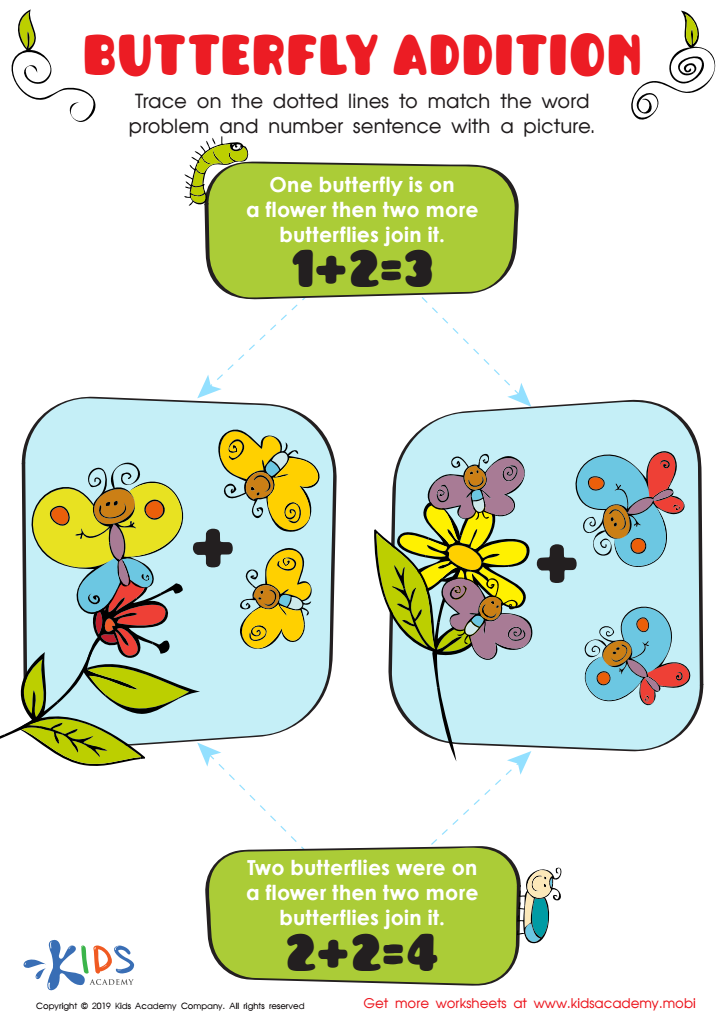
Butterfly Addition Worksheet
 Assign to My Students
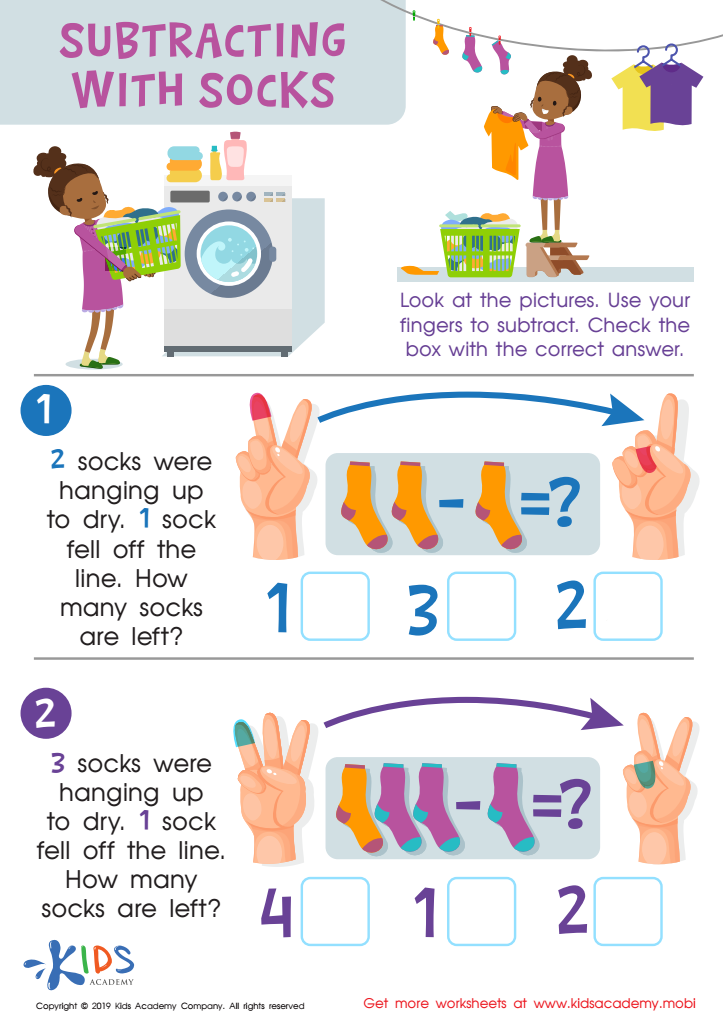
Subtracting Socks Worksheet
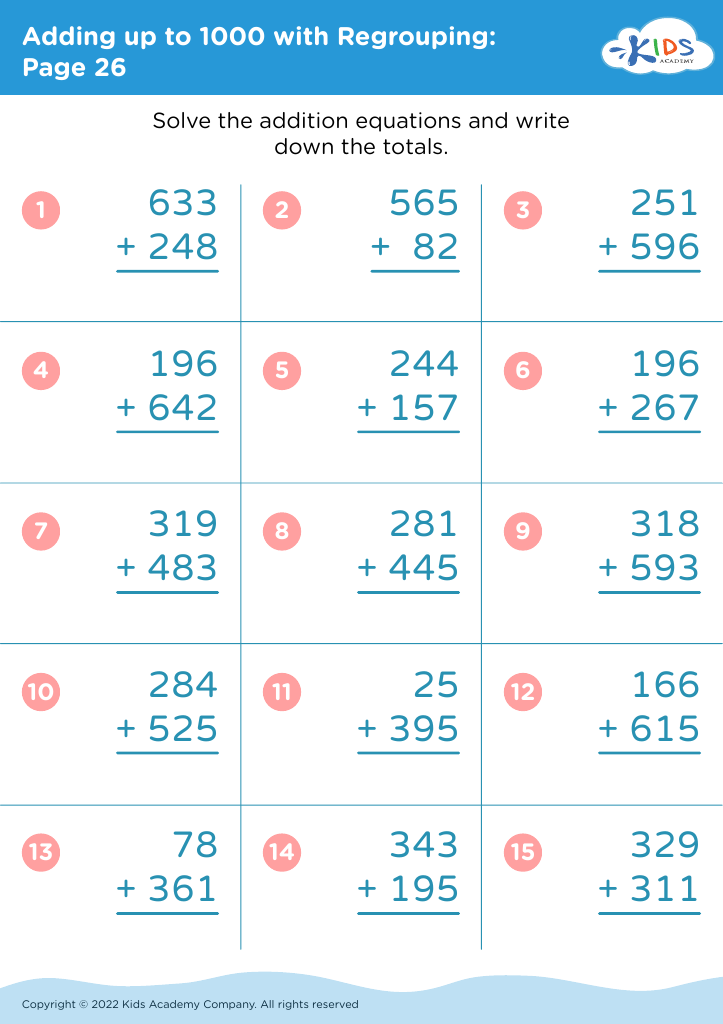
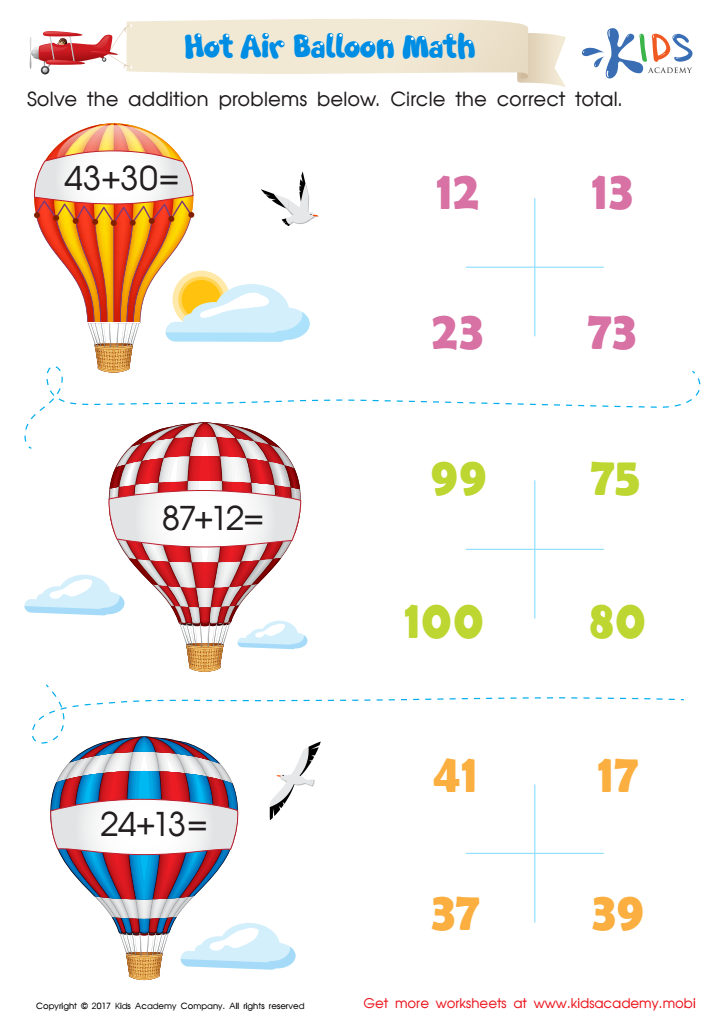
Hot Air Balloon Math Worksheet
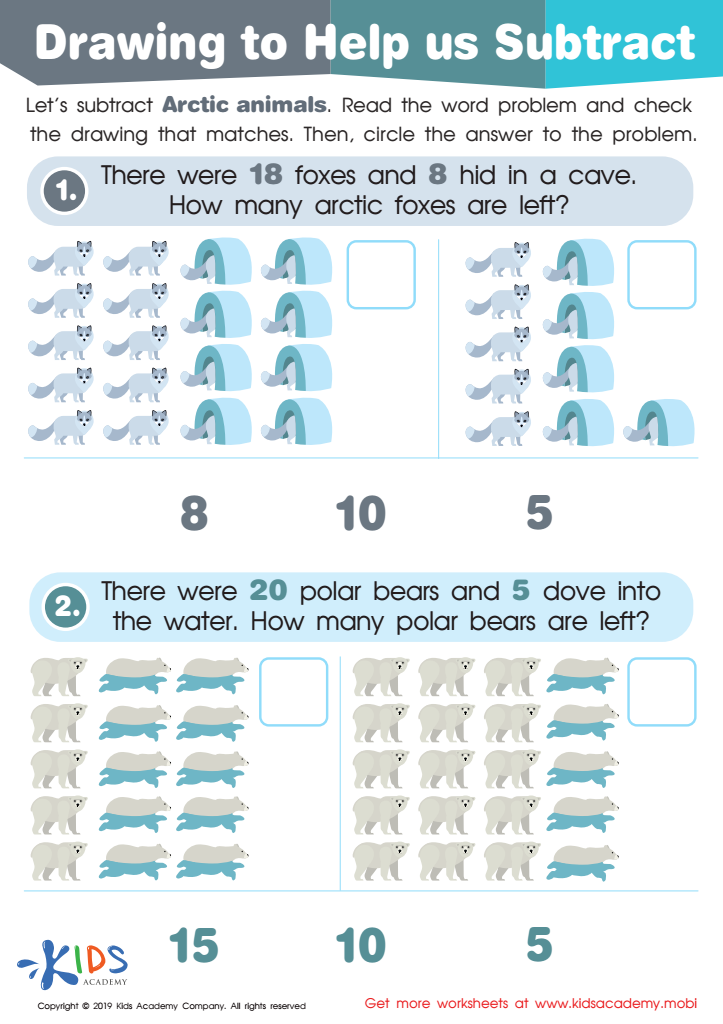
Drawing to Help Us Subtract Worksheet
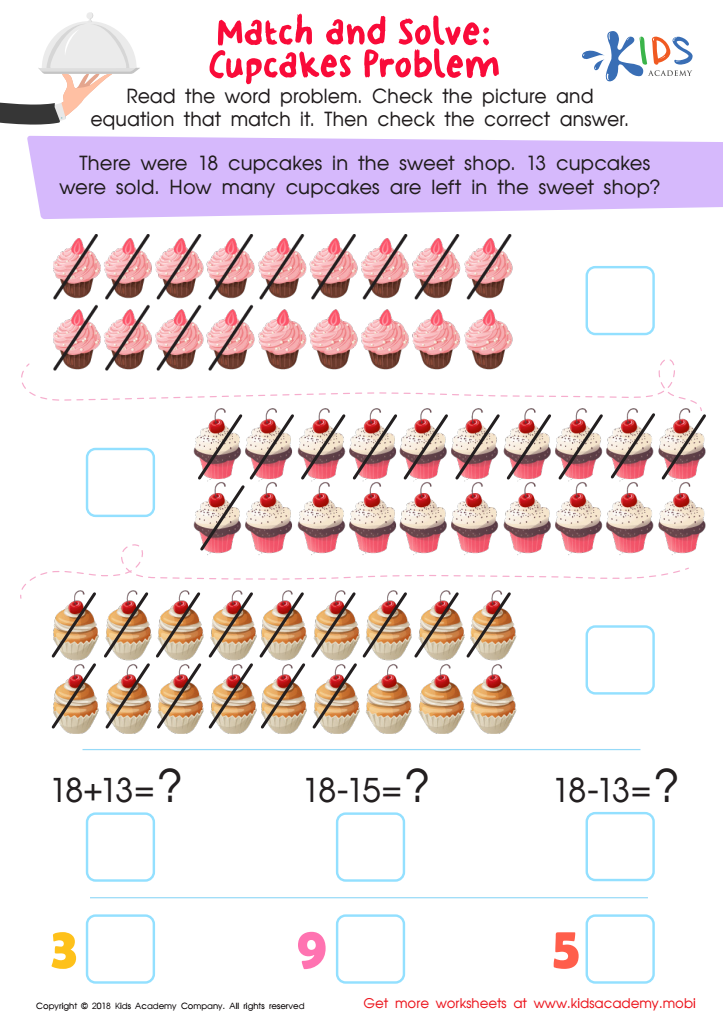
Match and Solve: Cupcakes Problem Worksheet
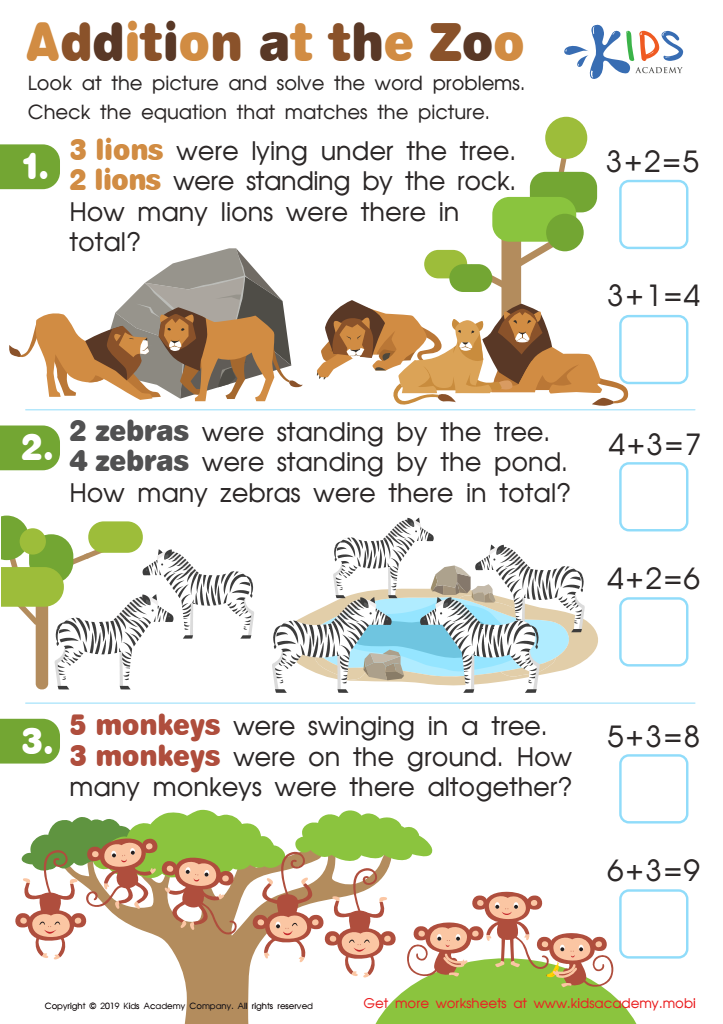
Addition at the Zoo Worksheet








Parents and teachers should prioritize visual learning for addition and subtraction, especially for children aged 8-9, as it enhances understanding and retention of mathematical concepts. At this age, children are transitioning from concrete to more abstract thinking, and visual aids—like diagrams, number lines, and manipulatives—can bridge the gap, allowing learners to grasp concepts more effectively.
Visual learning supports diverse learning styles, ensuring that every child has access to personalized instruction techniques. Utilizing graphics and visual strategies aids in breaking down complex problems into manageable parts, making it easier for children to solve addition and subtraction equations while building critical thinking skills.
Additionally, visual learning can bolster engagement and motivation, turning potentially daunting subjects into enjoyable activities. When children can see the relationships between numbers through visual representation, it instills confidence and promotes a positive attitude towards math.
By fostering an environment that embraces visual learning, parents and teachers not only facilitate better academic performance but also encourage a lifelong love of learning. This approach lays the groundwork for future math skills and develops important cognitive abilities that extend beyond mathematics, helping children in other areas of study.








