Filters

16 filtered results

Clear all filters
Favorites
With answer key
Interactive

16 filtered results

Difficulty Level

Grade


Our Basic Addition Worksheets for ages 8-9 are designed to help young learners reinforce their math skills using fun and engaging exercises. These printable worksheets feature a variety of addition problems that challenge students to develop their arithmetic abilities, promoting confidence and fluency in basic math. Each worksheet is crafted to fit the curriculum standards for ages 8-9, ensuring effective practice. Foster a love for math and set a strong foundation for future learning with our thoughtfully created worksheets that make addition an enjoyable experience for every child. Enhance your child's mathematical journey today!
Check out this FREE Trial Lesson on Addition for age 8-9!

Match Objects that Fit Together

Favorites
With answer key
Interactive
  • 8-9
  • Basic Addition
  • Addition
Adding 2-digit Numbers: Page 23

Adding 2-digit Numbers: Page 23

Adding 2-digit Numbers: Page 23
Worksheet
Adding up to 1000: Page 8

Adding up to 1000: Page 8

Adding up to 1000: Page 8
Worksheet
Adding up to 100: Page 4

Adding up to 100: Page 4

Adding up to 100: Page 4
Worksheet
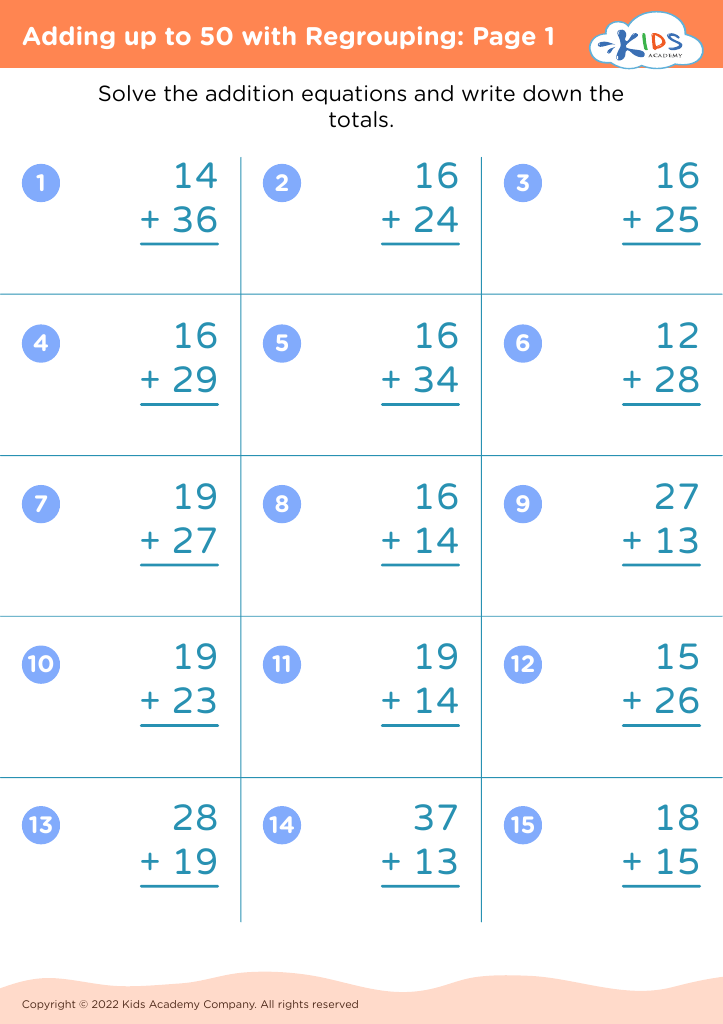
Adding up to 50 with Regrouping: Page 1
Worksheet
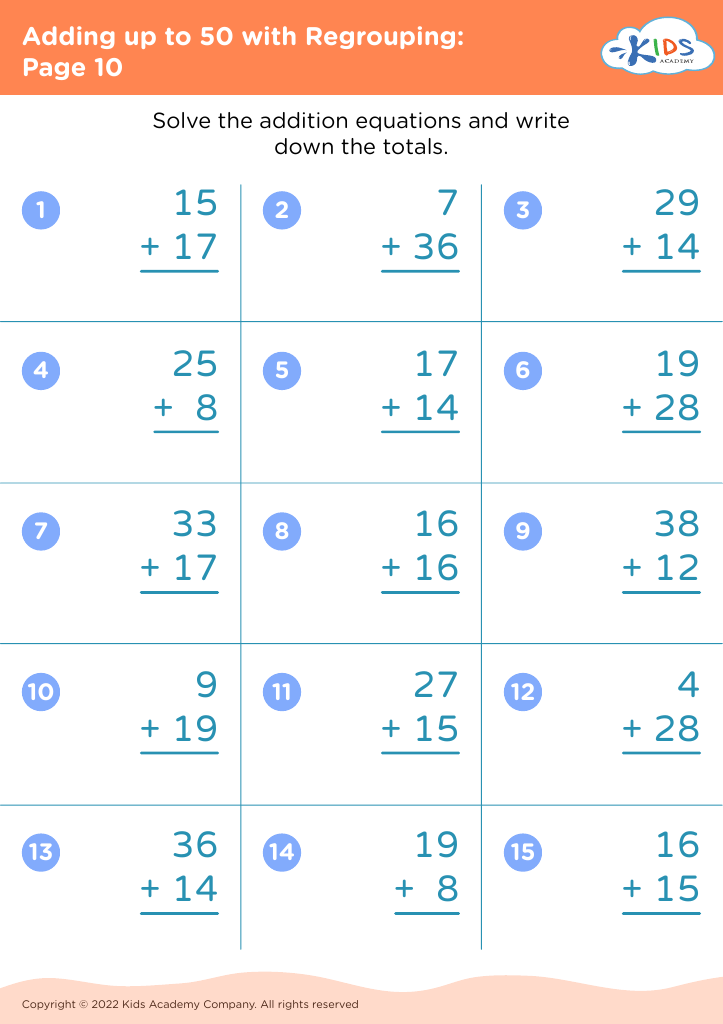
Adding up to 50 with Regrouping: Page 10
Worksheet
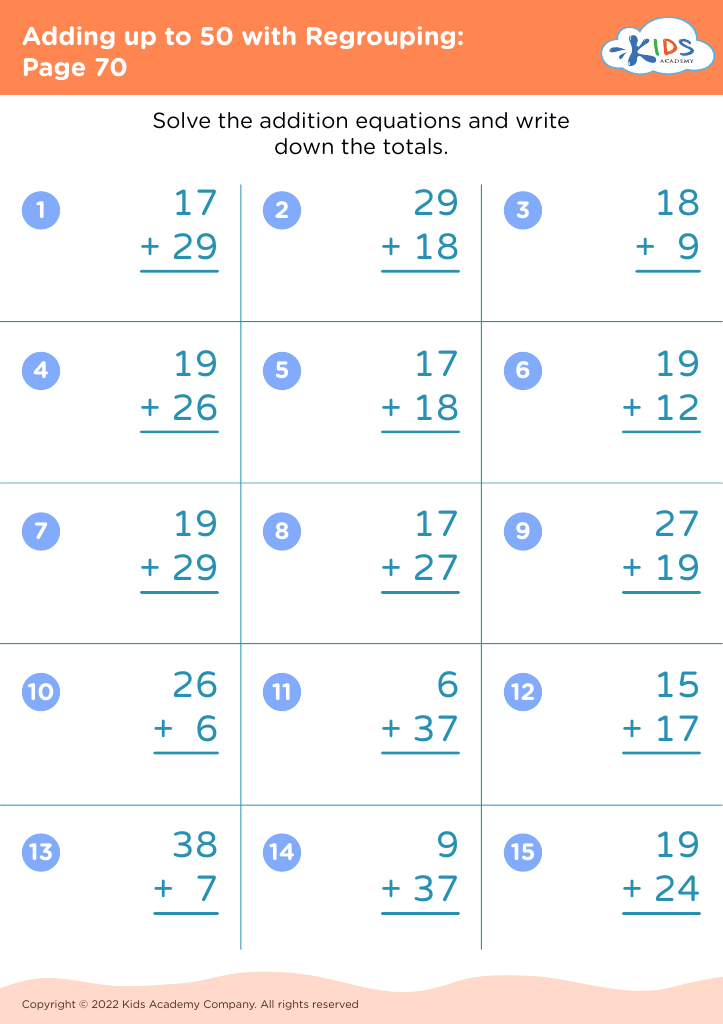
Adding up to 50 with Regrouping: Page 70
Worksheet
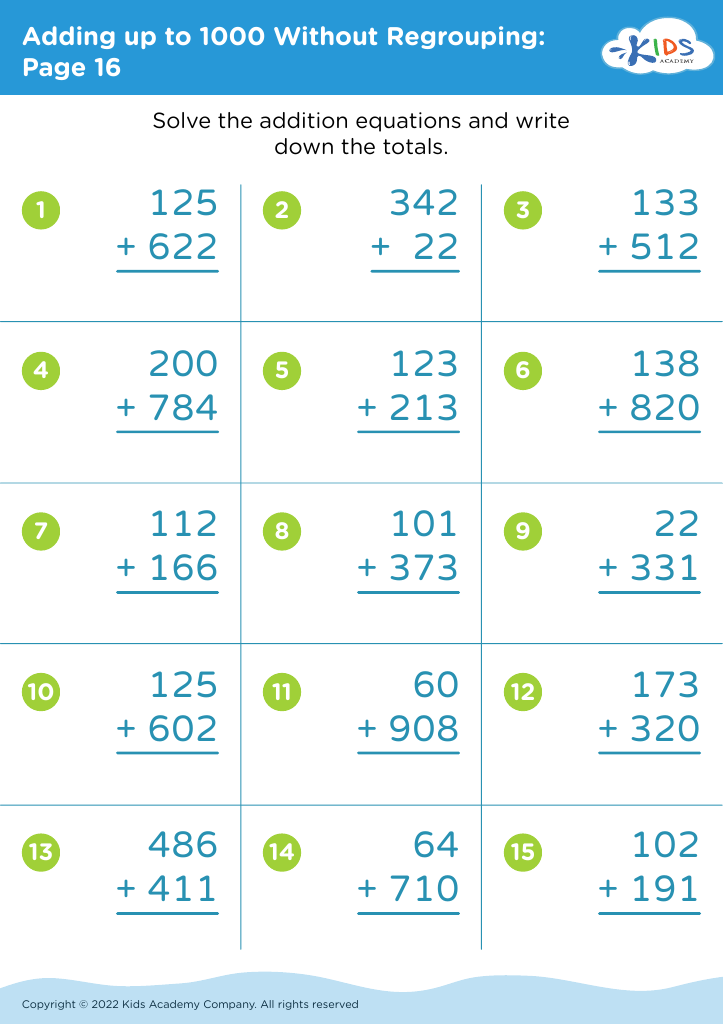
Adding up to 1000 Without Regrouping: Page 16
Worksheet
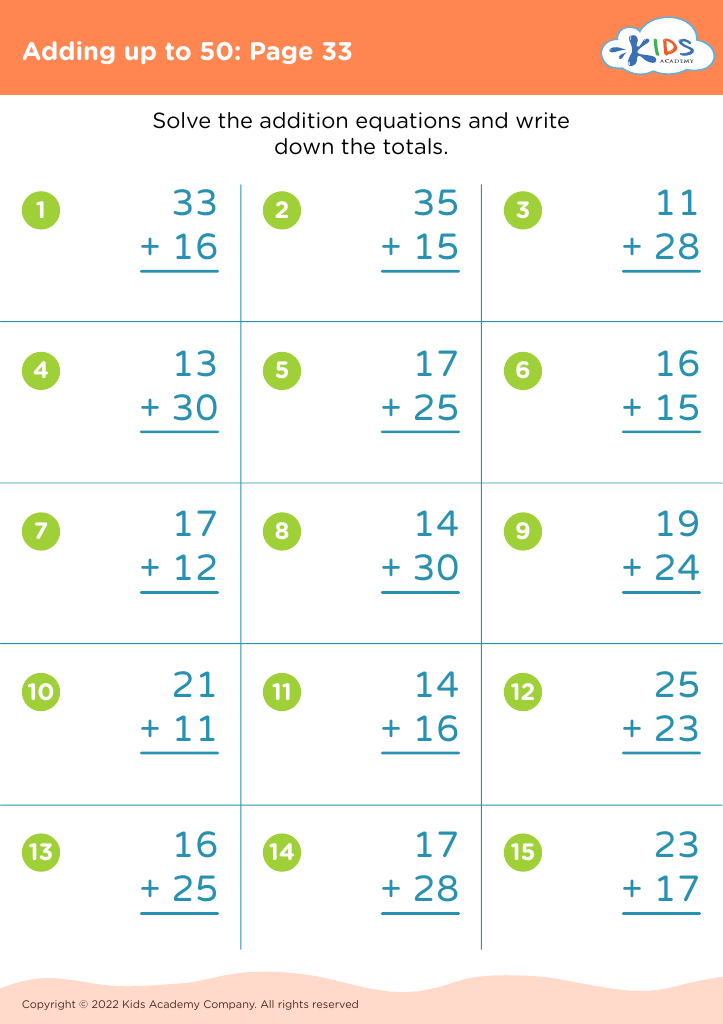
Adding up to 50: Page 33

Adding up to 50: Page 33

Adding up to 50: Page 33
Worksheet
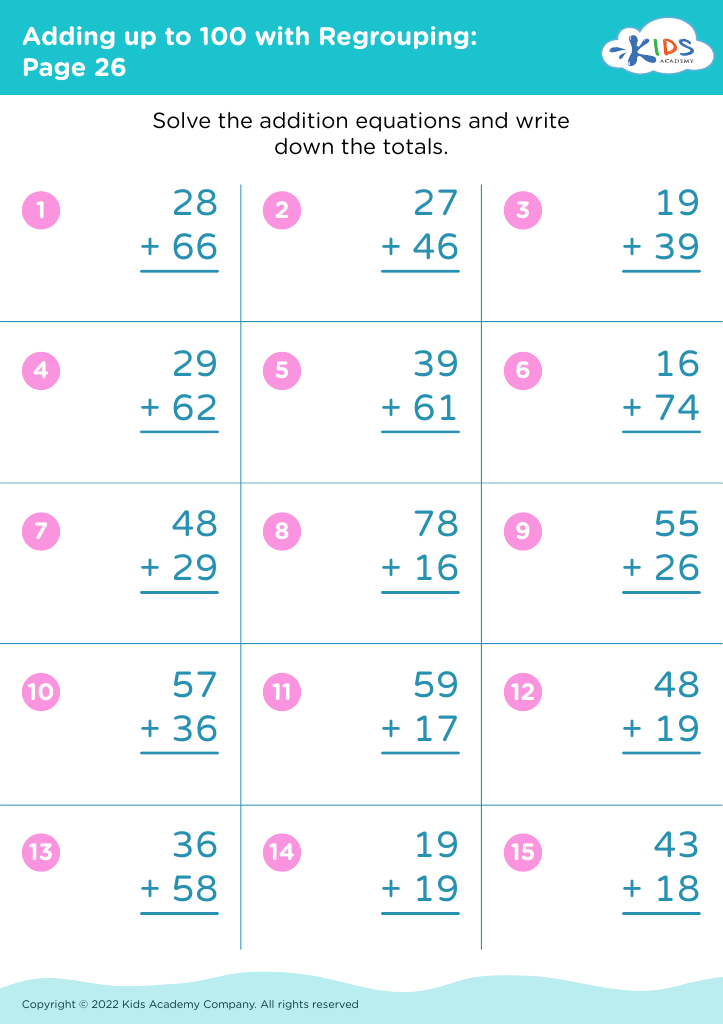
Adding up to 100 with Regrouping: Page 26
Worksheet
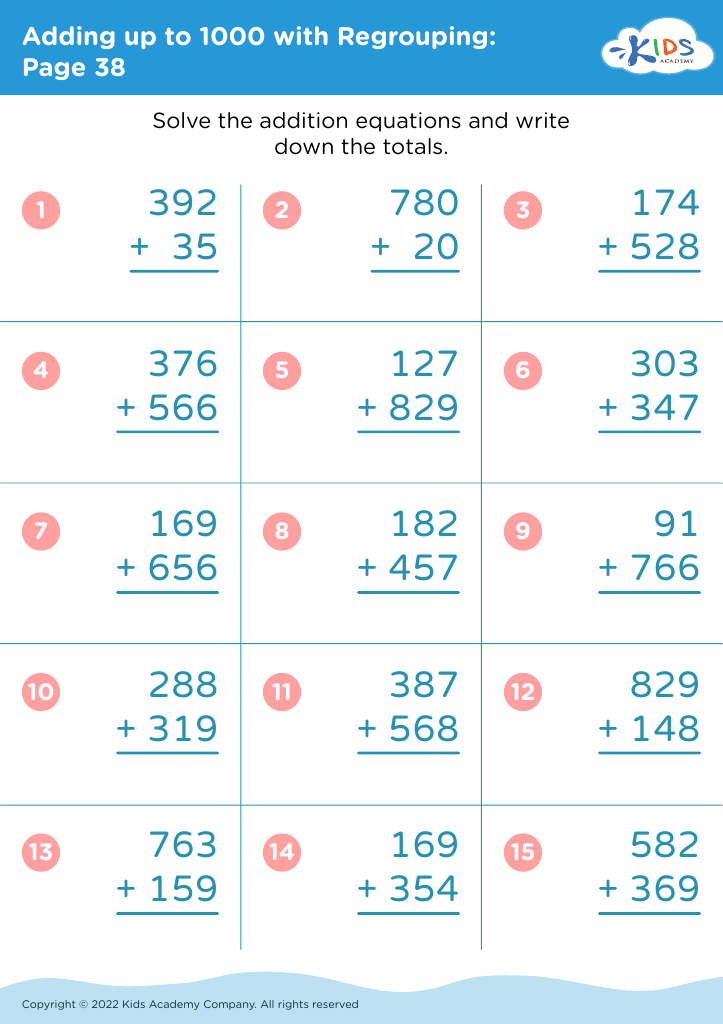
Adding up to 1000 with Regrouping: Page 38
Worksheet
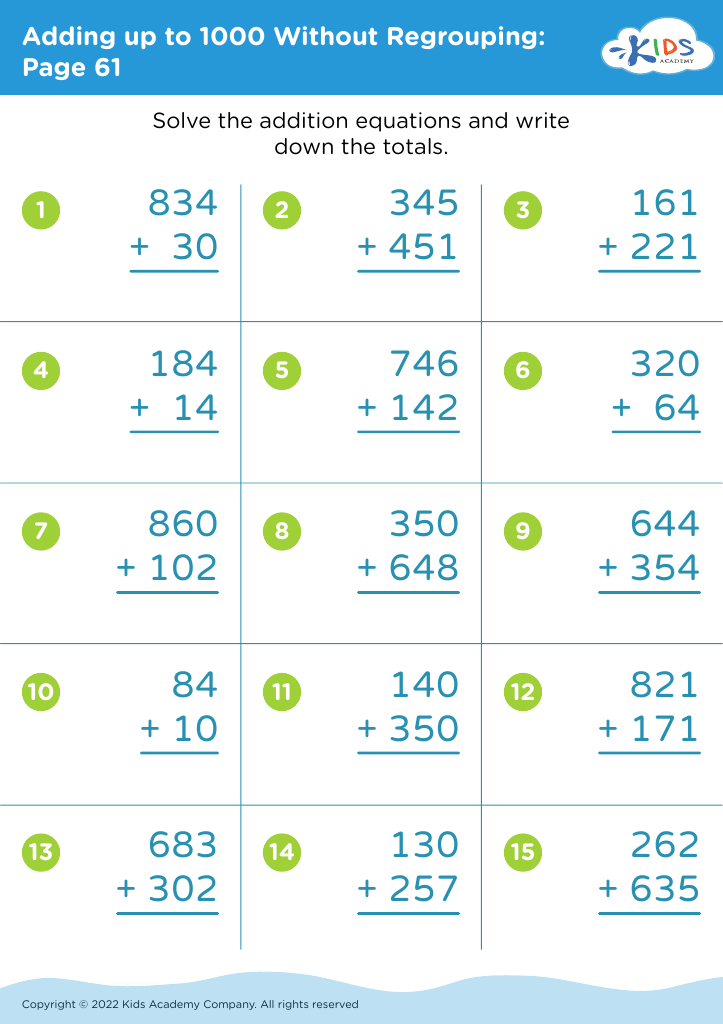
Adding up to 1000 Without Regrouping: Page 61
Worksheet
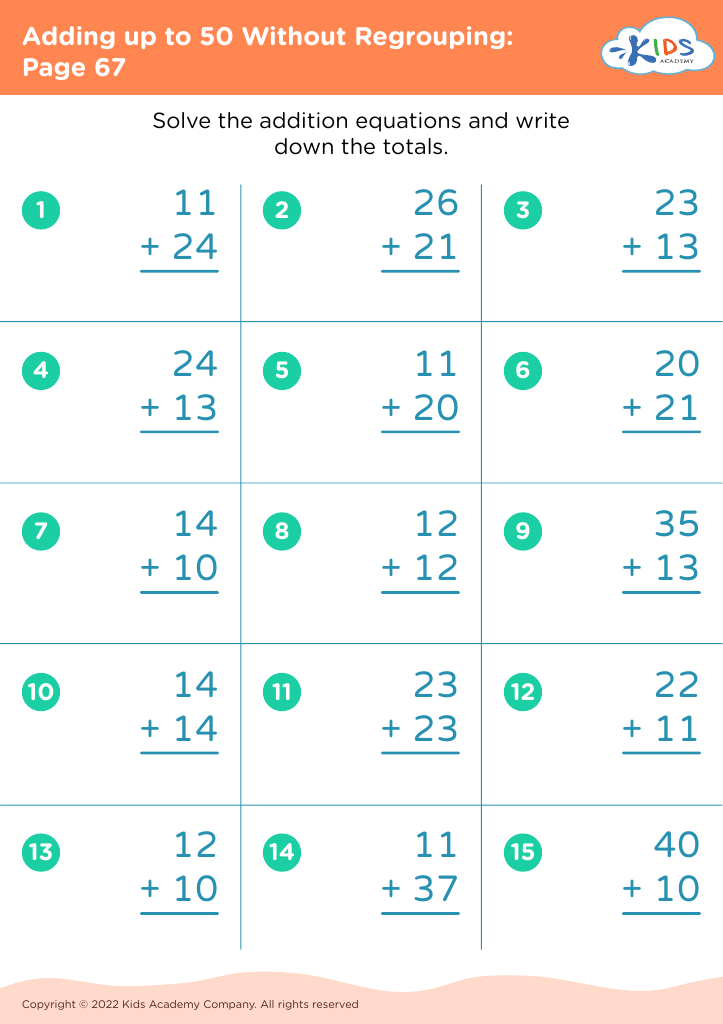
Adding up to 50 Without Regrouping: Page 67
Worksheet
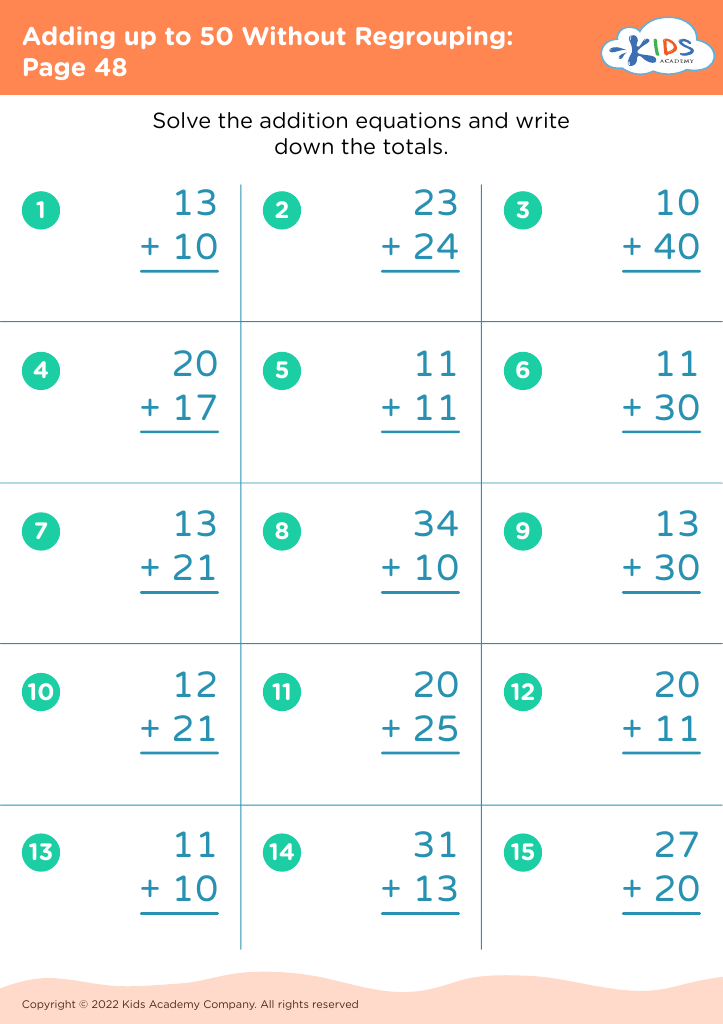
Adding up to 50 Without Regrouping: Page 48
Worksheet
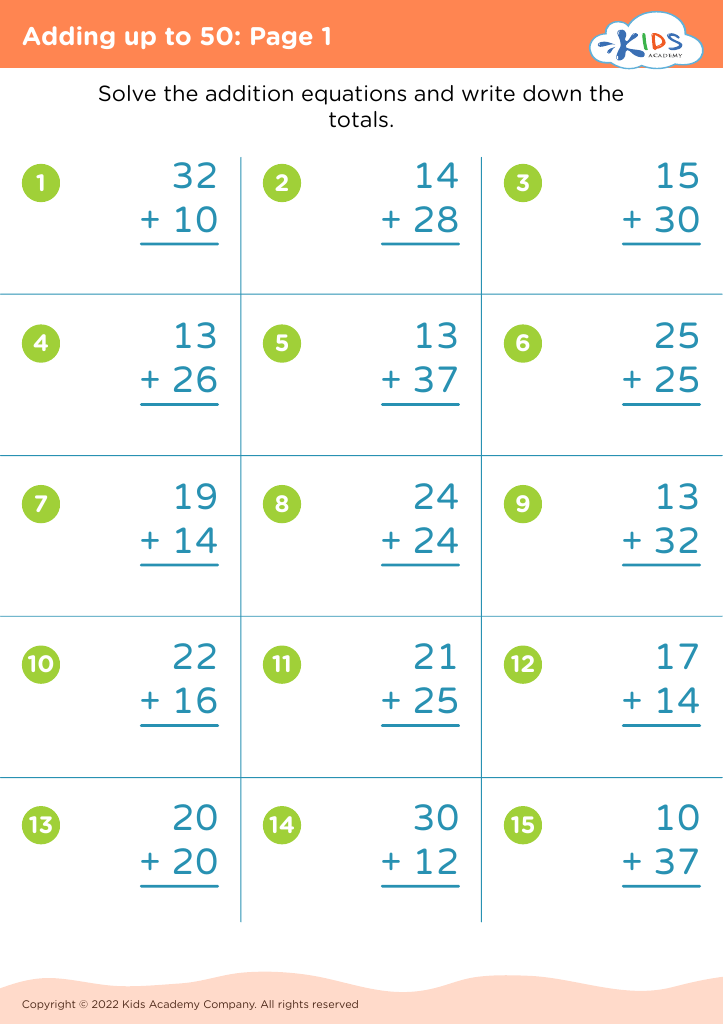
Adding up to 50: Page 1

Adding up to 50: Page 1

Adding up to 50: Page 1
Worksheet
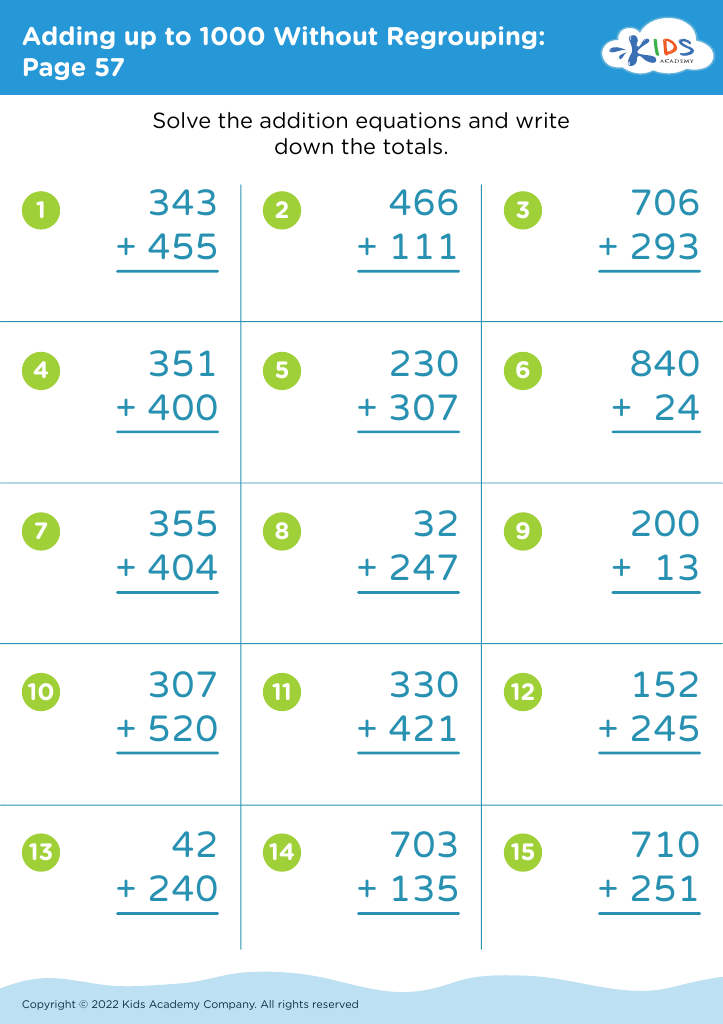
Adding up to 1000 Without Regrouping: Page 57
Worksheet
Adding up to 1000 Without Regrouping: Page 70
Worksheet


Understanding basic addition is crucial for children aged 8-9, as it lays the foundation for all future mathematics learning. At this stage, children's cognitive abilities are rapidly developing, and mastering addition enhances their numeracy skills, which translates into better problem-solving abilities. Strong addition skills are not only central to math; they underpin various everyday activities, from handling money to measuring ingredients in cooking.

For parents and teachers, fostering proficiency in addition nurtures a child's confidence and interest in math, transforming it from a potentially intimidating subject into an accessible and enjoyable one. Effective addition skills also contribute to academic success, which can boost a child's overall self-esteem and motivation across all subjects.

Moreover, addition is part of many key educational benchmarks and standardized tests. Early proficiency ensures that children are well-prepared for these assessments, reducing anxiety and increasing their chances of scoring well.

In sum, prioritizing basic addition at this pivotal developmental stage equips children with essential tools for academic and practical life, supporting their long-term cognitive and emotional growth. Parents and teachers thus play a critical role in nurturing a child's mathematical journey, setting the stage for future learning and everyday competency.