
Comparison Skills Addition Worksheets for Ages 8-9
4 filtered results
Difficulty Level
Grade
Age
-
From - To
Subject
Activity
Standards
Enhance your child's mathematical abilities with our Comparison Skills Addition Worksheets designed specifically for ages 8-9. These worksheets focus on developing critical thinking through comparison concepts, enabling students to compare sums and differentiate between larger and smaller numbers. Engaging and visually appealing, our resources stimulate curiosity and reinforce key addition skills in a fun way. Perfect for home or classroom use, these worksheets encourage independent learning while tracking progress effectively. Give your child the tools they need to succeed in math and foster a love for numbers with our comprehensive and interactive comparison skills activities. Begin their journey to mathematical mastery today!
Favorites
With answer key
Interactive
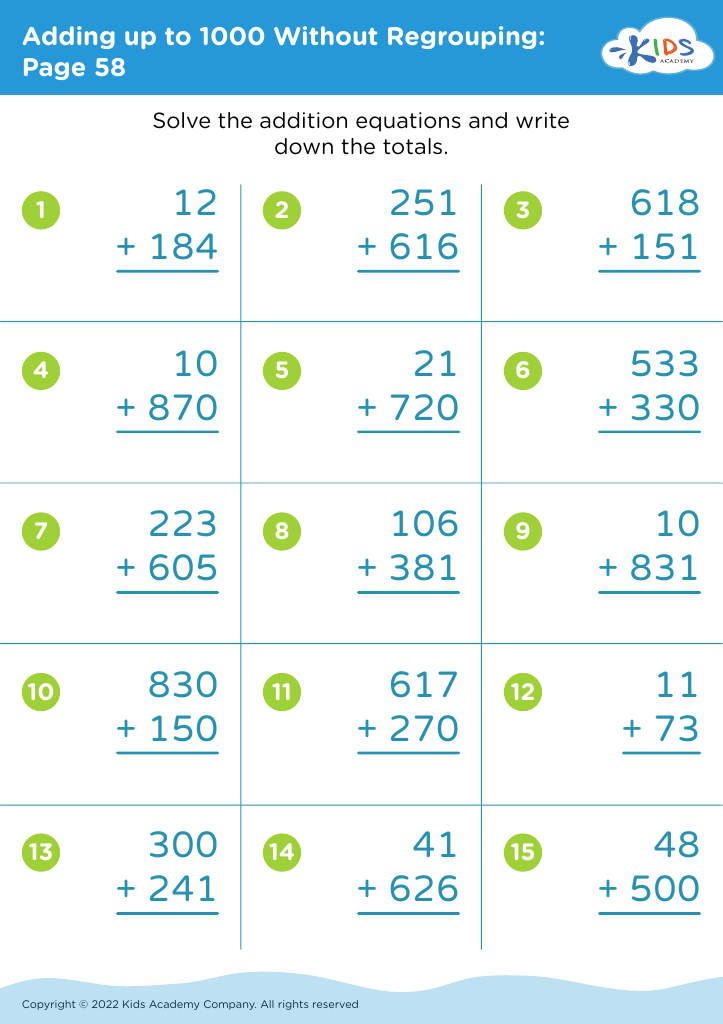
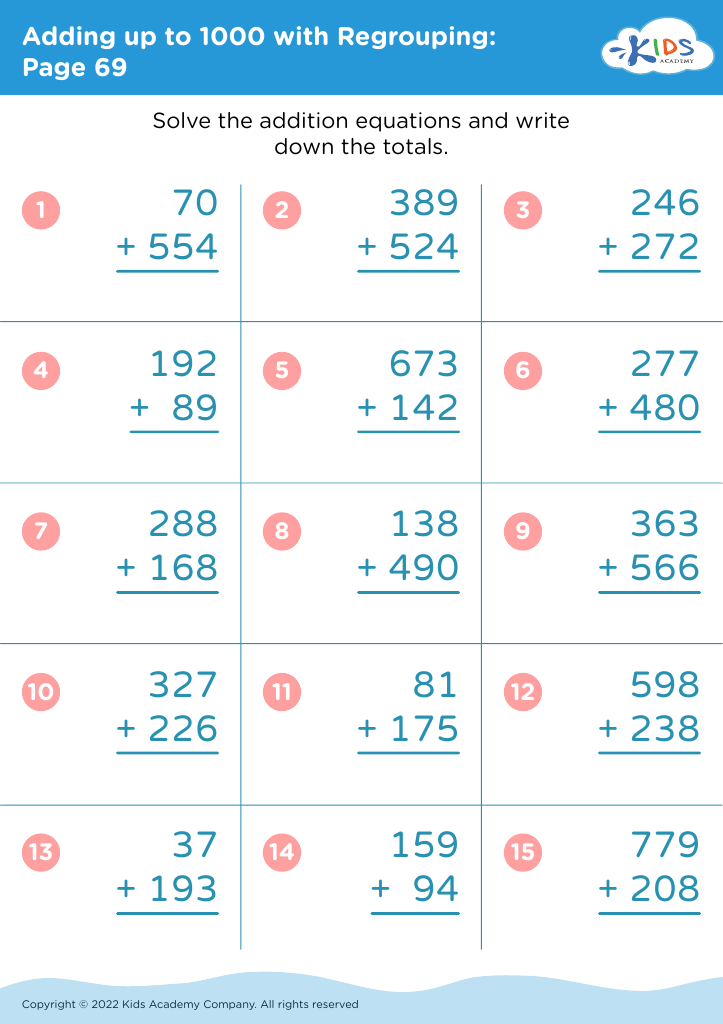
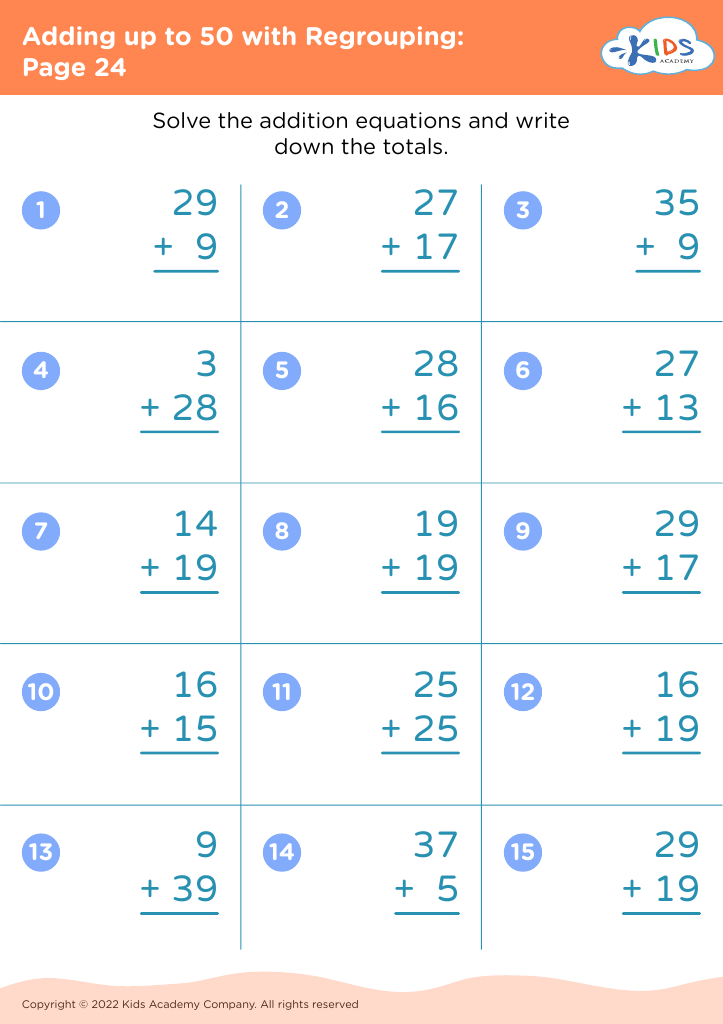
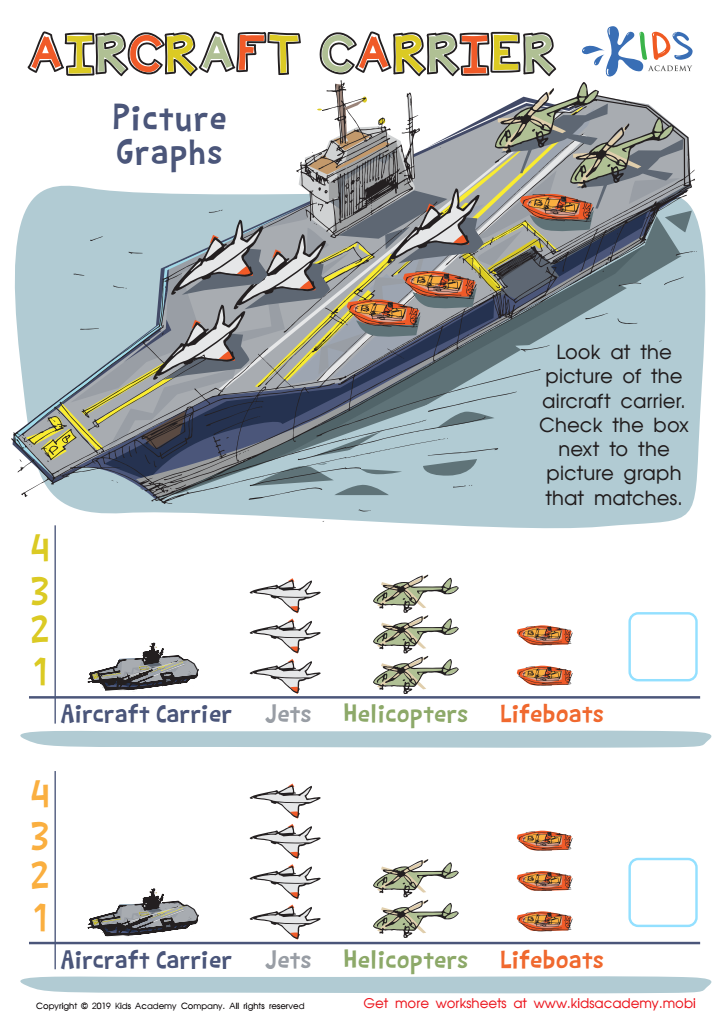
Aircraft Carrier Picture Graphs Worksheet
Kids love learning about jets and boats with this awesome worksheet! It's a great way to engage them as they work on picture graphs. Representing numerical values with pictures, this free PDF requires them to choose which picture graph and representation best match the carrier in the picture. It's also great practice for visual discrimination!
 Assign to My Students
Aircraft Carrier Picture Graphs Worksheet
Worksheet
Join Kids Academy for Free
Who is primarily going to use this learning content?








Comparison Skills Addition is crucial for children aged 8 to 9, as it lays the foundation for essential mathematical concepts and critical thinking. At this developmental stage, children begin to explore number relationships, understand value, and develop their problem-solving abilities. By focusing on comparison skills, children learn to analyze and interpret numerical data, helping them appreciate not just the 'how' but also the 'why' of addition.
Utilizing comparison skills encourages children to engage with math in meaningful ways. For instance, when children compare numbers to determine which is larger or smaller, they enhance their grasp of subtraction as the inverse of addition. Moreover, they learn to make connections between quantities and their representations, which is fundamental for advanced math topics such as measurement, fractions, and percentages.
Parents and teachers should care about nurturing these skills because they foster a growth mindset, encourage persistence, and build confidence in young learners as they tackle more complex mathematical problems later on. Additionally, competencies in comparison and addition extend beyond math; they empower children in daily life situations, strengthen decision-making abilities, and promote logical reasoning—essential skills for academic success and everyday problem-solving.








