Enhance number recognition Addition Worksheets for Ages 8-9
17 filtered results
-
From - To
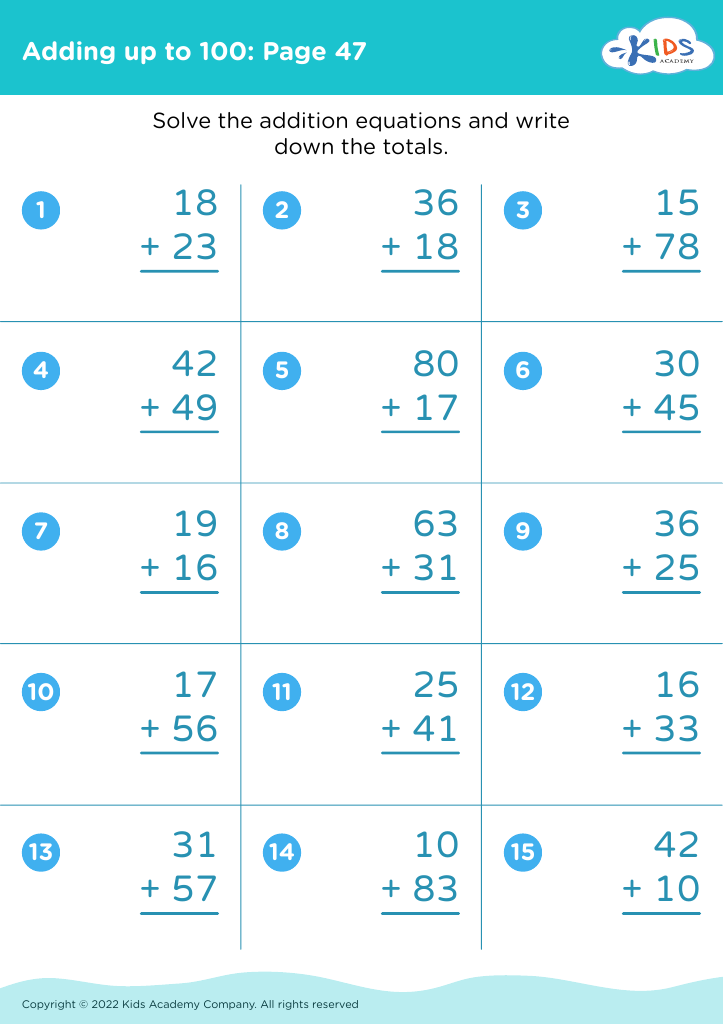
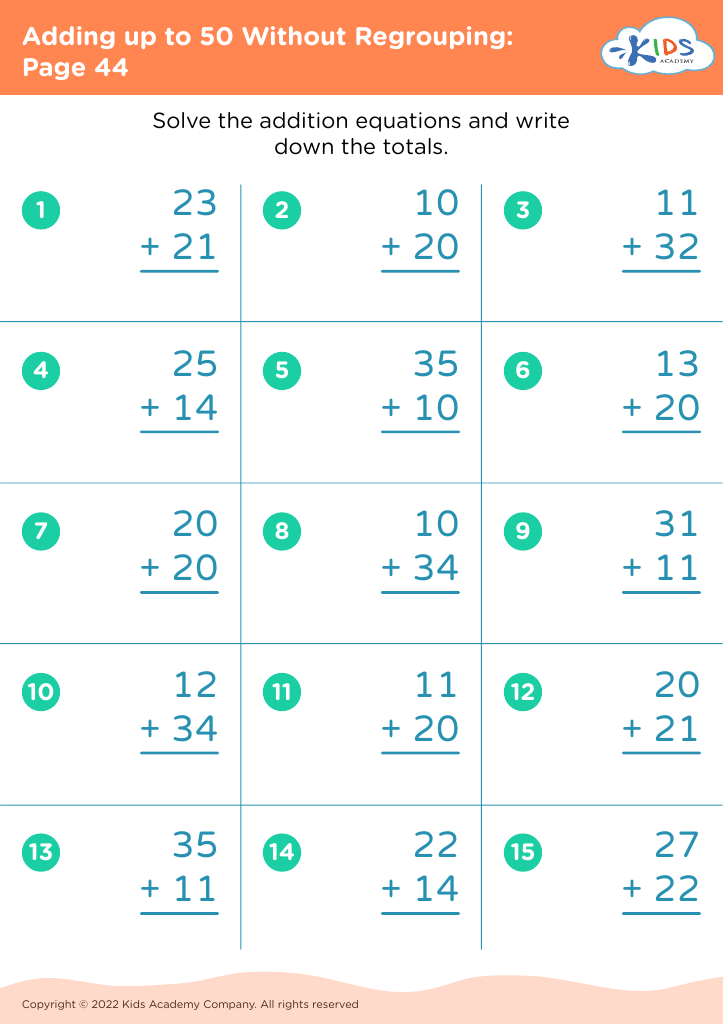
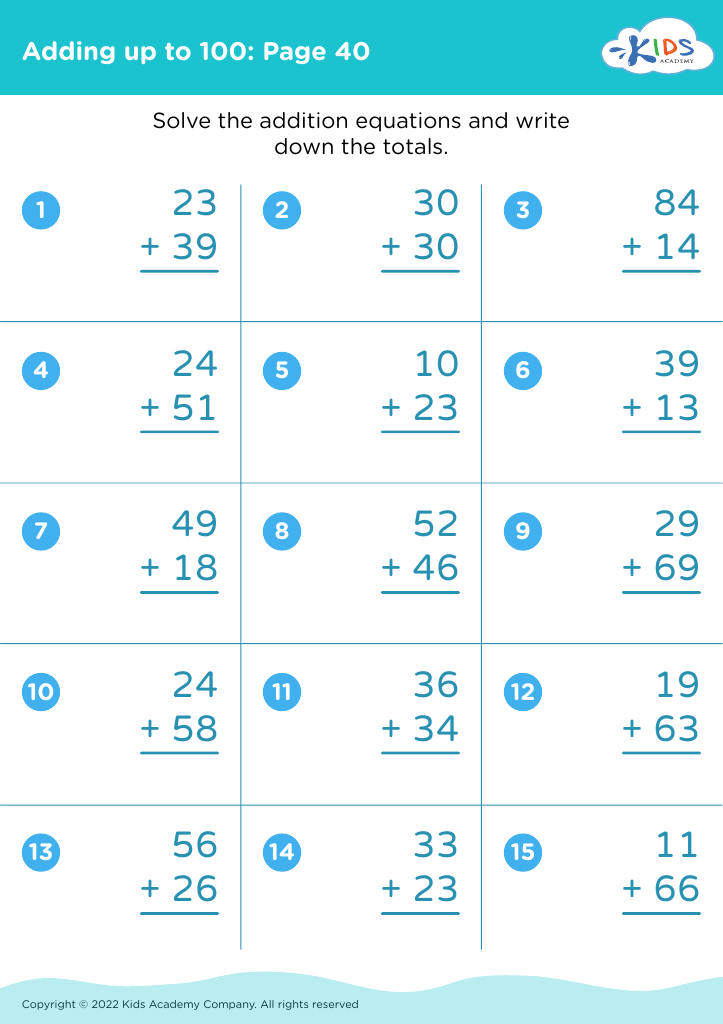
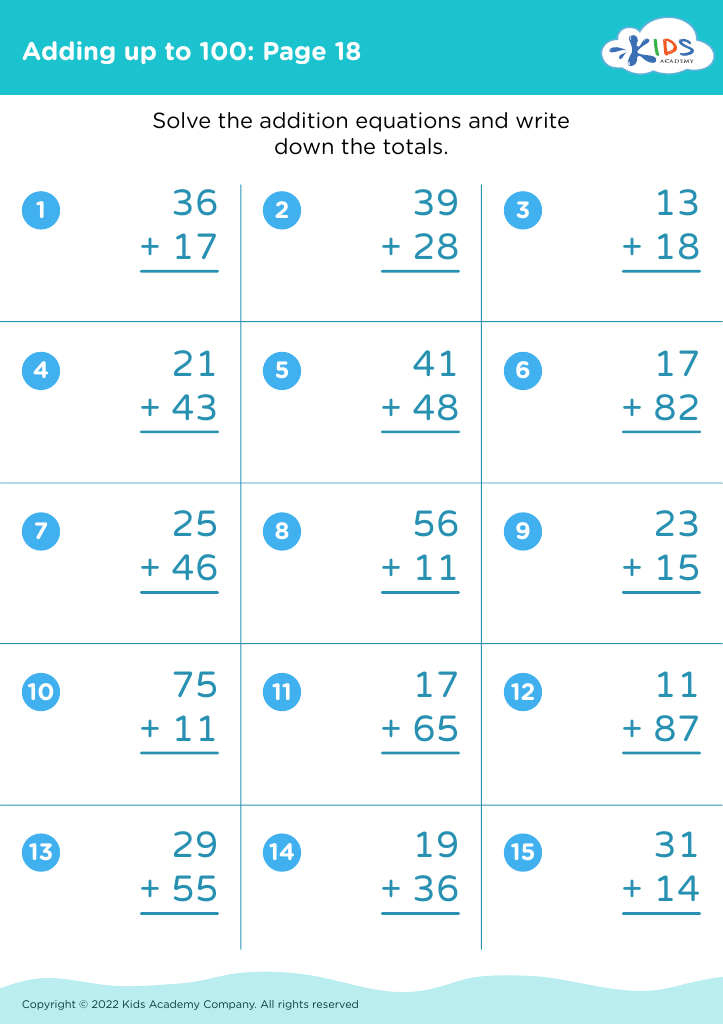
Boost your child's number recognition and addition skills with our engaging worksheets designed specifically for ages 8-9! These printable resources provide fun and interactive activities that help reinforce essential math concepts. Kids will enjoy various exercises that challenge their understanding of numbers while improving their ability to perform addition operations. Our worksheets include colorful visuals and real-life math scenarios, making learning enjoyable and practical. Perfect for classroom use or at-home practice, these activities ensure your child builds a solid foundation in mathematics. Explore our collection today to help your learner enhance their number recognition and become confident problem-solvers!
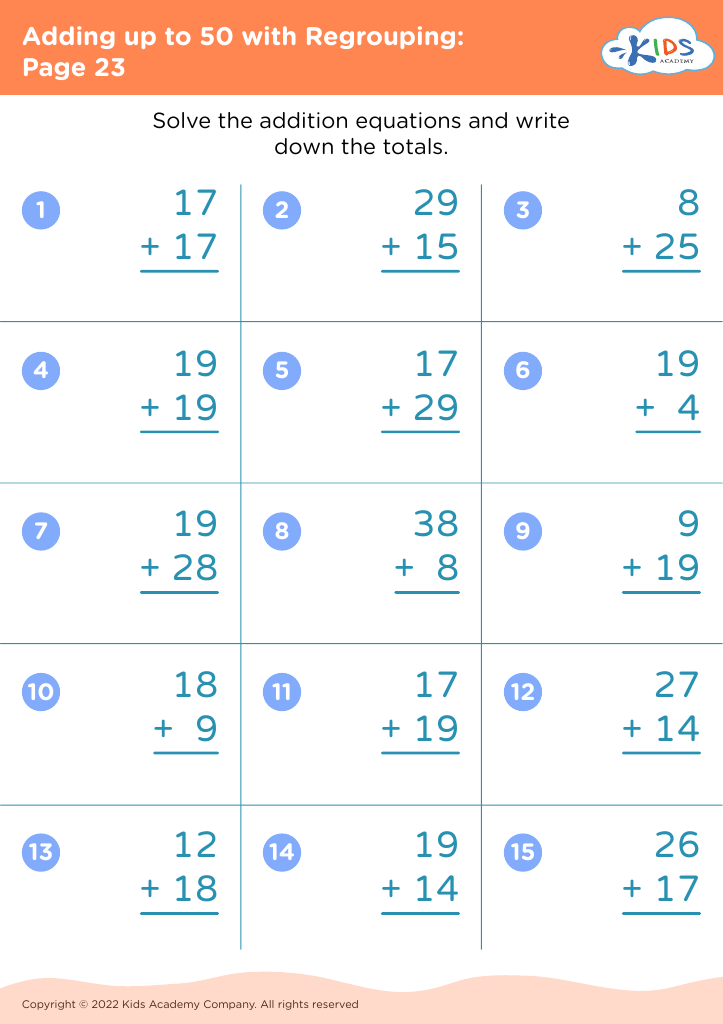
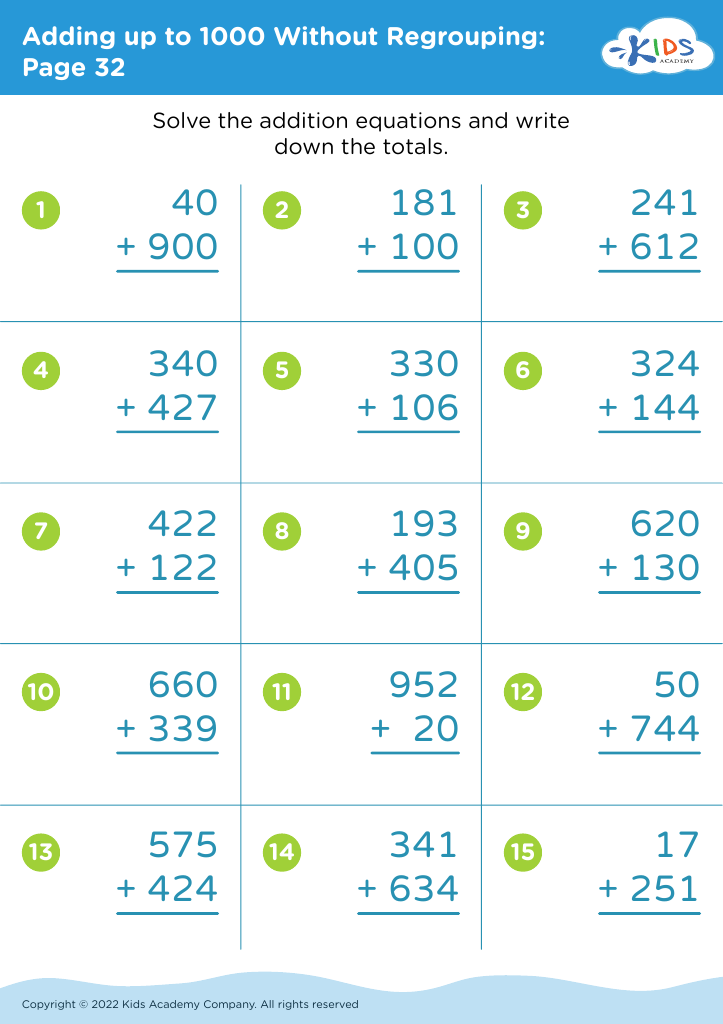
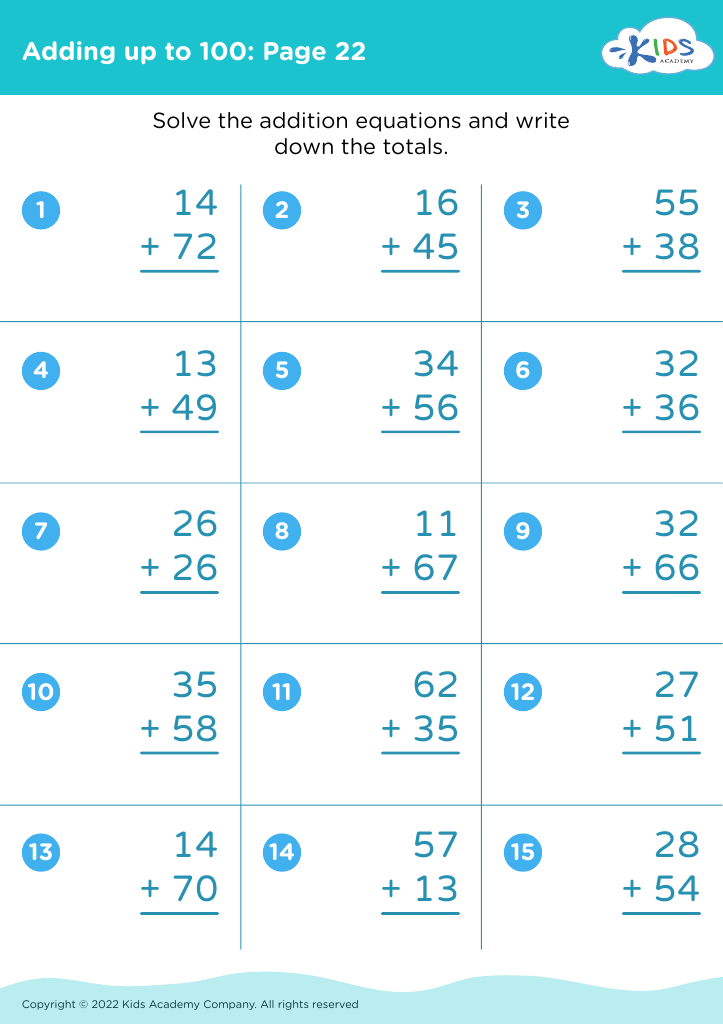
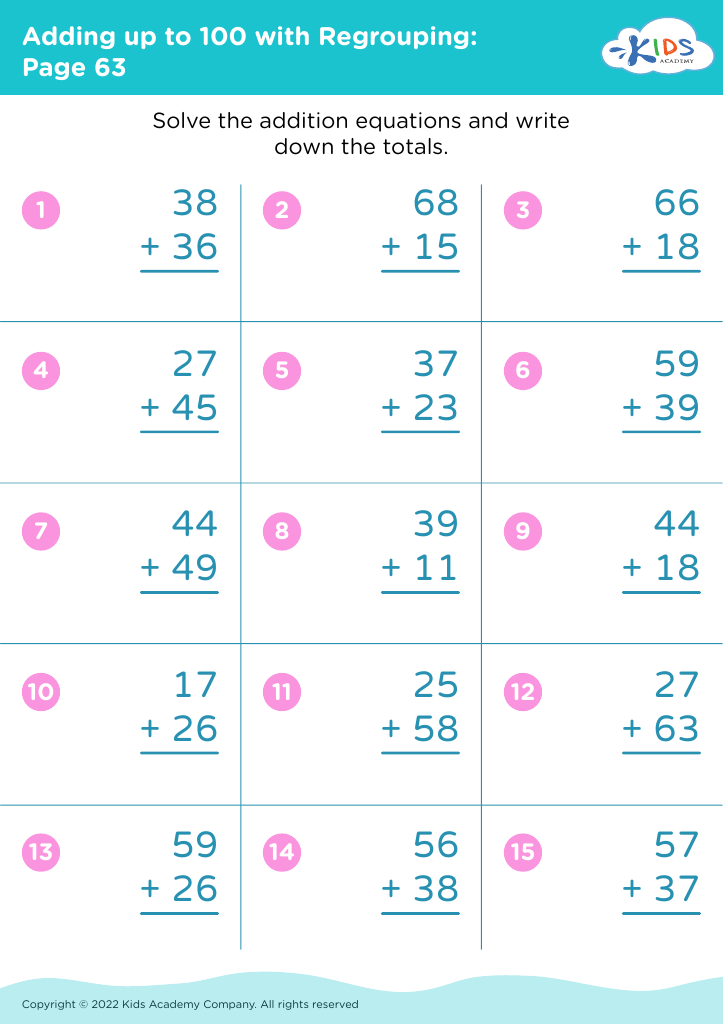
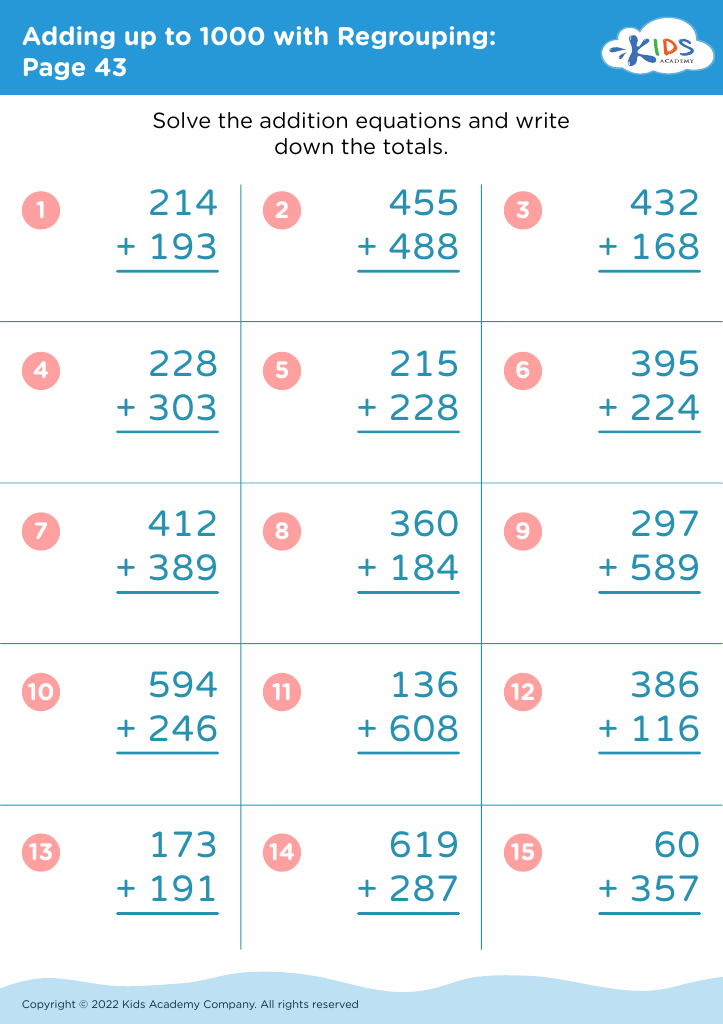
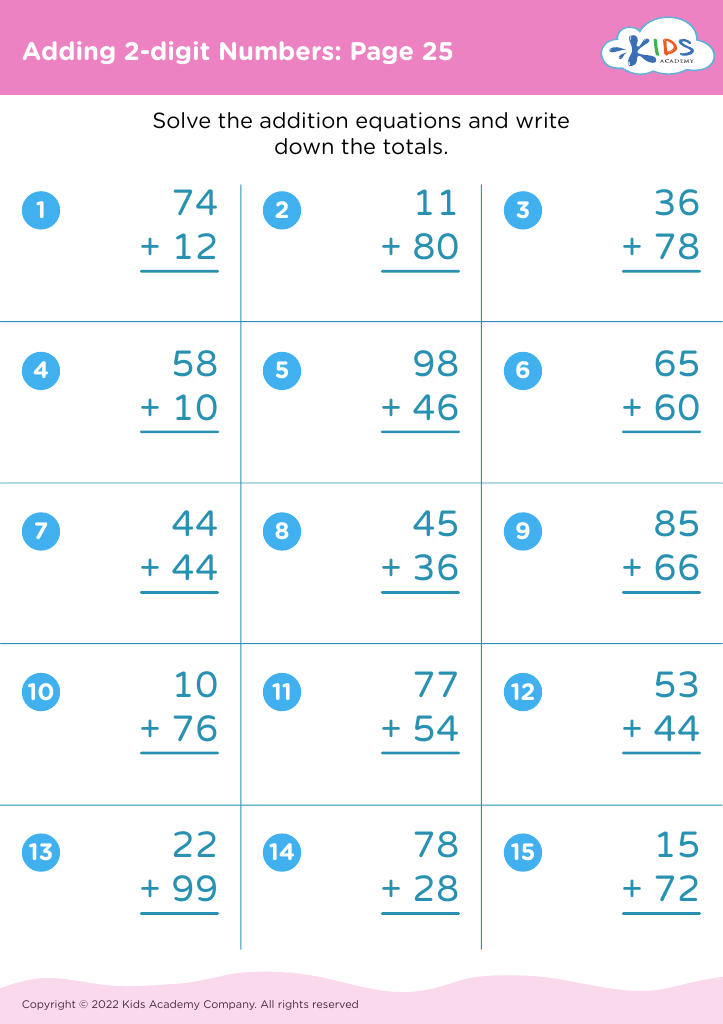
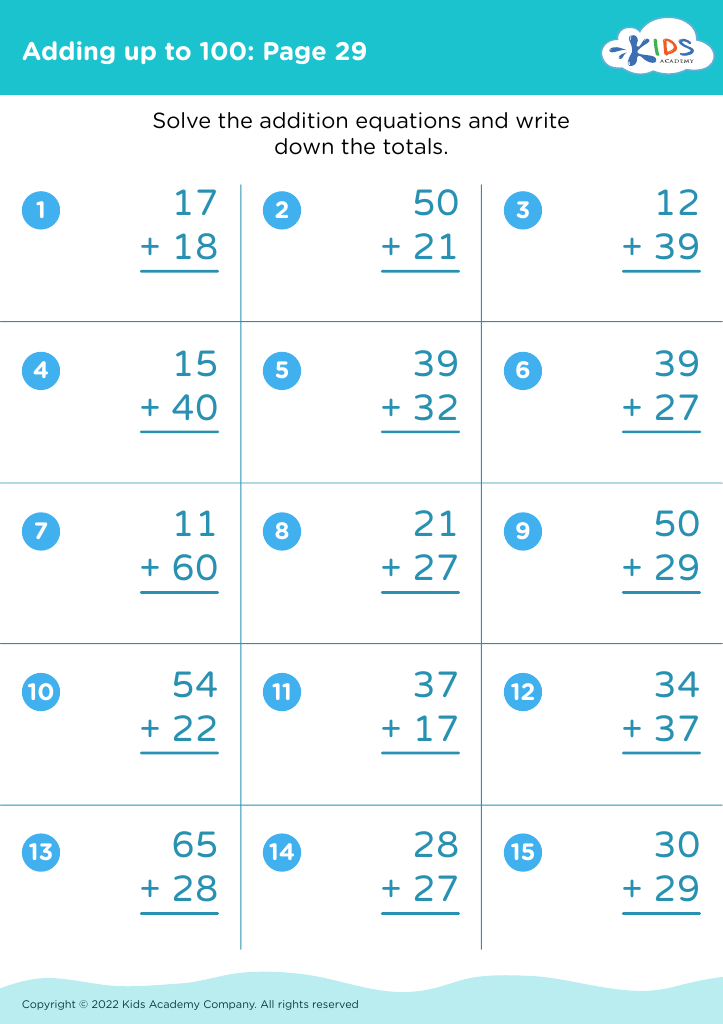
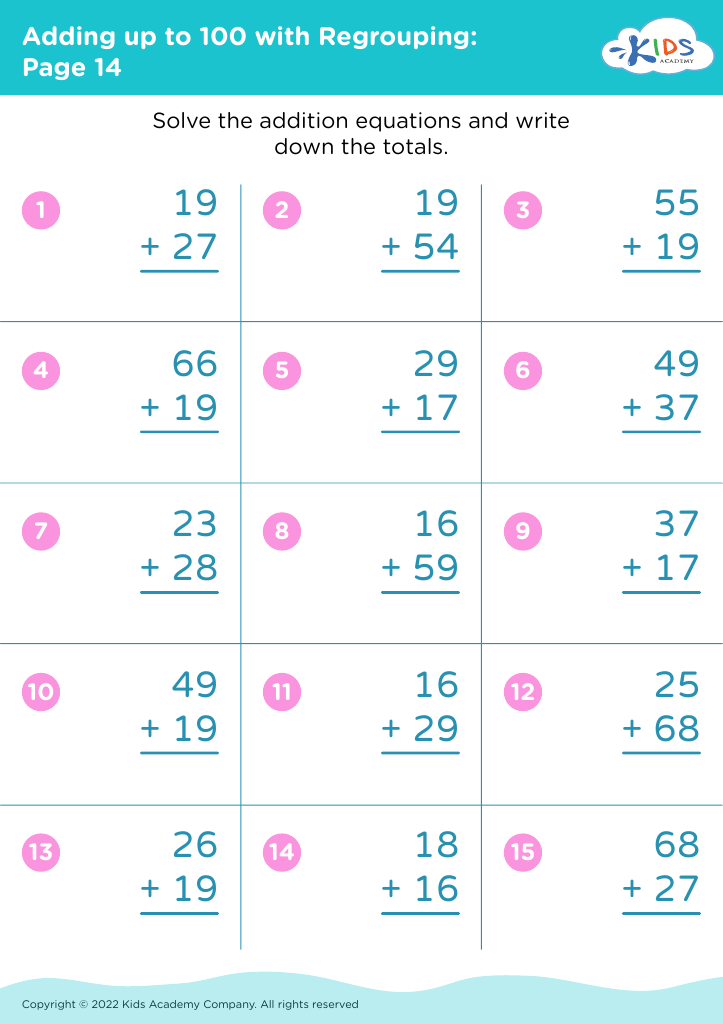
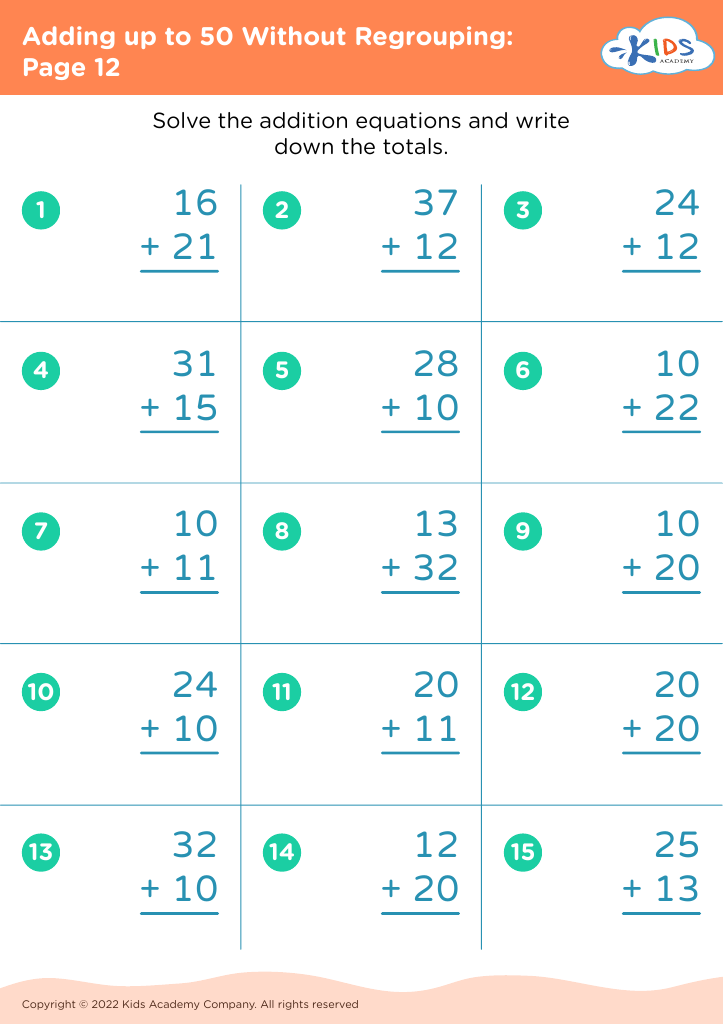
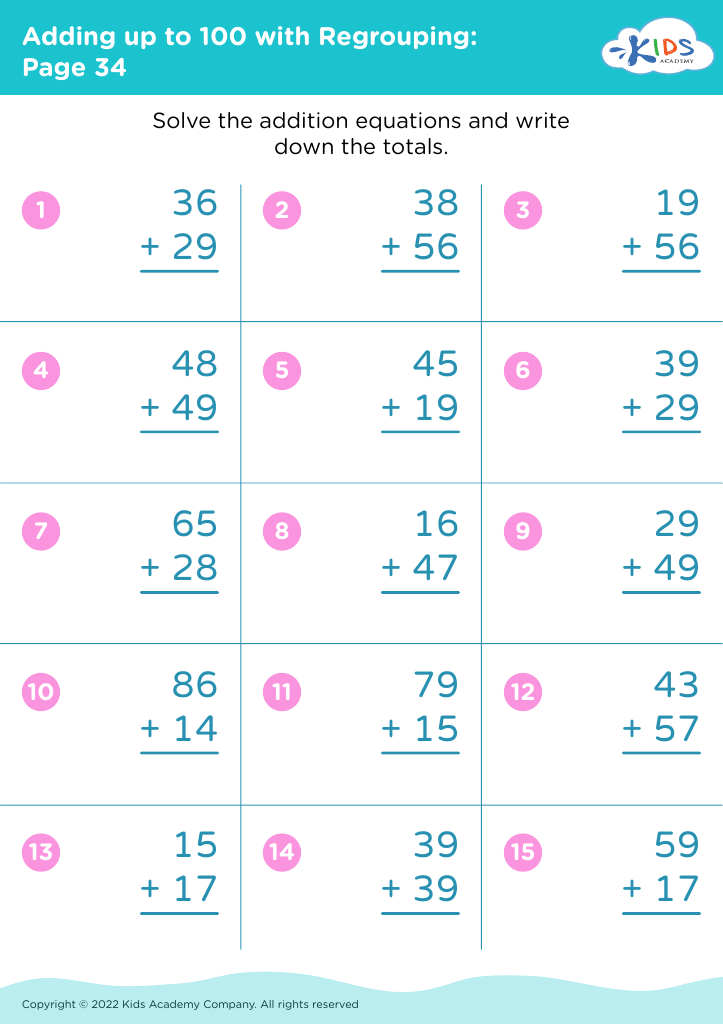
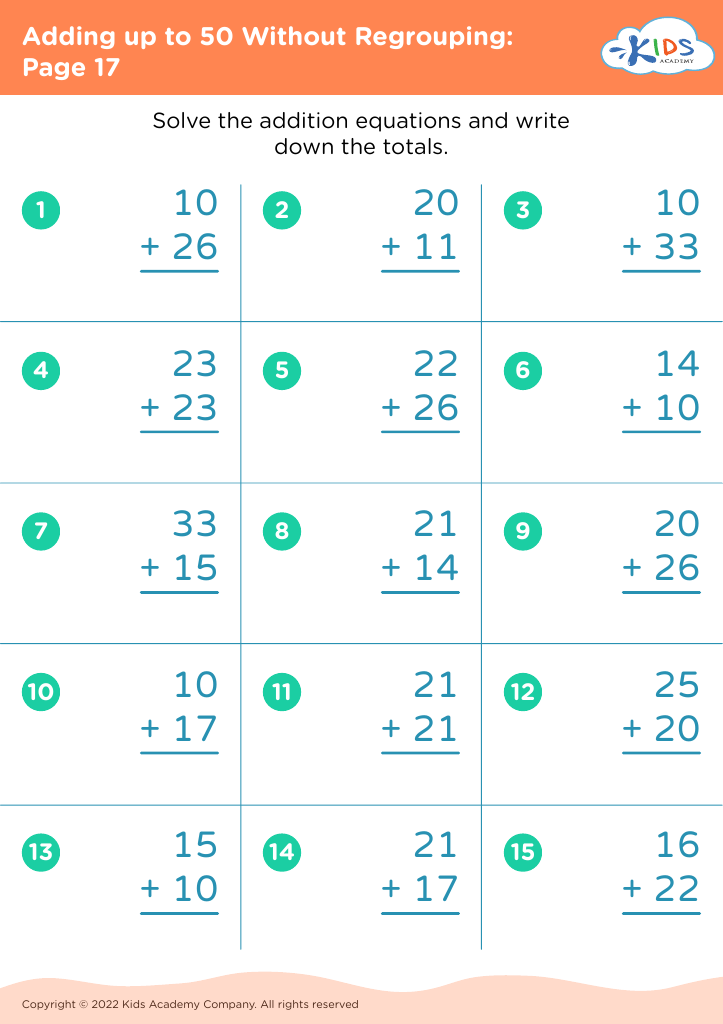
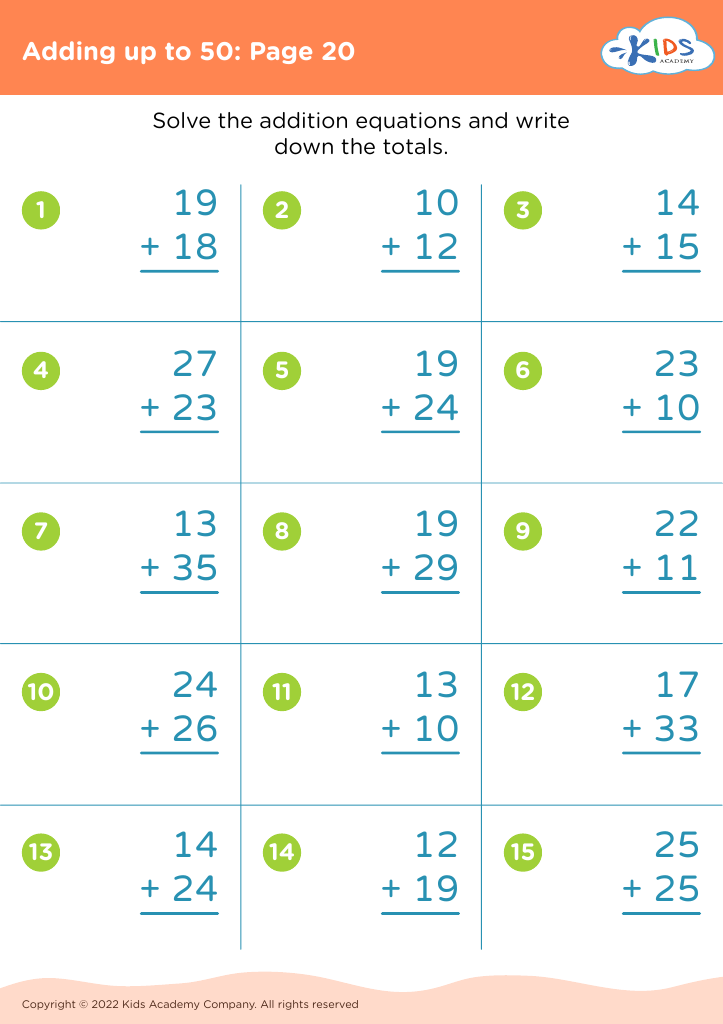
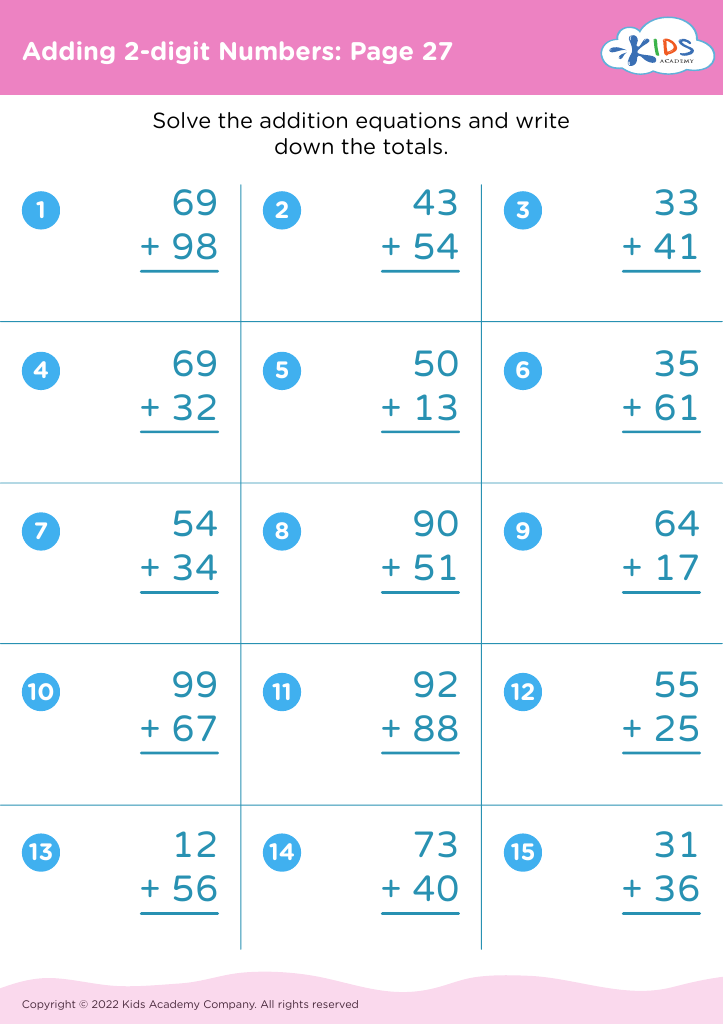








Parents and teachers should prioritize enhancing number recognition and addition skills for children aged 8-9, as these foundational abilities significantly impact future academic and everyday math competence. During this developmental stage, children transition from basic arithmetic to more complex problem-solving. Strong number recognition helps them understand mathematical concepts, enabling them to identify relationships between numbers and operate with them more effectively.
Effective addition skills are essential not only for processing academic content but also for navigating real-life situations, such as budgeting, measuring ingredients in cooking, or applying math in games and sports. As children engage with increasingly challenging math problems, their confidence and self-esteem in handling mathematics can grow or wane based on their number competency.
Moreover, early intervention is crucial; if struggling with these skills, children may create negative associations with math, which can affect their attitude towards the subject later in life. By focusing on enhancing number recognition and addition, parents and teachers foster a positive learning environment that supports critical thinking, resilience, and a lifelong interest in mathematics. Equipping children with these essential skills ultimately prepares them not only for academic excellence but also for practical everyday applications.








