Filters

35 filtered results

Clear all filters
Favorites
With answer key
Interactive

35 filtered results

Difficulty Level

Grade


Check out this FREE Trial Lesson on Addition for age 8-9!

D

Favorites
With answer key
Interactive
  • 8-9
  • Fine Motor Skills
  • Addition
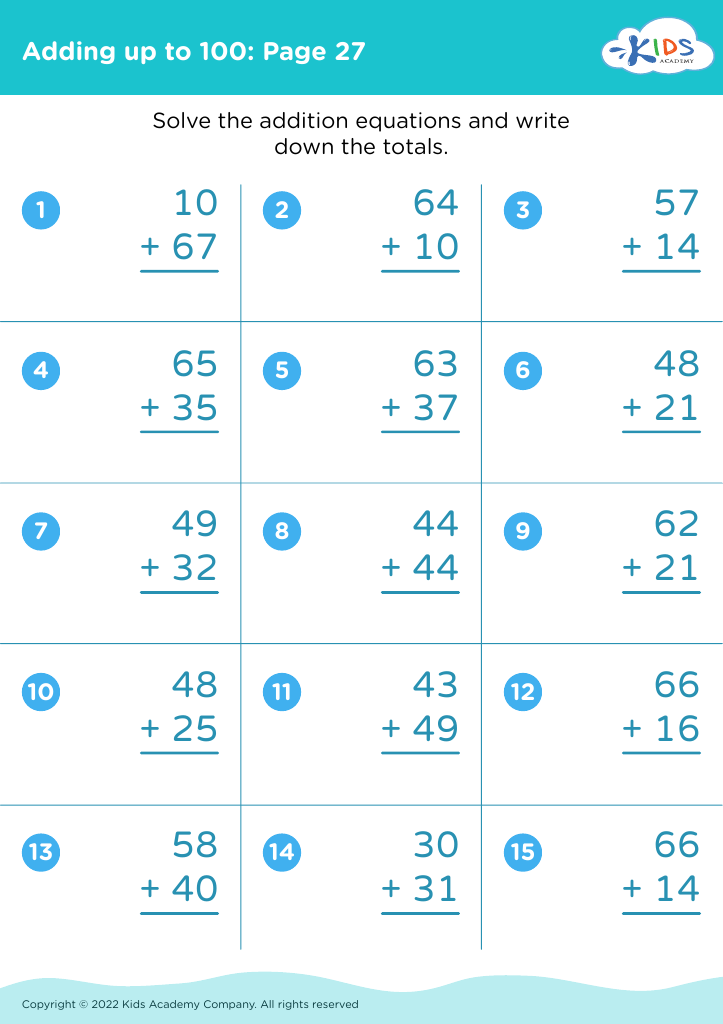
Adding up to 100: Page 27

Adding up to 100: Page 27

Adding up to 100: Page 27
Worksheet
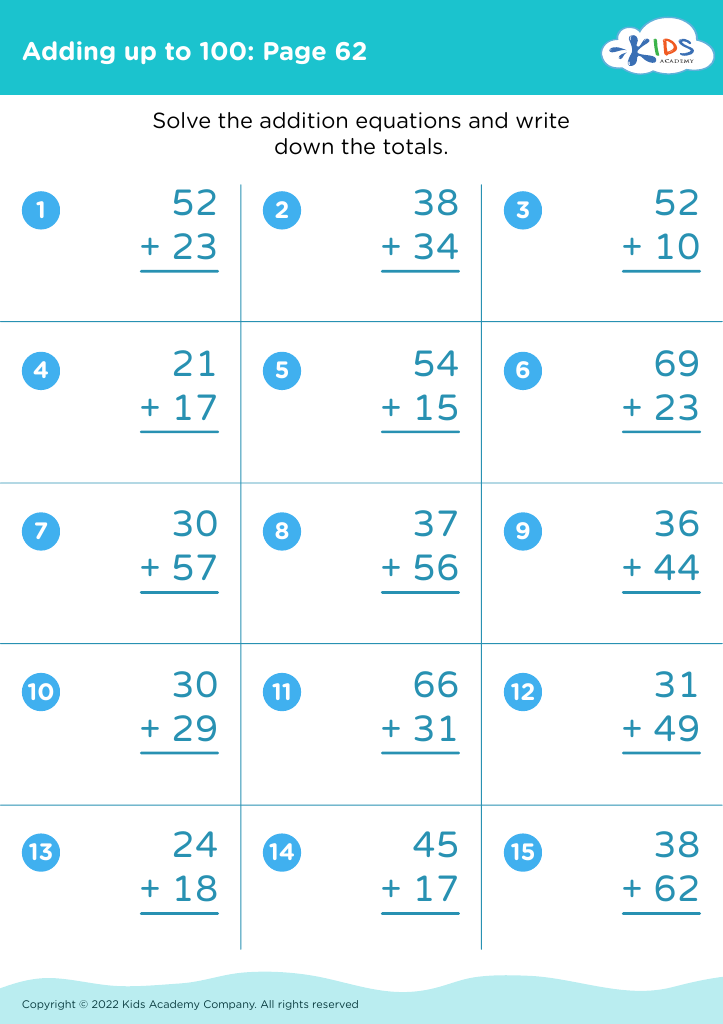
Adding up to 100: Page 62

Adding up to 100: Page 62

Adding up to 100: Page 62
Worksheet
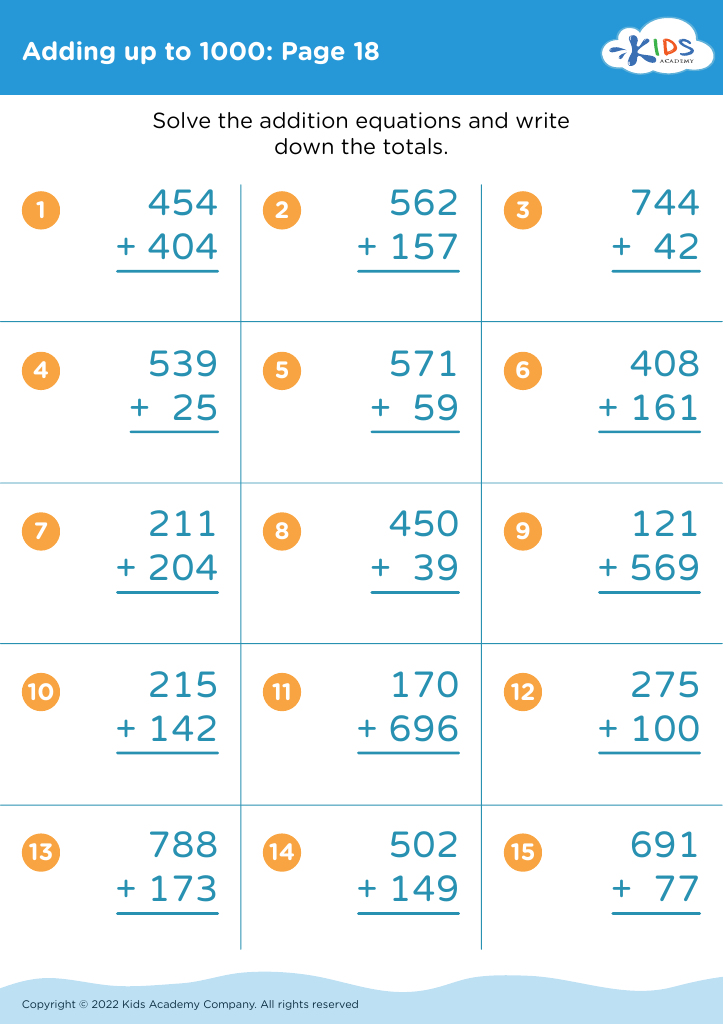
Adding up to 1000: Page 18

Adding up to 1000: Page 18

Adding up to 1000: Page 18
Worksheet
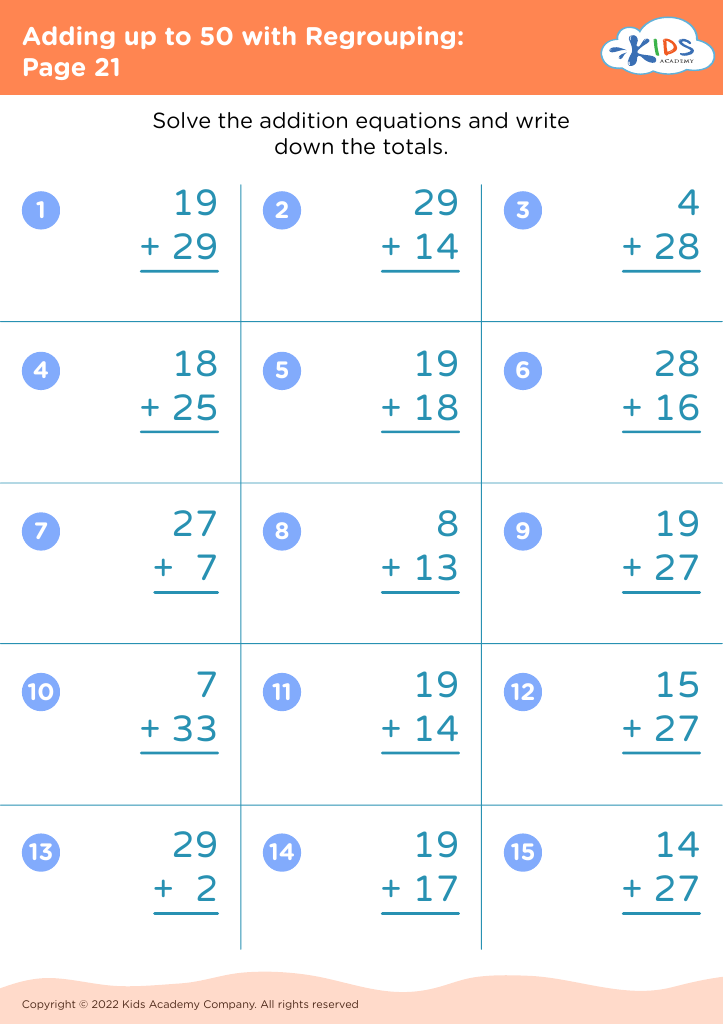
Adding up to 50 with Regrouping: Page 21
Worksheet
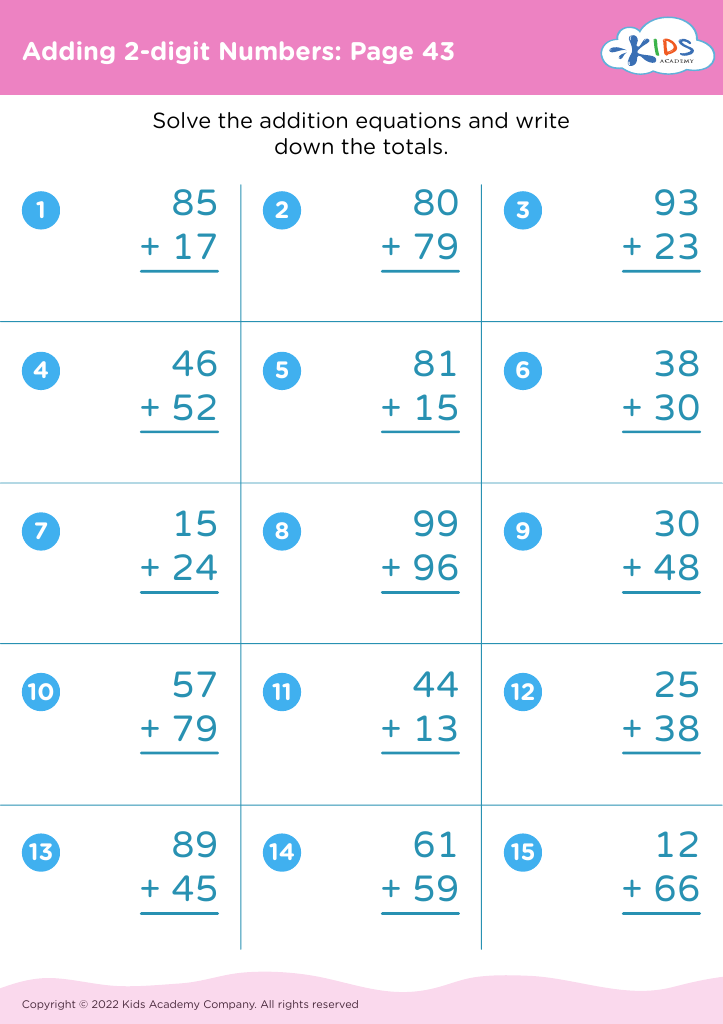
Adding 2-digit Numbers: Page 43

Adding 2-digit Numbers: Page 43

Adding 2-digit Numbers: Page 43
Worksheet
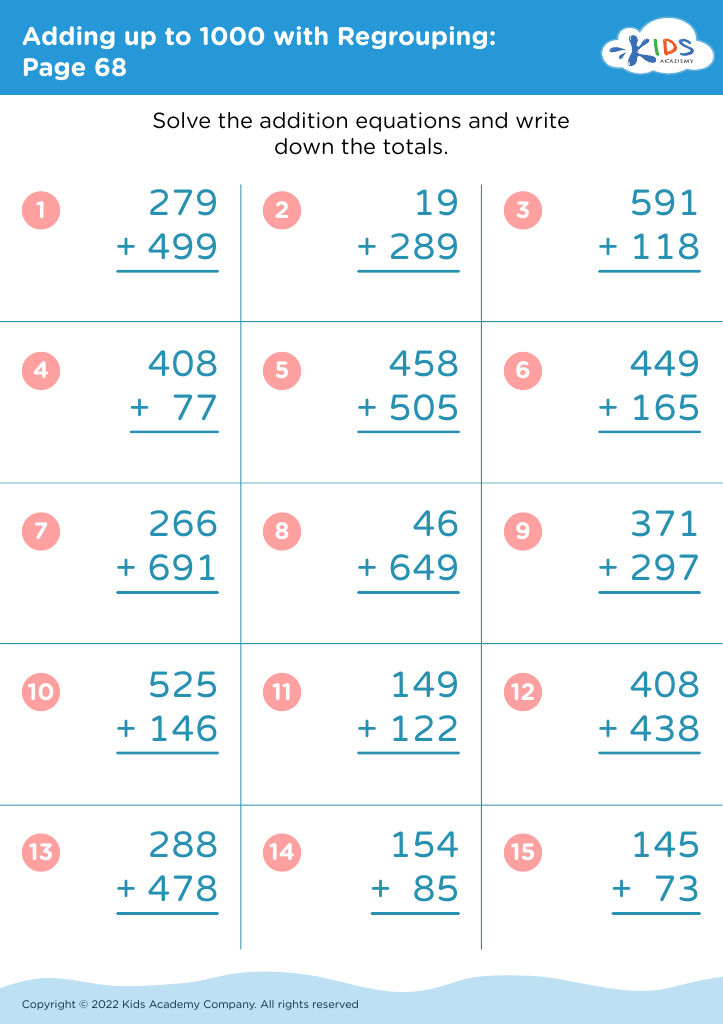
Adding up to 1000 with Regrouping: Page 68
Worksheet
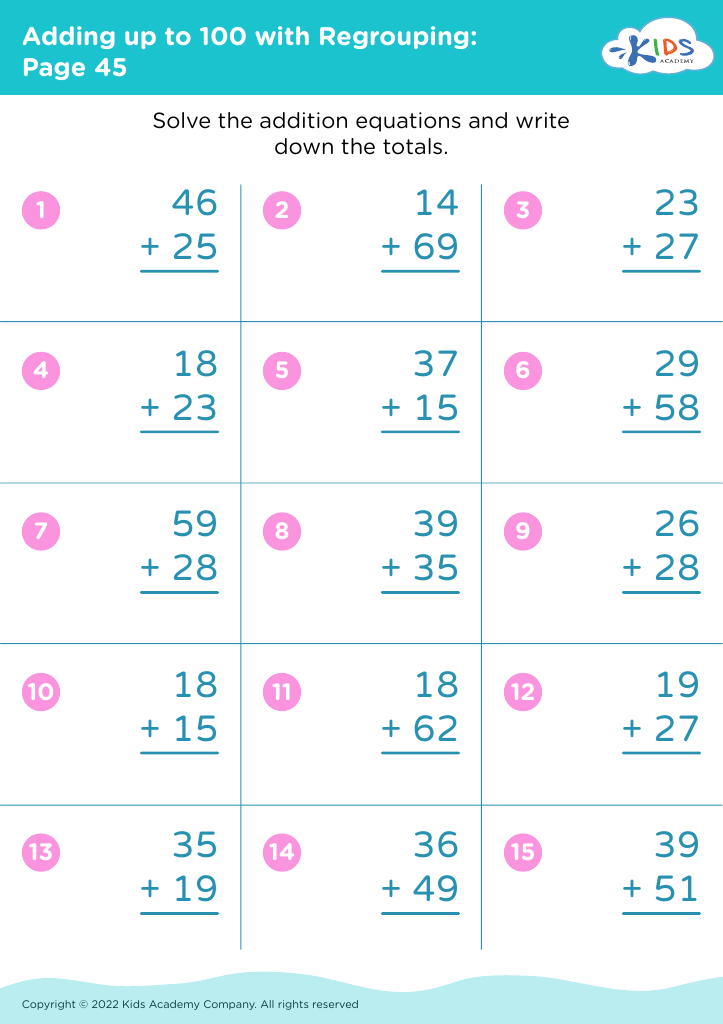
Adding up to 100 with Regrouping: Page 45
Worksheet
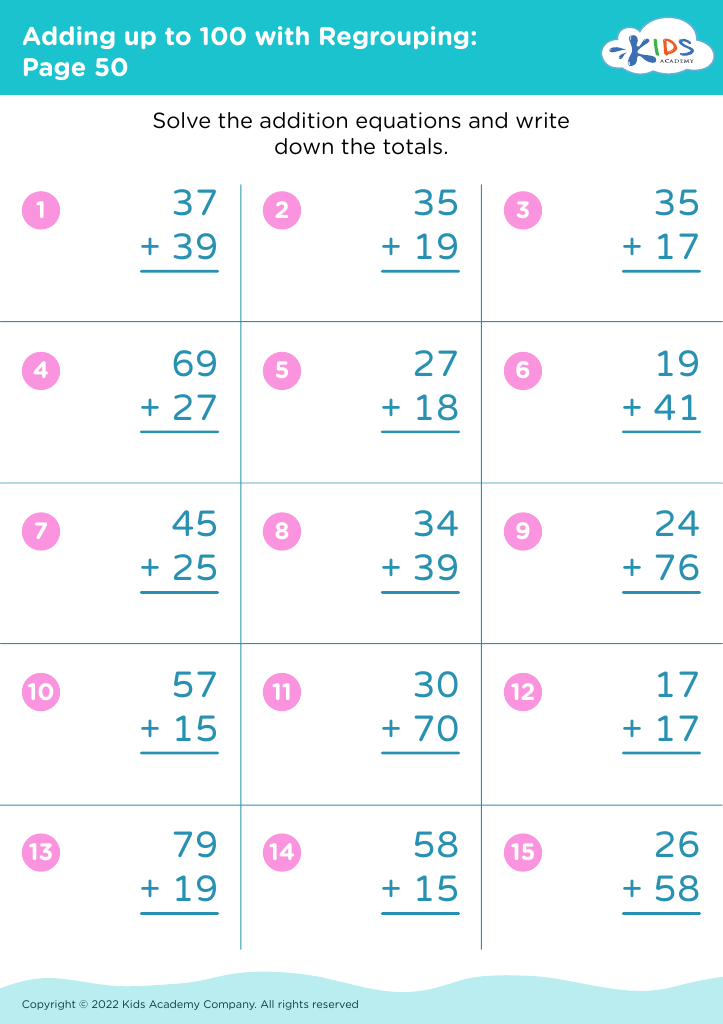
Adding up to 100 with Regrouping: Page 50
Worksheet
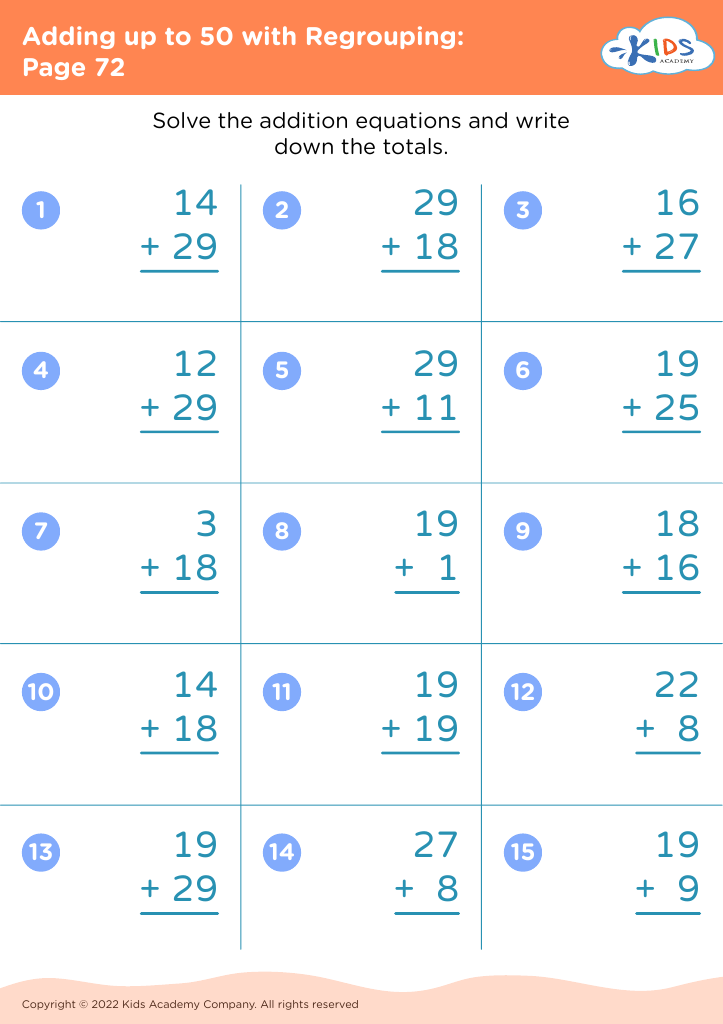
Adding up to 50 with Regrouping: Page 72
Worksheet
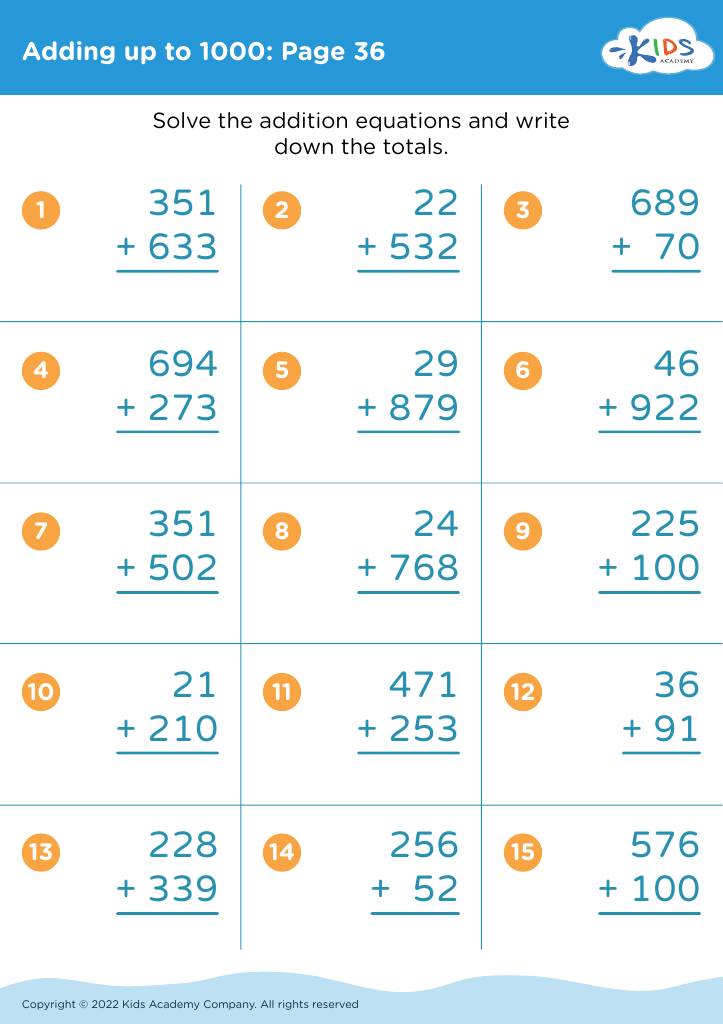
Adding up to 1000: Page 36

Adding up to 1000: Page 36

Adding up to 1000: Page 36
Worksheet
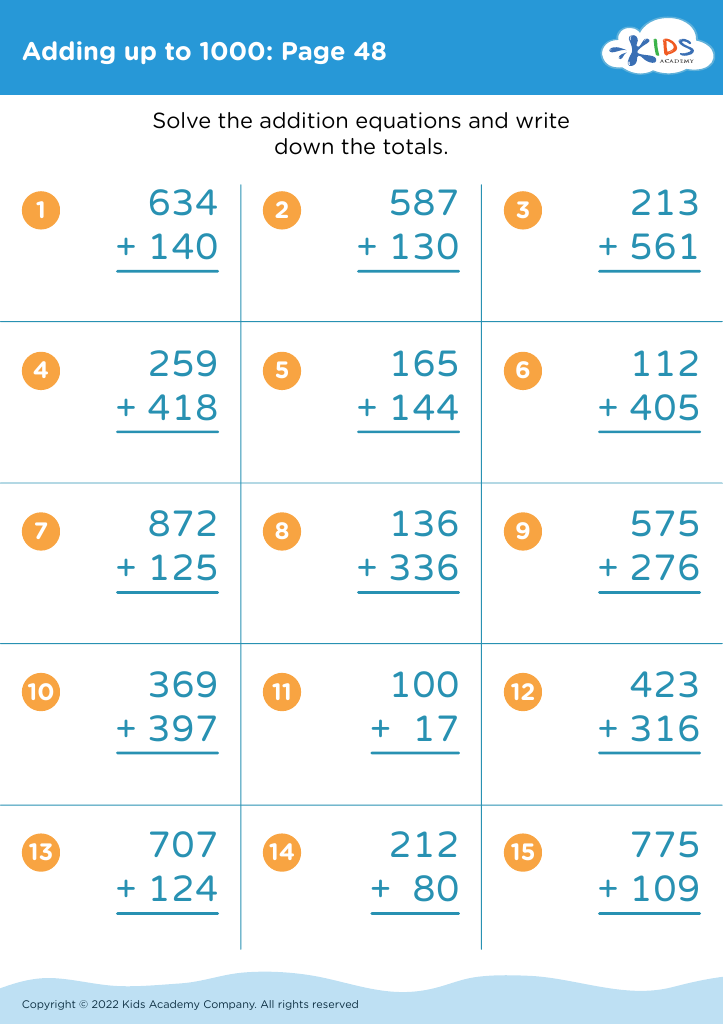
Adding up to 1000: Page 48

Adding up to 1000: Page 48

Adding up to 1000: Page 48
Worksheet


Fine motor skills are crucial for the development of children ages 8-9, as they serve as the foundation for many everyday tasks and future learning. These skills involve the coordination of small muscle movements, primarily in the hands and fingers, enabling children to perform activities such as writing, drawing, buttoning clothes, and using scissors effectively.

As children navigate through school tasks, strong fine motor skills allow them to structure their work more neatly, improving their confidence and overall academic performance. These skills also influence their ability to engage in complex tasks, such as assembling models or completing puzzles, fostering creativity and problem-solving abilities.

Moreover, a lack of proficiency in fine motor skills can lead to frustration and diminished self-esteem in children, potentially impacting their willingness to participate in class. By focusing on Fine Motor Skills Addition in this age group, parents and teachers can create a more enriching and supportive learning environment. Encouraging activities that enhance these skills through games, crafts, and everyday tasks can help children develop the dexterity needed for more advanced academic and life tasks, ultimately setting the stage for their long-term success. Supporting this development at a young age is vital to helping children thrive both in and out of the classroom.