
Handwriting practice Addition Worksheets for Ages 8-9
5 filtered results
Difficulty Level
Grade
Age
-
From - To
Subject
Activity
Standards
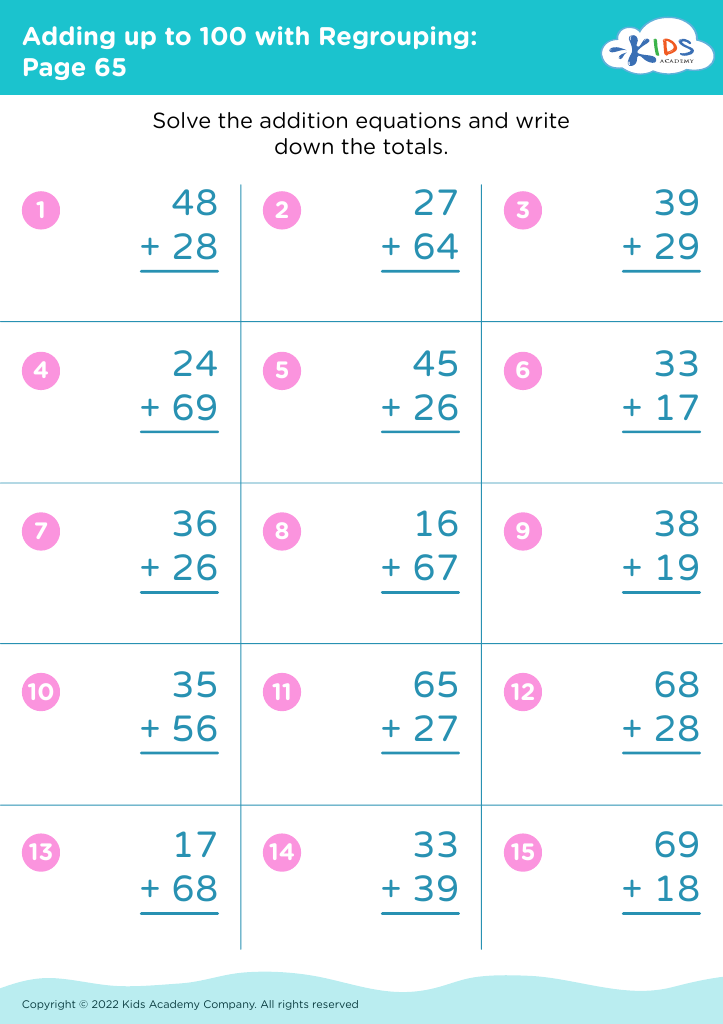
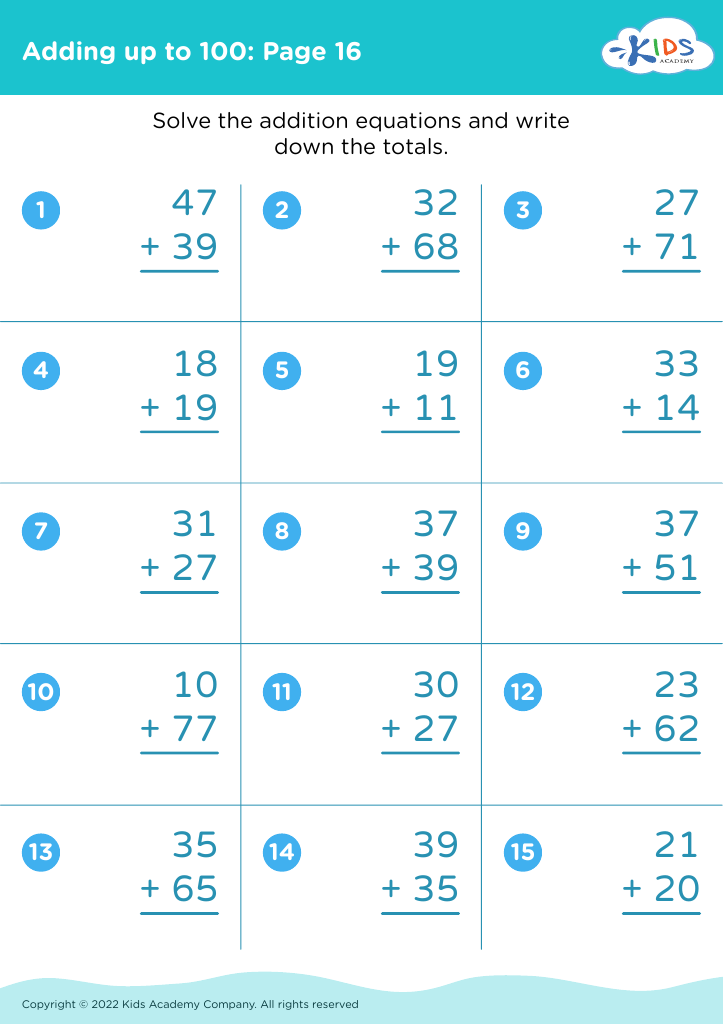
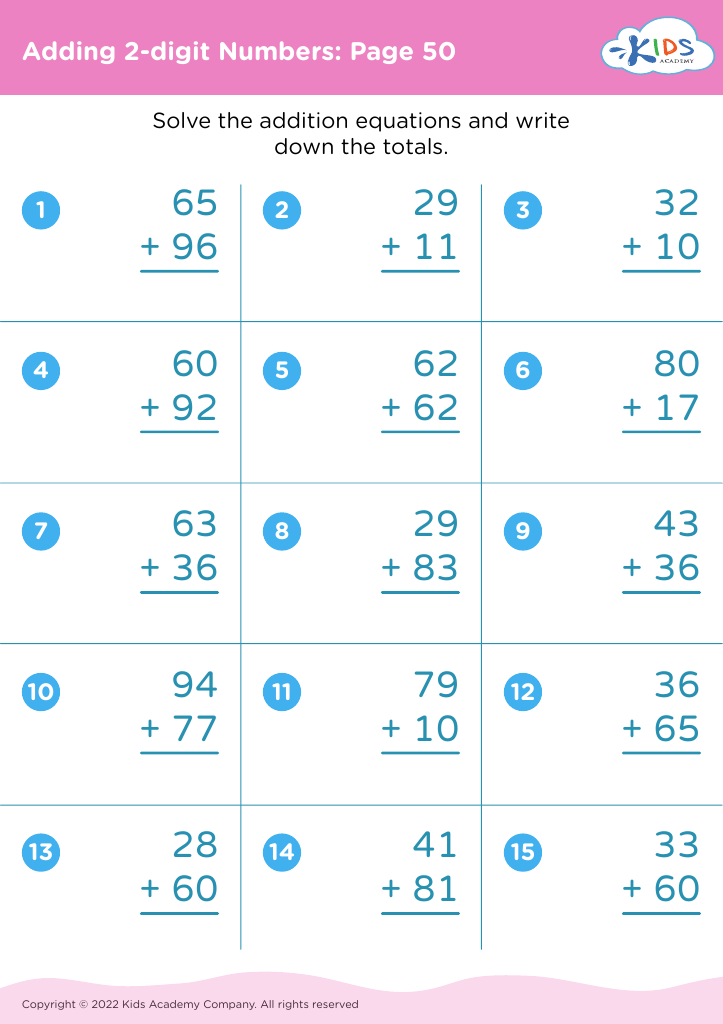
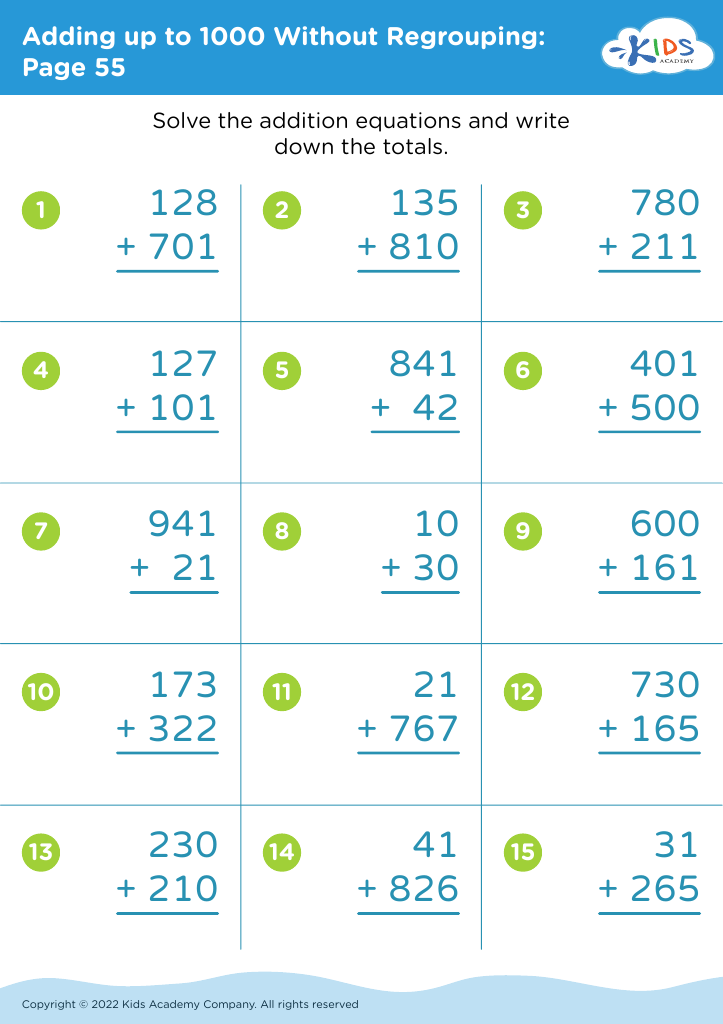
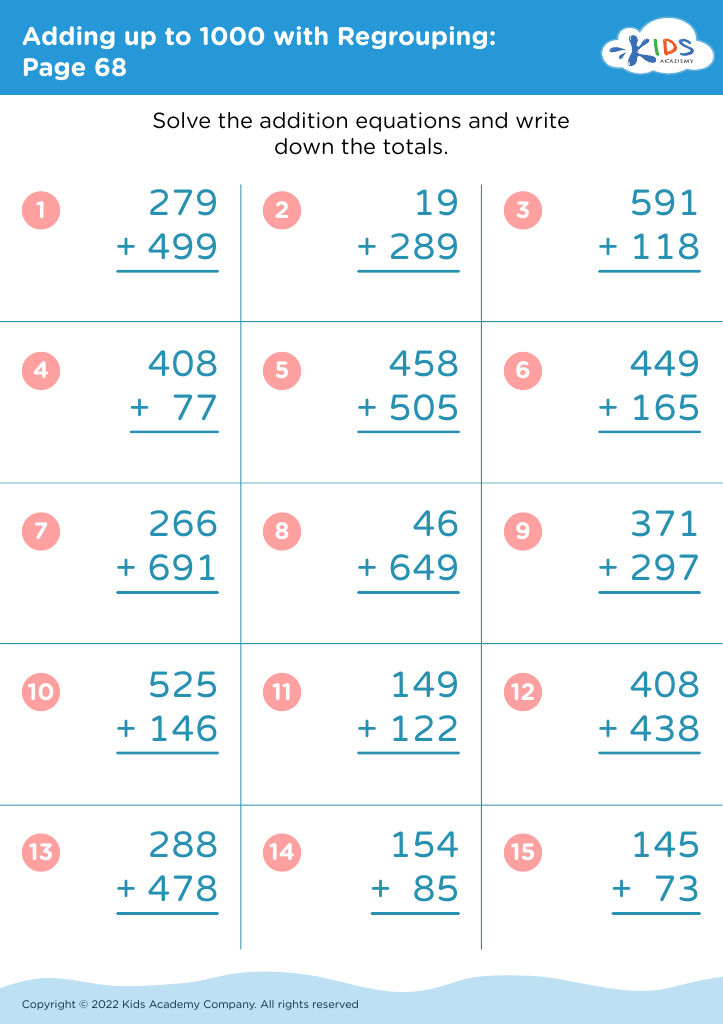
Enhance your child's math and handwriting skills with our engaging Handwriting Practice Addition Worksheets for Ages 8-9. Designed to reinforce addition fluency while improving penmanship, these thoughtfully crafted worksheets provide a dual learning experience. Perfect for young learners, they offer a variety of interesting exercises and practice problems to strengthen addition abilities. By combining math with handwriting practice, kids develop both numerical competence and fine motor skills. Ideal for home or classroom use, these printable worksheets will boost confidence and mastery in your child’s math journey, making learning fun and productive. Download and print now for vibrant, hands-on education!
Favorites
With answer key
Interactive
Join Kids Academy for Free
Who is primarily going to use this learning content?








Handwriting practice, combined with addition exercises for children aged 8-9, is a powerful tool for cognitive and motor development. At this age, the brain is highly receptive to integrating multiple skills simultaneously. Firstly, handwriting helps in solidifying fine motor skills. The act of writing by hand, with precision and control, bolsters muscle memory and coordination.
Simultaneously, addition exercises sharpen mathematical skills, enabling children to grasp fundamental arithmetic concepts critical for future learning. When combined, these activities foster a dual growth pathway, integrating cognitive and motor learning. This influences not just academic performance but real-world skill application.
Moreover, handwriting practice improves reading and comprehension as children become more familiar with the shapes of letters and words, which supports literacy. This synergy instills a sense of accomplishment and confidence, catalyzing an enthusiastic approach to learning.
In an increasingly digital age, these traditional skills also provide a unique balance, ensuring comprehensive brain development. For parents and teachers, focusing on such practices at this impressionable age lays a cornerstone for lifelong learning, promotes better academic performance, and equips children with essential, versatile core skills. Investing time in handwriting and addition is an investment in a child's holistic educational foundation.








