Categorization skills Geometry Worksheets for Ages 8-9
3 filtered results
-
From - To
Explore our engaging Categorization Skills Geometry Worksheets tailored for children ages 8-9! Designed to enhance young learners' geometric understanding and critical thinking, these worksheets introduce various shapes, angles, and related concepts. Through fun and interactive activities, kids will practice recognizing, classifying, and sorting geometric figures, helping them develop essential categorization skills. Our carefully crafted exercises align with educational standards, making them perfect for classroom use or at-home learning. Foster your child's confidence in geometry and critical reasoning with these dynamic worksheets, ensuring they build a solid foundation for future math success. Download and start the journey to mastering geometry today!
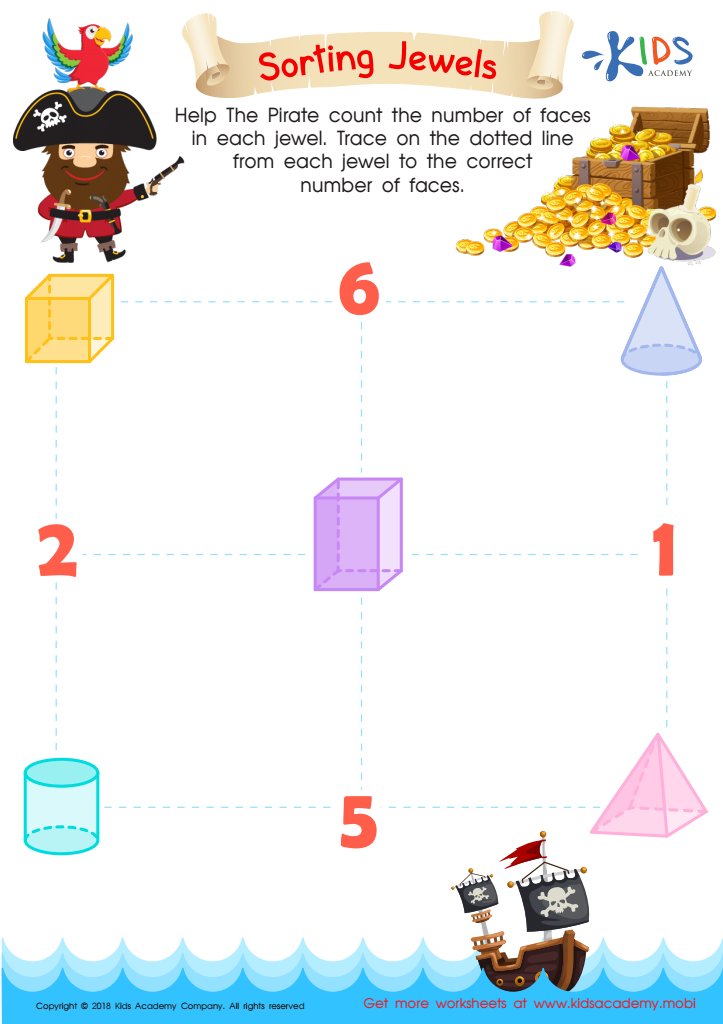
Sorting Jewels Worksheet
 Assign to My Students











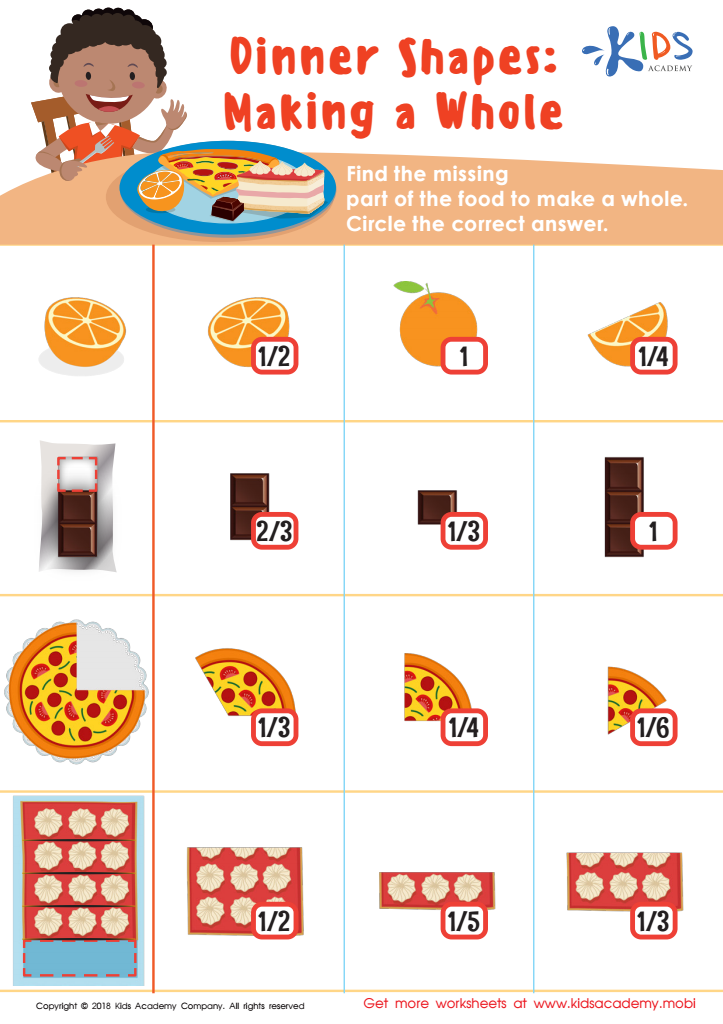
Dinner Shapes: Making a Whole Worksheet
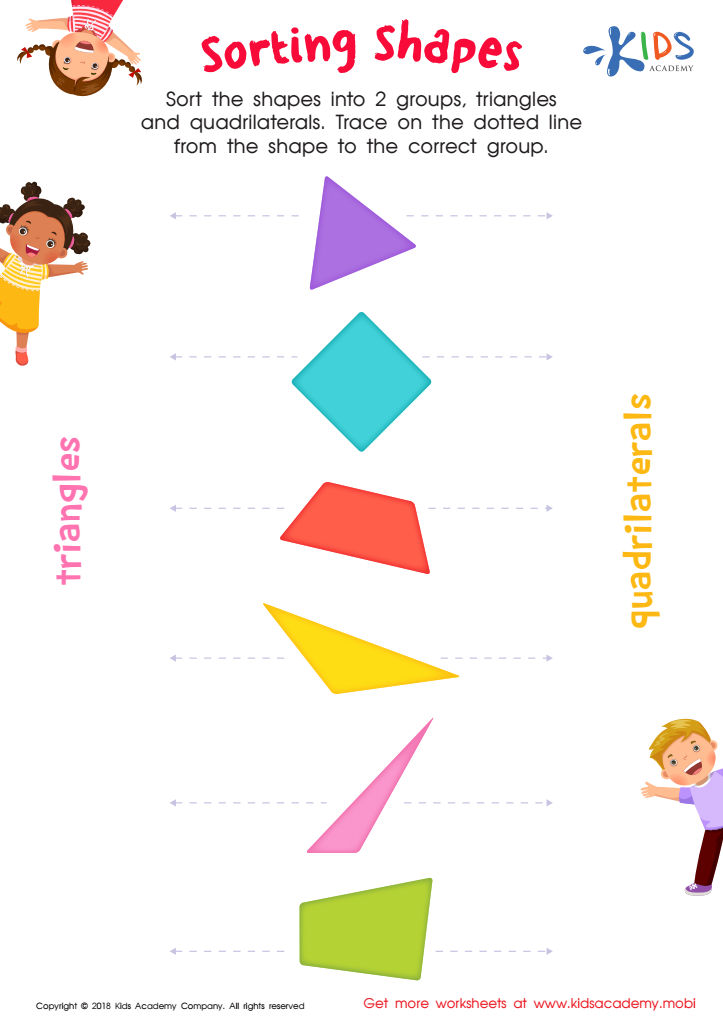
Sorting Shapes Worksheet








Parents and teachers should prioritize categorization skills in geometry for children aged 8 to 9 because these skills are foundational for critical thinking and understanding mathematical concepts. At this age, children begin to develop the ability to sort and classify shapes based on various attributes, such as size, color, and the number of sides. Mastering categorization helps them grasp more complex geometric principles, such as area and perimeter, as they learn to differentiate between shapes and their properties.
Moreover, categorization fosters problem-solving abilities, as students learn to analyze and organize information. This skill not only has mathematical applications but also enhances cognitive development, supporting logical reasoning and analytical thinking in other subjects. Engaging in categorization activities aids in building familiarity with geometric language and concepts, empowering children to articulate their understanding and reasoning processes.
Additionally, strong categorization skills in geometry can facilitate collaboration in group activities, enhancing communication and cooperative learning. For parents and teachers, encouraging categorization helps create a rich learning environment, ensuring that children are well-prepared for future educational challenges and developing a passion for math that can last a lifetime.








