Problem-Solving Skills Numbers Worksheets for Ages 8-9 - Page 2
25 filtered results
-
From - To
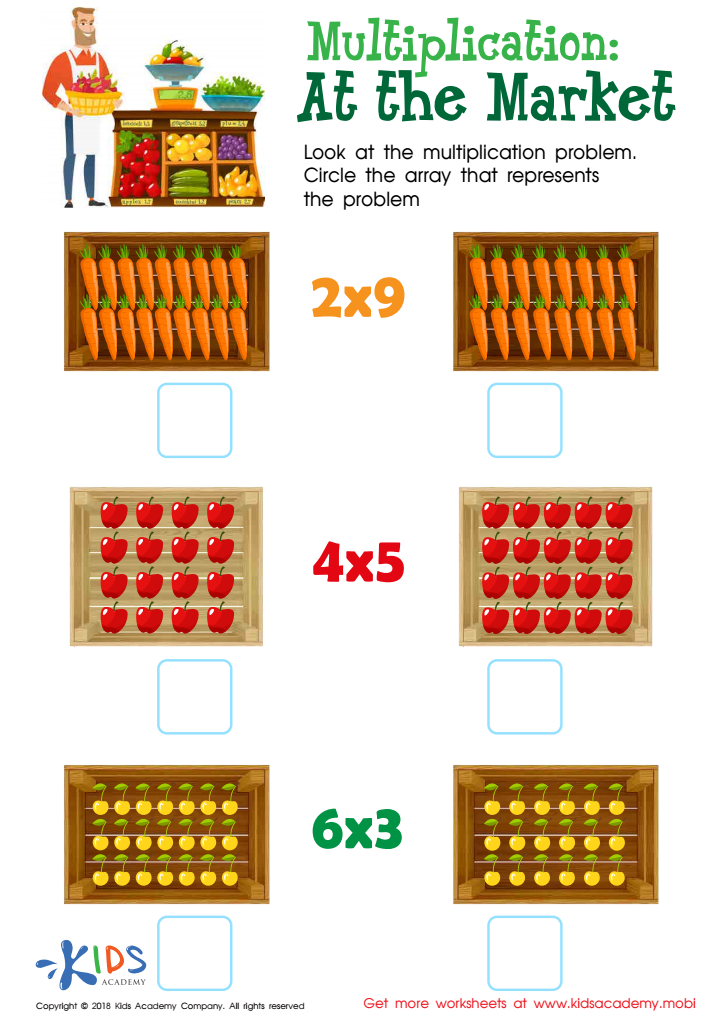
At the Market Worksheet
 Assign to My Students


%20(1).jpg)





Problem-solving skills, particularly those using numbers, are critical for children ages 8-9 as they form the foundation for advanced cognitive development and real-world applications. At this age, children's brains are highly receptive to new learning experiences, making it a prime time to cultivate essential skills.
Firstly, strong number-based problem-solving abilities enhance critical thinking. They teach children to break a problem into smaller parts, analyze data, and devise logical solutions. These skills are invaluable both academically and in everyday life. For example, basic arithmetic encourages children to think steps ahead, fostering goal-setting and planning abilities.
Secondly, mastering numbers boosts confidence and encourages a positive attitude towards learning. When children successfully solve mathematical problems, they build self-esteem and develop a growth mindset, learning that perseverance and effort lead to success.
Additionally, strong number-related problem-solving skills have direct academic benefits. They improve performance not only in math but also in subjects requiring logical analysis like science and coding. This sets the stage for future success in a variety of fields.
Lastly, these skills are essential for functional adulthood. Simple tasks like budgeting, cooking, and project planning all require basic number sense and problem-solving. Encouraging these competencies from an early age ensures children grow into self-sufficient, capable adults. Parents and teachers should, therefore, prioritize these educational opportunities to lay a robust groundwork for lifelong learning and critical thinking.








