Recognizing number patterns Numbers Worksheets for Ages 8-9
3 filtered results
-
From - To
Enhance your child's numerical skills with our engaging "Recognizing Number Patterns Numbers Worksheets for Ages 8-9". These printable worksheets are designed to help 3rd graders identify and understand various number patterns in a fun and interactive way. Through these activities, students will strengthen their critical thinking and problem-solving abilities by recognizing sequences, alternating patterns, and more. Our expertly crafted worksheets cater to young learners, making math both enjoyable and educational. Boost your child’s confidence in math by incorporating these essential number pattern worksheets into their study routine today.
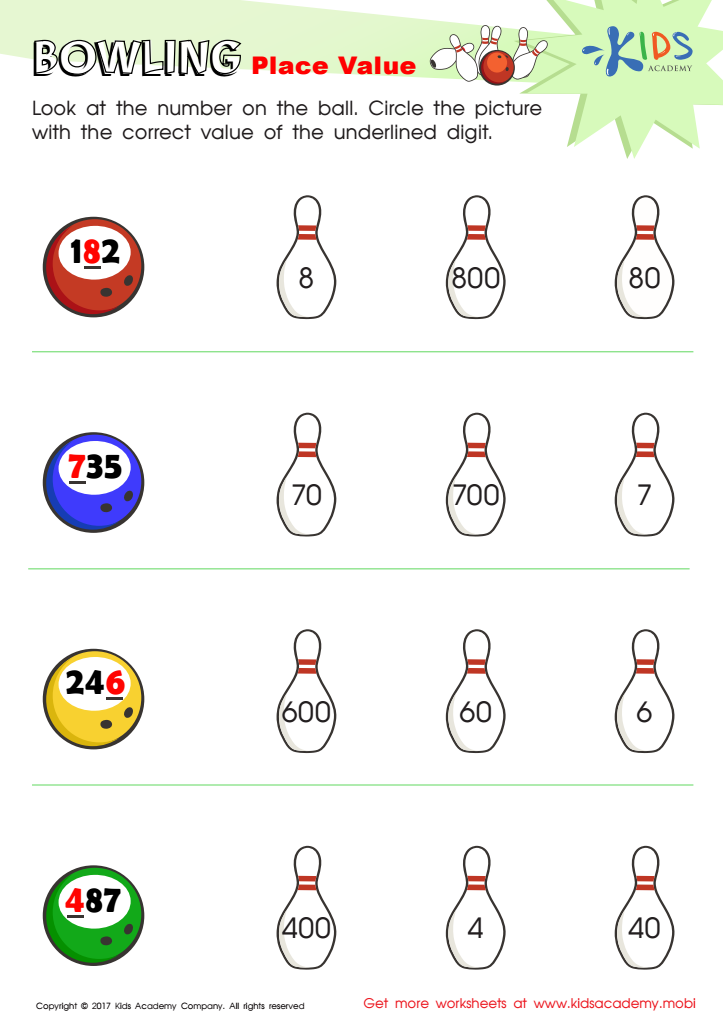
Place Value Worksheet
 Assign to My Students
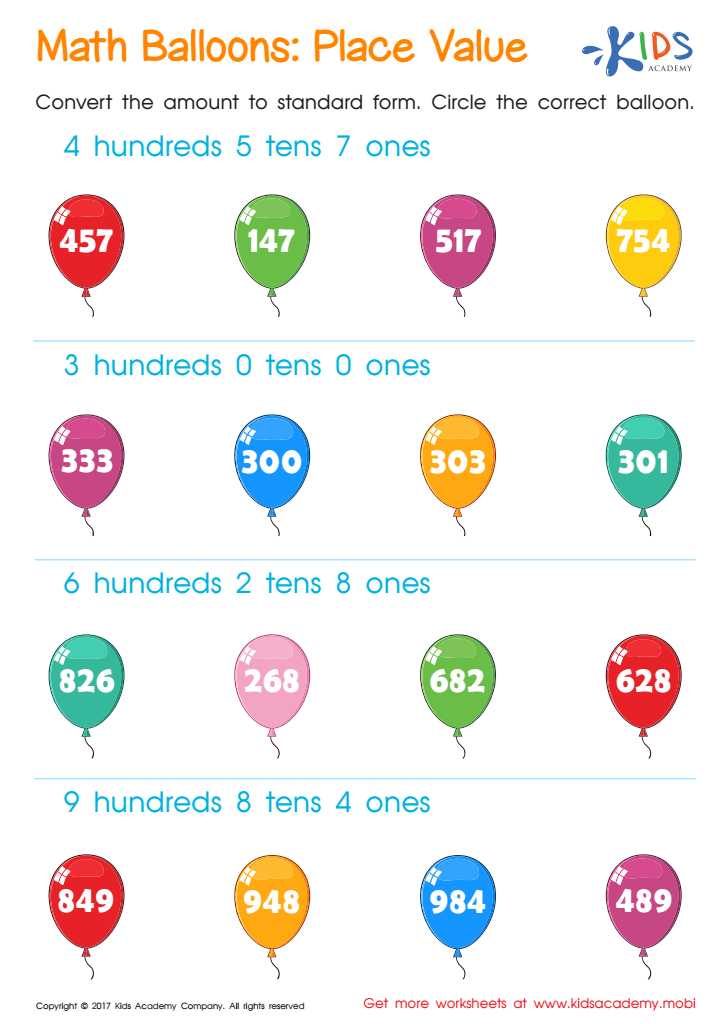
Place Value Printable Worksheet
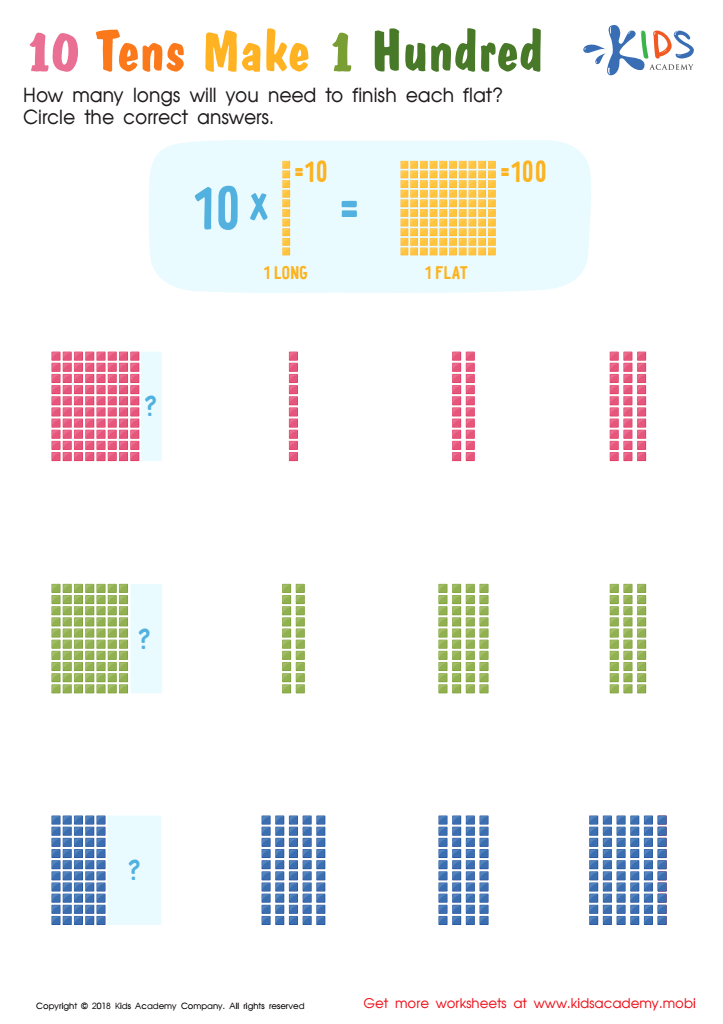
10 Tens Make 1 Hundred Worksheet








Recognizing number patterns is crucial for children aged 8-9 because it lays the groundwork for higher-level mathematical thinking. At this developmental stage, children are transitioning from basic arithmetic to more complex concepts. Understanding number patterns helps them grasp the underlying principles of math, making it easier to learn multiplication, division, and later, algebra.
First, pattern recognition enhances problem-solving skills. Children who can identify patterns can predict future elements, simplifying complex problems into familiar steps. This cognitive skill promotes logical thinking and boosts their confidence in tackling math challenges.
Second, recognizing number patterns supports numeracy, a fundamental life skill. Patterns are everywhere—in nature, art, music, and daily routines like planning time and money management. Being comfortable with patterns helps children make sense of the world around them, fostering both academic and practical skills.
Finally, working with number patterns can make math enjoyable. Engaging activities like puzzles, games, and exploratory tasks help nurture a love for mathematics. When children find joy in discovering patterns, their intrinsic motivation to learn and explore grows, setting a positive attitude toward education in general.
In essence, nurturing the ability to recognize number patterns equips children with critical thinking skills, real-life numeracy, and a love for learning—cornerstones for academic success and everyday competency.








