
Analog clock reading Math Worksheets for Ages 8-9
3 filtered results
Difficulty Level
Grade
Age
-
From - To
Subject
Activity
Standards
Enhance your child's learning experience with our engaging Analog Clock Reading Math Worksheets, specially designed for ages 8-9. These interactive worksheets make mastering time-telling skills fun and accessible. Students will practice reading analog clocks, learning to identify hours and minutes with clarity. Our carefully crafted exercises reinforce essential math concepts while encouraging critical thinking and problem-solving. Each worksheet is visually appealing and age-appropriate, ensuring that your child remains motivated and focused. Perfect for use at home or in the classroom, these worksheets are an invaluable resource in developing essential life skills. Start your journey towards clock-reading confidence today!
Favorites
With answer key
Interactive
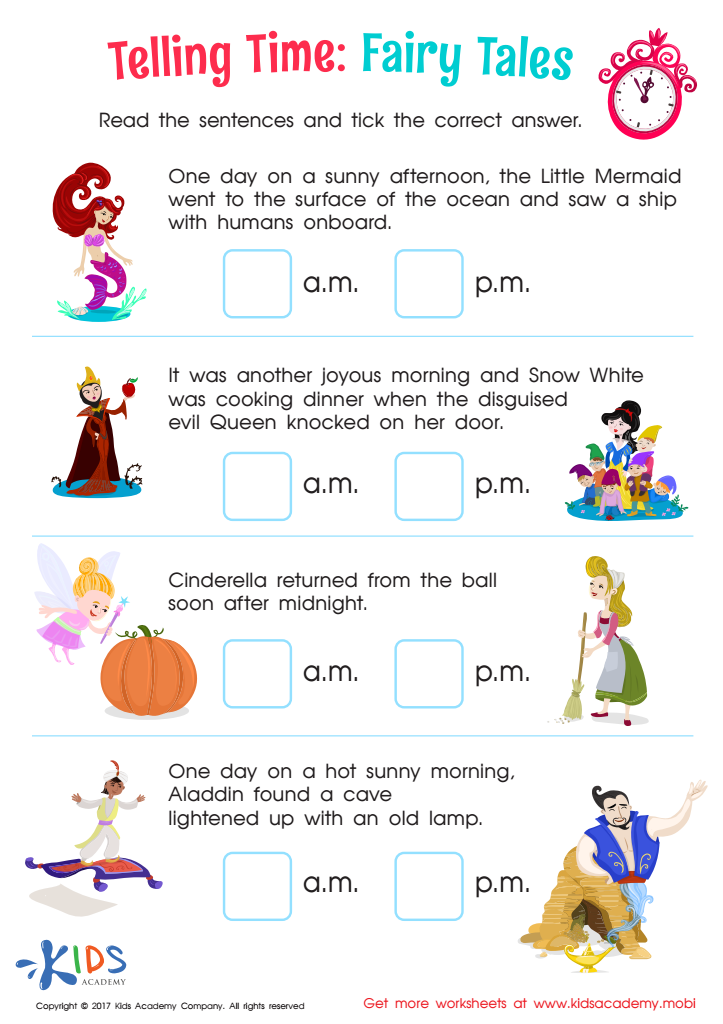
Telling Time: Fairy Tales Worksheet
Bring your child's imagination to life with classic fairy tales! This colorful telling time worksheet has it all: The Little Mermaid, Cinderella, and more! Plus, your child will have fun learning to distinguish a.m. from p.m. with this charming worksheet.
 Assign to My Students
Telling Time: Fairy Tales Worksheet
Worksheet
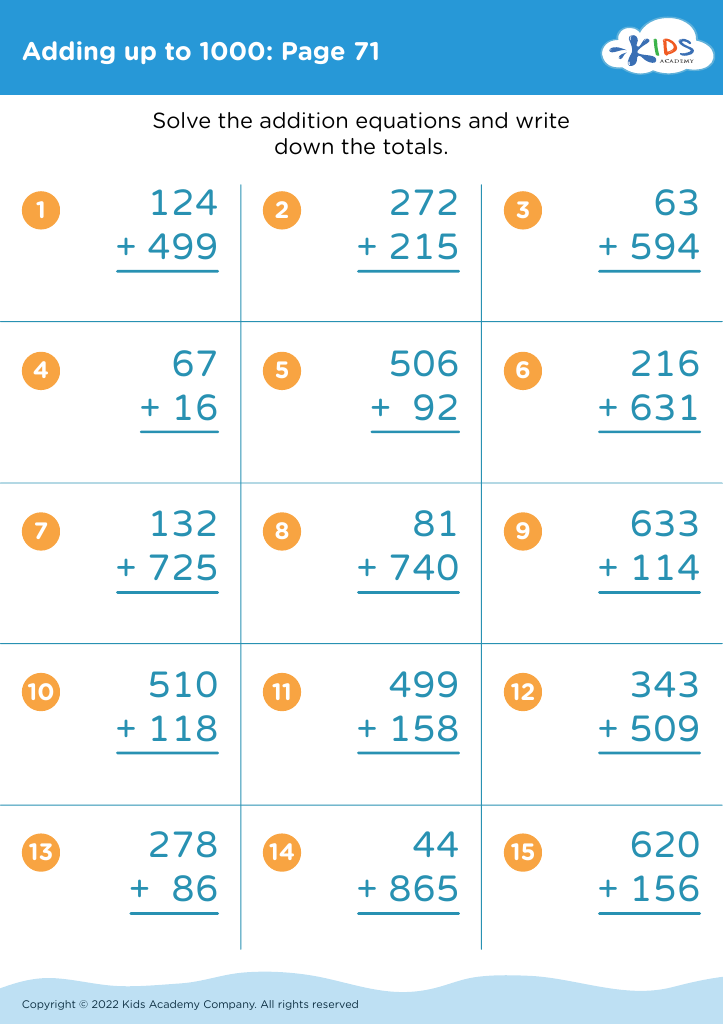
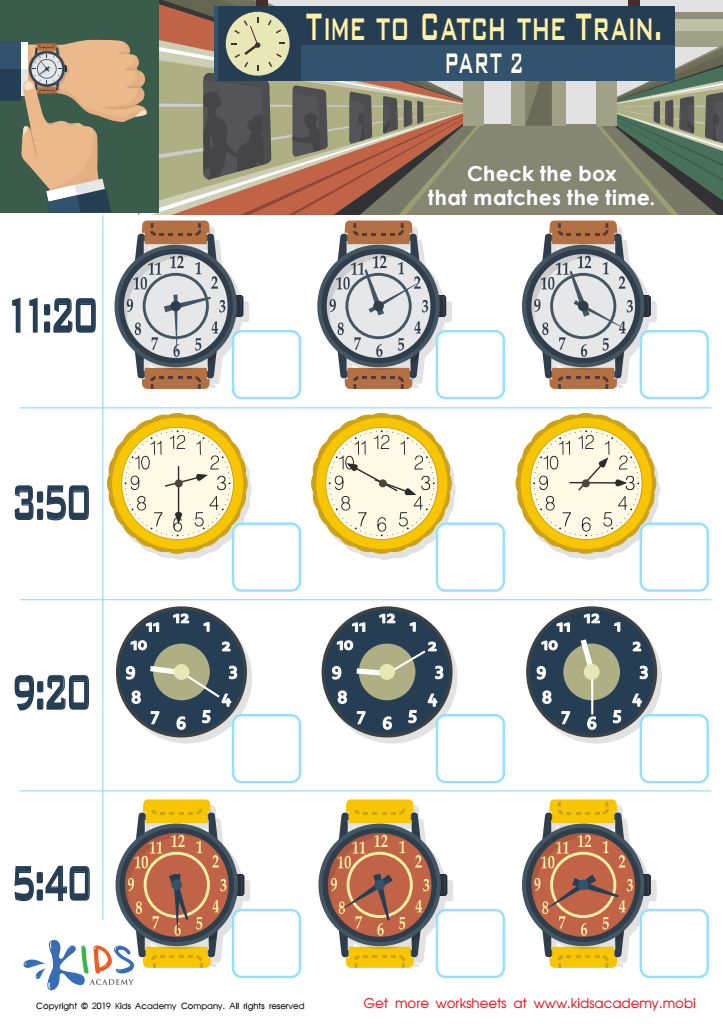
Time to Catch the Train Part 2 Worksheet
Teach your kids the importance of telling time and how to do it. Explain that there are multiple ways to show the time, such as written on the left side or watches in the picture. Guide them to check the box that matches the time. Knowing the time is essential to get things done and create order. Ensure your kids understand this and they will reap the benefits.
Time to Catch the Train Part 2 Worksheet
Worksheet
Join Kids Academy for Free
Who is primarily going to use this learning content?




%20(1).jpg)

Teaching children to read analog clocks is crucial for their overall mathematical and cognitive development. For children aged 8-9, learning to tell time goes beyond merely understanding hours and minutes; it integrates various mathematical concepts such as counting, fractions, and spatial awareness. Reading an analog clock enhances their number sense as they learn to visualize numbers on a circular face.
Moreover, mastering analog clock reading fosters independence and life skills. As children engage with time, they become more aware of daily routines—learning to manage schedules, set timers for tasks, and understand the concept of time management. This skill is essential as it lays the groundwork for organizing their tasks effectively, which directly influences academic success and daily living.
Additionally, while digital clocks are common today, being skilled at reading analog clocks fosters critical thinking skills in identifying patterns and understanding systems, which are vital in math and beyond. Thus, parents and teachers should prioritize analog clock reading not only for its immediate applications but myös for the broader educational benefits and practical life skills it imparts to children. Encouraging this skill creates a strong foundation for future learning in mathematics and fosters autonomy in everyday activities.








