
Cultural awareness Math Worksheets for Ages 8-9
5 filtered results
Difficulty Level
Grade
Age
-
From - To
Subject
Activity
Standards
Explore our engaging Cultural Awareness Math Worksheets designed for ages 8-9! These worksheets blend essential math skills with cultural education, helping young learners appreciate diverse cultures while mastering concepts like addition, subtraction, and problem-solving. Each activity features relatable scenarios and examples inspired by various cultures around the world, promoting inclusivity and respect. Encourage curiosity and understanding in your child's learning journey with activities that foster both mathematical proficiency and cultural literacy. Perfect for home or classroom use, our worksheets provide a fun, enriching experience that helps kids grow academically and socially. Unlock the joy of learning today!
Favorites
With answer key
Interactive
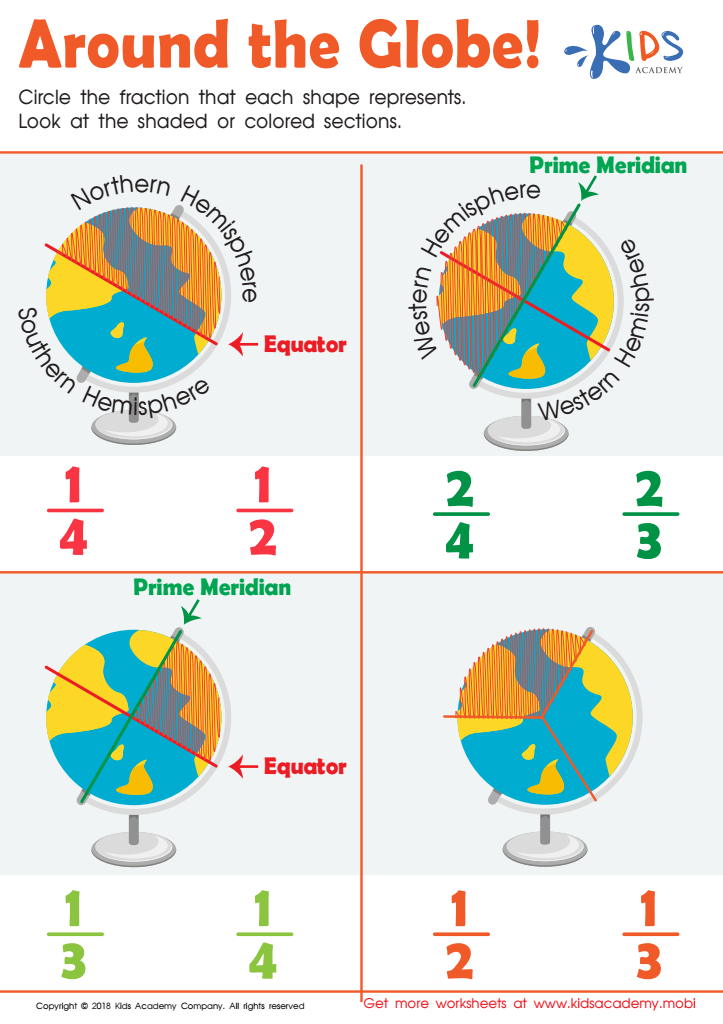
Around the Globe Worksheet
This worksheet introduces your students to the globe. Explain that it's a 3D representation of our planet, and highlight the Northern, Southern, Eastern and Western Hemispheres, plus the Equator and Prime Meridian. Then, have them circle the fractions associated with the shapes shown. Point out the shaded or colored sections for guidance.
 Assign to My Students
Around the Globe Worksheet
Worksheet
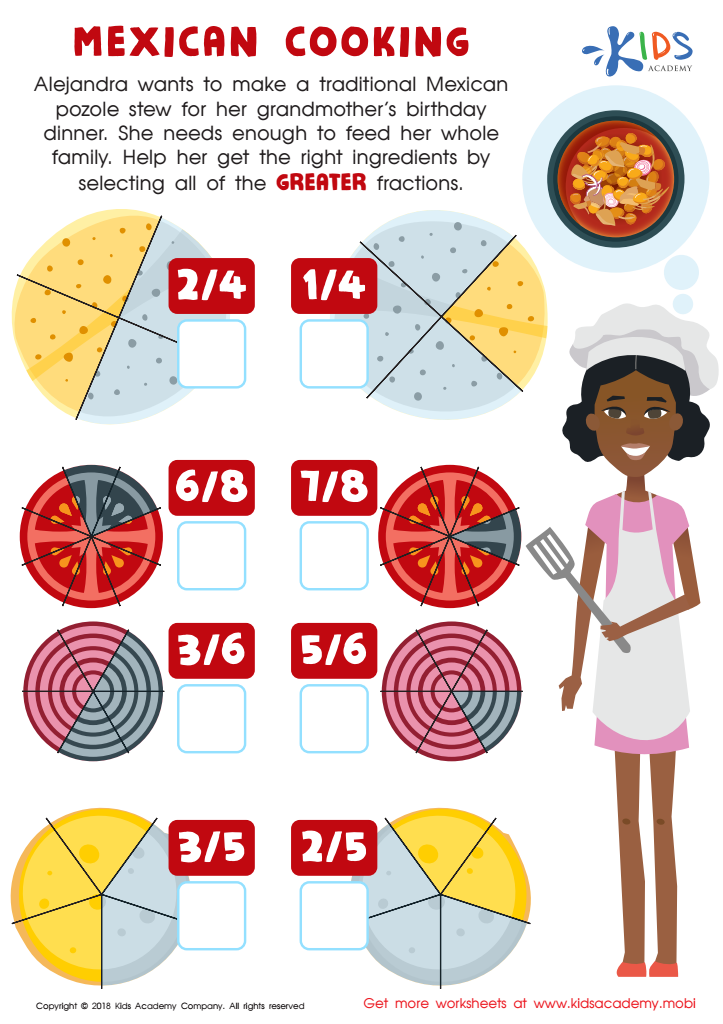
Mexican Cooking Worksheet
Alejandra needs to make a traditional Mexican pazole stew that will feed her whole family. Help her select the right ingredients by choosing the greater fractions in this worksheet. Mexicans have an amazing culture with many unique holidays, customs and dishes - explore it with your kids in your local neighbourhood!
Mexican Cooking Worksheet
Worksheet
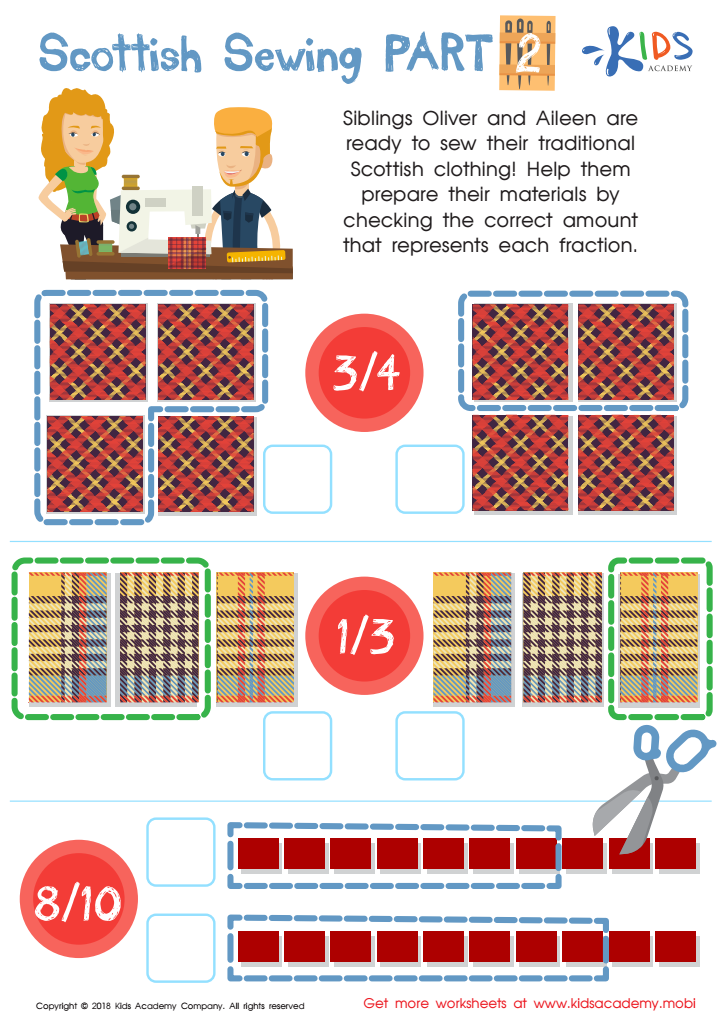
Scottish Sewing Part 2 Worksheet
Oliver and Alleen are sewing traditional Scottish attire. Help your kids count the cloth and check the correct fraction to support them. Have your kids check the correct amount that represents each fraction to help the brother-sister duo prepare their material.
Scottish Sewing Part 2 Worksheet
Worksheet
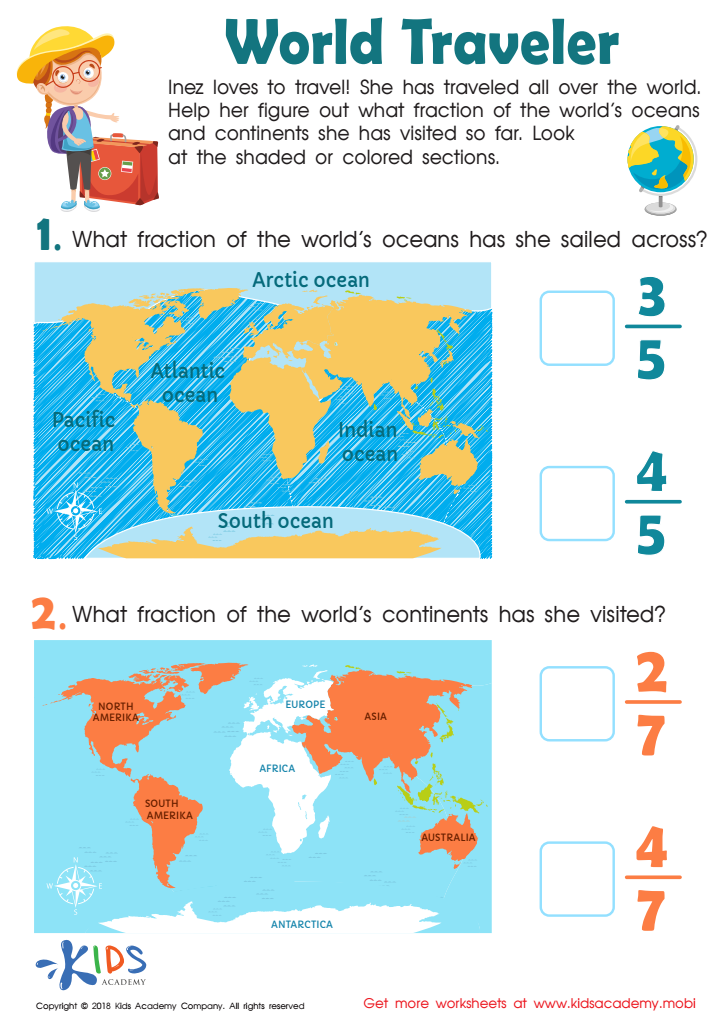
World Traveler Worksheet
Kids love exploring the world? Inez sure does! She's seen oceans and continents around the globe. Your kids can help her figure out what fraction of the world she has visited. Have them name all the countries they've been to, then look at the marked sections on the printout to find out!
World Traveler Worksheet
Worksheet
Join Kids Academy for Free
Who is primarily going to use this learning content?







Cultural awareness in math education for children aged 8-9 is vital for fostering inclusive learning environments. At this age, children are forming their identities and learning how to relate to the world around them. By integrating cultural elements into math, educators and parents can help children appreciate diverse perspectives and experiences, making math more relevant and engaging.
When mathematic concepts are anchored in familiar cultural contexts, children find greater motivation to participate, as they see connections between their own lives and academic content. For instance, different cultures have unique ways of approaching patterns, shapes, and measurements, showcasing the universal nature of math while celebrating diversity.
Moreover, cultural awareness in math helps combat stereotypes and inequalities. It encourages children to respect and value different viewpoints, fostering empathy and collaboration among peers. Understanding these diverse backgrounds can help reduce anxiety about math tasks for students from various cultures who may feel alienated by a standard curriculum.
Ultimately, instilling cultural awareness not only enriches math education but also cultivates a sense of belonging and community. By prioritizing this awareness, parents and teachers empower children to become global citizens who appreciate diversity in all its forms—essential skills in today's interconnected world.








