Enhancing problem-solving skills Math Worksheets for Ages 8-9
8 filtered results
-
From - To
Discover the engaging "Enhancing Problem-Solving Skills Math Worksheets" designed specifically for children ages 8-9. These versatile worksheets focus on developing critical thinking, logical reasoning, and mathematical abilities, catering to various learning styles. With a blend of fun, interactive exercises, your child will tackle real-life scenarios, word problems, and creative math challenges that enhance their analytical skills. Perfect for classroom or at-home learning, these worksheets not only make math enjoyable but also instill confidence as students work through each problem. Nurture a passion for problem-solving and watch your child thrive in their mathematical journey. Start their adventure today!

Whole Shape from Fourths Worksheet
 Assign to My Students
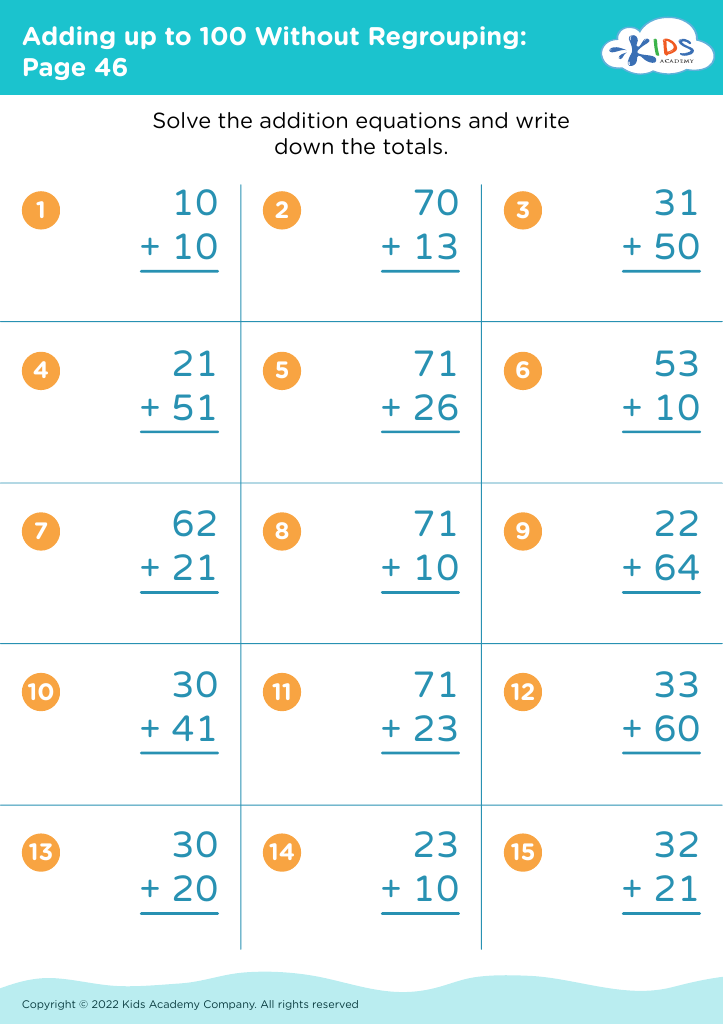
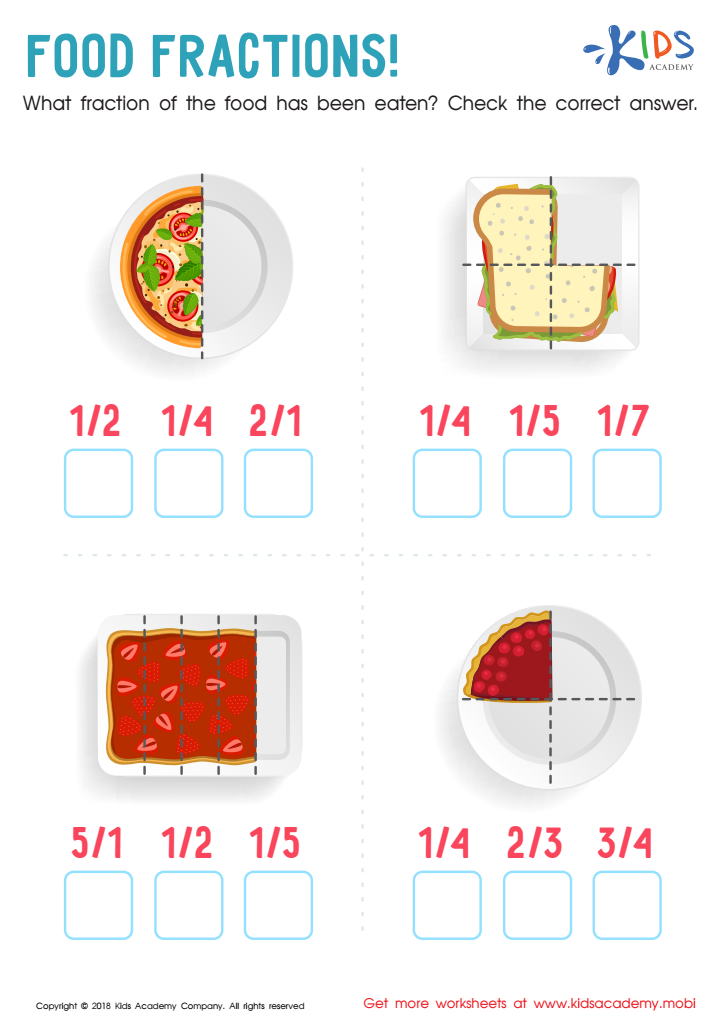
Food Fractions Worksheet
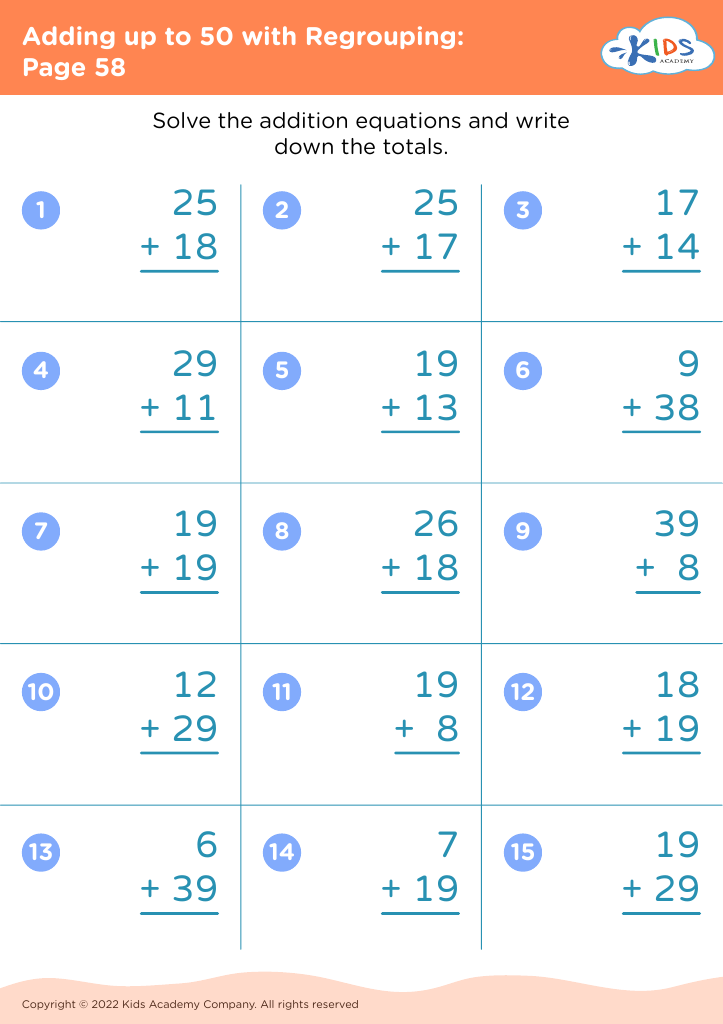
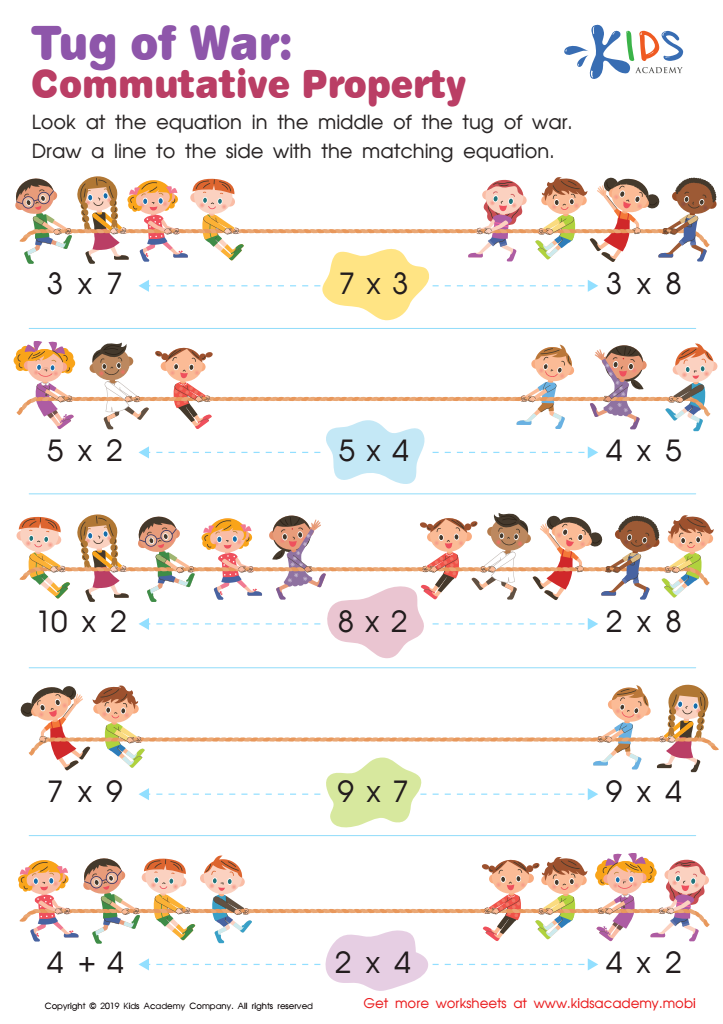
Tug of War: Commutative Property Worksheet

Bee Maze Rounding Worksheet







Enhancing problem-solving skills in math for ages 8-9 is crucial for several reasons. At this developmental stage, children are forming foundational cognitive skills that will influence their approach to learning throughout their lives. Math problem-solving encourages critical thinking, logical reasoning, and creativity. These skills are not only essential in mathematics but are also transferable to other subjects and real-life situations.
When children learn to tackle math problems, they develop persistence and resilience by working through challenges and errors, fostering a growth mindset. This resilience is vital as students encounter complex tasks in their academic journey, preparing them for future challenges. Moreover, problem-solving in math promotes collaboration and communication, as children often work in groups where sharing ideas leads to richer understanding and innovation.
Parents and teachers play a significant role by encouraging inquiry-based learning and providing diverse problem-solving opportunities. Engaging children in discussions about their problem-solving strategies enhances their understanding and makes learning more enjoyable. Ultimately, fostering strong problem-solving skills during this formative age lays a robust educational foundation, boosts academic confidence, and equips children with the tools they need to navigate various life scenarios successfully. Investing in these skills now will yield long-lasting benefits.








