Fine motor skills development Math Worksheets for Ages 8-9
6 filtered results
-
From - To
Enhance your child's fine motor skills and mathematical abilities with our specialized worksheets designed for ages 8-9. Our engaging exercises not only support math learning but also promote fine motor development through carefully crafted activities. Your child will enjoy solving puzzles, drawing lines, and navigating mazes that challenge their dexterity and precision, helping to improve their handwriting and coordination. These fun and educational resources are perfect for at-home practice or classroom enrichment, ensuring your child gains confidence and essential skills in an enjoyable way. Explore our fine motor skills development Math Worksheets and watch your young learner thrive!

Trace The Circles Worksheet
 Assign to My Students
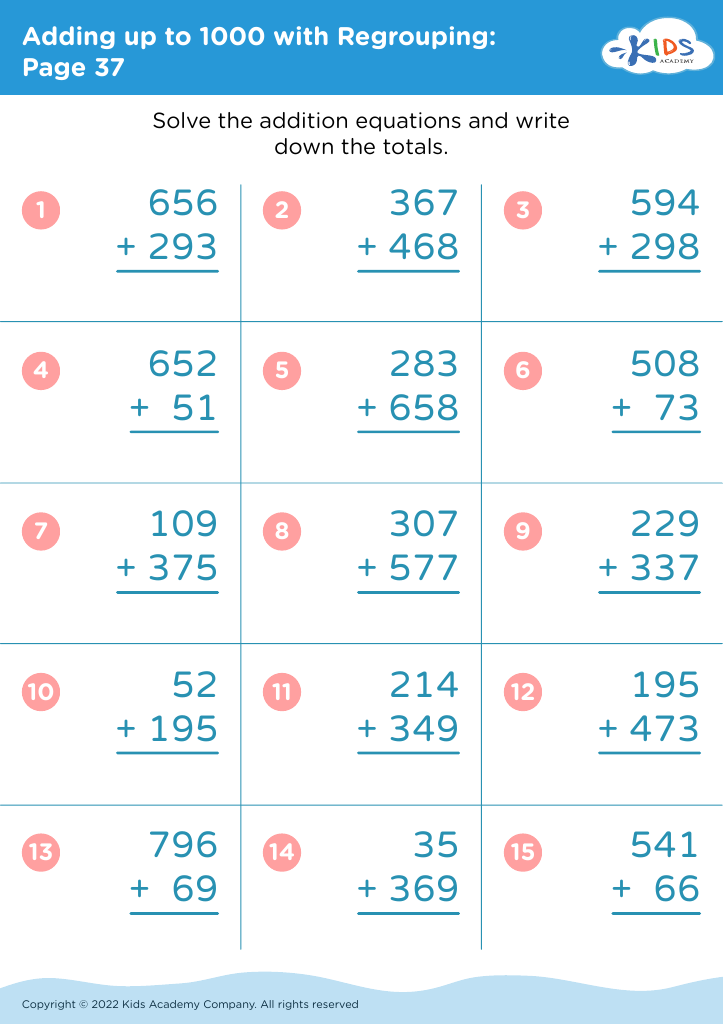
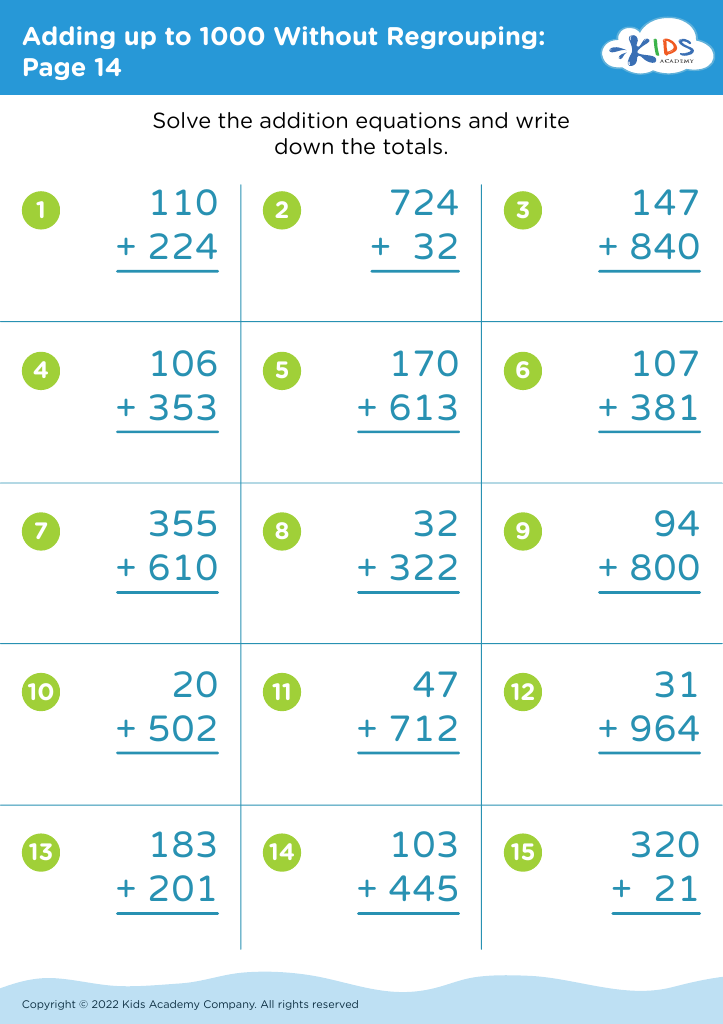
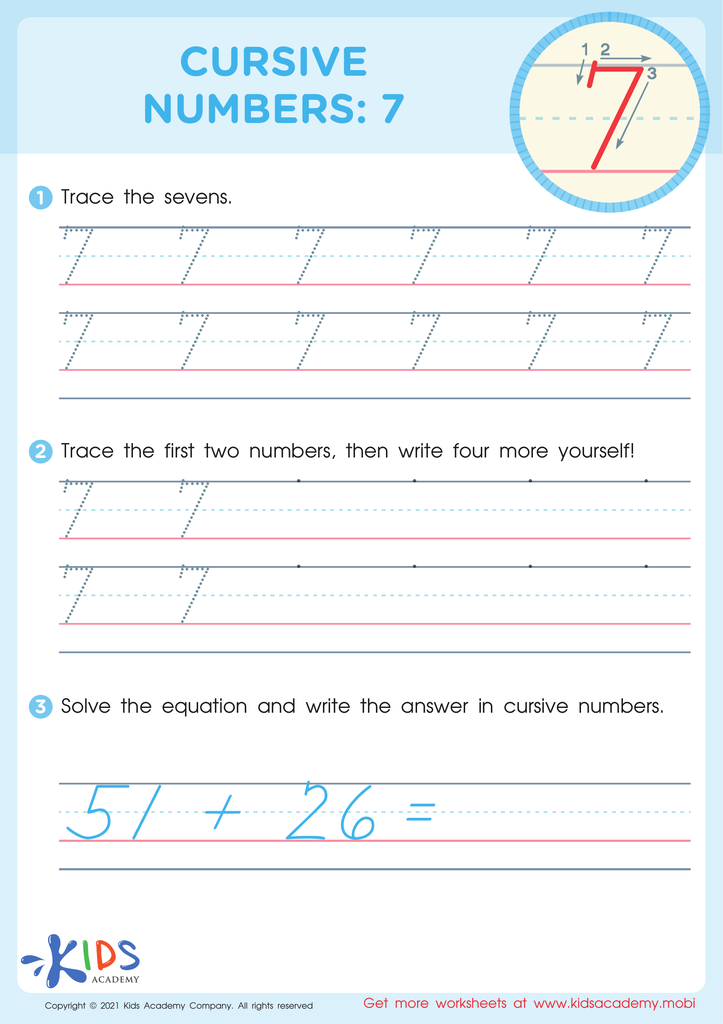
Cursive Numbers: 7 Worksheet
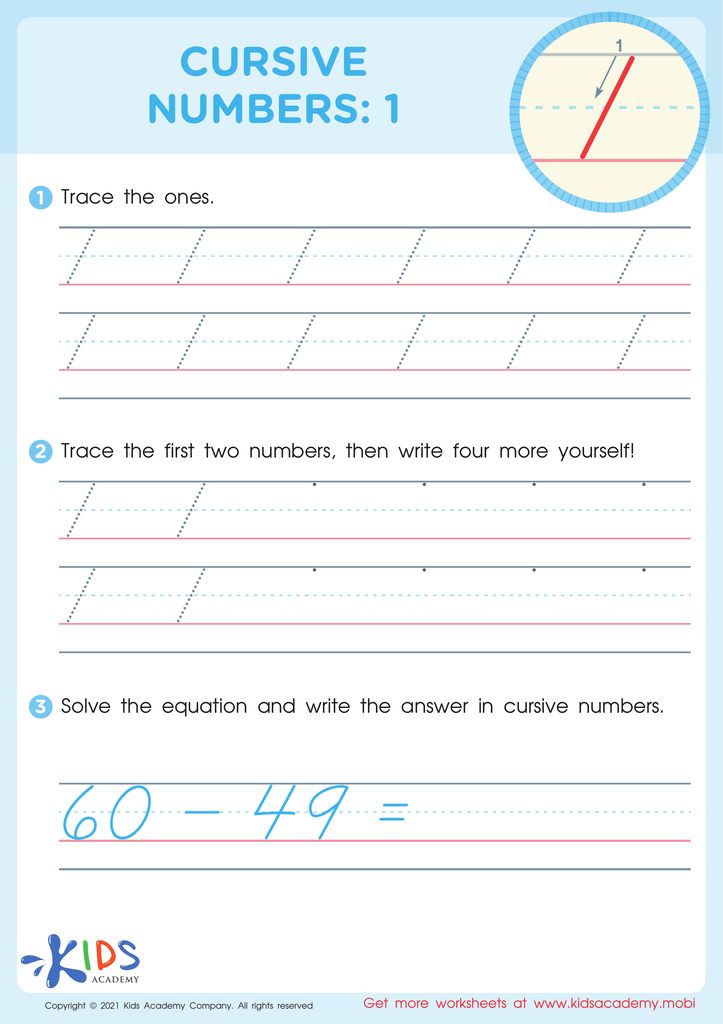
Cursive Numbers: 1 Worksheet
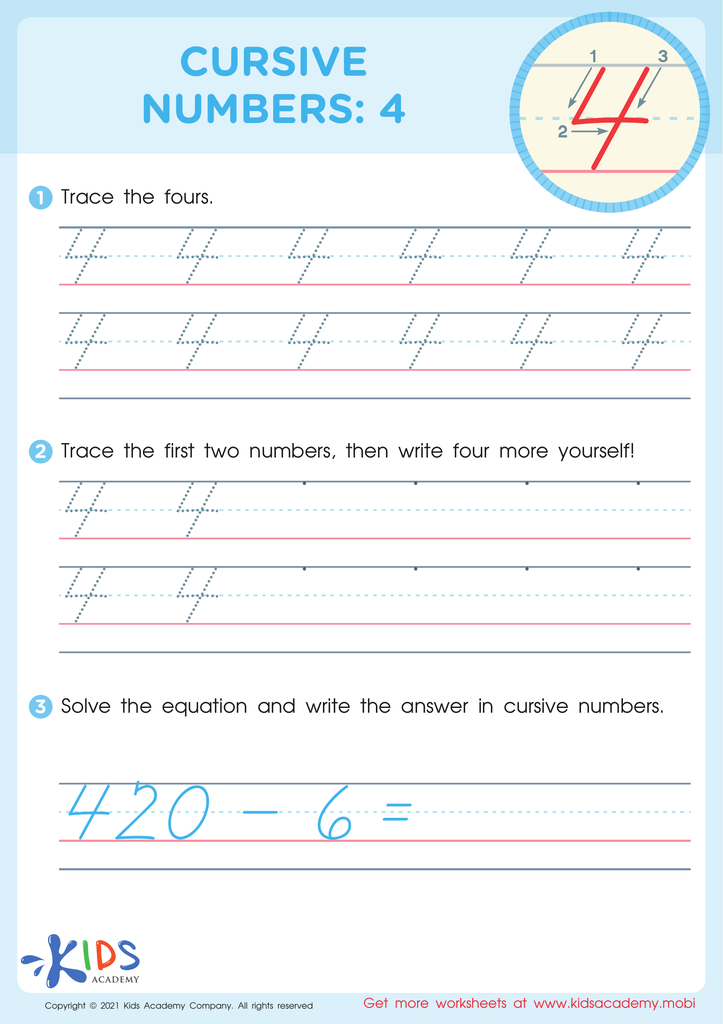
Cursive Numbers: 4 Worksheet





.jpg)


Parents and teachers should prioritize the development of fine motor skills in children aged 8-9, especially within the context of math learning, because of its critical impact on overall academic success and daily functioning. Fine motor skills involve the coordination of small muscles in the hands and fingers, enabling children to perform tasks like writing, cutting, and manipulating small objects. In math, these skills are integral; they help children write numbers, solve puzzles, and handle math tools like rulers and protractors with precision.
At this age, children transition from basic arithmetic to more complex mathematical concepts such as multiplication, division, and fractions. A child's ability to properly align numbers, draw shapes, and accurately place solutions become essential for understanding and solving problems. Additionally, improved fine motor skills lead to better handwriting, which not only makes math problems more readable but also reduces frustration and cognitive load, allowing the child to focus more on problem-solving rather than the act of writing itself.
Moreover, strong fine motor skills contribute to self-confidence and independence. When children feel competent in their ability to perform tasks, they are more likely to engage with learning activities with enthusiasm. Therefore, fostering these skills lays a foundation for academic achievement and promotes positive attitudes toward learning and problem-solving.








