Geography knowledge Math Worksheets for Ages 8-9
6 filtered results
-
From - To
Explore our engaging Geography Knowledge Math Worksheets, specifically designed for children aged 8-9! These interactive worksheets seamlessly blend geography concepts with essential math skills, enhancing your child's learning experience. Young learners will discover the correlation between maps, locations, and arithmetic through fun exercises that challenge their problem-solving abilities. From calculating distances to interpreting data, these sheets foster critical thinking and reinforce both geography and math knowledge. Ideal for home or classroom usage, our worksheets empower students to grow confident in their skills while exploring the world around them. Download today and embark on an exciting educational adventure with your child!
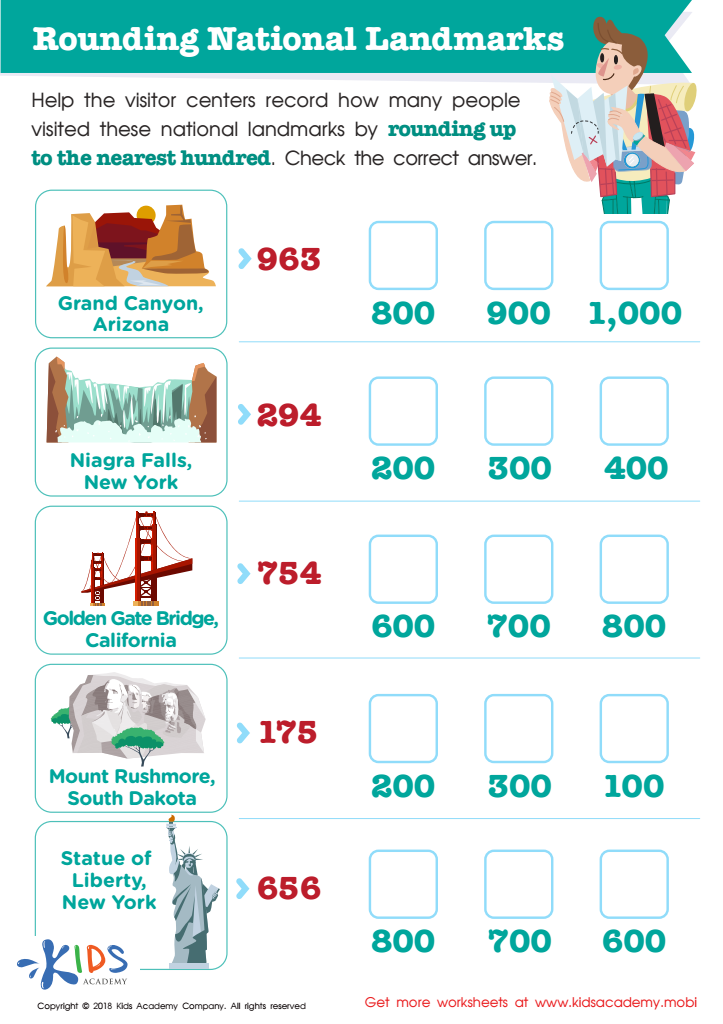
Rounding National Landmarks Worksheet
 Assign to My Students
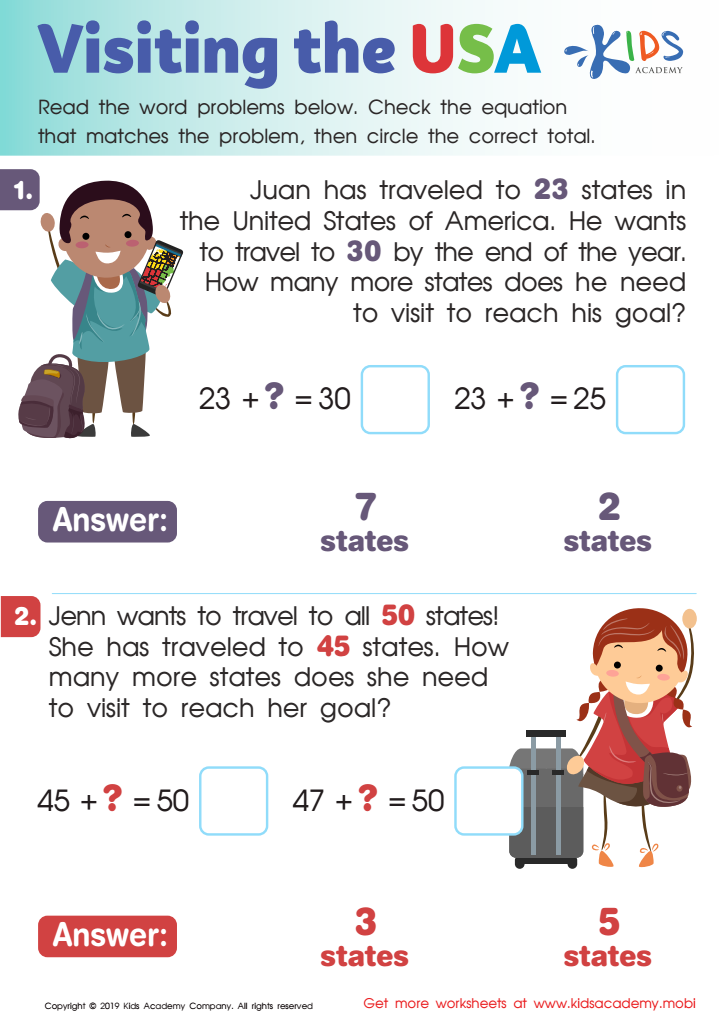
Visiting the USA Worksheet
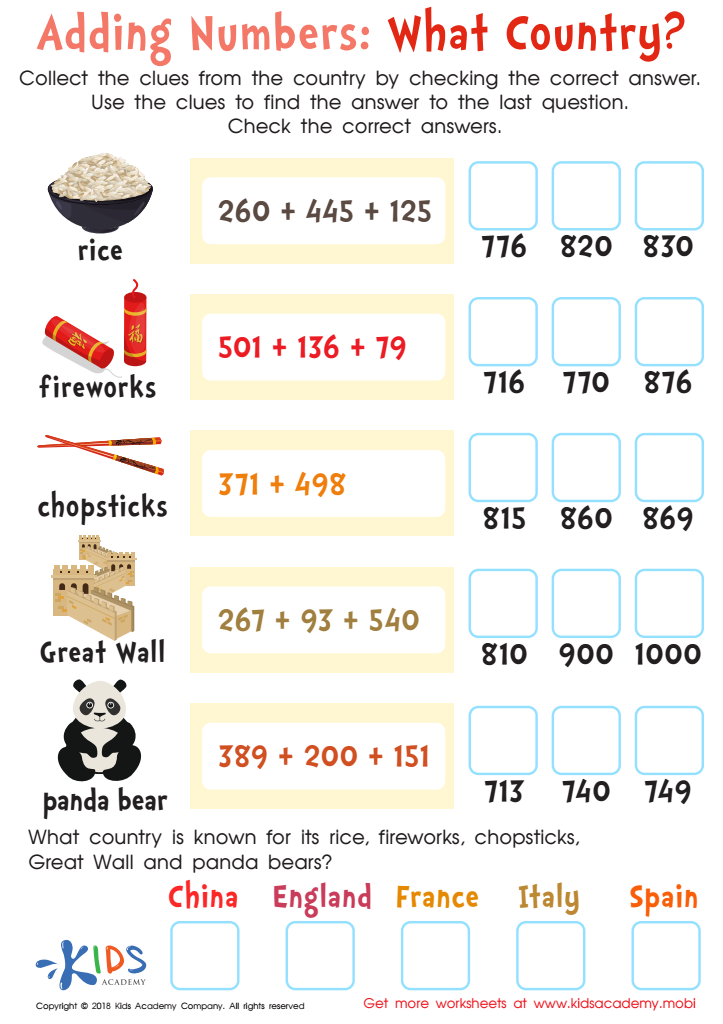
Adding Numbers: What Country Worksheet
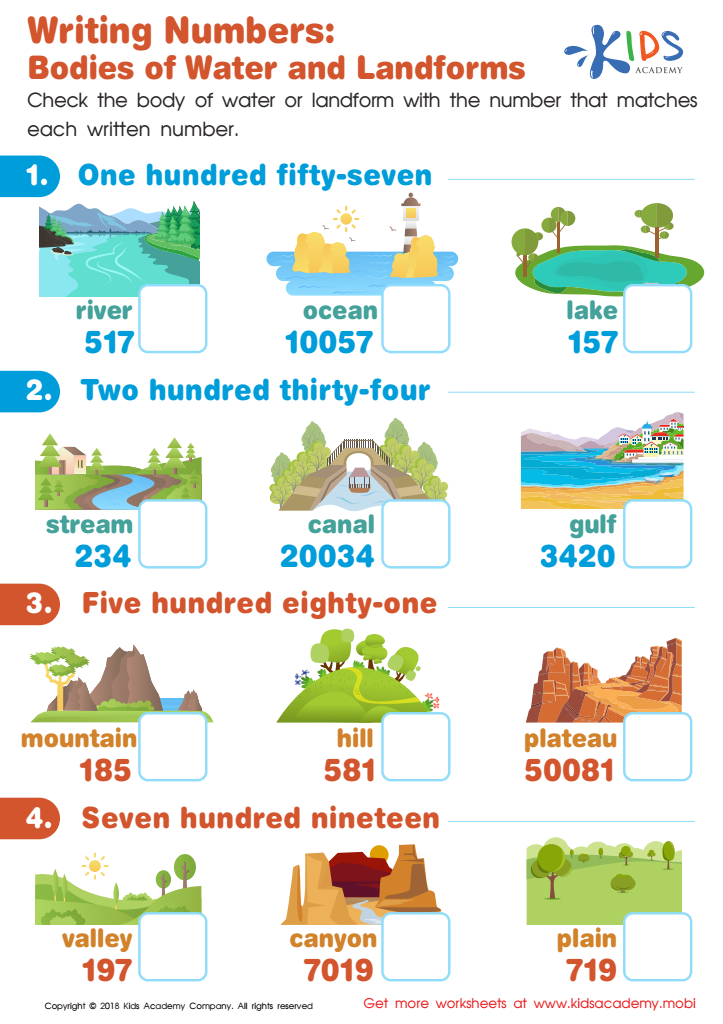
Bodies of Water and Landforms Writing Numbers Worksheet
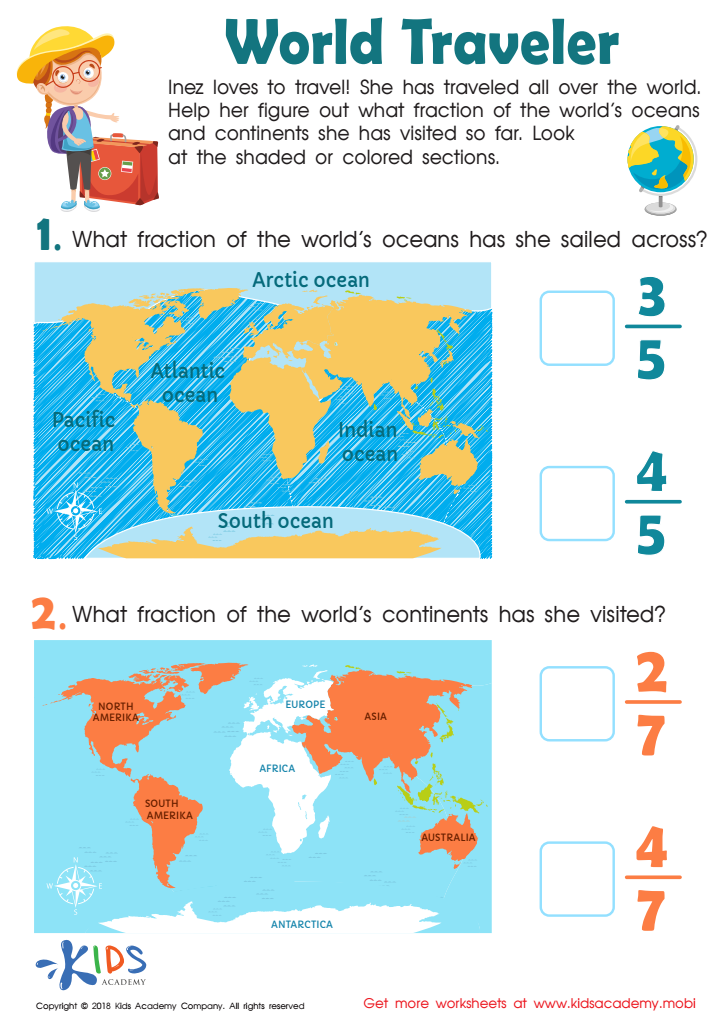
World Traveler Worksheet







Geography knowledge is crucial for children aged 8-9, and when intertwined with math, it enhances their understanding of the world around them. At this age, children are developing critical thinking skills and a sense of curiosity about different places and cultures. Incorporating geography into their math lessons allows them to apply mathematical concepts to real-world scenarios. For instance, understanding maps involves geometry, measurement, and spatial reasoning. This helps students visualize concepts like distance, area, and scale.
Moreover, geographical knowledge supports global awareness, which is essential in today’s interconnected world. Students can explore data interpretation through demographic statistics, weather patterns, and climate studies. By combining geography and math, they develop analytical skills that foster problem-solving abilities across disciplines.
Parents and teachers should care because this integrated approach promotes literacy in both subjects. It encourages cooperative learning through projects and discussions, enhancing social skills. Such knowledge prepares children to become informed citizens, fostering inclusivity and empathy toward diverse perspectives. Ultimately, integrating geography knowledge with math helps students make sense of their environment and develop comprehensive, critical skills necessary for academic success and responsible citizenship.








