Filters

191 filtered results

Clear all filters
Favorites
With answer key
Interactive

191 filtered results

Difficulty Level

Grade


Check out this FREE Trial Lesson on Math for age 8-9!

Write 8

Favorites
With answer key
Interactive
  • 8-9
  • Number Recognition
  • Math
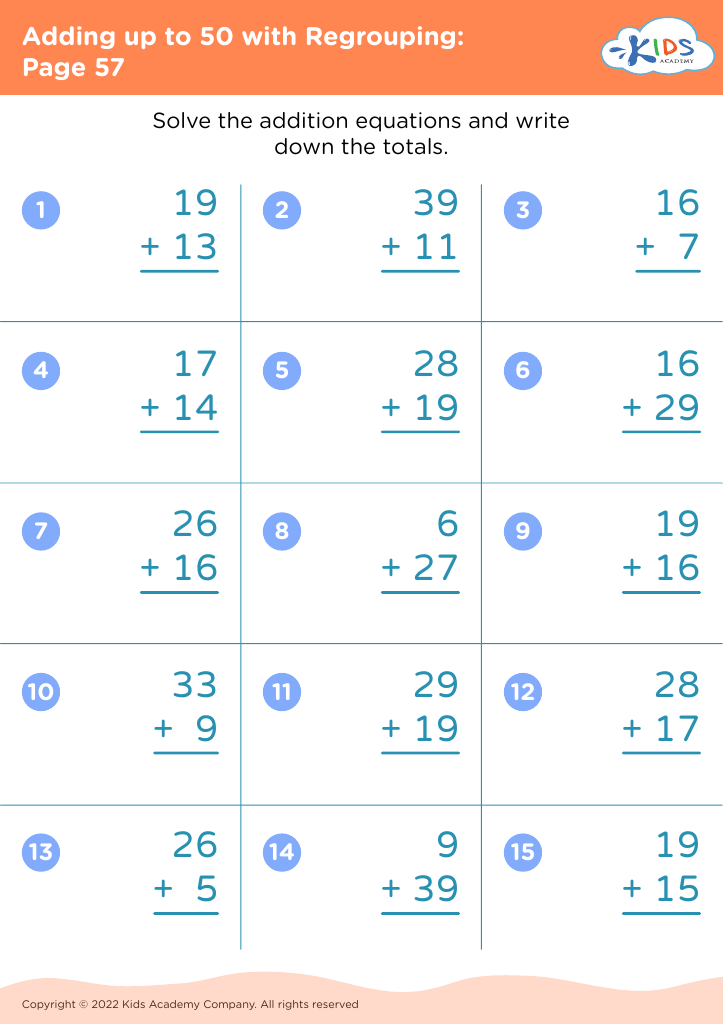
Adding up to 50 with Regrouping: Page 57
Worksheet
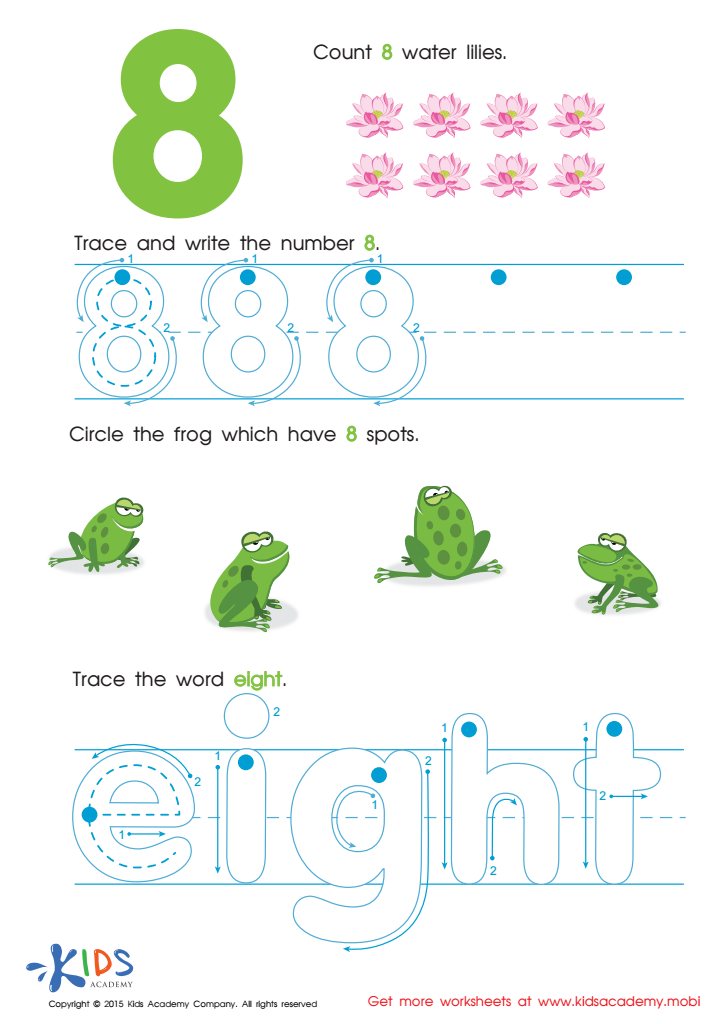
Learning Numbers Worksheets: Learn Number 8 Easily

Learn Number 8 Easily Worksheet

Kids can trace, write numbers and learn to pronounce them through exciting activities and games. Try our number worksheets for preschoolers to make learning fun!
Learn Number 8 Easily Worksheet
Worksheet
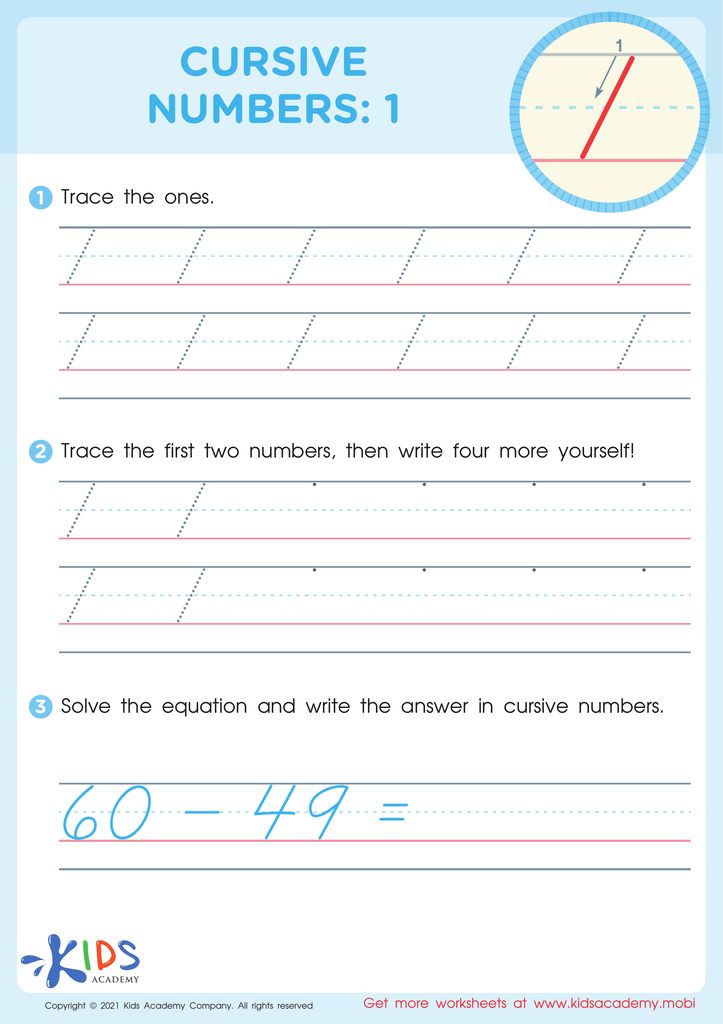
Cursive Numbers: 1 Worksheet

Cursive Numbers: 1 Worksheet

Math and handwriting are connected! Try these traceable worksheets to help your children learn cursive numbers. The tracing lines make it easy to follow, plus there's a simple subtraction exercise at the bottom for them to try. This is perfect for kids who struggle with handwriting and gives them a fun way to practice.
Cursive Numbers: 1 Worksheet
Worksheet
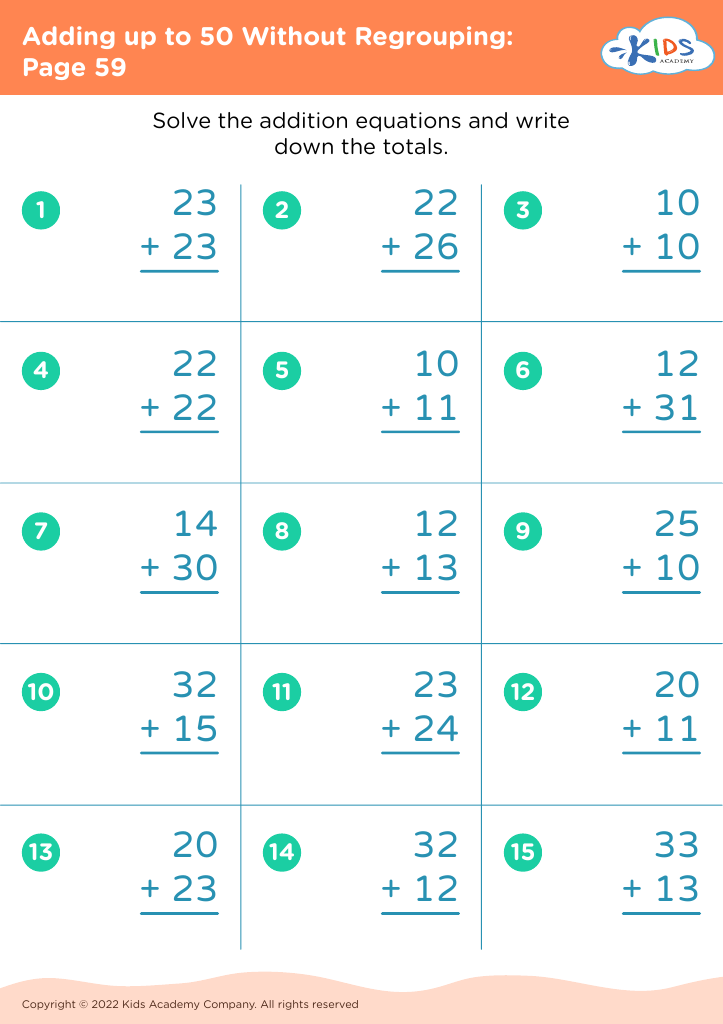
Adding up to 50 Without Regrouping: Page 59
Worksheet
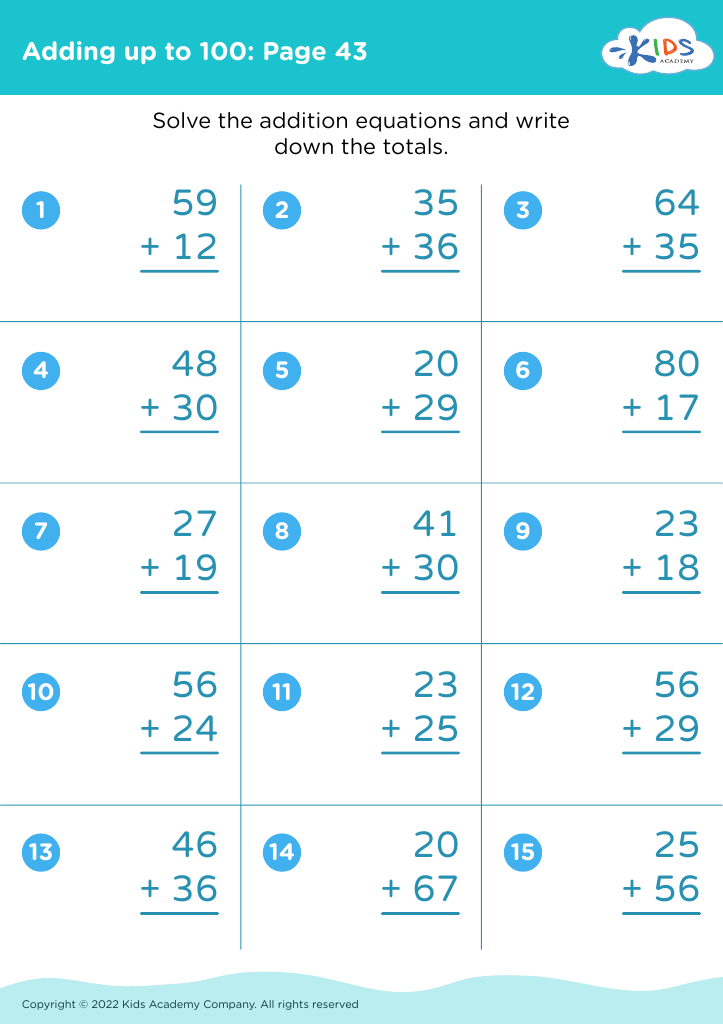
Adding up to 100: Page 43

Adding up to 100: Page 43

Adding up to 100: Page 43
Worksheet
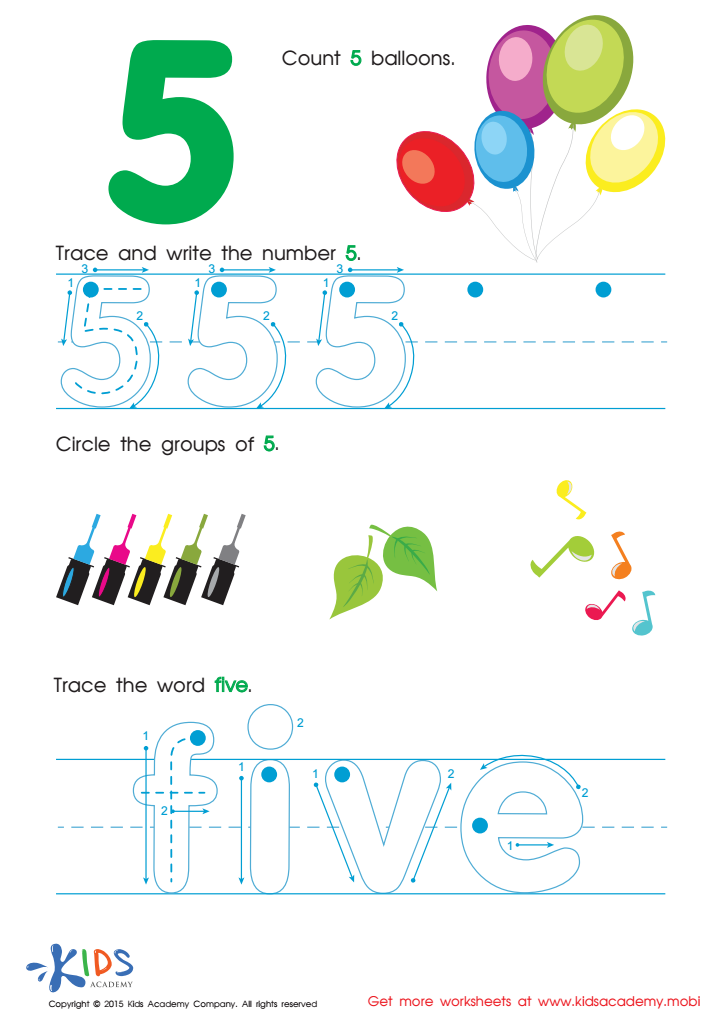
Learning Numbers Worksheets: Practice Writing Number 5 PDF

Practice Writing Number 5 Worksheet
Make learning numbers fun! Let your kids count the balloons, trace numbers, and circle the groups with five items. Also, have them trace the word "five" for letter revision. Get the full collection of preschool number worksheets from Kids Academy for a fun and interactive learning experience.
Practice Writing Number 5 Worksheet
Worksheet
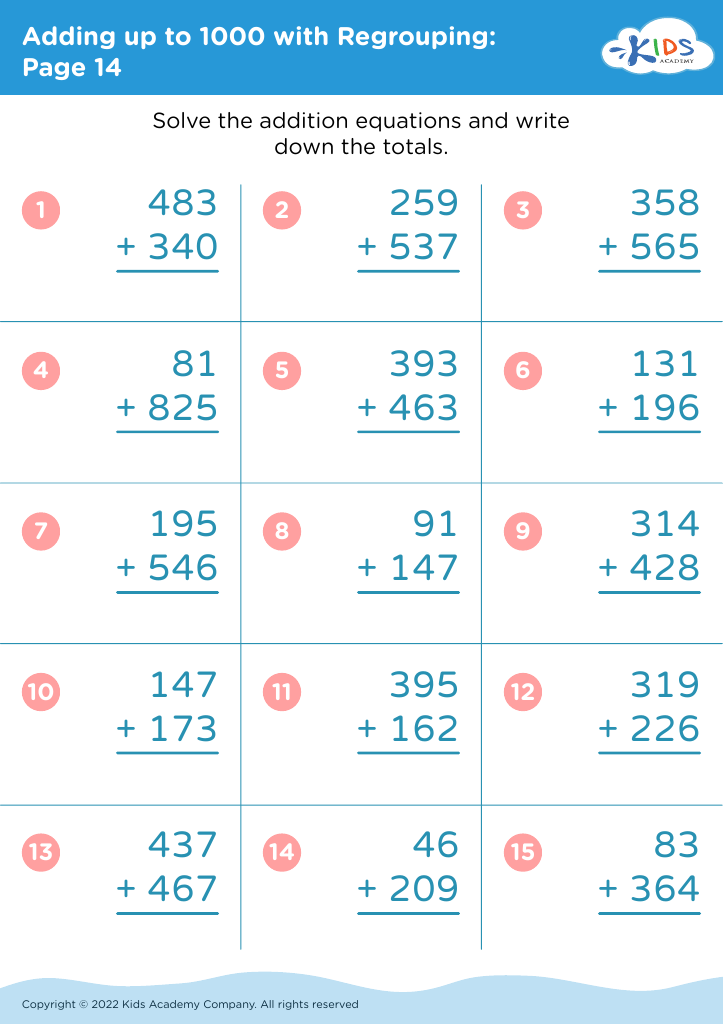
Adding up to 1000 with Regrouping: Page 14
Worksheet
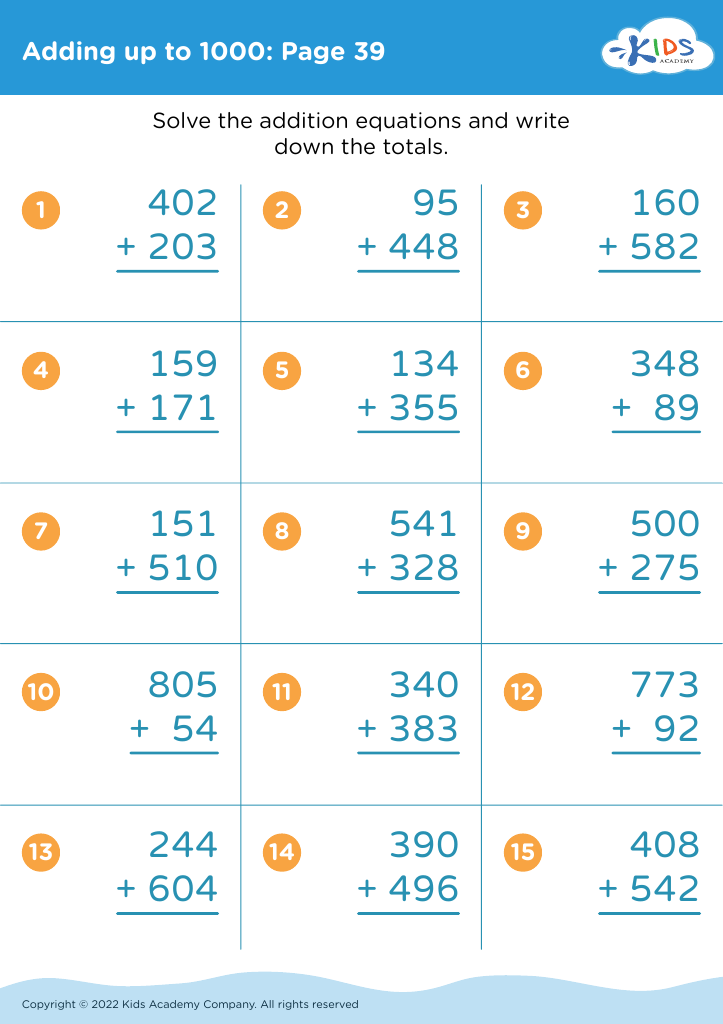
Adding up to 1000: Page 39

Adding up to 1000: Page 39

Adding up to 1000: Page 39
Worksheet
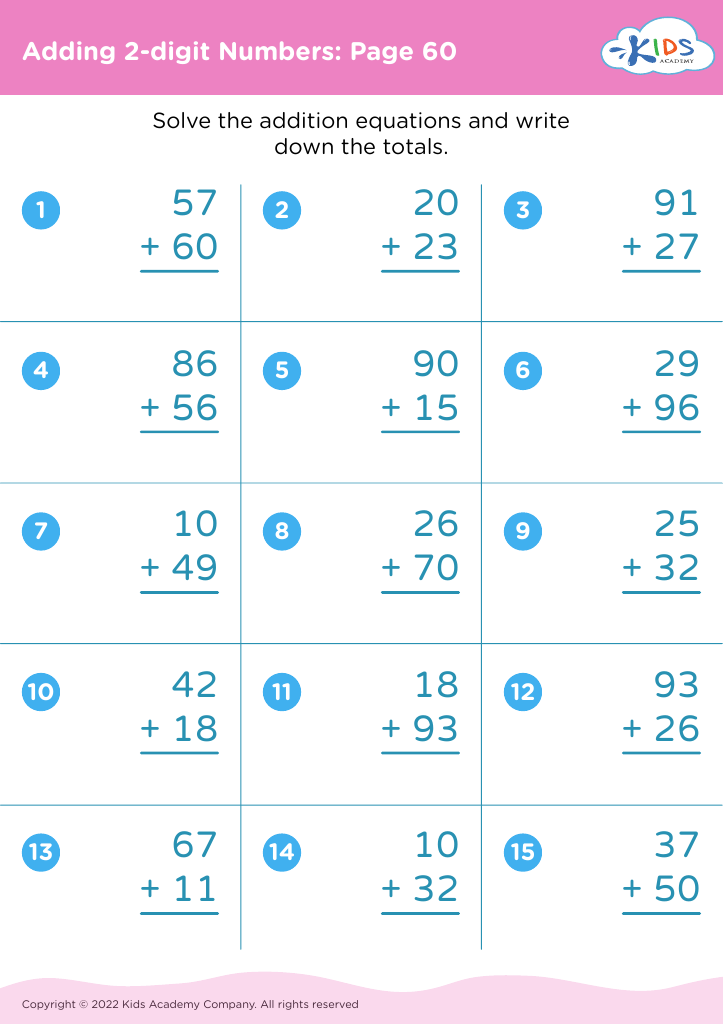
Adding 2-digit Numbers: Page 60

Adding 2-digit Numbers: Page 60

Adding 2-digit Numbers: Page 60
Worksheet
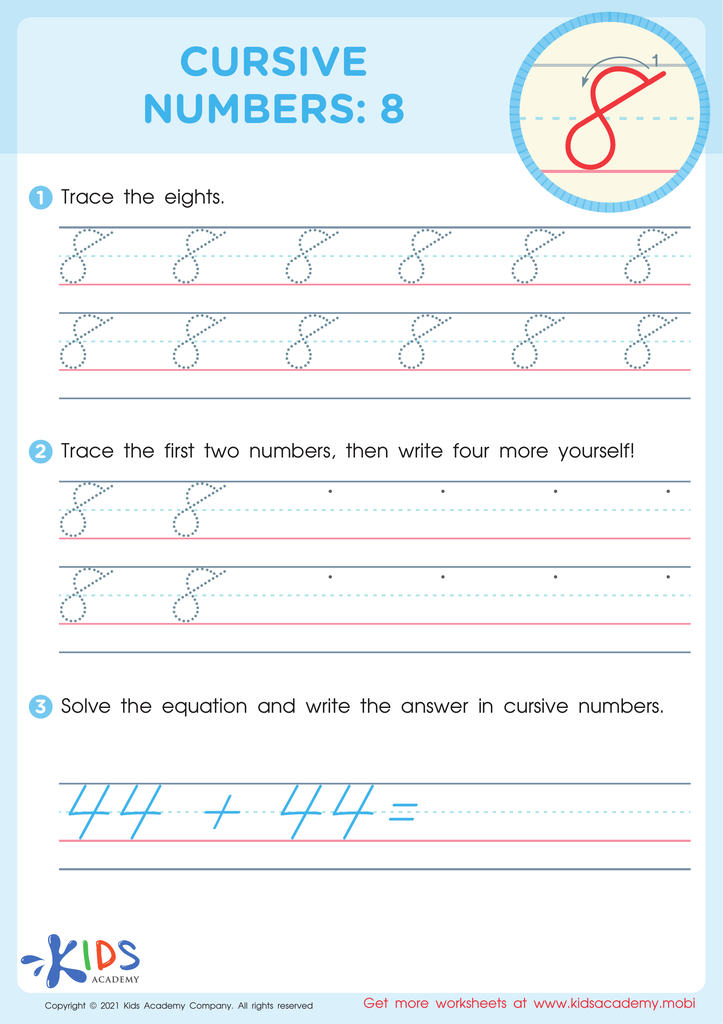
Cursive Numbers: 8 Worksheet

Cursive Numbers: 8 Worksheet

This tracing sheet helps your kids learn to write the cursive number 8. It's perfect for those struggling with handwriting. They'll trace the number 8, write it on their own, then solve a simple math equation and answer in cursive. Counting and writing numbers correctly is essential, so help your kids master it with this worksheet!
Cursive Numbers: 8 Worksheet
Worksheet
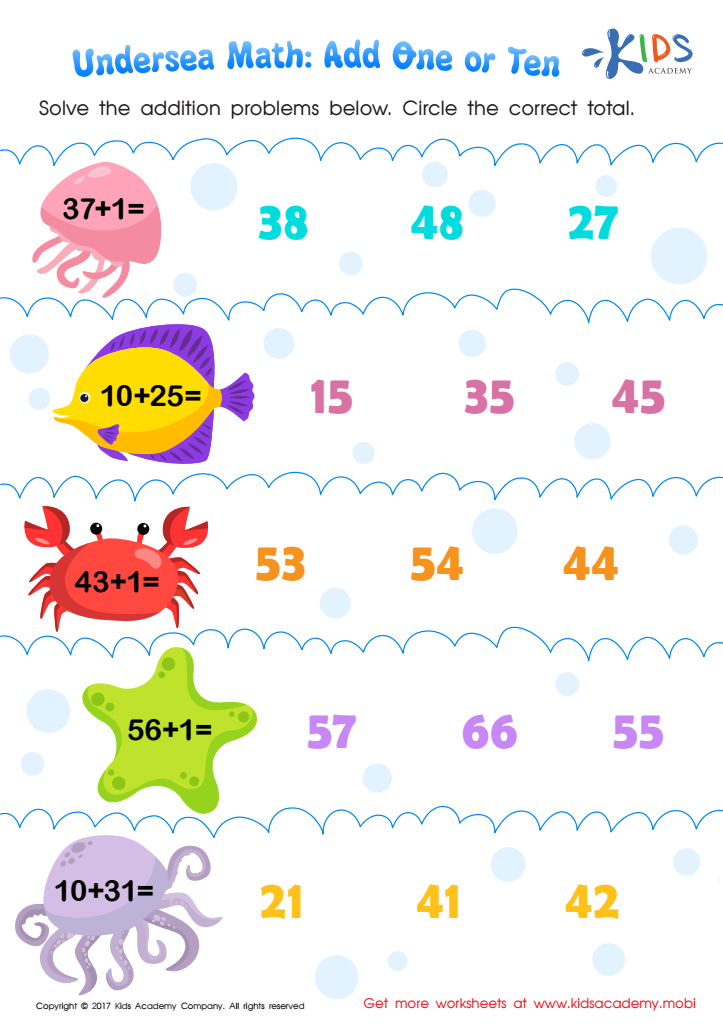
Add one or ten worksheet

Undersea Math Worksheet

Dive under the sea and practice addition with place value! This fun sea-themed math worksheet will help your child add ones and tens to 2-digit numbers. Kids need to practice to gain an understanding of math processes and this worksheet uses vibrant tropical fish to entertain and build important skills.
Undersea Math Worksheet
Worksheet
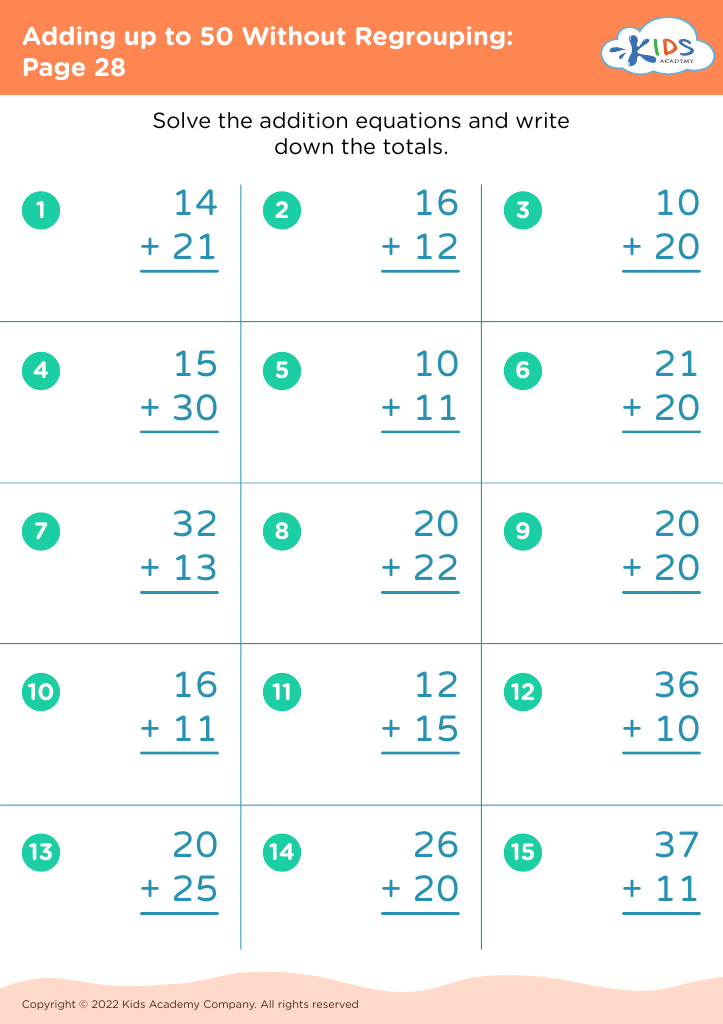
Adding up to 50 Without Regrouping: Page 28
Worksheet
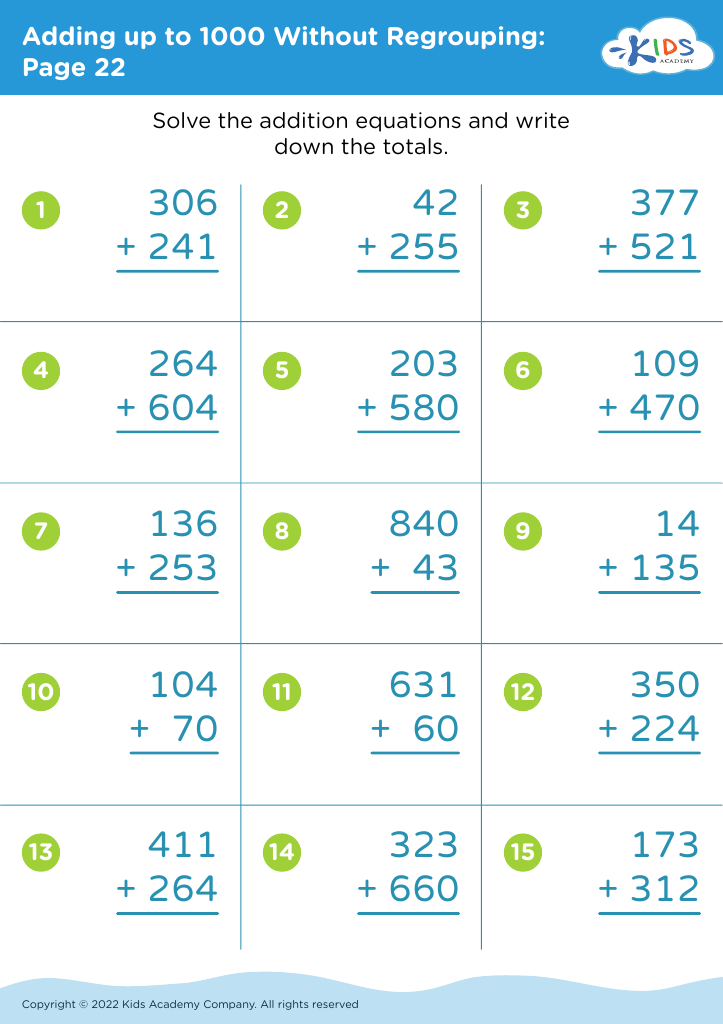
Adding up to 1000 Without Regrouping: Page 22
Worksheet
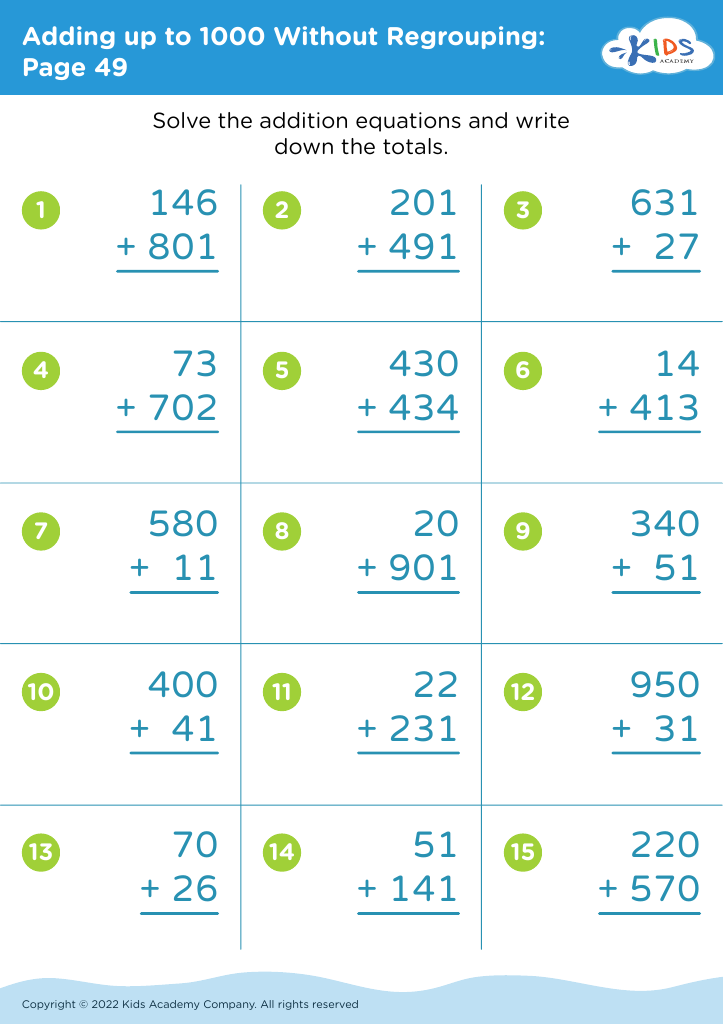
Adding up to 1000 Without Regrouping: Page 49
Worksheet
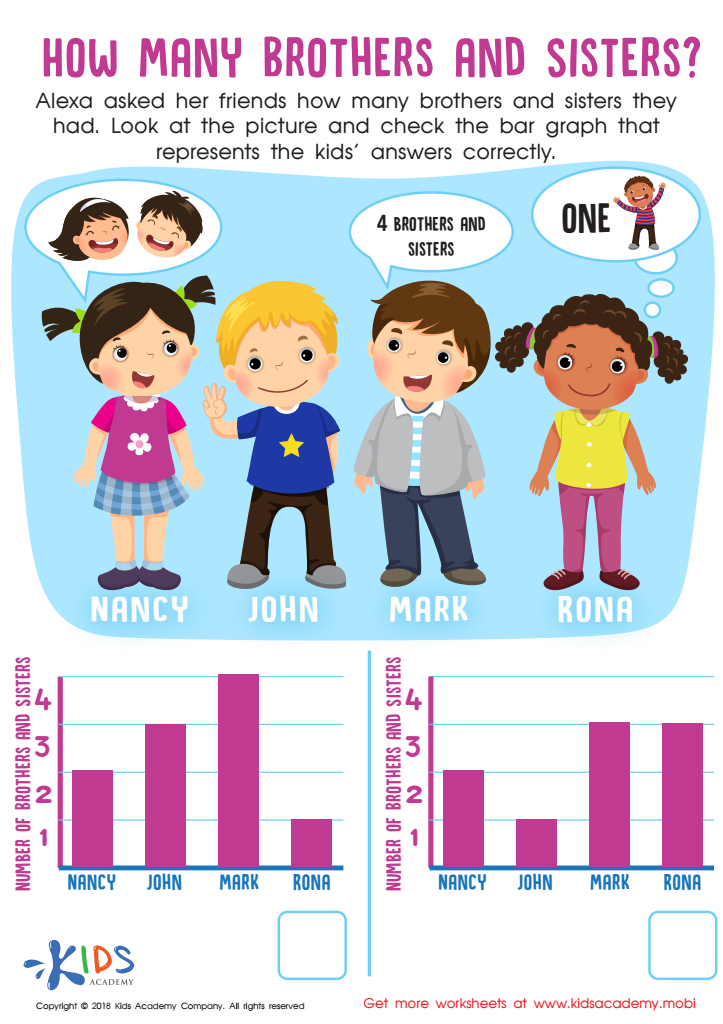
How Many Brothers and Sisters? Worksheet
How Many Brothers and Sisters? Worksheet
With this worksheet, Alexa has asked her friends how many siblings they have. Have your child look at the picture and use it to answer the bar graph correctly. Can they tell you how many siblings their friends have? See if they can get it right!
How Many Brothers and Sisters? Worksheet
Worksheet
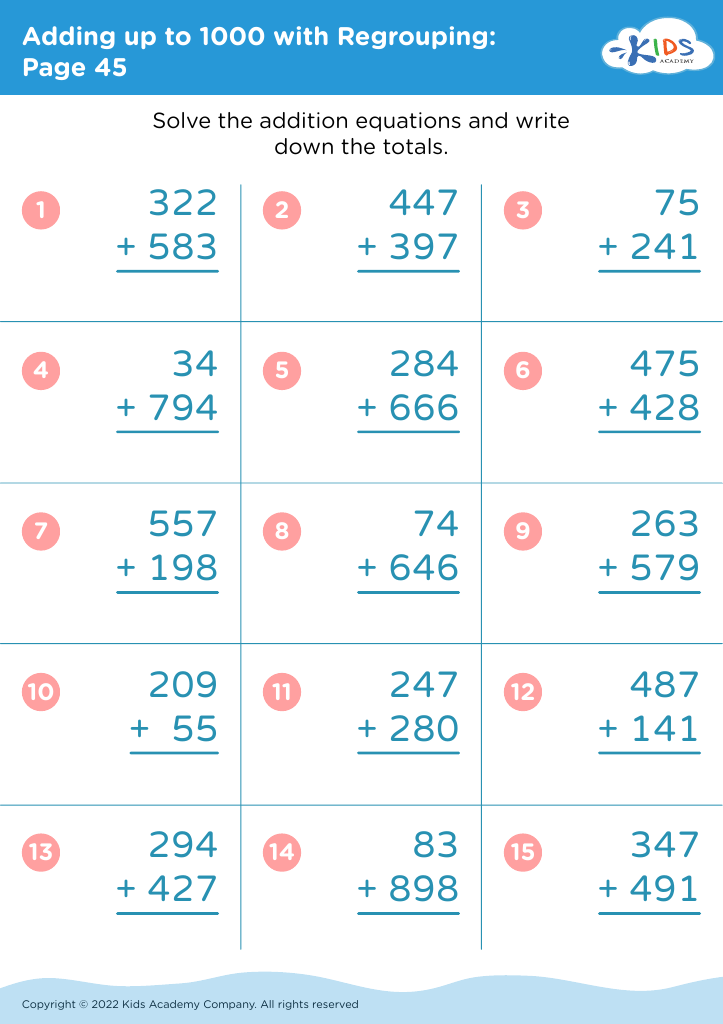
Adding up to 1000 with Regrouping: Page 45
Worksheet
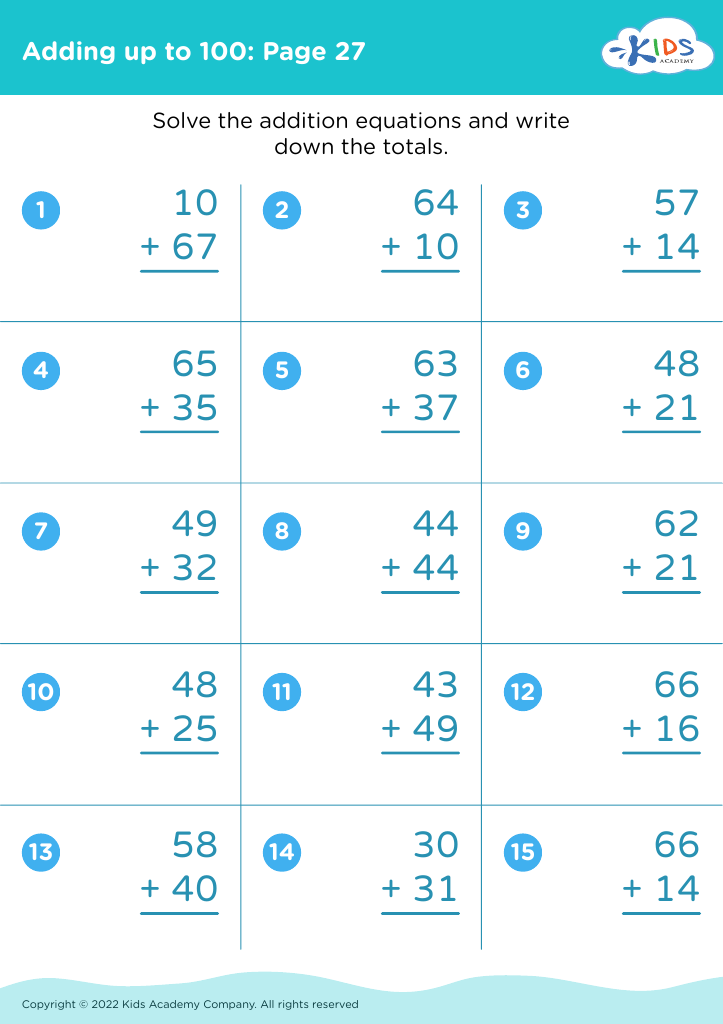
Adding up to 100: Page 27

Adding up to 100: Page 27

Adding up to 100: Page 27
Worksheet
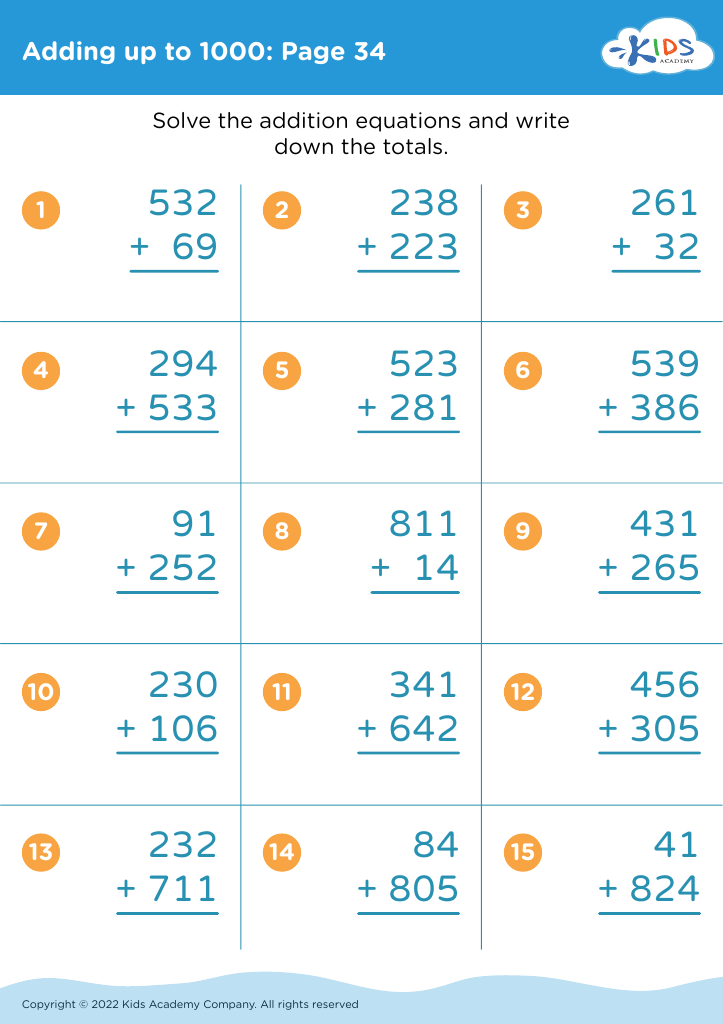
Adding up to 1000: Page 34

Adding up to 1000: Page 34

Adding up to 1000: Page 34
Worksheet
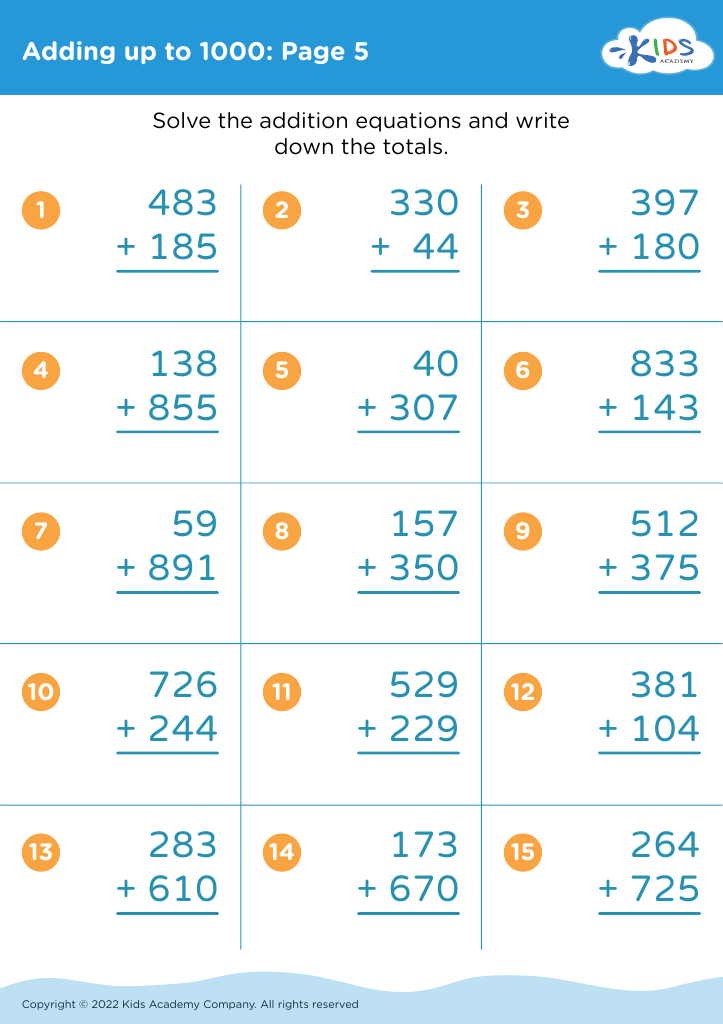
Adding up to 1000: Page 5

Adding up to 1000: Page 5

Adding up to 1000: Page 5
Worksheet
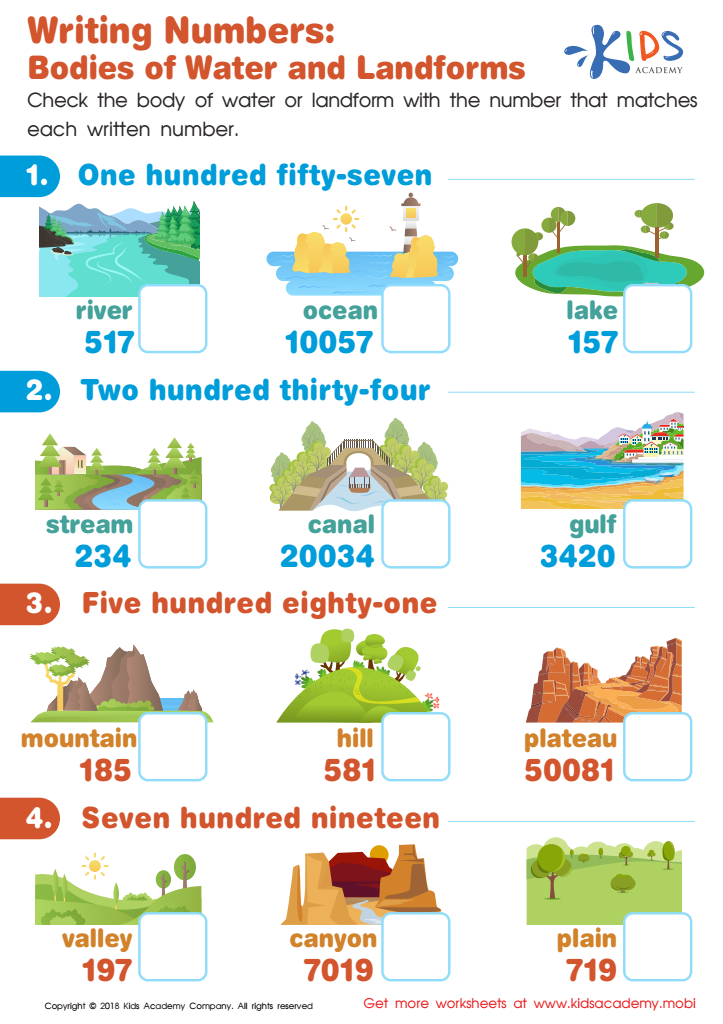
Bodies of Water and Landforms Writing Numbers Worksheet
Bodies of Water and Landforms Writing Numbers Worksheet
Your student will love this engaging worksheet with its bright hues, while you give them practice comparing numbers with higher place values. Matching the correct number words to their numeral representations is key for our students as they deal with larger numbers and higher place values.
Bodies of Water and Landforms Writing Numbers Worksheet
Worksheet
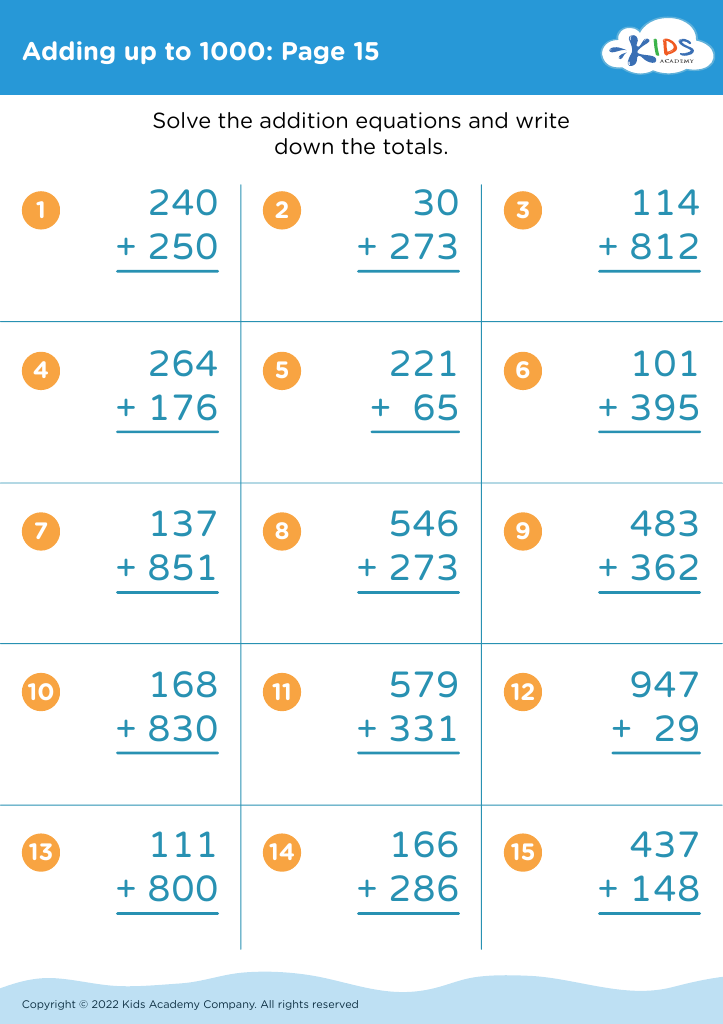
Adding up to 1000: Page 15

Adding up to 1000: Page 15

Adding up to 1000: Page 15
Worksheet
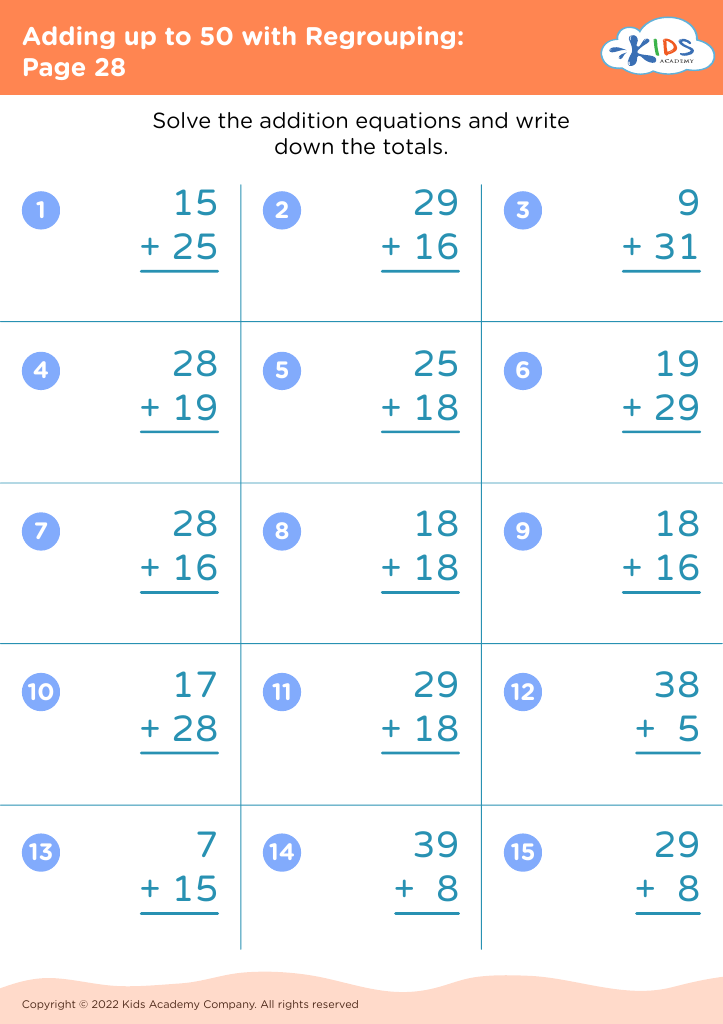
Adding up to 50 with Regrouping: Page 28
Worksheet
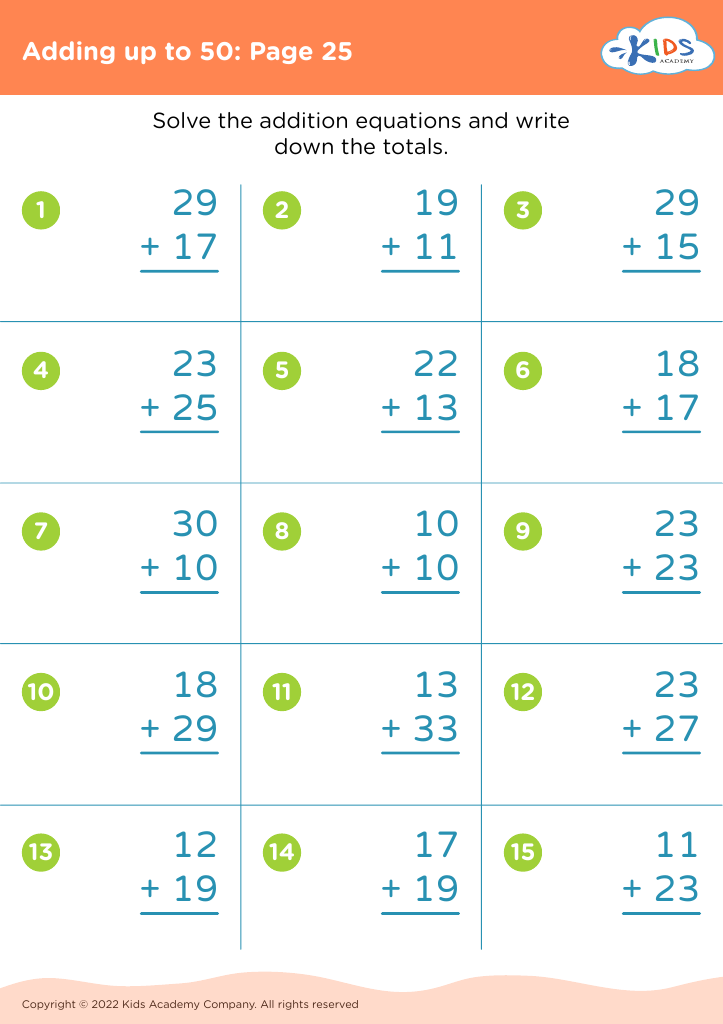
Adding up to 50: Page 25

Adding up to 50: Page 25

Adding up to 50: Page 25
Worksheet
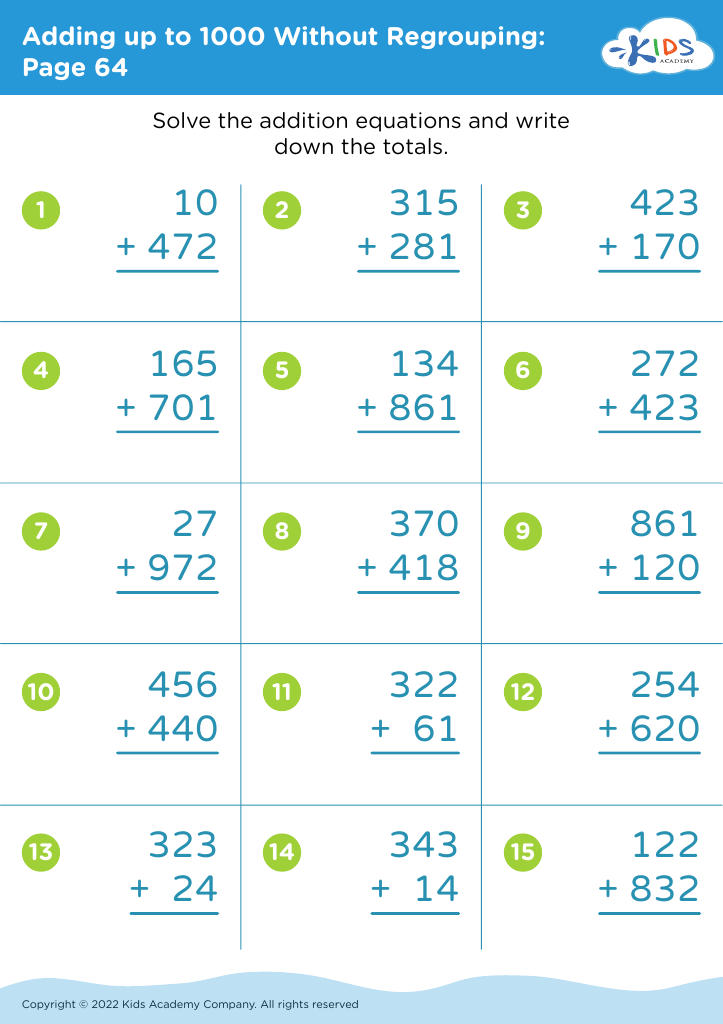
Adding up to 1000 Without Regrouping: Page 64
Worksheet


Number recognition is a fundamental skill for children ages 8-9, forming the backbone of more advanced mathematical concepts. At this developmental stage, elementary school children are transitioning from basic counting to understanding place values, addition, subtraction, and eventually more complex operations. Proficient number recognition enhances their ability to solve problems efficiently, making it a vital area for parents and teachers to prioritize.

Parents and teachers should care about number recognition because it lays the groundwork for future mathematical learning. When children develop a solid understanding of numbers, they can easily grasp concepts like multiplication, division, fractions, and even early geometry, which are instrumental in later schooling and real-life applications.

Moreover, children with strong number recognition skills gain confidence in their math abilities. This self-assurance encourages them to take on new challenges and engage cautiously in mathematical discussions, fostering a lifelong positive relationship with math. Conversely, struggles with number recognition can lead to frustration and anxiety, possibly creating aversions to math as they progress.

Overall, investing time and resources into developing number recognition at this age is crucial for promoting both academic success and emotional well-being concerning mathematics.