Practicing division Math Worksheets for Ages 8-9
3 filtered results
-
From - To
Explore our engaging division math worksheets designed specifically for children aged 8-9! These printable resources provide a fun and interactive way to enhance division skills through various exercises tailored to different learning levels. Our worksheets promote critical thinking and reinforce essential math concepts, making learning enjoyable and effective. Perfect for at-home practice or classroom use, these activities help students build confidence and mastery in division, preparing them for more advanced math challenges. Join us in fostering a strong mathematical foundation with our user-friendly and visually appealing worksheets that make division practice an exciting learning experience!
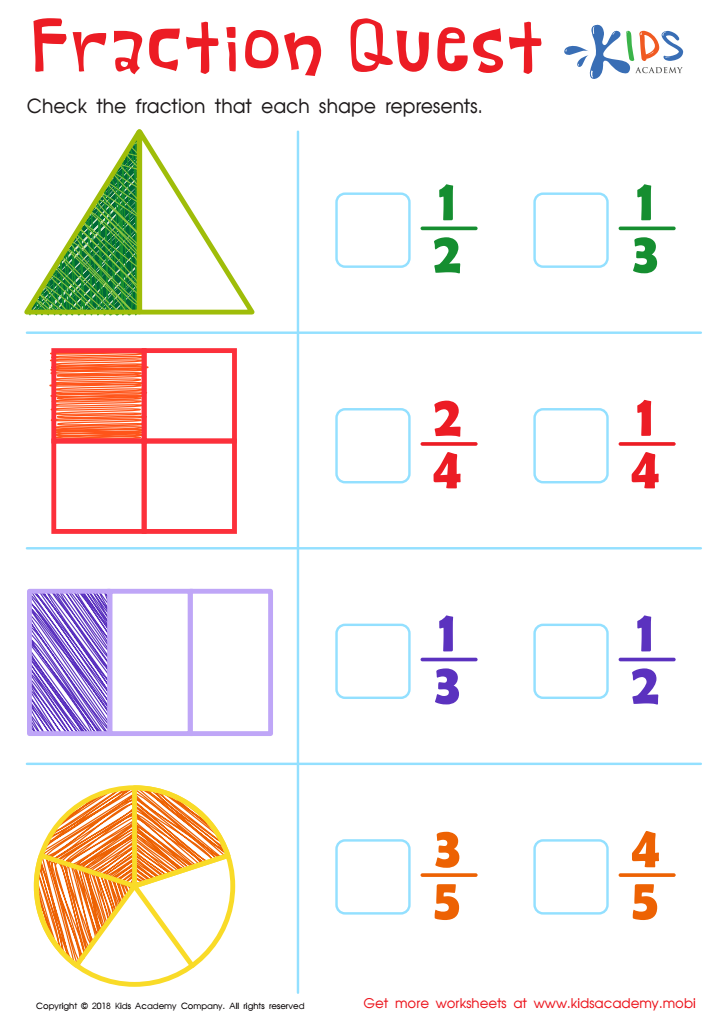
Fraction Quest Worksheet
 Assign to My Students
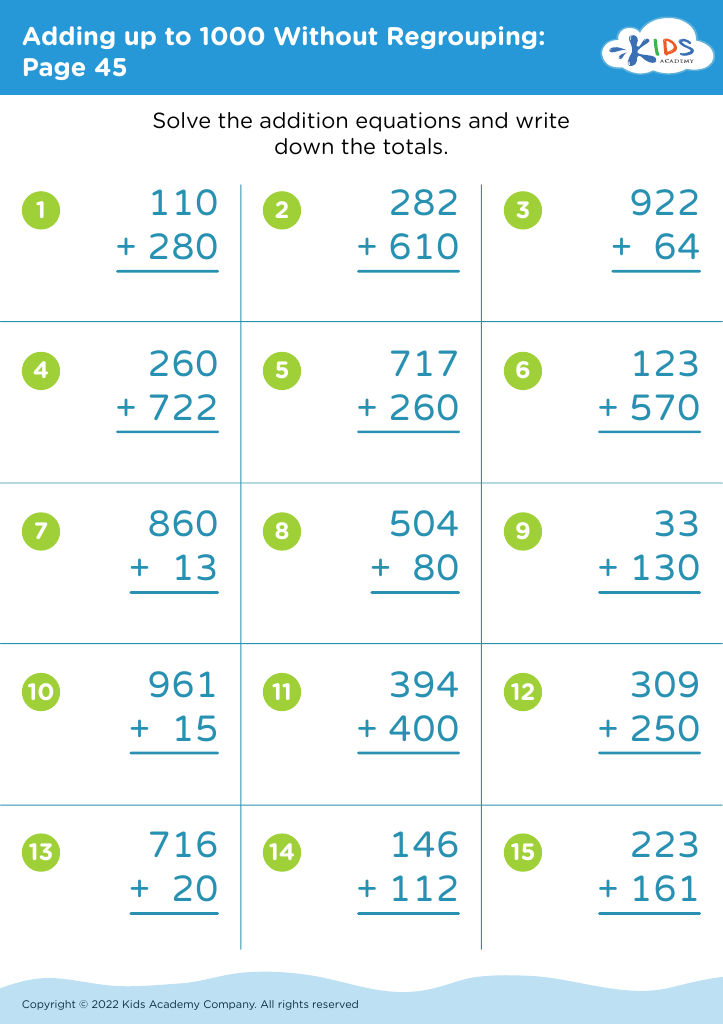
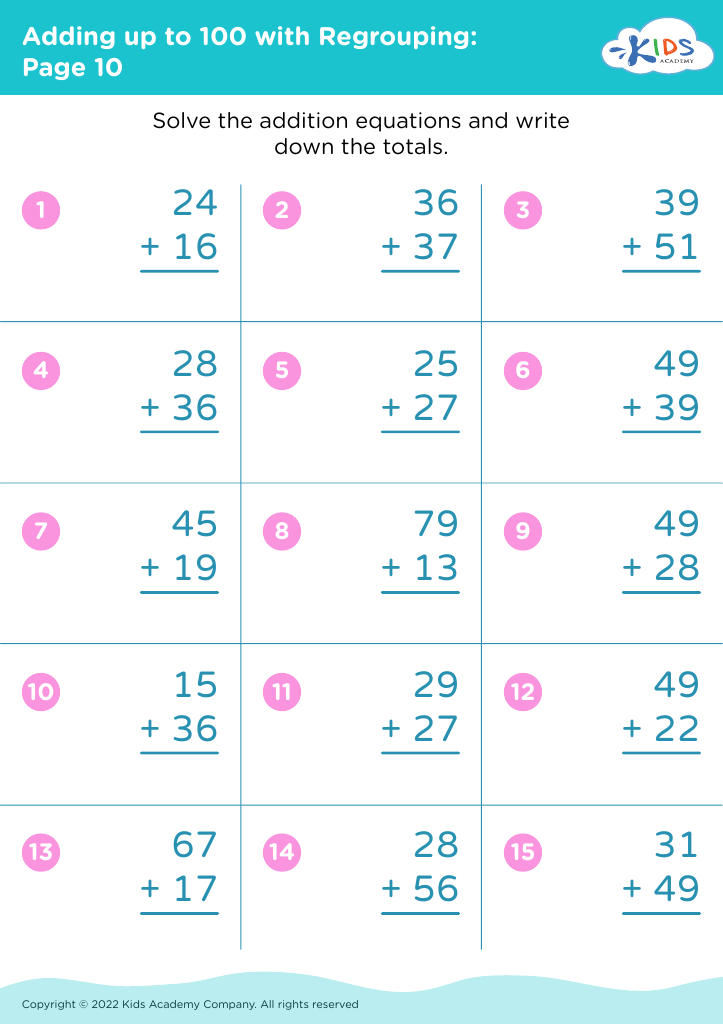







Practicing division for children aged 8-9 is crucial for several reasons. First, division is a foundational math skill that helps kids understand more complex concepts later on, such as fractions and decimals. Mastery of division also builds their confidence and promotes a positive attitude towards math, which can impact their overall academic success.
By learning division, children strengthen their problem-solving skills and logical thinking, essential for everyday situations. They learn to share equally, distributing resources fairly among friends or members of a family. This early comprehension fosters social skills as they navigate real-world experiences.
Additionally, practicing division enhances their numerical fluency. As they become familiar with dividing numbers, they gain speed and accuracy in basic calculations, which is foundational for future academic pursuits. Consistent practice helps them retain information and reduces anxiety about math as they transition into more advanced topics.
Encouraging division skills at this age not only prepares children for academic challenges but also equips them with essential life skills. Parents and teachers must prioritize division practice to ensure children build a robust mathematical foundation that supports their future learning and everyday problem-solving abilities.








