Enhance your child's math skills with our engaging Understand Fractions worksheets designed specifically for ages 8-9! These worksheets provide a comprehensive approach to mastering fractions, featuring a variety of activities that promote critical thinking and problem-solving. Kids will explore concepts like equivalent fractions, comparing and ordering fractions, and adding and subtracting fractions with like denominators. Each worksheet is thoughtfully crafted to make learning fun and interactive, fostering confidence in young learners. Parents and educators can easily print and use these resources at home or in the classroom to support curriculum goals. Dive into the world of fractions today!
Check out this FREE Trial Lesson on Math for age 8-9!

Short and Long Vowel Sort

Favorites
With answer key
Interactive
  • 8-9
  • Understand fractions
  • Math
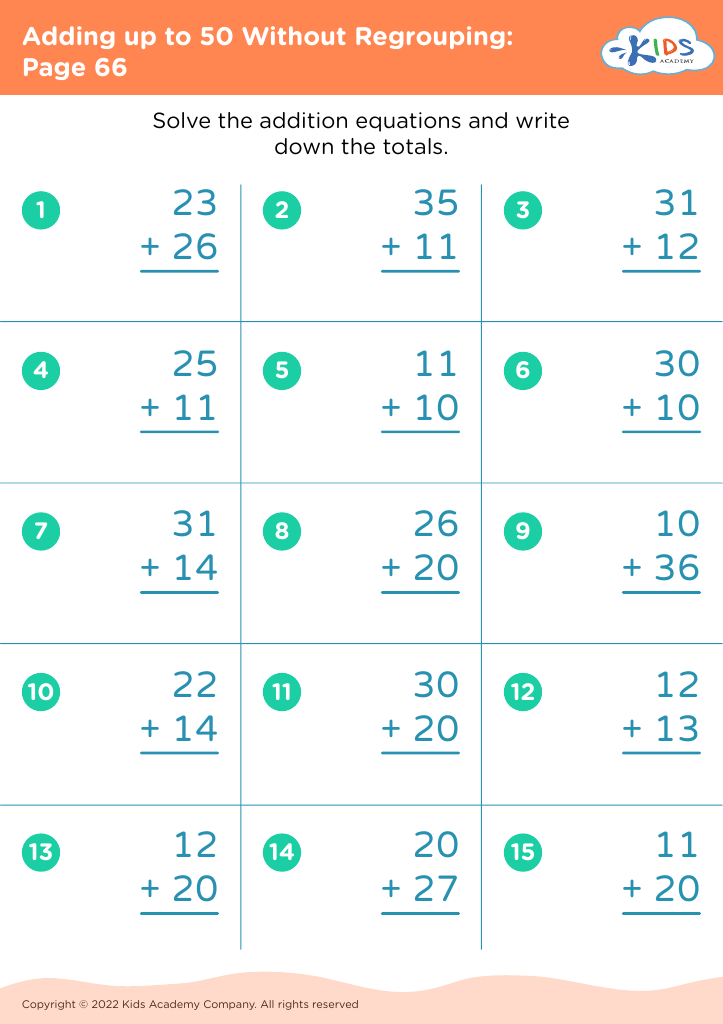
Adding up to 50 Without Regrouping: Page 66
Worksheet
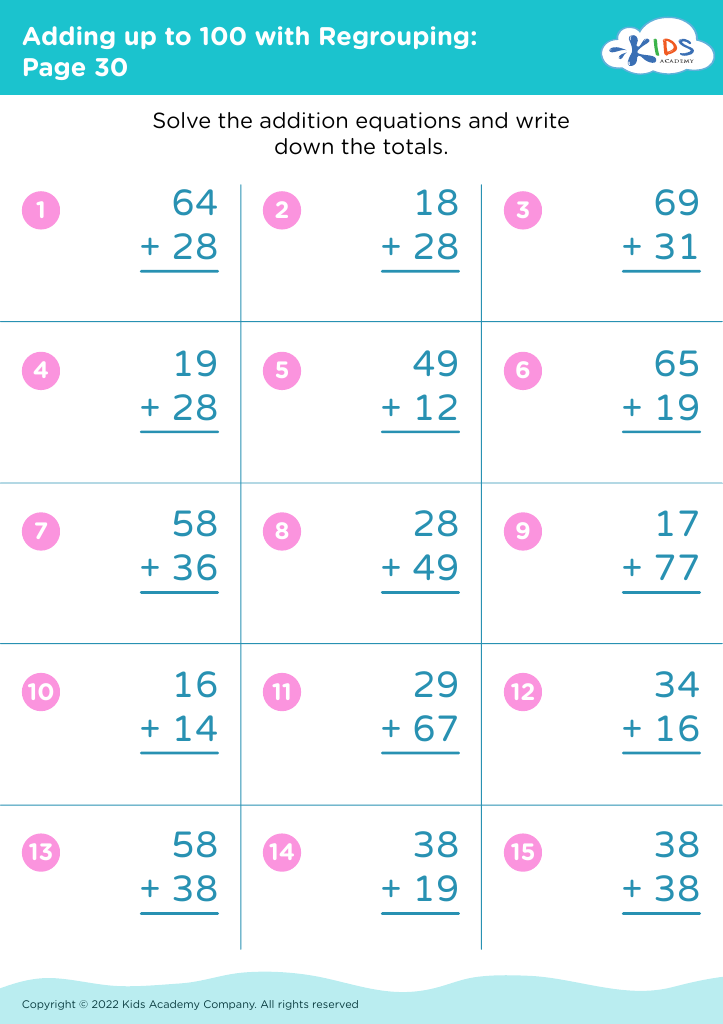
Adding up to 100 with Regrouping: Page 30
Worksheet
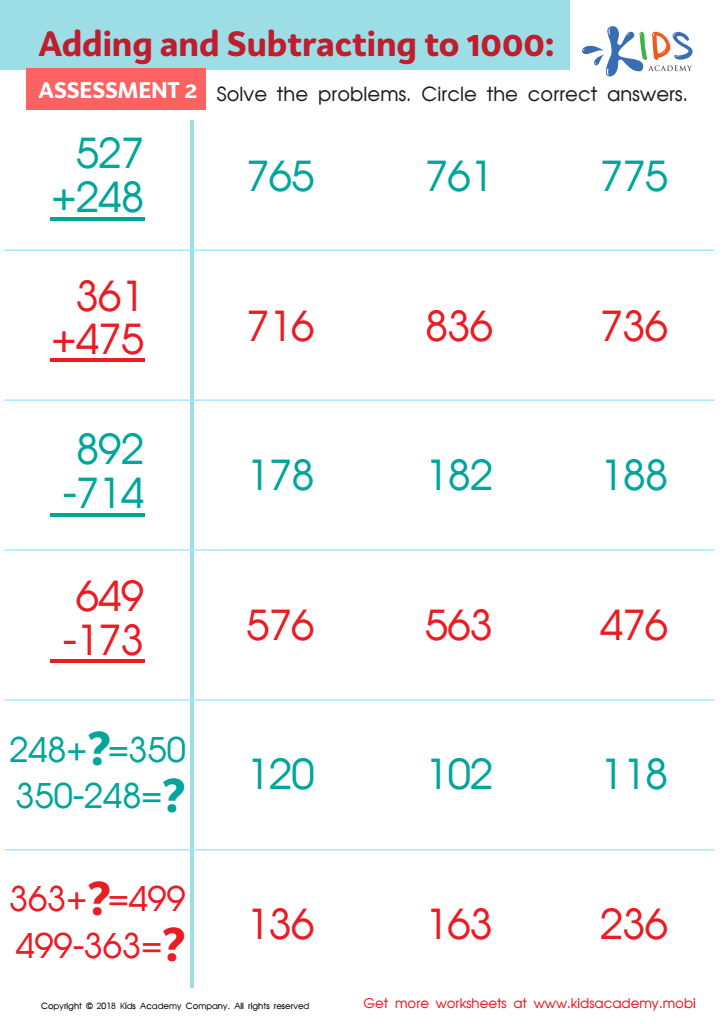
Adding and Subtracting to 1 Worksheet: Assessment 2

Adding and Subtracting to 1 Worksheet: Assessment 2

Test your child's addition and subtraction of 3-digit numbers with this assessment worksheet! They'll practice regrouping and pre-algebra skills to show their expertise. Have them work through the page and circle their answers, then see how many they got right to check their understanding and progress.
Adding and Subtracting to 1 Worksheet: Assessment 2
Worksheet
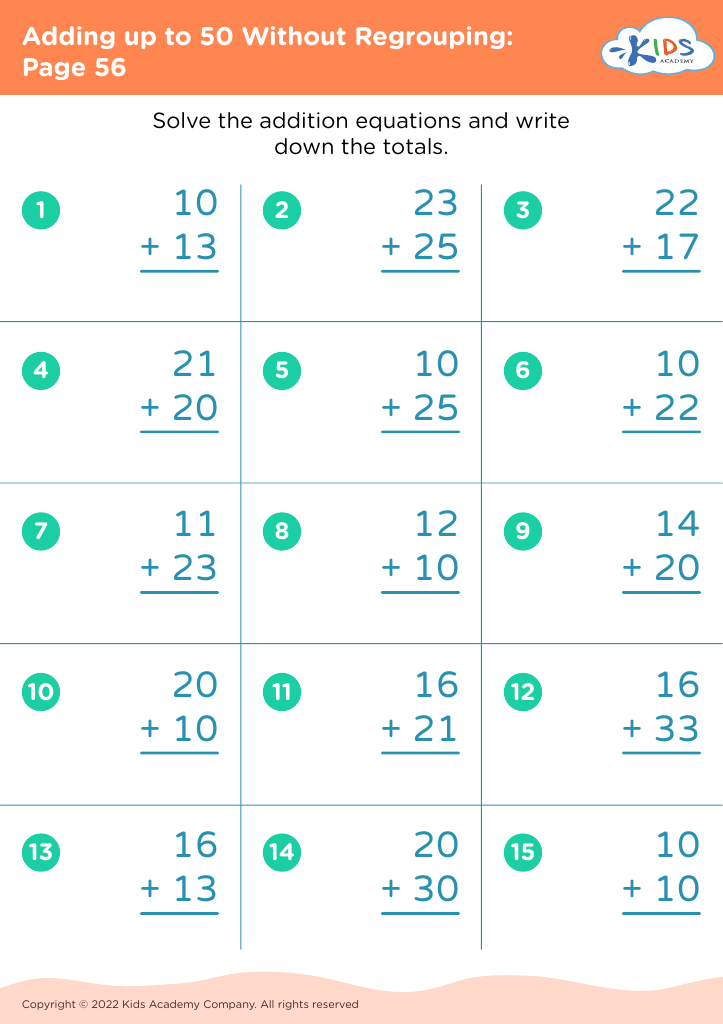
Adding up to 50 Without Regrouping: Page 56
Worksheet
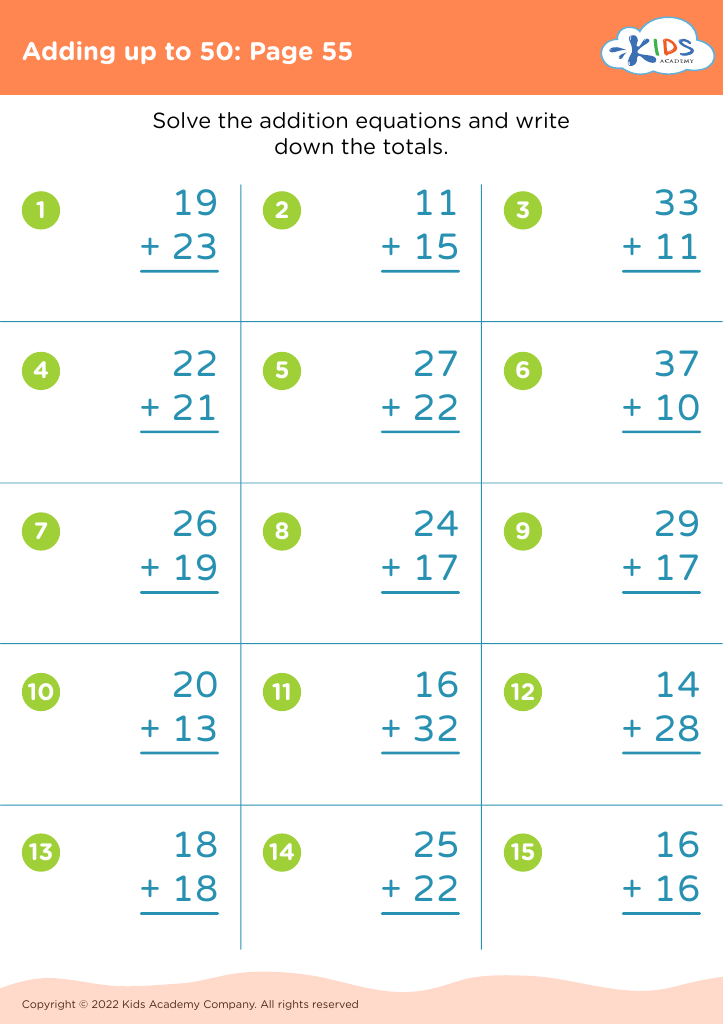
Adding up to 50: Page 55

Adding up to 50: Page 55

Adding up to 50: Page 55
Worksheet
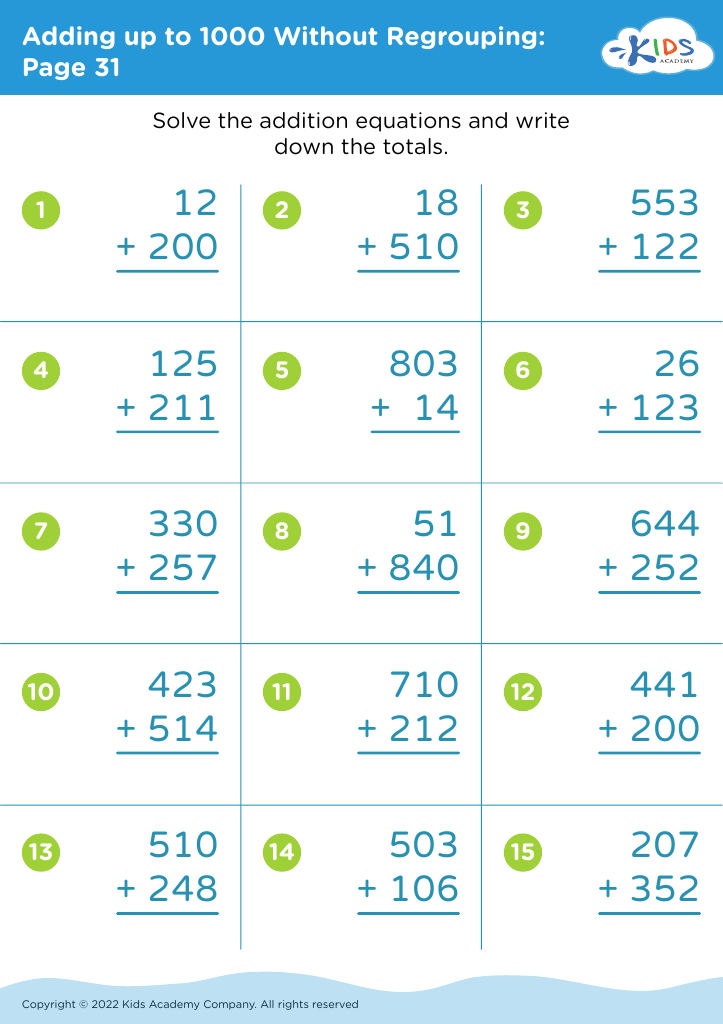
Adding up to 1000 Without Regrouping: Page 31
Worksheet
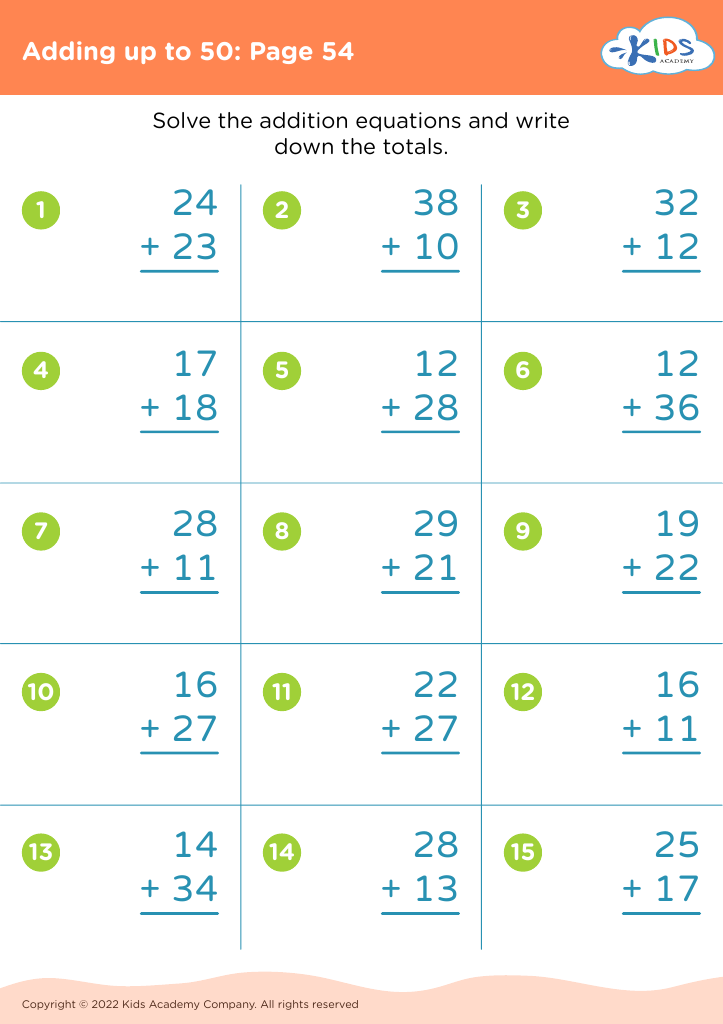
Adding up to 50: Page 54

Adding up to 50: Page 54

Adding up to 50: Page 54
Worksheet
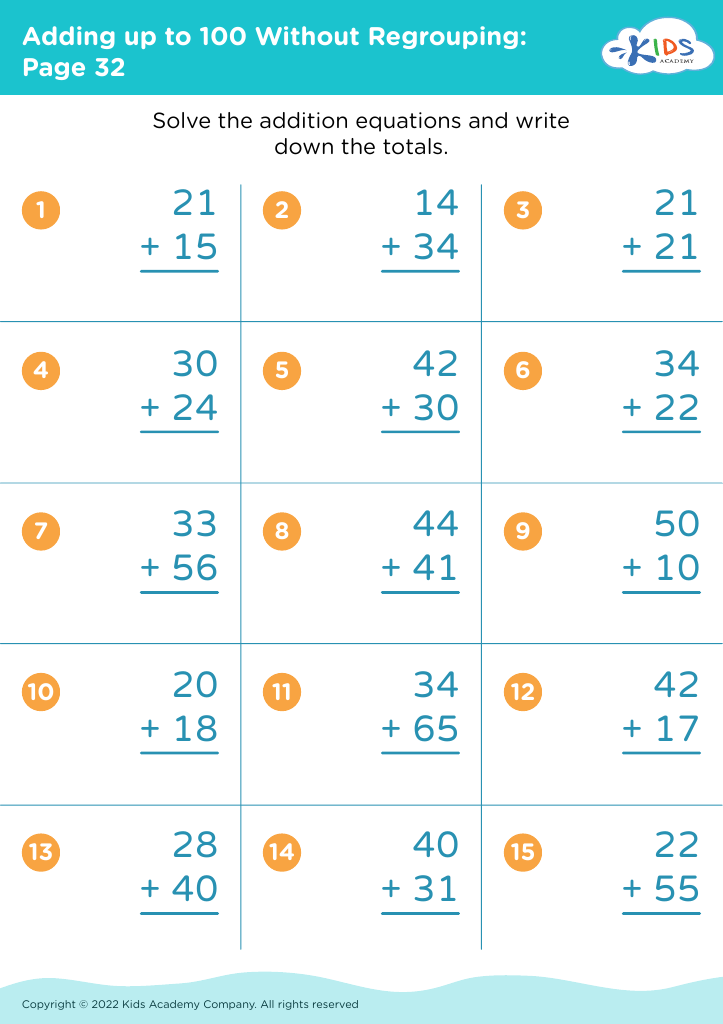
Adding up to 100 Without Regrouping: Page 32
Worksheet
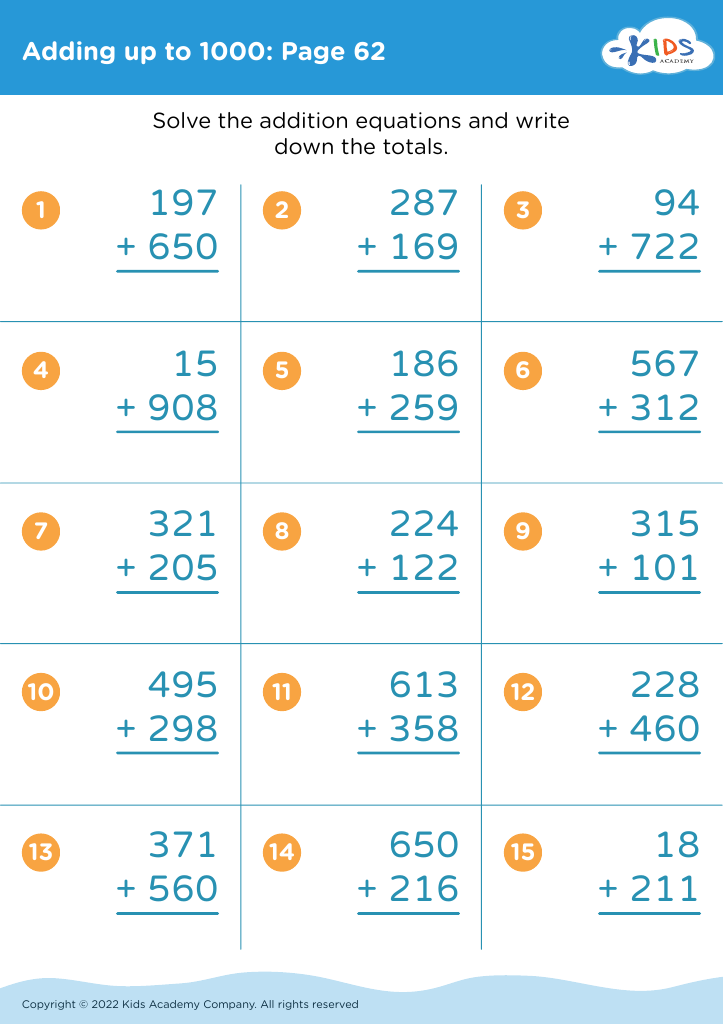
Adding up to 1000: Page 62

Adding up to 1000: Page 62

Adding up to 1000: Page 62
Worksheet
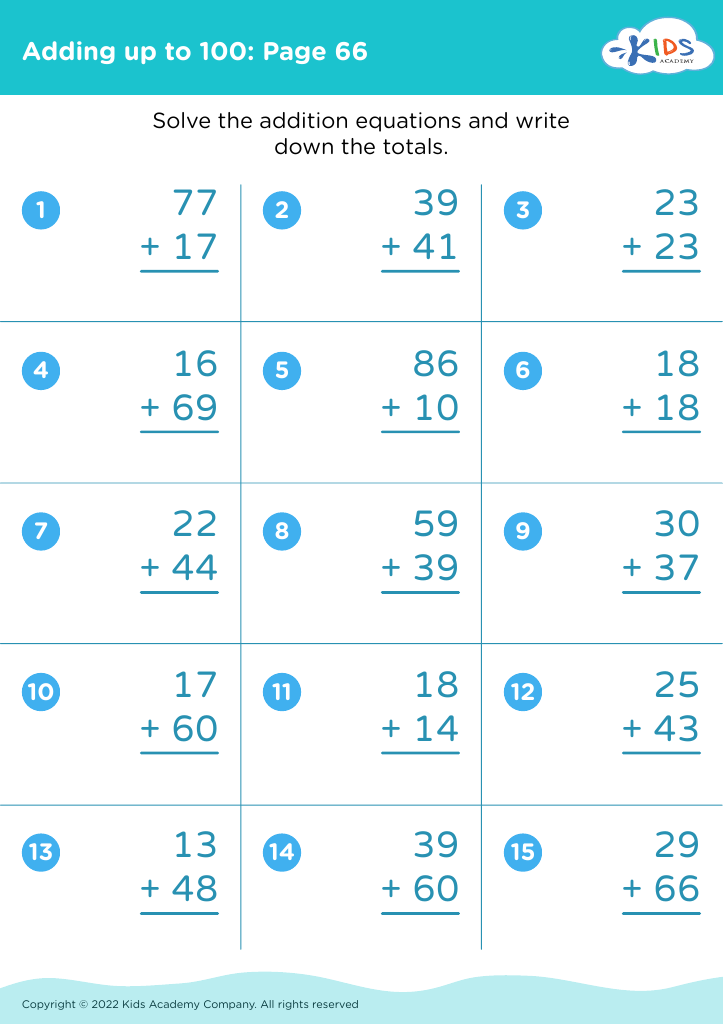
Adding up to 100: Page 66

Adding up to 100: Page 66

Adding up to 100: Page 66
Worksheet
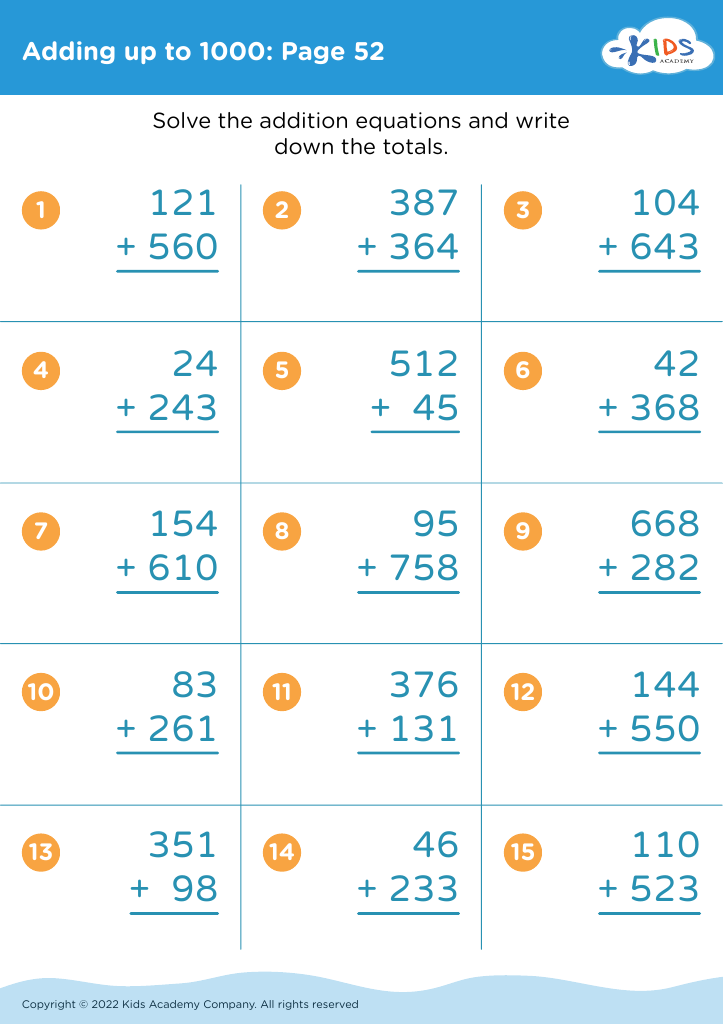
Adding up to 1000: Page 52

Adding up to 1000: Page 52

Adding up to 1000: Page 52
Worksheet
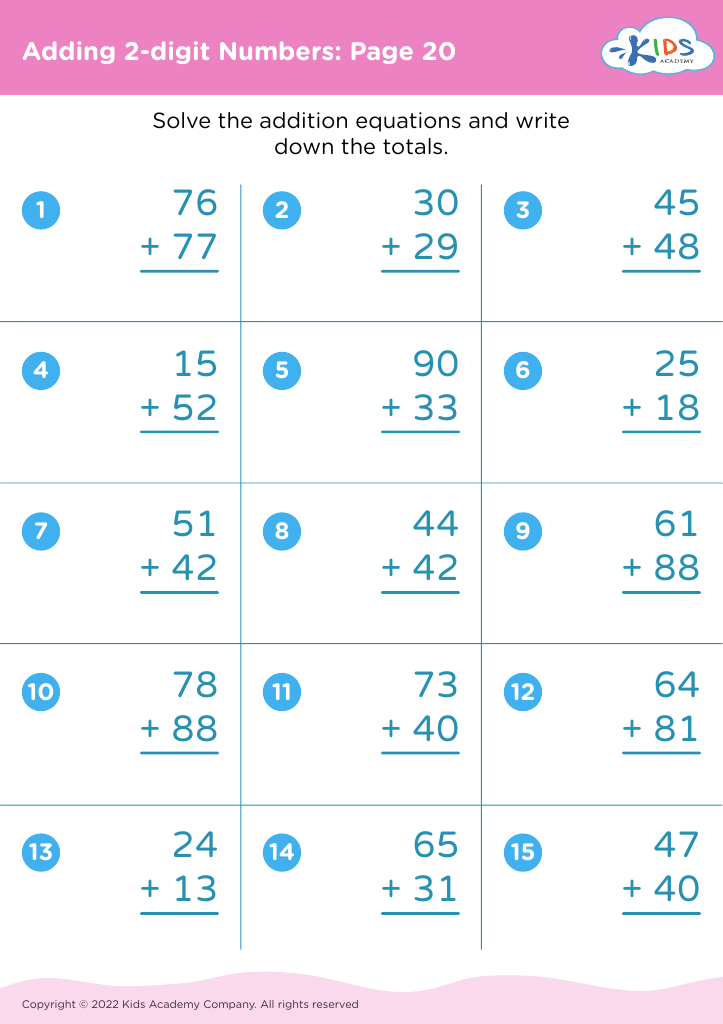
Adding 2-digit Numbers: Page 20

Adding 2-digit Numbers: Page 20

Adding 2-digit Numbers: Page 20
Worksheet
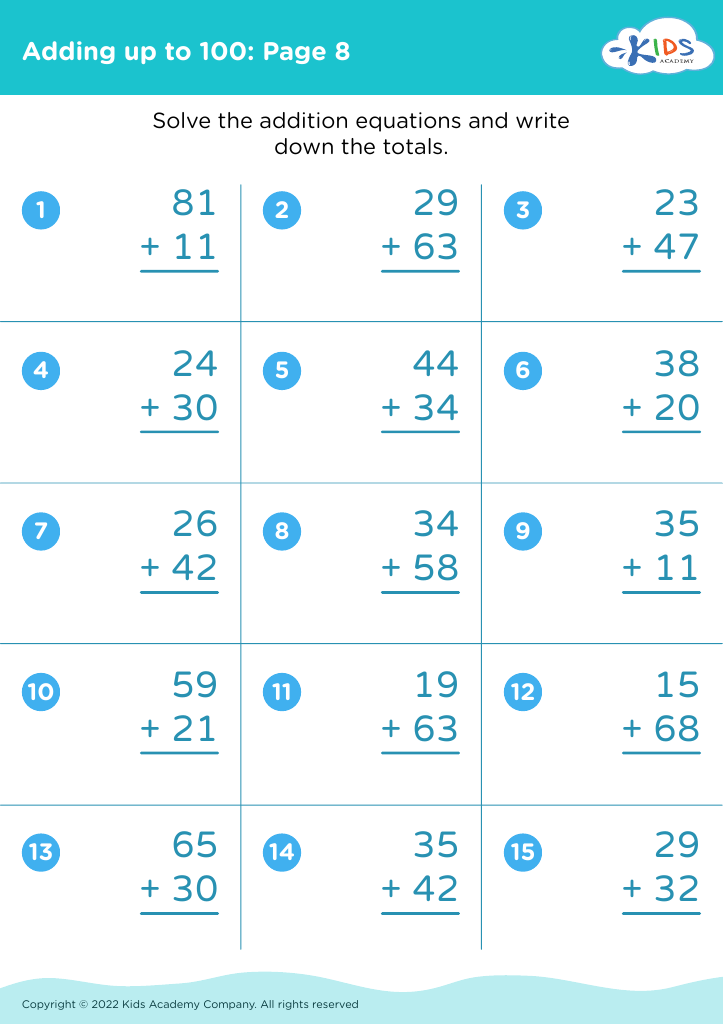
Adding up to 100: Page 8

Adding up to 100: Page 8

Adding up to 100: Page 8
Worksheet
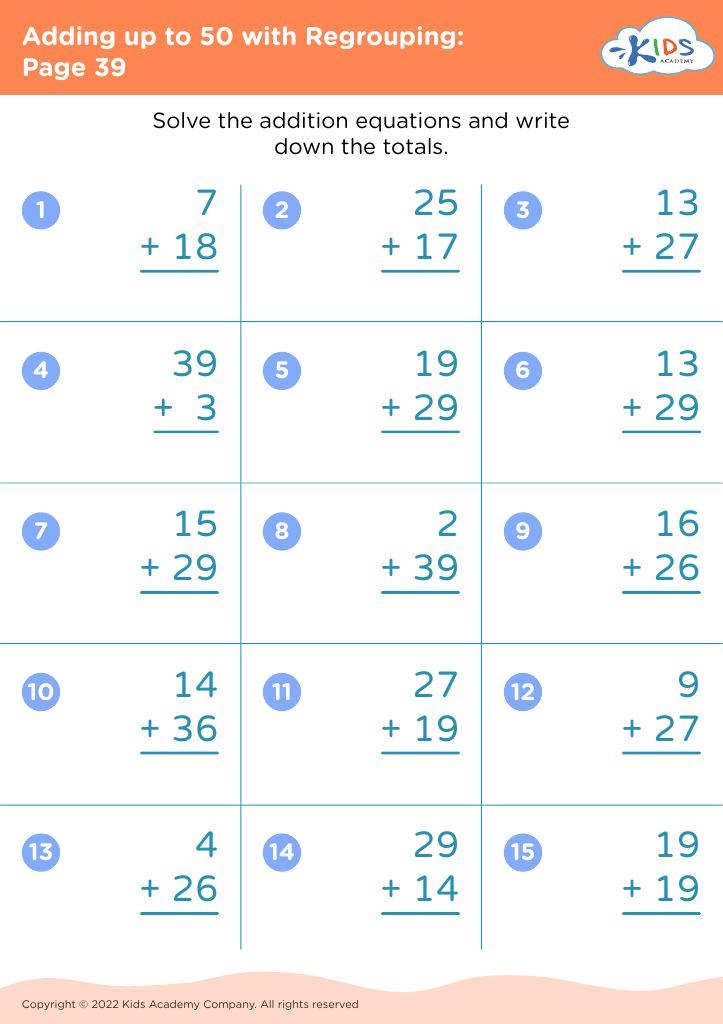
Adding up to 50 with Regrouping: Page 39
Worksheet
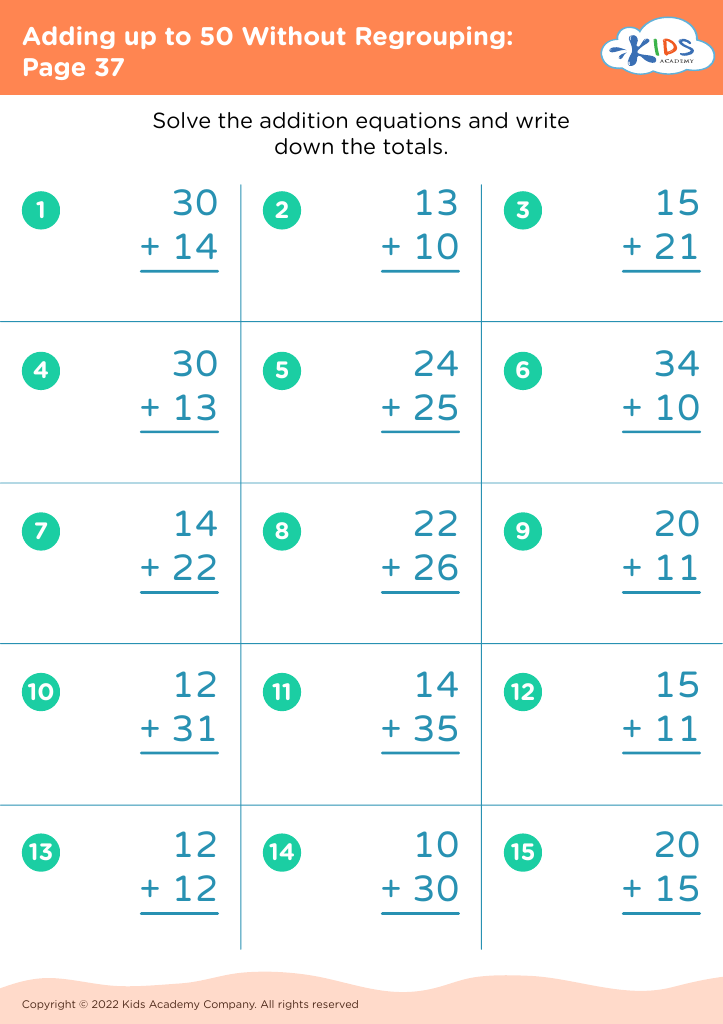
Adding up to 50 Without Regrouping: Page 37
Worksheet
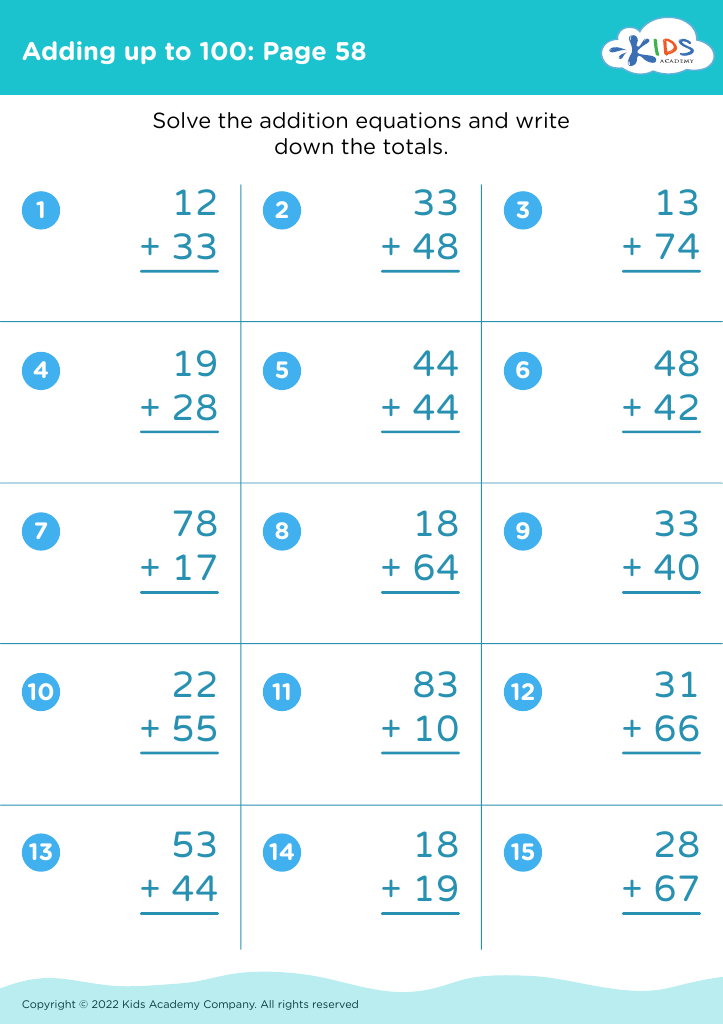
Adding up to 100: Page 58

Adding up to 100: Page 58

Adding up to 100: Page 58
Worksheet
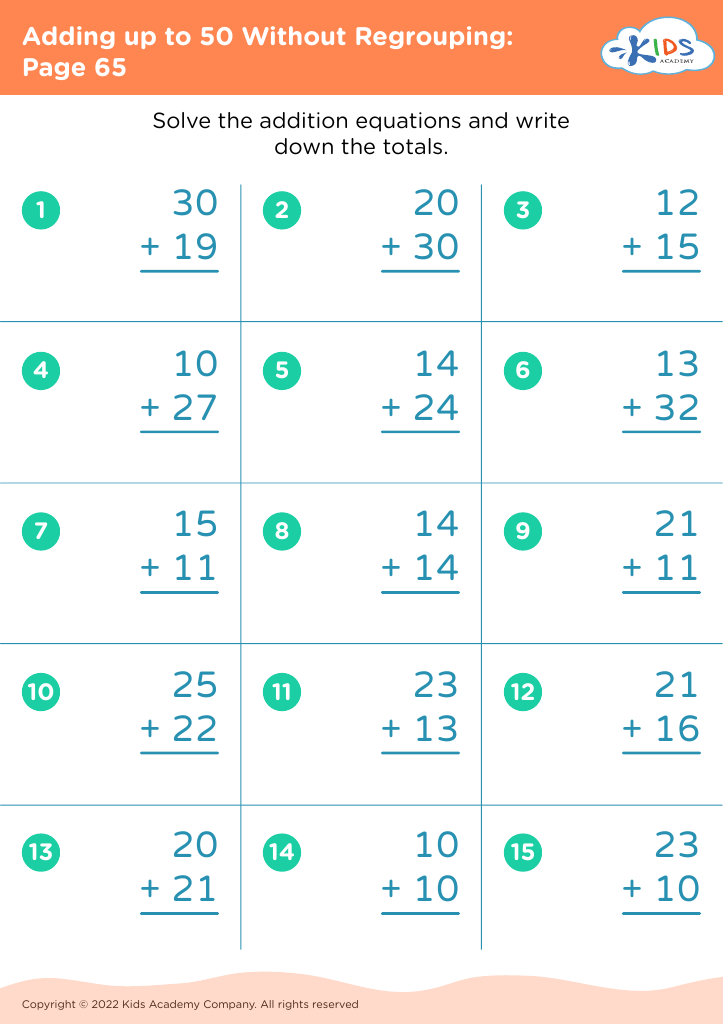
Adding up to 50 Without Regrouping: Page 65
Worksheet
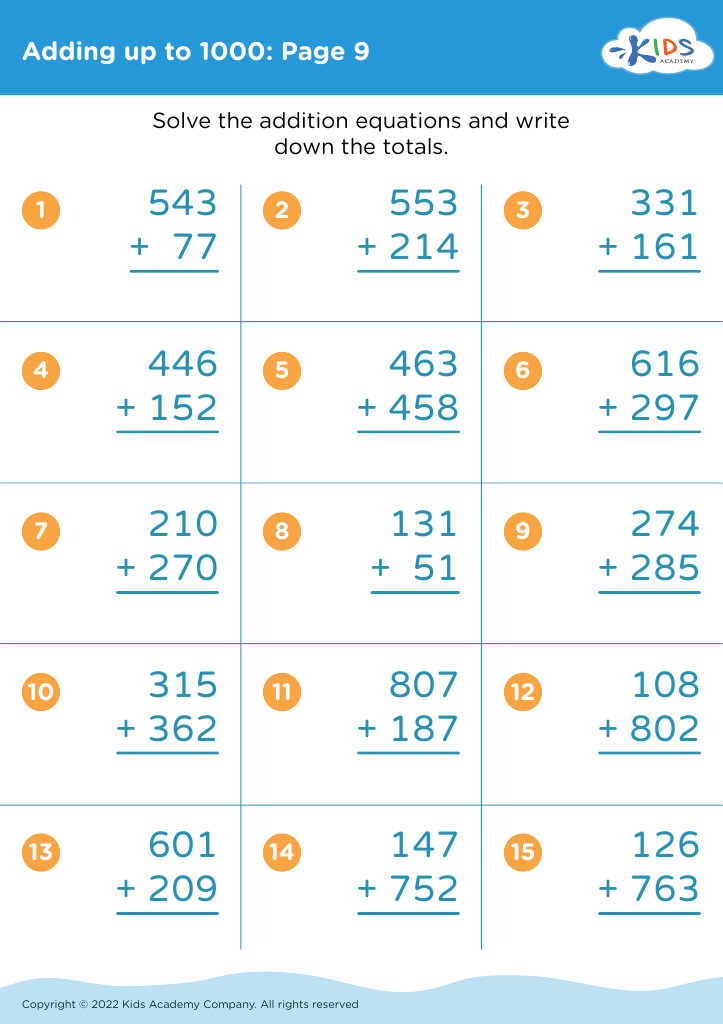
Adding up to 1000: Page 9

Adding up to 1000: Page 9

Adding up to 1000: Page 9
Worksheet
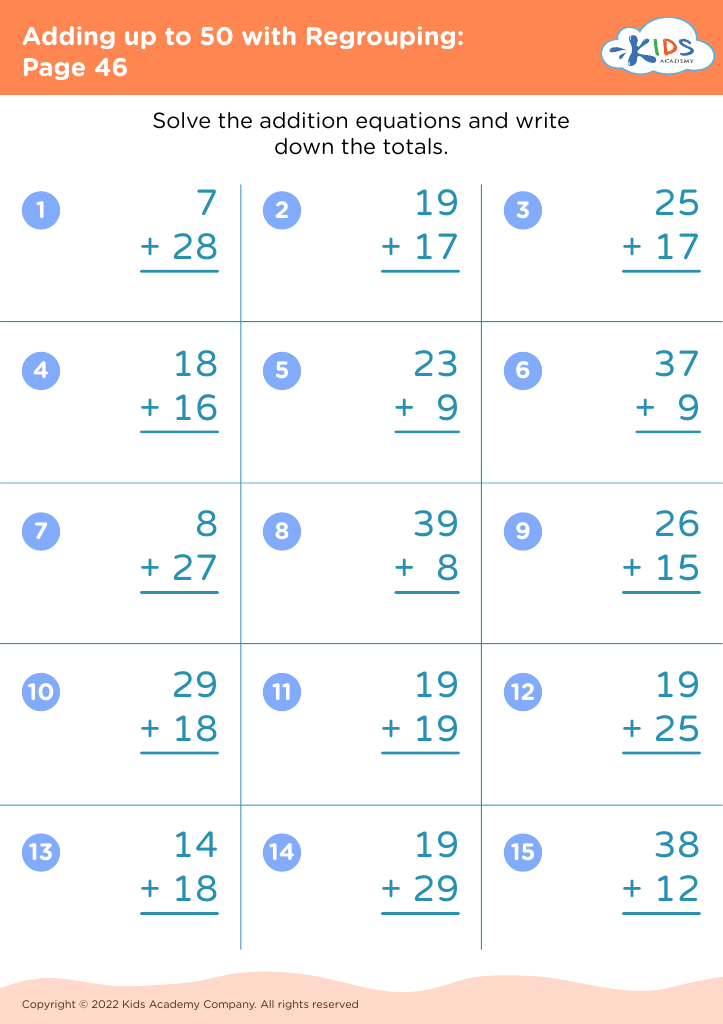
Adding up to 50 with Regrouping: Page 46
Worksheet
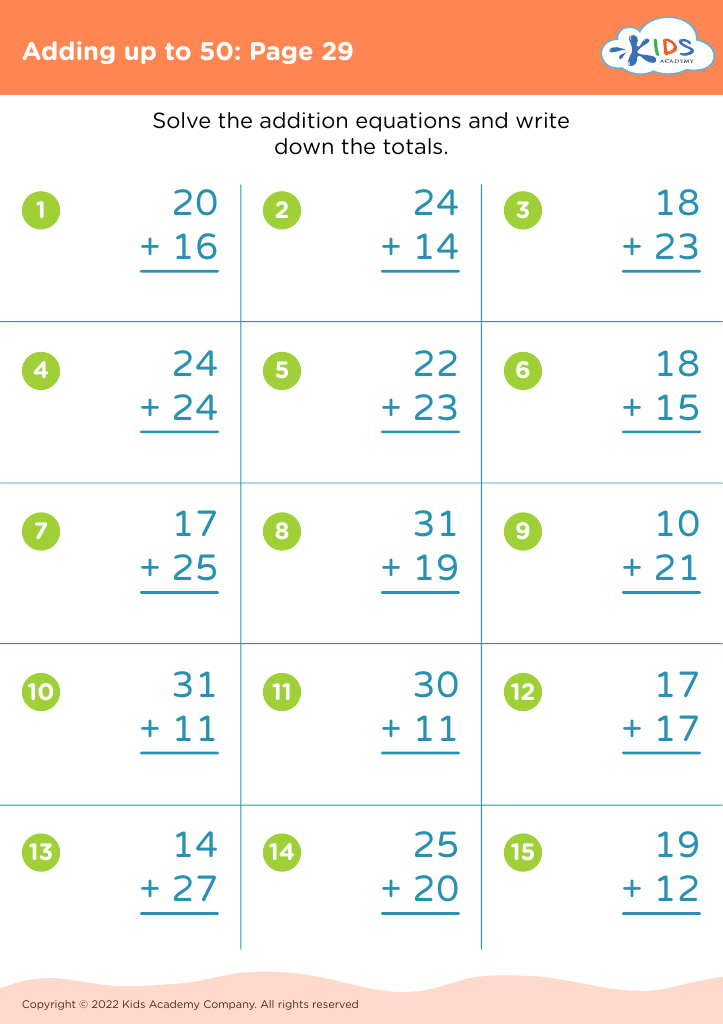
Adding up to 50: Page 29

Adding up to 50: Page 29

Adding up to 50: Page 29
Worksheet


Understanding fractions is crucial for children aged 8-9 because it serves as a foundational skill for advanced mathematics and everyday problem-solving. At this age, students are transitioning from basic arithmetic to more complex concepts, making it essential for them to grasp fractions to successfully tackle topics like decimals, ratios, and proportions later on.

Fractions help children develop critical thinking skills. For instance, learning to compare and order fractions enhances their ability to analyze problems and assess situations in various contexts, from cooking to budgeting. Additionally, understanding fractions fosters mathematical reasoning, allowing students to justify their answers and explain their thought processes, which are vital skills in various academic and life scenarios.

Moreover, a strong grasp of fractions boosts a child's confidence in math, reducing anxiety associated with more difficult concepts in later grades. When parents and teachers address fractional understanding early, they ensure that students build a robust mathematical foundation. This support encourages a positive attitude toward math, making students more likely to excel—not only in math but across their schooling, ultimately setting them up for future success in various career paths. Therefore, an emphasis on fractions in early education is crucial for holistic development.